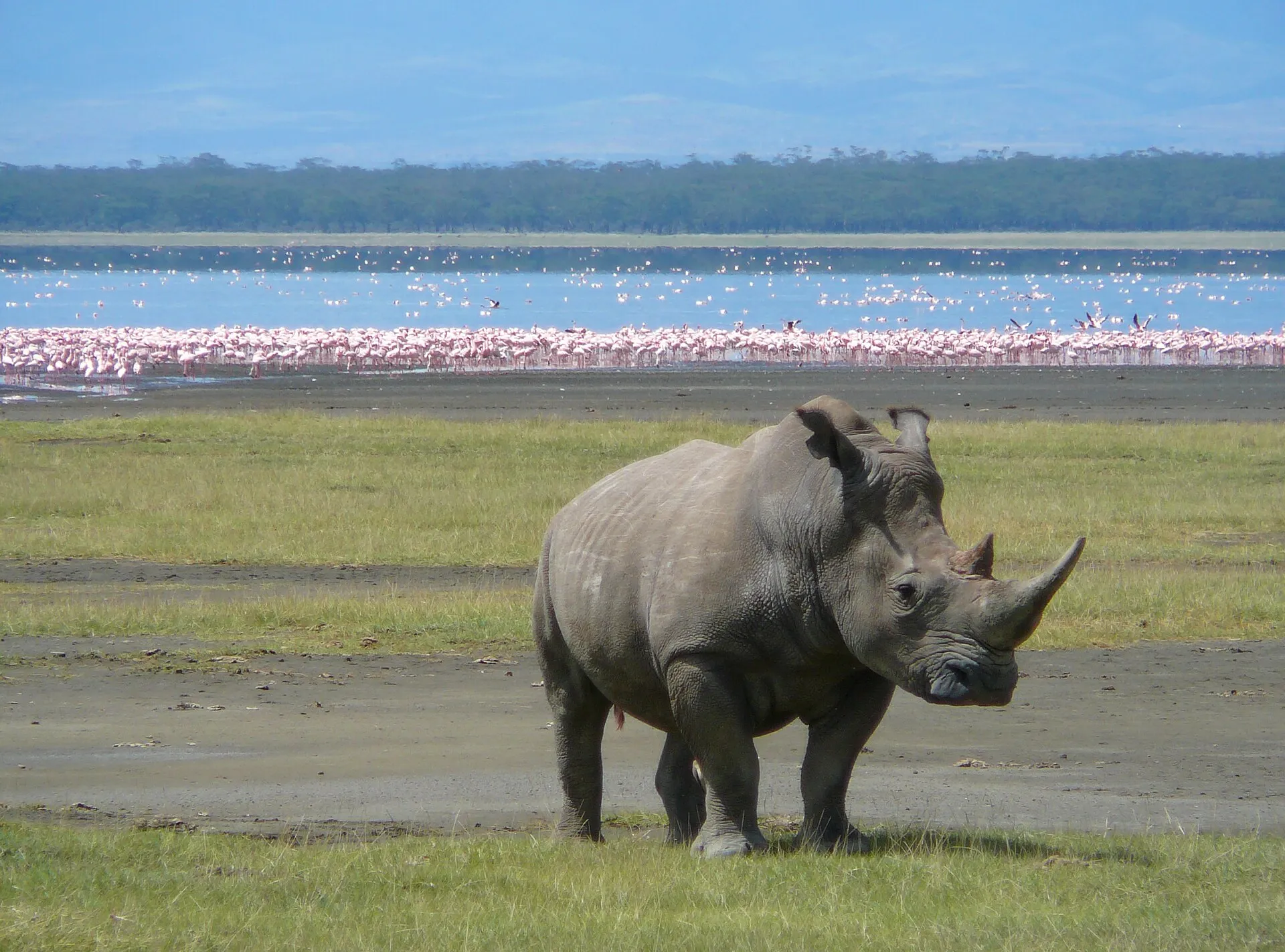
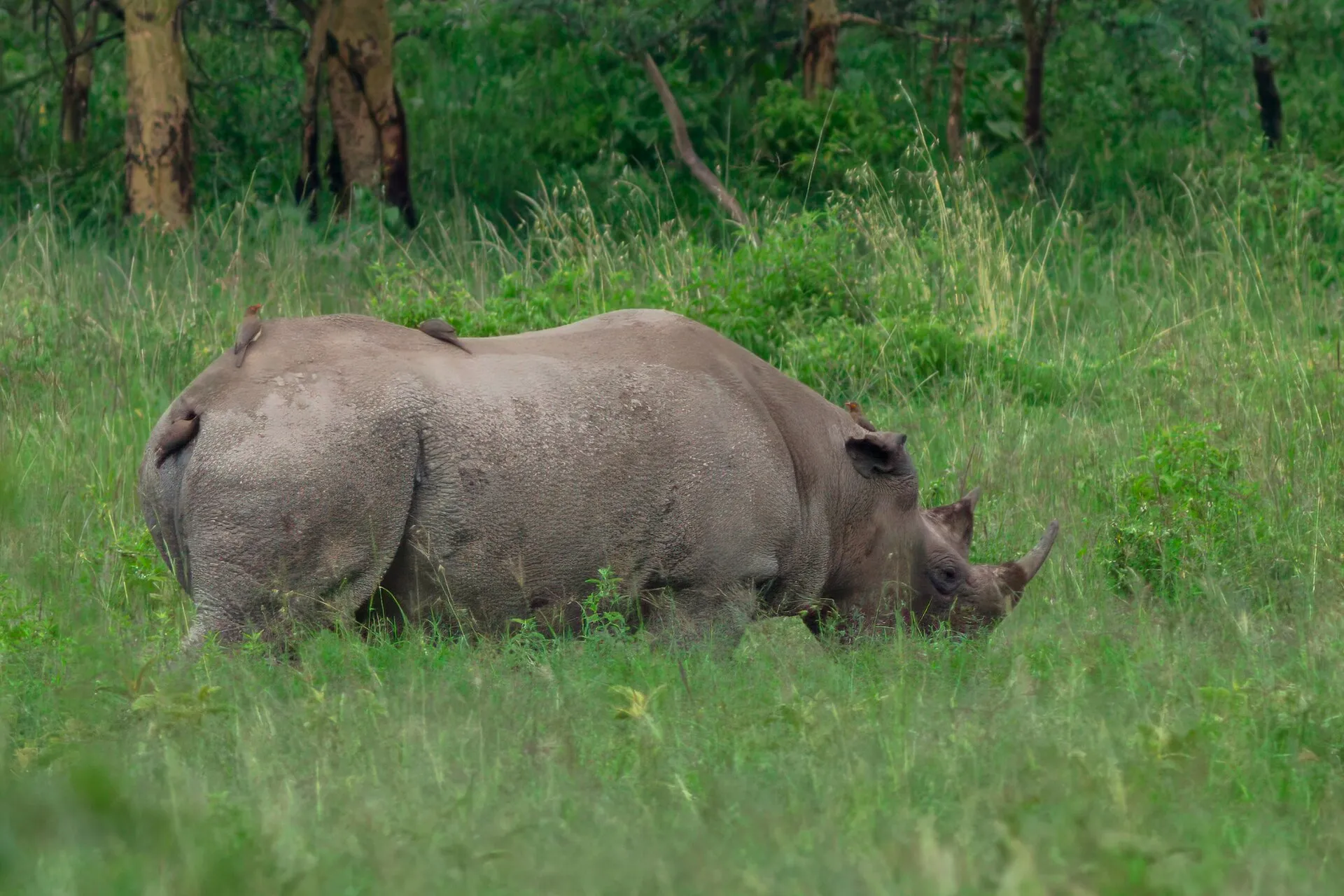
Lake Nakuru National Park in Kenya’s Rift Valley is a fenced rhino sanctuary with both black and white rhinos. White rhinos often graze on the open grassland near the lakeshore, while black rhinos browse in the woodland. The park is about three hours from Nairobi, which makes it an easy stop between Nairobi and the Masai Mara. The park fee is US$90 per adult per day.
Key takeaways
- Both black and white rhinos.
- White rhinos graze near the lakeshore.
- About three hours from Nairobi.
- Park fee US$90 per day.
Lake Nakuru was fenced and established as a rhino sanctuary in the 1980s. It is now one of Kenya’s most important rhino strongholds, with good chances of seeing them on a single game drive.
Where to see rhinos
- White rhinos graze on the open grassland around the lake, often in small groups.
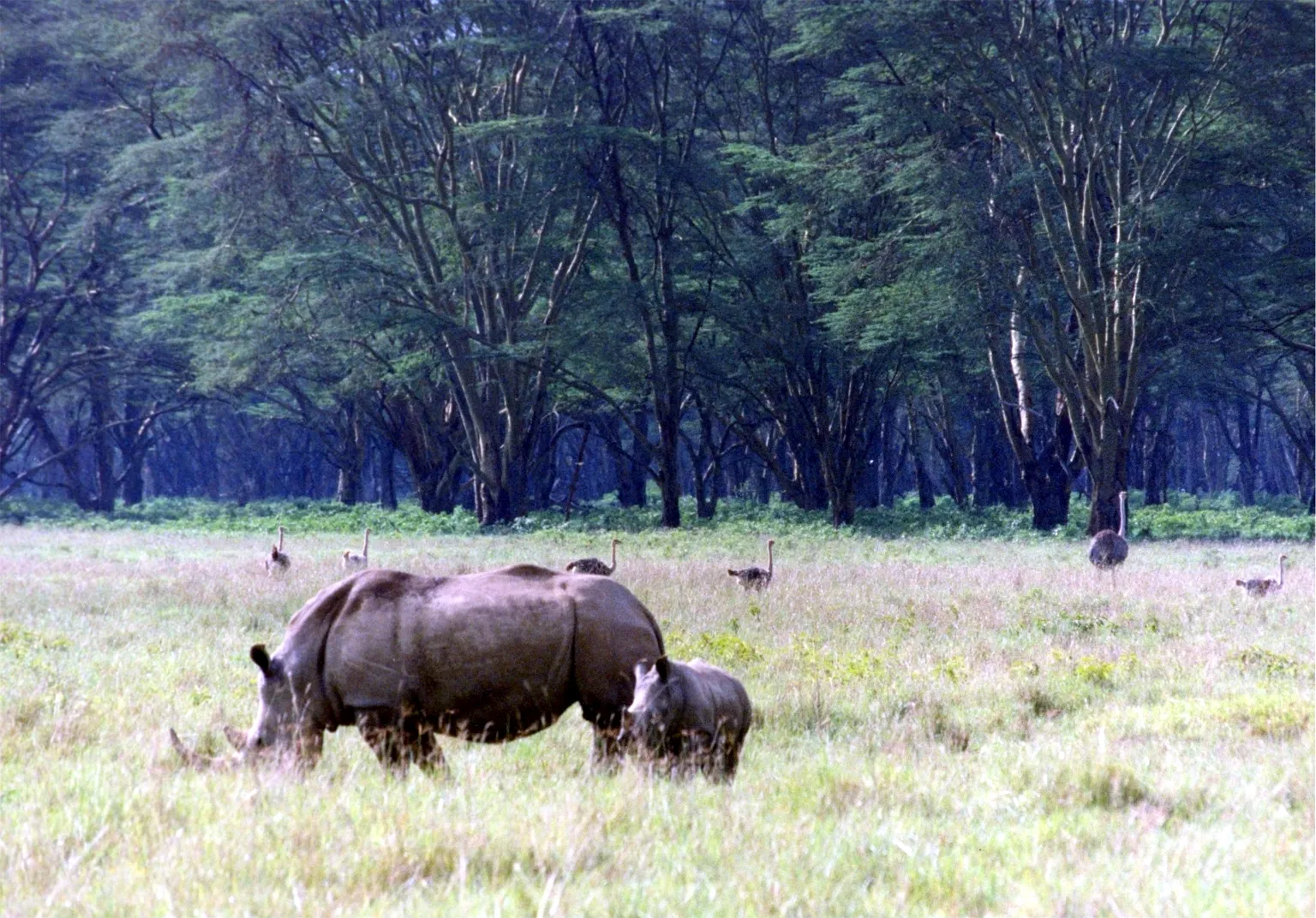
- Black rhinos prefer the denser acacia woodland and are shyer.
- Ask your guide to check the southern grasslands and the lake edges in the morning.
Beyond rhinos
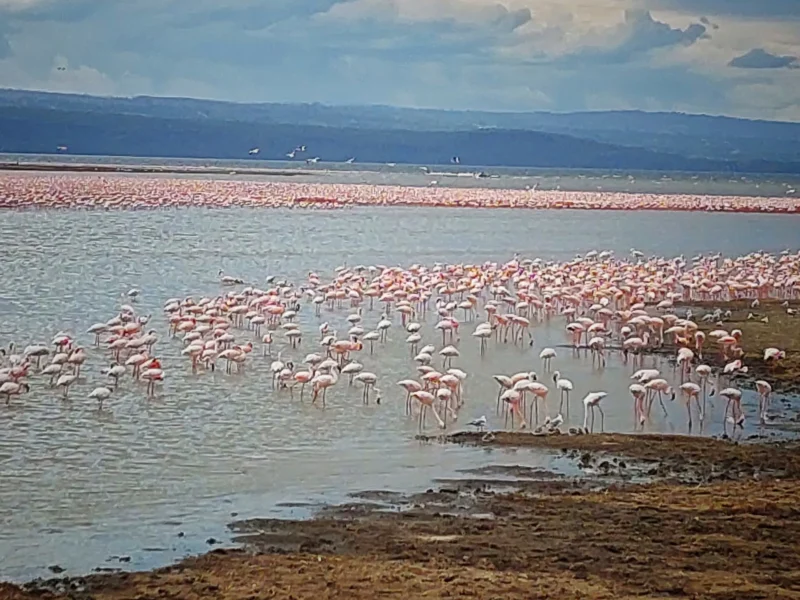
- Flamingos: numbers vary greatly. Rising lake levels since around 2013 reduced flamingo numbers, but they can still be seen in some seasons.
- Rothschild’s giraffe, introduced to the park.
- Lions and leopards, sometimes seen resting in acacias.
- Baboon Cliff, a viewpoint over the lake and the Rift Valley.
- Makalia Falls in the south of the park.
When to go
Lake Nakuru can be visited year-round. The dry seasons, June to October and January to February, are best for rhinos and game drives. In the rains, some tracks may be closed.
Good to know
- The park fee is US$90 per adult per day.
- Nakuru town is close, with many hotels.
- Combine with Lake Naivasha’s boat trips; see Lake Naivasha and Crescent Island.
- Bring binoculars for black rhinos in the woodland.
Who it suits
Nakuru suits first-time safari-goers, families and anyone completing the Big Five. It is a half-day or one-night stop on the way to the Mara.
A typical visit
Most visitors arrive from Nairobi in the late morning, take an afternoon game drive around the lakeshore and stay the night at a lodge in or near the park. An early drive the next morning gives the best chance of finding black rhinos in the woodland and lions on the move, before continuing to the Masai Mara, about five to six hours away. Do not miss Baboon Cliff for the view.
Conservation
Nakuru’s rhinos are protected by fences, ranger patrols and monitoring, and some have been moved to start new populations elsewhere in Kenya.
Lake Nakuru’s story
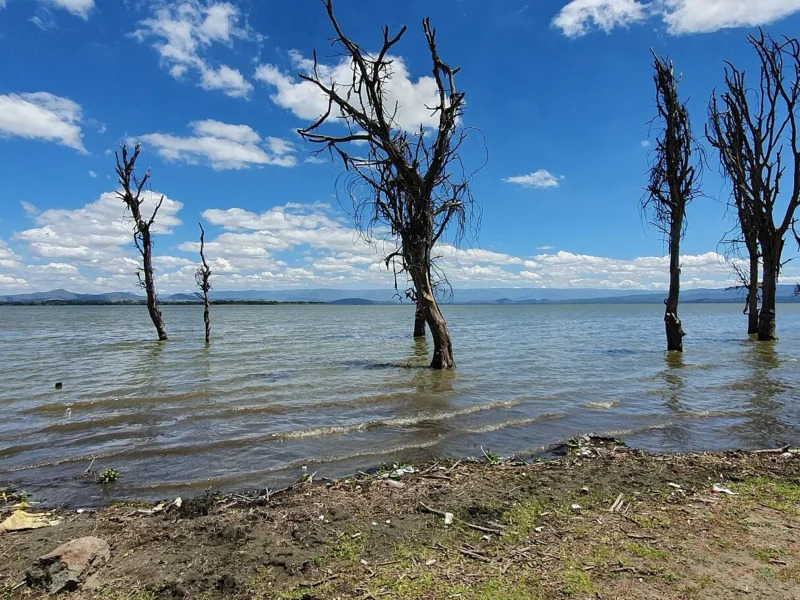
Lake Nakuru National Park was created in 1968 around a soda lake in the Rift Valley. Its millions of flamingos once made it famous as the “greatest bird spectacle on Earth”. In 1987, the park was fenced and became Kenya’s first rhino sanctuary. Since around 2013, rising water has flooded parts of the shoreline and lowered salinity, so flamingos now gather in other lakes such as Bogoria. The park remains one of Kenya’s best places for rhinos.
Where to stay
Lodges inside the park sit on hills or in the forest, with views over the lake. Nakuru town, just outside the main gate, has more hotels.
A typical visit
Enter at dawn, drive along the lakeshore for white rhinos, search the woodland for black rhinos, then climb to Baboon Cliff for the view. In the afternoon, visit Makalia Falls in the south or look for lions and leopards in the acacias.
Combine it with
Lake Naivasha, about 1.5 hours away, Lake Bogoria for flamingos, and the Masai Mara.
Who it suits
Nakuru suits families, first-time visitors and anyone completing the Big Five. Its compact size makes it easy to explore in a half day or a full day, and it combines naturally with Lake Naivasha’s boat trips and walking safaris.
Birds at Lake Nakuru
Even with fewer flamingos, Lake Nakuru remains excellent for birds, with more than 400 species recorded. Look for great white pelicans, African fish eagles, marabou storks and many waders along the shore, and for woodland birds in the yellow-barked acacia forest. The open shoreline makes it a good park for beginner birders, and early mornings bring the most activity along the water’s edge.
Plan it
Nakuru features on our 4-day Masai Mara and Lake Nakuru safari and 8 days in Amboseli, Lake Nakuru and the Masai Mara. Read about the white rhinoceros.
Frequently asked questions
Are rhinos guaranteed at Lake Nakuru?
Not guaranteed, but white rhinos are seen on most game drives.
Are there still flamingos?
Numbers vary; they are fewer than before the lake rose.
How long do I need?
A half-day game drive or one night is enough.
Is it on the way to the Mara?
Yes, it fits well between Nairobi and the Masai Mara.
Can I see lions at Lake Nakuru?
Yes. Lions are present, sometimes resting in trees.
Is it worth a full day?
A full day allows you to explore the whole park, including the southern areas.

Written by our Kampala-based planners and guides, who arrange these trips every season. Prices and rules are checked before every quote.