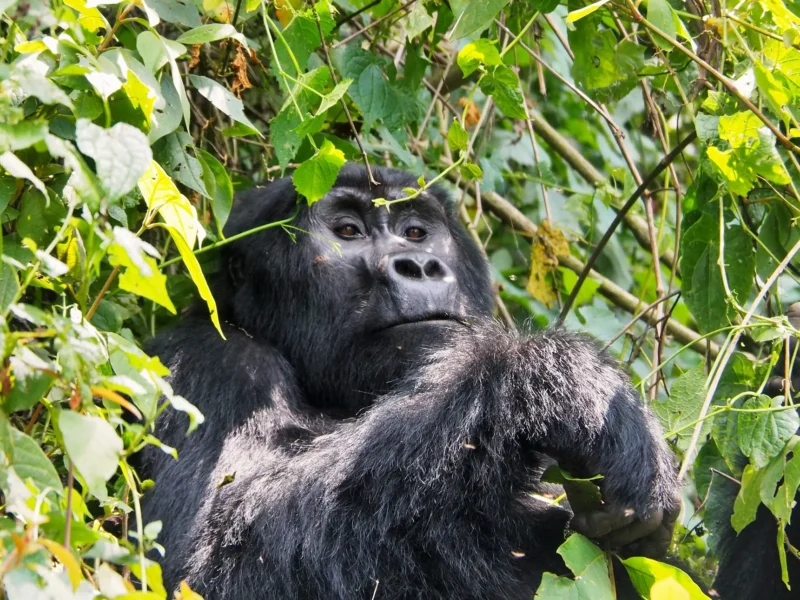
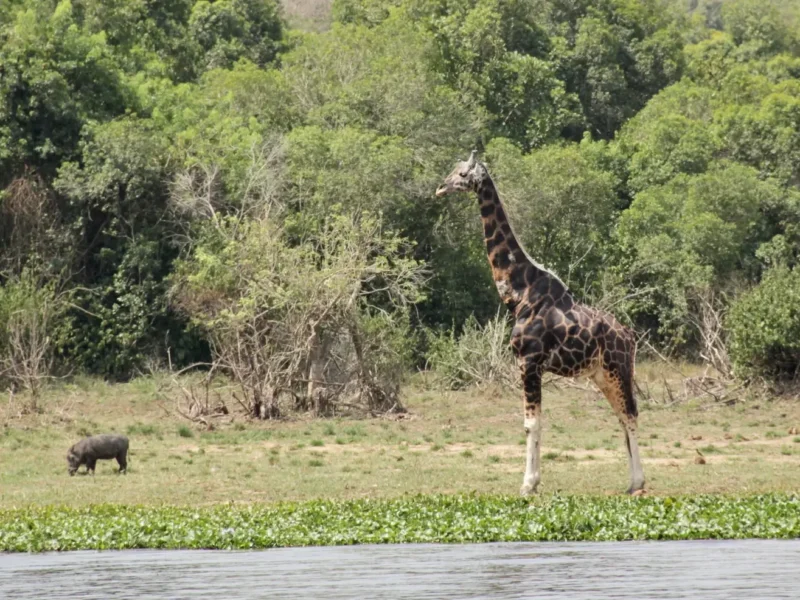
Responsible tourism means travelling in a way that benefits local people and protects wildlife. On our trips, that includes community-run experiences such as the Bigodi Wetland walk and Batwa visits, community stays such as Ride 4 A Woman in Buhoma, local guides at Mabamba and Kasubi, hiring porters on treks, and strict wildlife etiquette around primates.
Key takeaways
- Community-run experiences where fees go directly to communities.
- Local guides and community stays on our itineraries.
- Strict wildlife etiquette: distance, time limits, no flash.
- Porters hired on treks to support families next to the parks.
- Permit fees fund conservation and community projects.
East Africa’s great parks, from Bwindi to the Serengeti, survive because local people and governments choose to protect them. Tourism helps make that choice possible, by turning wildlife into jobs, schools and clinics. How you travel decides how much of that benefit reaches the people who live next to the animals.
Communities first
We include experiences run by and for local communities:
- Bigodi Wetland Sanctuary, protected by a community organisation whose walk fees support the village school and health projects. See the Bigodi Wetland primate walk.
- Batwa cultural experiences, led by Batwa guides, the Indigenous forest people of Bwindi and Mgahinga. See the Batwa cultural experience.
- Community stays such as Ride 4 A Woman in Buhoma on our standard itineraries.
- Local poler-guides at Mabamba and local site guides at Kasubi.
Respecting wildlife
- Gorillas and chimps can catch human illnesses. Do not trek if you are unwell, wear a mask when asked, and keep the distance your guide sets.
- Time with primates is limited to protect them, usually one hour.
- No flash photography near primates, and no feeding of any animals.
- On game drives, we ask guides to keep a respectful distance and not to crowd sightings or block animals at river crossings.
Porters and local jobs
Porters on gorilla and chimp treks are local people, often organised in community associations, and some are former poachers. Hiring one helps you on steep trails and gives a family an income from the forest. Read hire a porter on your trek.
Where your money goes
Gorilla and chimp permits fund park management, ranger patrols and veterinary care. In Uganda and Rwanda, a share of park revenue goes to communities around the parks, funding schools, health centres and water projects. Choosing local guides, lodges and community activities adds to that benefit.
Plastic and waste
Rwanda, Kenya, Tanzania and Zanzibar have banned many single-use plastic bags. Pack a reusable water bottle, take rubbish out of the parks and avoid buying shells, coral or wildlife products.
Cultural respect
Ask before photographing people, dress modestly in towns and villages, and pay fair prices for crafts. Avoid giving sweets or money to children; support schools and community projects instead.
Wildlife-friendly choices
- Choose dolphin trips that watch rather than chase, such as at Mnemba Atoll.
- Never buy captive animals or animal products.
- Follow the rules at rhino sanctuaries such as Ziwa.
Frequently asked questions
Do you include community experiences in every trip?
We include them wherever they fit the route, and we can add more on request.
Should I hire a porter even if I am fit?
Yes. It helps you on steep trails and supports a family living next to the park.
Can I visit a school or orphanage?
We support community projects through organised, community-approved visits and avoid orphanage tourism.
Is gorilla trekking good for gorillas?
Well-managed trekking funds protection and gives communities a reason to protect gorillas, which is why numbers have grown.

Written by our Kampala-based planners and guides, who arrange these trips every season. Prices and rules are checked before every quote.