Key takeaways
- Each habituated family takes a maximum of eight visitors a day, so permits are limited.
- Uganda’s low-season permits are fixed-date and non-reschedulable; standard permits follow UWA’s change rules.
- Permits are paid in full at purchase and tied to your passport details.
- Book the permit first, then the lodge in the same sector.
- Foreign residents and East African citizens pay lower rates.
What a gorilla permit is
A gorilla permit is the ticket that allows one person to trek to one habituated gorilla family on one specific date, in one specific park sector. It is issued by the national parks authority, Uganda Wildlife Authority (UWA) in Uganda and the Rwanda Development Board (RDB) in Rwanda, and is printed with your name, nationality and passport number. Without one, you cannot join a trek.
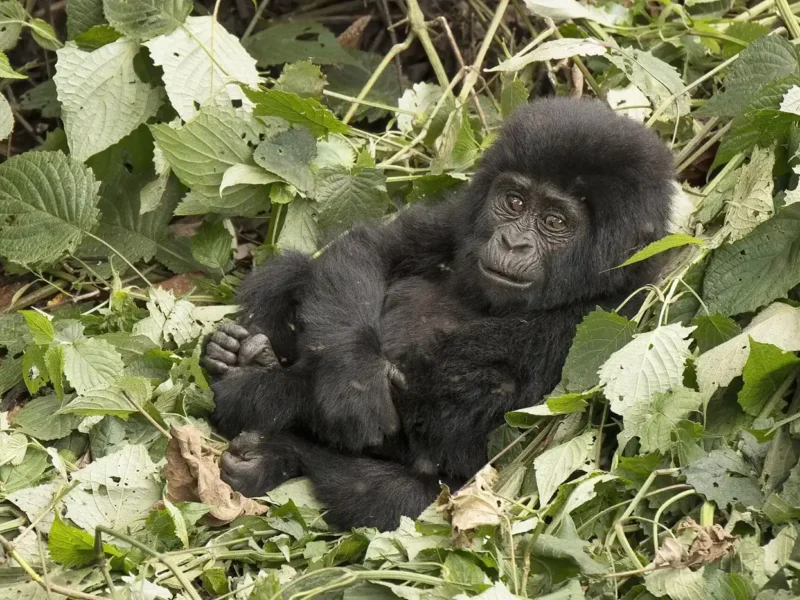
Permits exist to protect the gorillas. Each family can be visited by a maximum of eight people per day, for one hour, which limits disturbance and the risk of disease. The fees fund ranger patrols, veterinary care and, through revenue-sharing, schools, clinics and water projects in communities around the parks.
Gorilla permit prices
| Permit (2026) | Foreign non-resident | Notes |
|---|---|---|
| Uganda: standard trek (Bwindi or Mgahinga) | US$800 | One hour with a habituated family, ranger guides, park entry for the day |
| Uganda: low season (April, May, November) | US$600 | Introduced by UWA in February 2026; fixed date, cannot be rescheduled. Foreign residents US$500 |
| Uganda: habituation experience (Rushaga) | US$1,500 | Up to four hours, small group; rises to US$1,800 from 1 January 2027 |
| Rwanda: Volcanoes National Park | US$1,500 | Foreign residents and East African citizens pay less. 30% off (US$1,050) November–May when combined with stays in Nyungwe or Akagera; conditions apply |
| Uganda: chimpanzee tracking, Kibale (for comparison) | US$250 | Rises to US$300 from 1 January 2027 |
Foreign residents (with a valid work or residence permit) and East African citizens pay lower rates; tell us your status and we will quote the right price. Low-season and discounted permits have stricter conditions, so check what suits your plans before choosing. All rates are set by the authorities and can change. When fees rise between your quote and your final payment, the increase is passed on, as explained in our booking terms.
Uganda or Rwanda: which permit?
The gorillas are the same species and the hour is the same length, so the decision is about the rest of your trip:
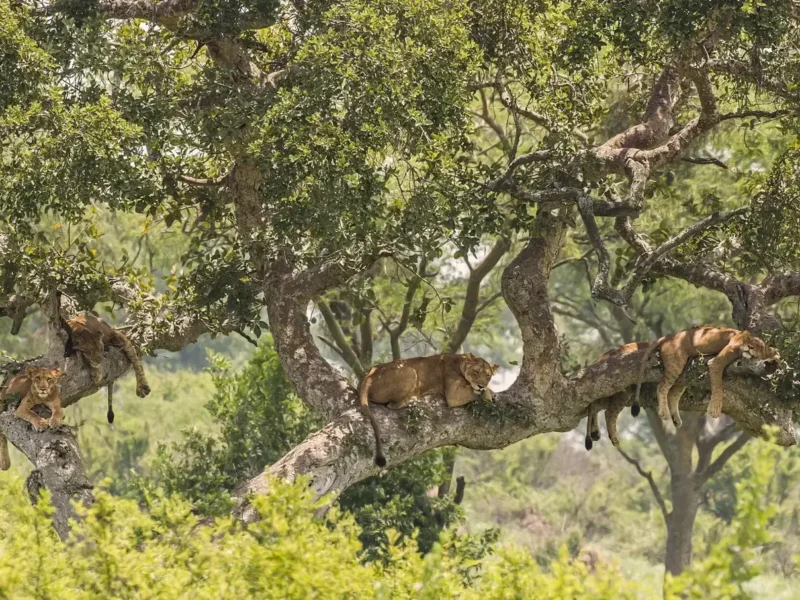
- Choose Uganda if you want value, more families to choose from, and a longer safari that adds chimpanzees in Kibale, the Kazinga Channel, tree-climbing lions and the Shoebill. A Uganda permit costs just over half the price of Rwanda’s.
- Choose Rwanda if your time is short. Volcanoes National Park is two to three hours from Kigali International Airport, so a three-day trip is easy, and the country has some of East Africa’s finest lodges.
- Combine them if you want to trek twice: southern Bwindi and Mgahinga are close to the Rwandan border, and the East Africa Tourist Visa covers both countries.

Availability and when to book
Bwindi has around twenty habituated families across its four sectors and Rwanda about a dozen, which sounds like a lot until you multiply by eight: on a given day there are only a few hundred permits for the whole region. The busiest periods are June to September, Christmas to New Year, and Easter.
- Peak months: book six to twelve months ahead, especially for Buhoma and Rushaga or for groups of four or more on the same family.
- Other months: two to three months is often enough, and last-minute permits are sometimes available within a few weeks.
- Flexible dates help. If one sector is full we can often find a family in another, then adjust your lodge to match.
How we book your permit
- Tell us your dates and group size through the safari planner or WhatsApp. We check live availability with the authority, usually the same day.
- Send passport details for every trekker: full name exactly as in the passport, nationality, passport number and date of birth.
- Pay for the permits. Permits are paid in full at the time of purchase, as part of your deposit. You can pay online with Pesapal by card or mobile money.
- We purchase and confirm. You receive a copy of each permit, and your guide carries the originals on the day.
- We build the rest around it: the right lodge for the sector, transport and any other activities.
Because permits are tied to a name and date, please double-check spellings. A mistake can mean being turned away at the briefing.
Rules, refunds and changes
- Minimum age 15. Rangers check passports at the briefing.
- Health: anyone with a cold, cough or fever may be refused on the day, without a refund. Gorillas are vulnerable to human illness.
- Non-transferable: a permit cannot be passed to another person.
- Refunds and date changes follow the authority’s own policy, which is stricter than most travel bookings. We explain the current rules before you pay and pass on anything we can recover.
- Insurance: travel insurance with cancellation cover is the best protection for a permit.
What your permit money pays for
A gorilla permit is expensive because it carries the cost of protecting the gorillas. In Uganda, part of every permit goes directly to communities around the parks: Uganda Wildlife Authority’s revenue-sharing programme returns a share of park entry fees, plus a fixed gorilla levy from each permit, to neighbouring parishes. The money has paid for classrooms, health centres, water tanks and projects that reduce crop-raiding by wildlife.
The rest funds daily tracking teams that follow every habituated family, ranger patrols against snares and poaching, and veterinary monitoring of the gorillas’ health. That investment is the main reason mountain gorillas are one of the few great apes whose numbers have grown in recent decades.
Five mistakes to avoid
- Booking the lodge before the permit. Bwindi’s sectors are hours apart. A lodge in Buhoma is no use if your permit is in Rushaga.
- Misspelled names or wrong passport numbers. Permits are checked against passports at the briefing.
- Leaving it late for peak months. July, August and the Christmas period sell out first.
- Arriving late to the briefing. Groups leave on time. From the wrong sector, the drive can take hours, so stay close the night before.
- Travelling without insurance. A permit is usually non-refundable if you fall ill. Cancellation cover protects the cost.
Combining gorilla and chimpanzee permits
Many travellers pair gorillas with chimpanzees. In Uganda, chimpanzee tracking in Kibale Forest needs its own permit, also issued by UWA, and the two parks are a day’s drive apart, which is exactly the route of our 8-day safari. In Rwanda, chimpanzee tracking takes place in Nyungwe National Park in the southwest. We book both permits together so the dates fit the route.
Frequently asked questions
How much is a gorilla permit in Uganda?
US$800 per person for foreign non-residents in 2026, or US$600 in the low-season months of April, May and November (fixed date, not reschedulable).
How much is a gorilla permit in Rwanda?
US$1,500 per person for foreign non-residents. From November to May a 30% discount (US$1,050) applies when you also stay in Nyungwe or Akagera; conditions apply.
Can I buy a permit on arrival?
Occasionally, in quiet months, but it is a gamble. Booking ahead is the only way to be sure of your date and sector.
Do I need a tour operator to buy a permit?
Not strictly, but an operator checks availability, handles payment in the right currency and matches your lodge and transport to the sector, which avoids costly mistakes.
Is the permit included in your safari prices?
Yes. Our gorilla safaris include the permit in the price, for example the 4-Day Shoebill & Gorilla Safari from US$2,633.

Written by our Kampala-based planners and guides, who arrange these trips every season. Prices and rules are checked before every quote.