Key takeaways
- Uganda is the best value and combines easily with chimps and savannah parks; Rwanda is quickest from an international airport.
- Book permits first: eight per family per day, and peak months sell out 6–12 months ahead.
- Uganda’s US$600 low-season permits (April, May, November 2026) are fixed-date and can’t be rescheduled.
- Hire a porter, wear waterproof boots and gloves, and don’t trek if you’re ill.
- Any month works; June–September and December–February have the driest trails.
What gorilla trekking is
Gorilla trekking means walking into the forest with Uganda Wildlife Authority (UWA) or Rwanda Development Board (RDB) rangers to find a family of wild mountain gorillas that has been habituated, meaning slowly accustomed to people over two years or more so that a small group of visitors can watch them without changing their behaviour. Each family can be visited by a maximum of eight people a day, and once your group reaches them you have one hour in their company.
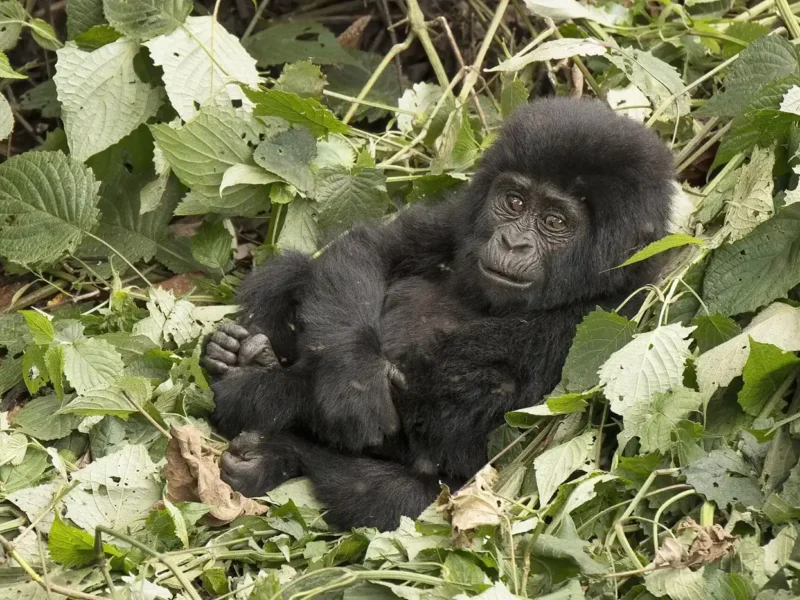
Mountain gorillas (Gorilla beringei beringei) live in only two places on earth: the Virunga volcanoes, shared by Uganda, Rwanda and the Democratic Republic of Congo, and Bwindi Impenetrable Forest in Uganda. The most recent counts put the total population at just over 1,000 animals. In 2018 the IUCN moved the subspecies from Critically Endangered to Endangered, one of the few great-ape conservation successes, and permit fees are a large part of why: they pay for rangers, veterinary monitoring and community projects around the parks.
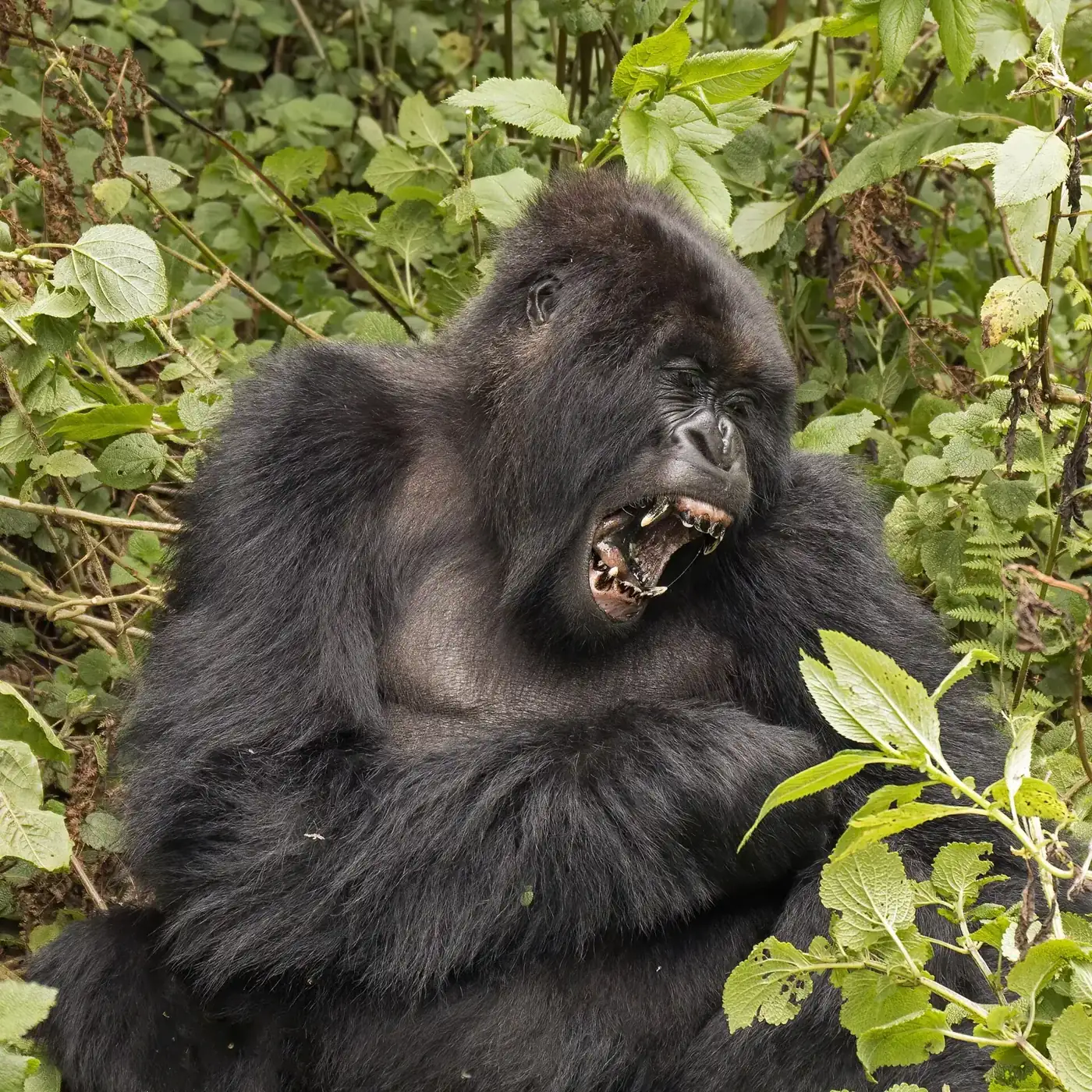
What you see in that hour depends on the day. Often the family is feeding: a silverback stripping wild celery or bamboo shoots, mothers nursing, juveniles chest-beating and tumbling through the undergrowth. Sometimes they are resting in a clearing; occasionally they are on the move and you follow at a walking pace. Every encounter is different, which is why many travellers trek twice.
Where to go: Uganda or Rwanda
There are three realistic places to trek, and the right one depends on your budget, time and how much else you want to see.
Bwindi Impenetrable National Park, Uganda
A UNESCO World Heritage Site since 1994, Bwindi protects around 321 km² of steep, ancient rainforest between roughly 1,160 and 2,600 metres. It holds close to half of the world’s mountain gorillas and around twenty families habituated for tourism, spread across four sectors:
- Buhoma (north): where gorilla tourism in Uganda began with the Mubare family in 1993. Good lodges, a lively village and the Batwa experience nearby. Used on our 4-day and 8-day safaris.
- Ruhija (east): the highest sector, cooler and excellent for birding, with fewer lodges.
- Rushaga (south): the most families, and the only place offering the gorilla habituation experience.
- Nkuringo (southwest): dramatic ridge views towards the Virungas and some of the steepest trails.
Sectors are several hours apart by road, so your permit sector decides which lodge you should stay in. We always book the permit first and the lodge second.
Mgahinga Gorilla National Park, Uganda
Uganda’s small slice of the Virunga volcanoes, with one habituated family (Nyakagezi), bamboo forest, golden monkeys and very few visitors. Easy to combine with Lake Bunyonyi or a crossing into Rwanda.
Volcanoes National Park, Rwanda
The slopes of the Virungas around Kinigi, about two to three hours by road from Kigali. Rwanda has about a dozen habituated families, smooth roads and a strong luxury lodge scene, which makes it ideal for a short trip. It is also where Dian Fossey founded the Karisoke Research Centre in 1967; you can hike to her grave and former camp.
In short: choose Uganda for value and to combine gorillas with chimpanzees, the Shoebill and savannah parks; choose Rwanda for a short, polished trip close to an international airport. Our Uganda and Rwanda guides cover both countries in more detail.
Permits and prices
You cannot trek without a permit, and the number of permits is fixed: eight per family per day. The permit covers the trek, your ranger guides and park entry for that day. Rates for foreign non-residents in 2026:
| Permit | 2026 price | Notes |
|---|---|---|
| Uganda: standard trek | US$800 | Bwindi or Mgahinga, most of the year |
| Uganda: low season | US$600 | April, May and November; fixed date, cannot be rescheduled |
| Uganda: habituation experience | US$1,500 | Up to 4 hours, Rushaga sector; US$1,800 from 1 January 2027 |
| Rwanda: Volcanoes National Park | US$1,500 | 30% low-season discount (November–May) when combined with stays in Nyungwe or Akagera |
Foreign residents and East African citizens pay lower rates in both countries.
Permits are non-transferable and, in practice, non-refundable, so we confirm your dates before buying and recommend insurance with cancellation cover. In peak months (June to September and around Christmas), permits in the most popular sectors can sell out six months or more ahead. Our gorilla permit guide explains booking, availability and residents’ rates step by step.
The gorilla habituation experience
In Bwindi’s Rushaga sector, a handful of visitors each day can join researchers and trackers with a family that is still being habituated. Instead of one hour you can spend up to four hours with the gorillas, watching the slow work of getting a wild family used to people. Group sizes are smaller (usually four visitors) and the permit costs US$1,500 in 2026, rising to US$1,800 from 1 January 2027.
It suits photographers, primate enthusiasts and anyone who has trekked before and wants a deeper experience. The gorillas are less relaxed than fully habituated families, so expect more movement and less posing.
What happens on trekking day
- Early breakfast (around 6–6:30am). Your lodge packs lunch and water.
- Briefing at the park office (about 7:30–8am). Rangers explain the rules, assign each group to a family and, where possible, match fitness to the expected walk. Tell your guide if you would prefer an easier trek.
- Drive to the trailhead. Depending on the family, this may be right next to the office or up to an hour away.
- The hike. Advance trackers leave at dawn to find the family, and radio its position to your ranger. The walk can take anywhere from one to six hours each way, on narrow, muddy and often steep paths. Rangers stop frequently, and you can ask to slow down at any time.
- Your hour with the gorillas. You leave bags, food and walking sticks with the porters a short distance away and approach with only your camera. The ranger keeps the hour strictly.
- The walk out and certificate. Back at the office you receive a trekking certificate, and you’re usually at your lodge by mid-afternoon. On our itineraries a Batwa cultural visit or a quiet afternoon follows.
How fit do you need to be?
Gorilla trekking is not a technical hike, but it is real exercise at altitude (most treks are between about 1,500 and 2,500 metres). If you can walk for three to four hours on uneven ground with some steep climbs, you will be fine. Our practical advice:
- Hire a porter. They carry your daypack, steady you on slippery slopes and push or pull when needed. The fee is modest and is an important local income.
- Use a walking stick; they are handed out at the trailhead.
- Walk regularly for a few weeks before you travel, ideally including hills or stairs.
- Tell us about knee, back or heart conditions so we can request an easier family and choose the right sector.
For travellers with limited mobility, some parks have previously offered sedan-chair carriers for an extra fee; ask us and we will check what is available for your dates.
Rules that protect the gorillas
Gorillas share about 98% of our DNA and can catch human illnesses, which is why the rules are taken seriously:
- You must be 15 years or older to trek.
- Do not trek if you are ill. Rangers can refuse anyone with a cold, cough or fever.
- Keep the distance your ranger sets (Uganda Wildlife Authority rules say at least 10 metres), and if a gorilla approaches you, stay still and let it pass.
- No flash photography, no eating or drinking near the gorillas, and keep your voice low.
- If you need to cough or sneeze, turn away and cover your mouth.
- If a silverback mock-charges, crouch down, look away and follow the ranger’s instructions. It is a display, not an attack.
What to wear and pack
- Waterproof hiking boots with good grip; trails are muddy all year.
- Long trousers and long sleeves in green, brown or khaki, which protect against nettles and thorns.
- Gardening gloves for grabbing vegetation, and gaiters or long socks to tuck trousers into (they keep safari ants out).
- A light rain jacket, even in the dry season.
- A small daypack with two litres of water, your packed lunch and snacks.
- Camera with a fast lens (the forest is dark; raise your ISO rather than using flash), plus spare batteries.
- Passport: rangers check it against your permit at the briefing.
Our full safari packing list covers the rest of your trip.
Best time to go
Gorilla trekking runs every day of the year. The drier months, June to September and December to February, have easier trails and are the most popular, so permits sell out first. The wetter months, March to May and October to November, bring more mud and afternoon rain, but the forest is lush, permits are easier to find and lodges are quieter. In April, May and November 2026 Uganda also offers low-season permits at US$600 instead of US$800, a saving of US$200 per person, on fixed dates. Because the gorillas do not migrate, your chances of finding them are excellent in any month. See travel by month for how gorillas fit with the rest of East Africa’s seasons.
Frequently asked questions
How much does gorilla trekking cost?
The permit is US$800 per person in Uganda (US$600 in April, May and November 2026) and US$1,500 in Rwanda for foreign non-residents. A complete trip including transport, lodges and guide starts from US$2,633 per person for our 4-day Uganda safari (solo traveller, budget lodges).
Am I guaranteed to see gorillas?
No wildlife encounter can be guaranteed, but sightings of habituated families are very reliable because trackers follow them every day.
What is the minimum age?
15 years in both Uganda and Rwanda, on the day of the trek.
How long is the trek?
Between about one and six hours each way, plus one hour with the gorillas. Most treks take three to five hours in total.
Can I trek twice?
Yes, and many people do. Each trek is a different family and a different experience. Book two permits on consecutive days.

Written by our Kampala-based planners and guides, who arrange these trips every season. Prices and rules are checked before every quote.