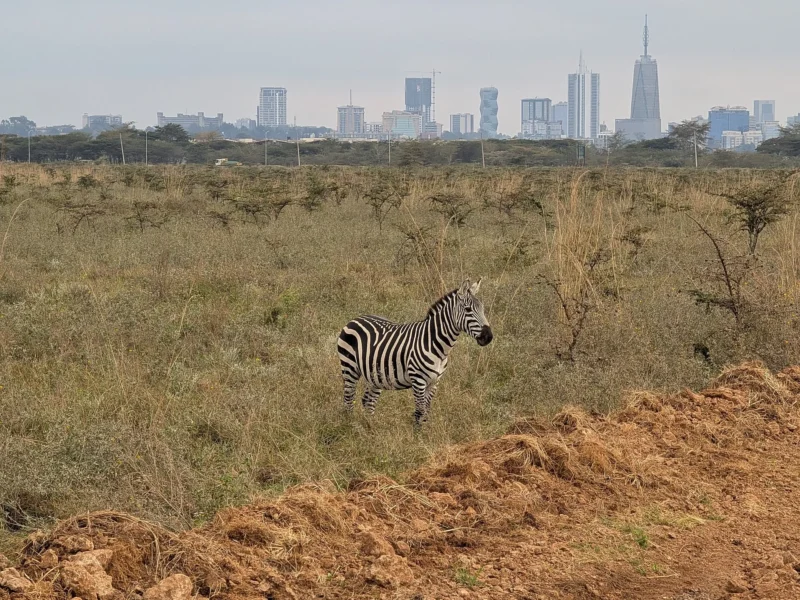
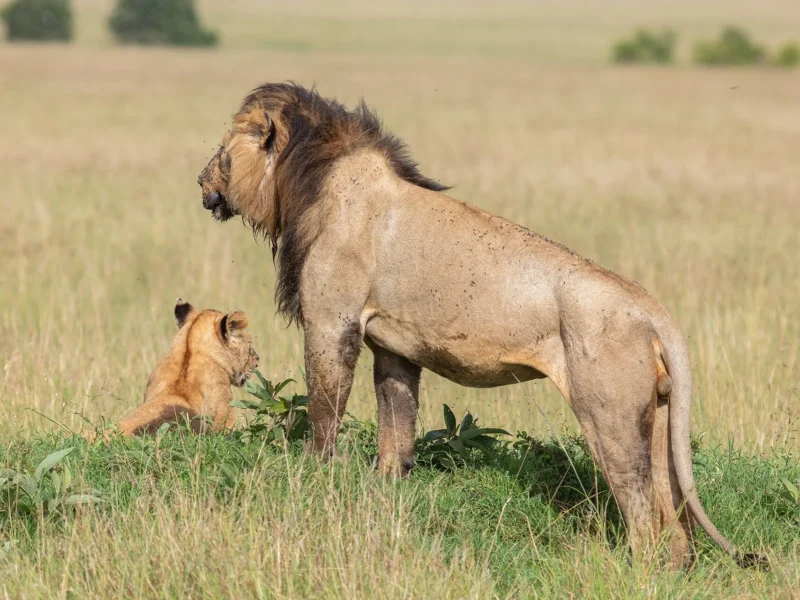
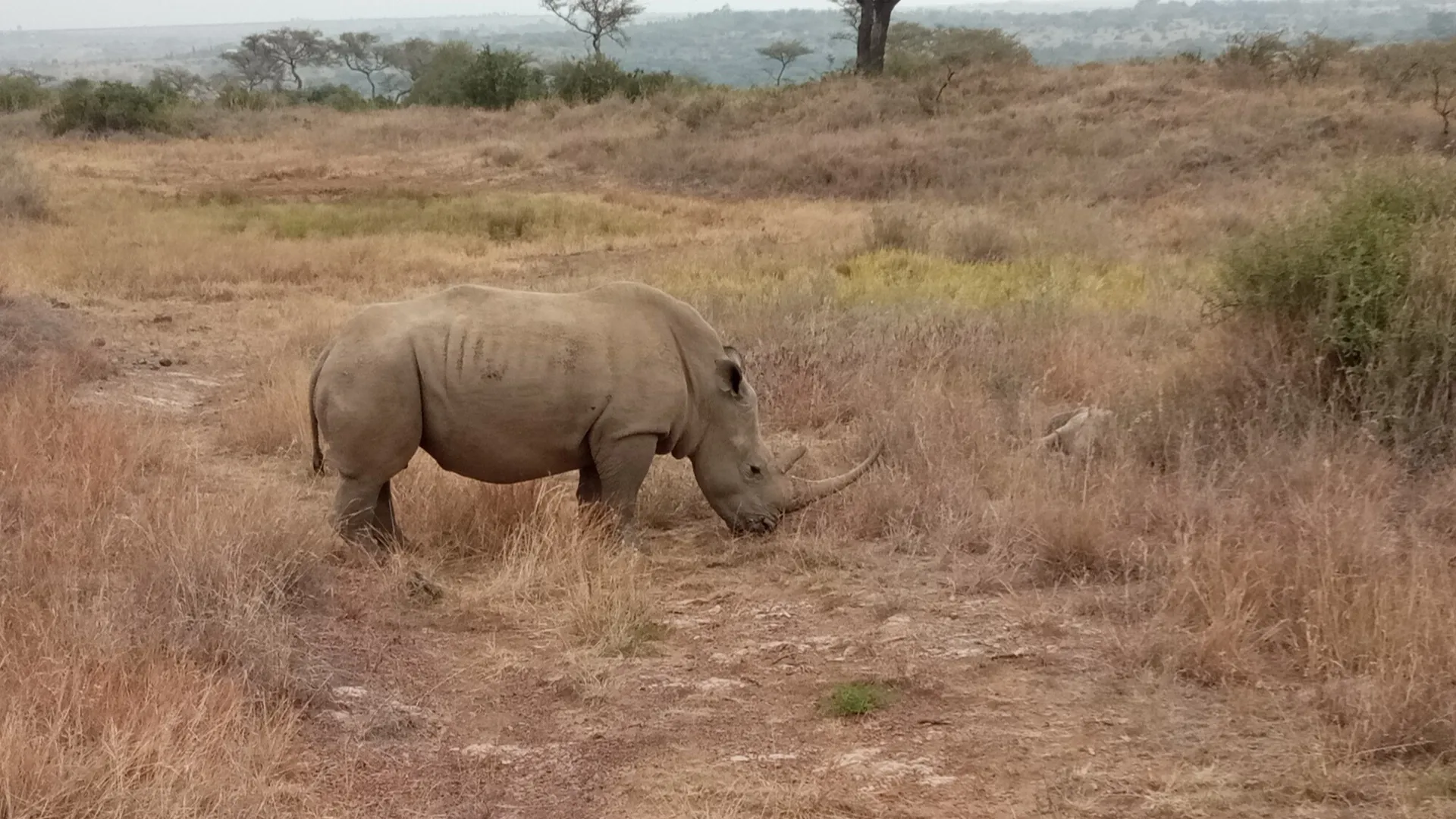
Nairobi National Park, established in 1946, was Kenya’s first national park. It lies only about 7 km from the city centre and covers about 117 km² of grassland and acacia. You can see black rhinos, lions, giraffes, buffalo, zebras and many antelope in a half-day game drive, often with the city skyline behind them.
Key takeaways
- Kenya’s first national park, established 1946.
- About 7 km from Nairobi’s centre.
- Black rhinos, lions and giraffes.
- Perfect for a layover or arrival day.
A Nairobi National Park city safari is unlike any other: the park is fenced on three sides, with the south open to the Kitengela plains so that animals can move in and out. It is one of Kenya’s most successful rhino sanctuaries.
What you can see
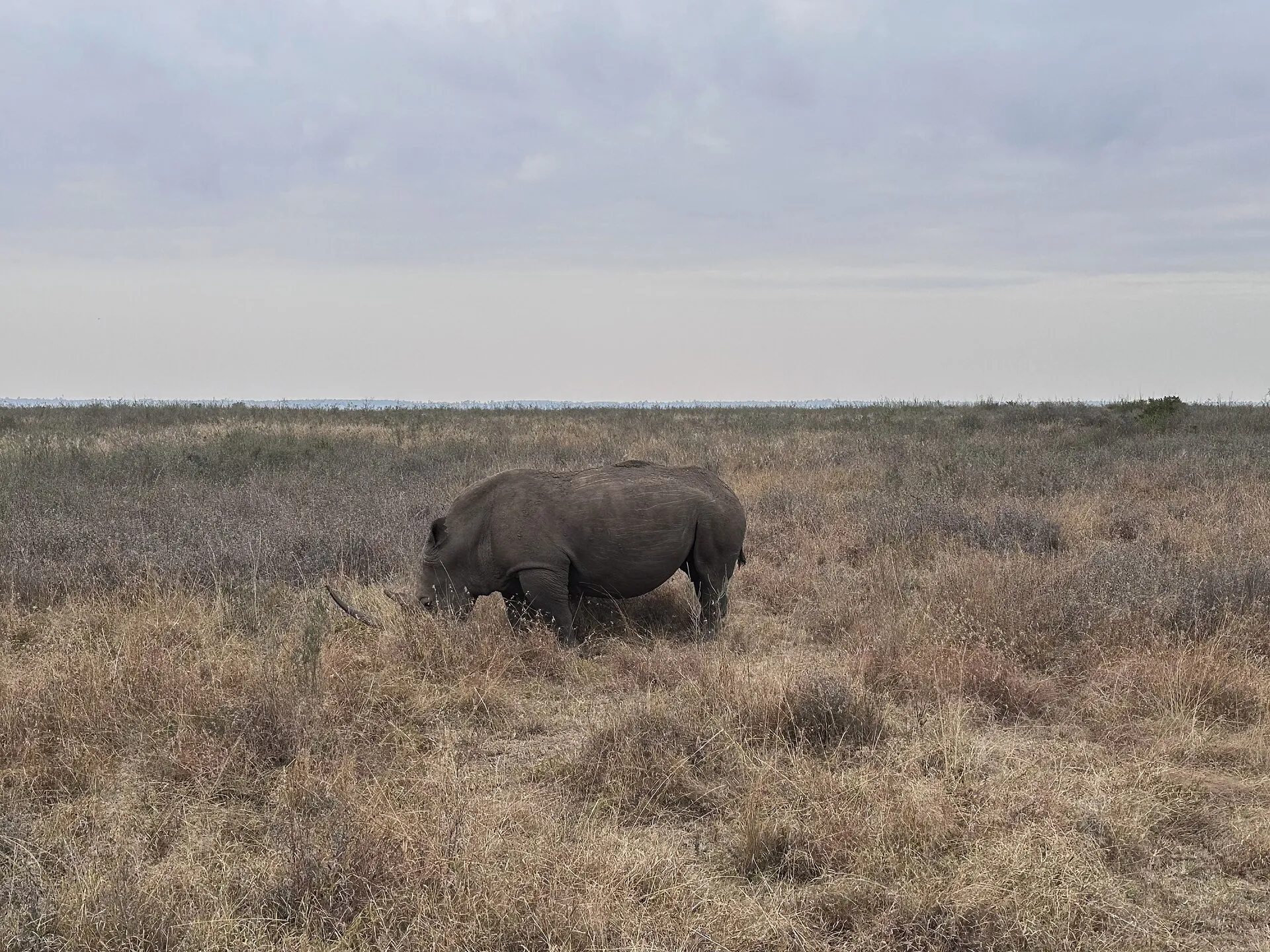
- Black rhinos, often in the open grassland.
- Lions, which hunt on the plains close to the city.
- Maasai giraffes, zebras, buffalo, eland and hartebeest.
- Hippos and crocodiles at the hippo pools.
- Over 400 bird species, including ostriches and secretary birds.
Ivory Burning Site
In 1989, Kenya burnt 12 tonnes of ivory here, a powerful message against poaching. A monument marks the site.
The elephant orphanage
The Sheldrick Wildlife Trust’s nursery, next to the park, cares for orphaned elephants and rhinos. A short public visit takes place late in the morning, when you can watch the young elephants being fed and playing in the mud. Booking ahead is required.
When to go
The park is good all year. The dry seasons, June to October and January to February, bring animals close to the water. Early mornings are best for lions.
Good to know
- Allow half a day; combine with the elephant orphanage and the Giraffe Centre.
- The park is ideal before an evening flight.
- Vehicles must stay on the tracks.
- Traffic in Nairobi can be heavy; start early.
Who it suits
Nairobi National Park suits travellers with limited time, families and anyone with a long layover. It also makes a great first safari before heading to the Masai Mara or Amboseli.
A typical half day
Enter at dawn through the main gate, when lions are most active, and drive south towards the open plains to look for rhinos. Stop at the hippo pools, where a short walk with a ranger is possible. Leave the park for the late-morning orphanage visit, and, if time allows, finish at the Giraffe Centre in Karen, where you can feed endangered Rothschild’s giraffes from a raised platform.
Conservation challenges
The city is growing around the park, and its southern migration corridor is under pressure from fences and roads. Visiting helps keep the park valuable.
A park with a long history
Nairobi National Park was gazetted in 1946, making it Kenya’s first national park. It was created while the city was growing around it. Since then, it has become a vital refuge for black rhinos and a place where Kenyans and visitors can see wildlife close to the capital.
Where to stay
Most visitors stay in Nairobi, with a range of hotels in the city and suburbs such as Karen and Langata, close to the park. A few camps and lodges sit inside or on the edge of the park.
Getting there
The main gate is on Langata Road, about 20–30 minutes from the city centre, depending on traffic.
Things to see nearby
- The Sheldrick Wildlife Trust elephant orphanage.
- The Giraffe Centre, where you can feed endangered Rothschild’s giraffes.
- The Karen Blixen Museum, home of the author of Out of Africa.
A morning in the park
Enter at 6:00am when the gates open, drive the southern plains for lions and rhinos, stop at the hippo pools, then visit the Ivory Burning Site. Leave by about 10:30am for the elephant orphanage’s late-morning visit.
Who it suits
The park suits short stays, families with young children and anyone on a long layover in Nairobi. Its compact size and easy access make it perfect for a first taste of safari before heading to the Mara or Amboseli.
Best time to visit
The park is good year-round. In the dry seasons, June to October and January to February, animals gather near the remaining water, and the grass is short, which makes sightings easier. In the rains, some tracks can become muddy, but the park is green and quiet. Early mornings are always best for predators, and the light over the city skyline is beautiful at sunrise.
Plan it
Our 1-day Nairobi National Park safari combines the park with Nairobi highlights, or add it to the 10-day Kenya safari and Diani Beach.
Frequently asked questions
Can I see rhinos in Nairobi National Park?
Yes. Black rhinos are often seen.
Is it worth visiting?
Yes, especially on a layover or arrival day.
How long does a visit take?
A half day is enough for most people.
Can I visit the elephant orphanage too?
Yes. Book the late-morning visit ahead.
Can I do a game drive before an evening flight?
Yes. The park is close to the airport, making it ideal before an evening departure.

Written by our Kampala-based planners and guides, who arrange these trips every season. Prices and rules are checked before every quote.