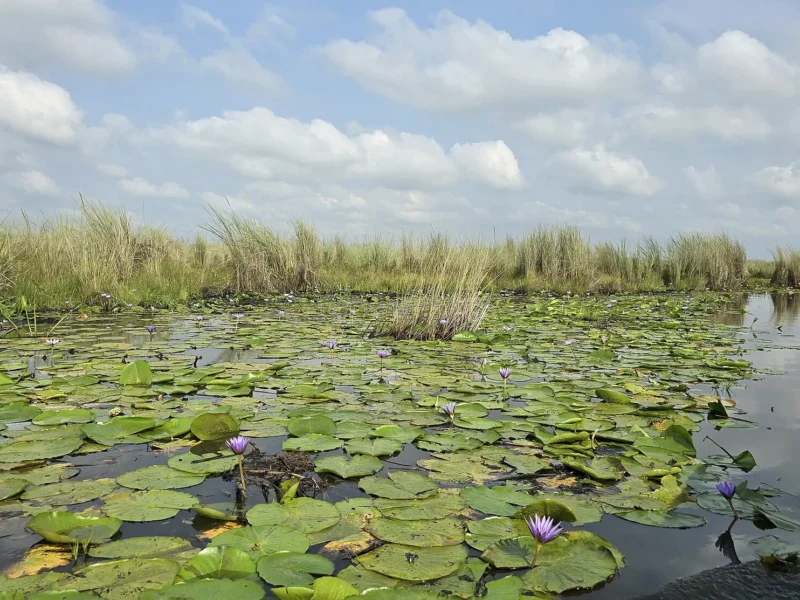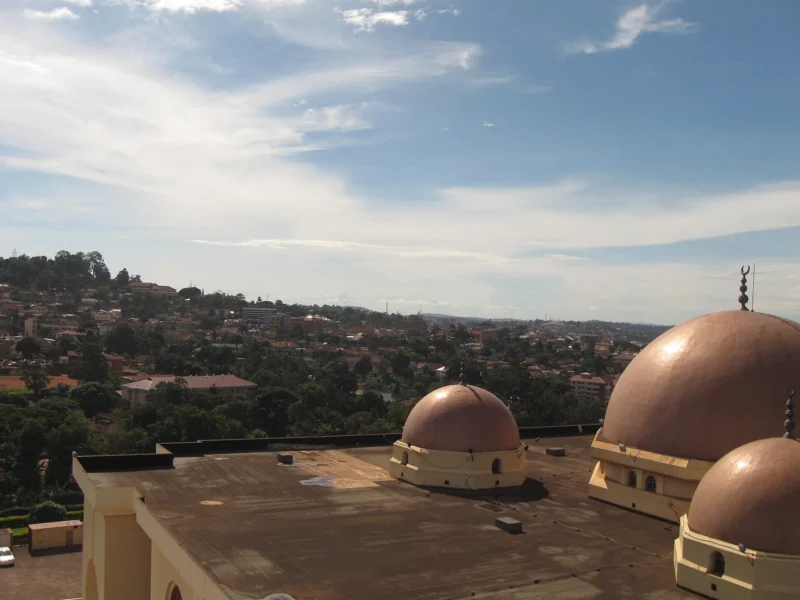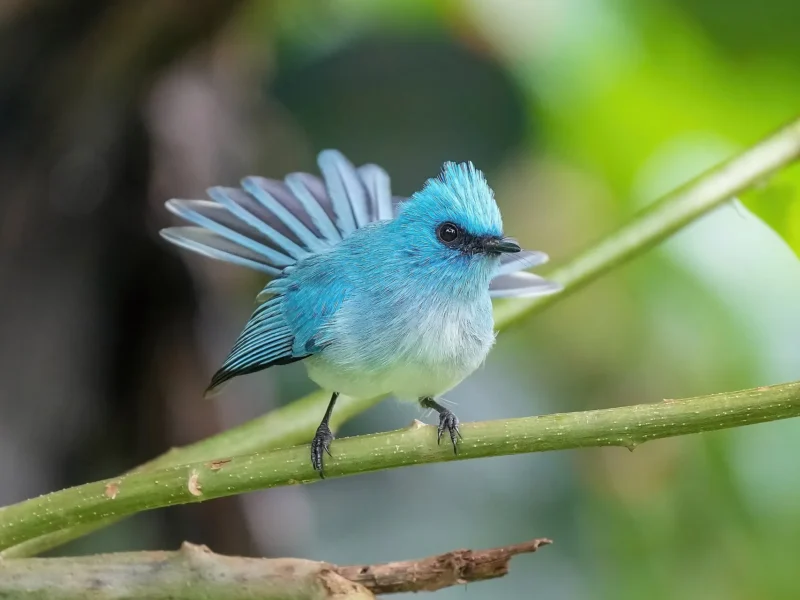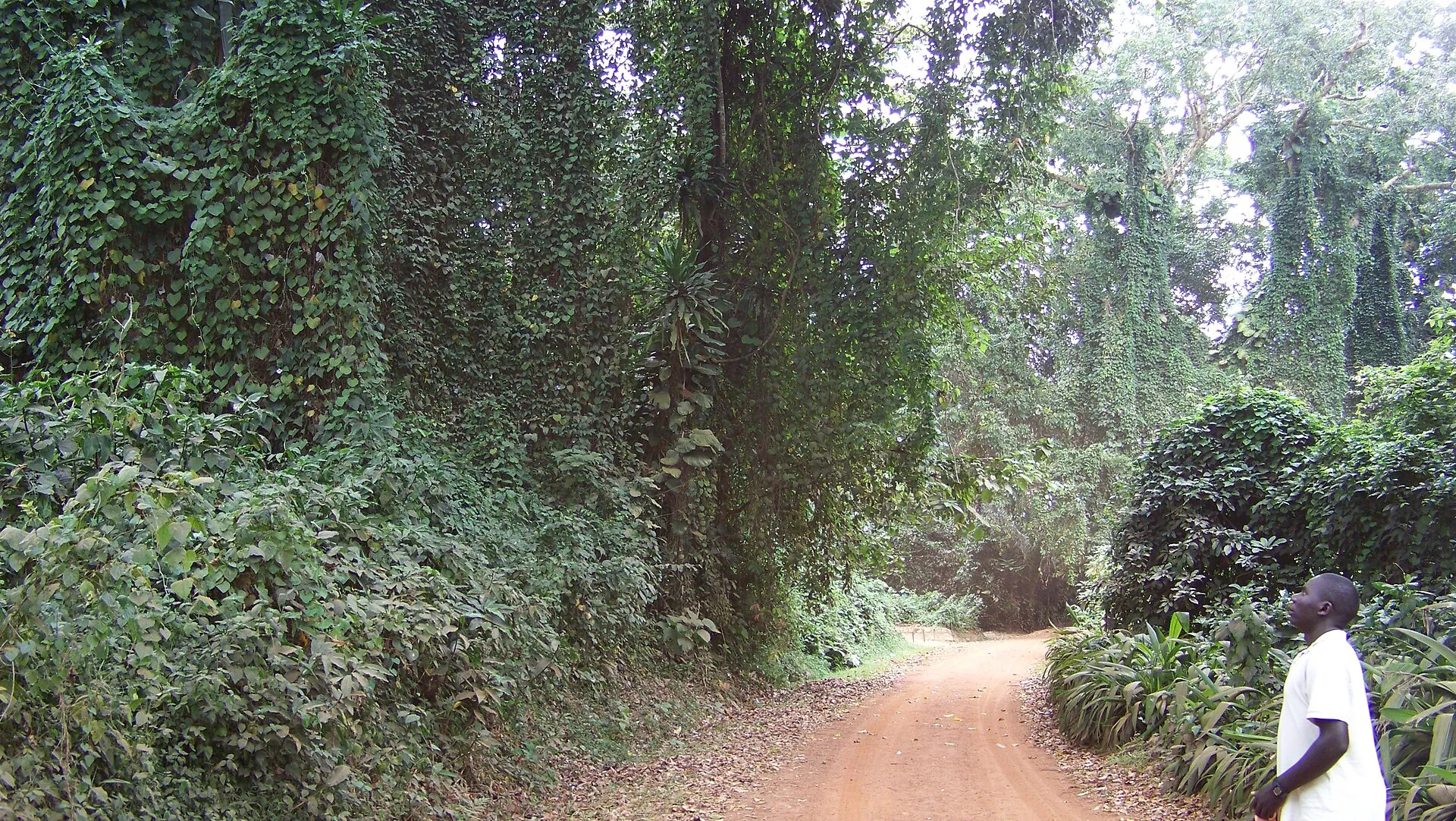
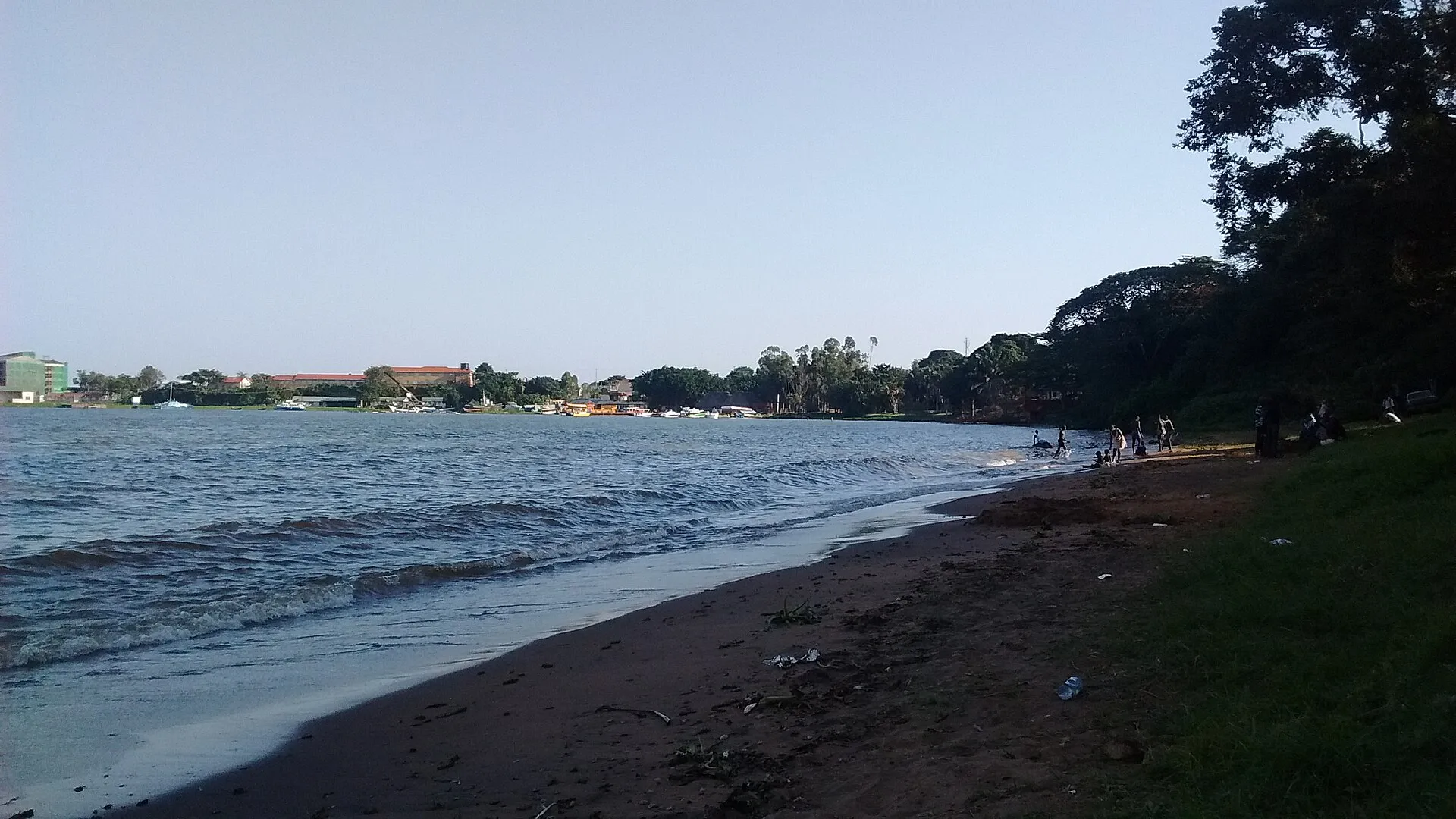
Entebbe Botanical Gardens, founded in 1898, lie on the shore of Lake Victoria a short drive from Entebbe International Airport. The gardens are home to great blue turacos, hornbills, weavers, kingfishers and black-and-white colobus monkeys. A two- to three-hour walk makes an easy introduction to Ugandan birds on arrival or before a flight home.
Key takeaways
- Founded in 1898 on Lake Victoria.
- A short drive from Entebbe airport.
- Great blue turacos, hornbills and colobus.
- Ideal for arrival or departure days.
The gardens were laid out in the early colonial period as a research garden for tropical plants. Today they mix old trees, forest patches, lawns and a lakeshore.
Birds to look for
- Great blue turaco, often easy to see. See great blue turaco.
- Black-and-white casqued hornbill.
- Orange, Vieillot’s and Jackson’s golden-backed weavers.
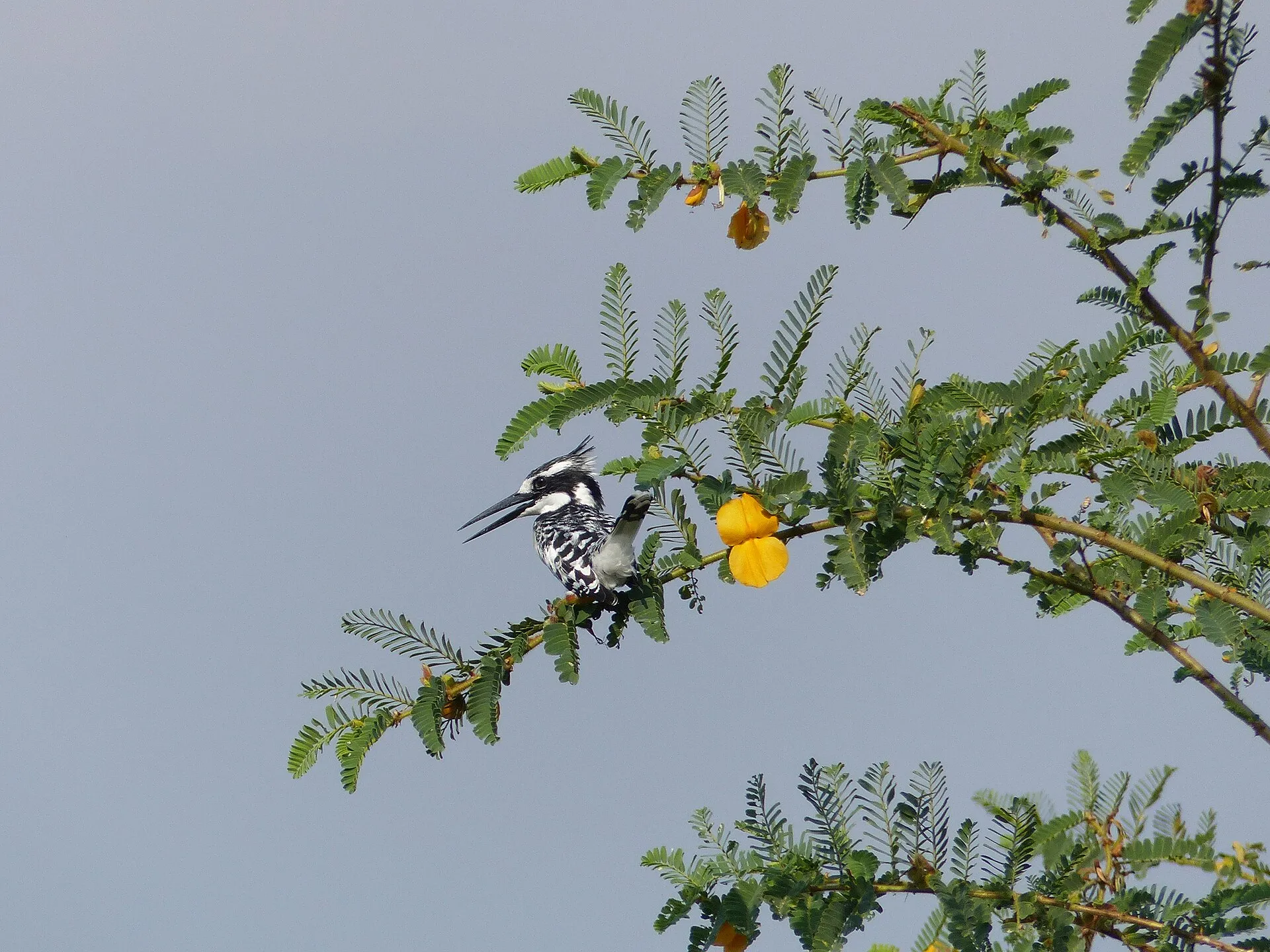
- Pied and woodland kingfishers.
- African fish eagle over the lake.
- Palm-nut vulture and herons along the shore.
Monkeys and trees
Black-and-white colobus monkeys and vervet monkeys live in the gardens. Labels on many trees show plants from across the tropics, including huge fig and mahogany trees.
A typical visit
Arrive early in the morning or late in the afternoon. Walk slowly along the paths through the forest patches, then down to the lake edge. A local bird guide can help you find many species in a short time.
When to go
The gardens are good year-round. Mornings are best for birds; afternoons are quieter and cooler.
Good to know
- An entry fee is paid at the gate.
- Bring binoculars and insect repellent.
- Combine with the Uganda Wildlife Conservation Education Centre nearby, or a Lake Victoria sunset.
- See also sunset on Lake Victoria.
Who it suits
The gardens suit birders, families and anyone with a few hours to spare in Entebbe. It is a gentle start for travellers recovering from a long flight.
Before or after
Many of our guests visit the gardens on the afternoon they arrive, or on the morning of their flight home. It is a calm way to start or end a safari.
Botanical history
The gardens were set up in 1898 to test useful plants for the new colony, including coffee, rubber, cocoa and timber trees. Many of the old trees planted then still stand, giving the gardens their shady character. Today they also protect patches of natural forest along the lakeshore, which is why they attract such a variety of forest birds and monkeys so close to town.
Combine it with
A visit fits well with the shoebill trip at Mabamba, a stop at the Uganda Wildlife Conservation Education Centre or a boat trip on Lake Victoria.
Where to stay
Entebbe has hotels and guesthouses close to the gardens and the airport, many with lake views.
Birding list
- Great blue turaco
- Black-and-white-casqued hornbill
- Eastern plantain-eater
- Orange weaver
- Vieillot’s black weaver
- Jackson’s golden-backed weaver
- Pied kingfisher
- Woodland kingfisher
- African fish eagle
- Palm-nut vulture
- Splendid glossy starling
- Red-chested sunbird
- Grey-headed kingfisher
Who it suits
Birders, families and anyone with a few hours to spare near the airport.
Combine it with
The Uganda Wildlife Conservation Education Centre, a boat trip on Lake Victoria, or the shoebill at Mabamba.
History of the gardens
The gardens were set up in 1898, when Entebbe was the colonial capital of Uganda. Botanists tested crops such as coffee, cocoa, rubber and tea, and planted trees from across the tropics to see which would grow well. Many of those trees are now giants, and the gardens remain a living museum of plants. Labels name many species, from tropical fruit trees to rare forest giants. Today, the gardens are a peaceful green space where local families, students and visitors walk, picnic and watch birds by the lake.
A suggested visit
Arrive early, walk the forest trail first, then follow the lakeshore. Allow about two to three hours, longer for keen birders.
Practical tips
Bring binoculars, insect repellent and water. Wear comfortable shoes for the forest trails, which can be muddy after rain. Local bird guides are often available near the entrance and know where to find the turacos and hornbills. Weekends can be busy with local visitors, so weekday mornings are quieter.
Plan it
Combine it with our 1-day Mabamba shoebill trip or 1-day Kampala city tour.
Frequently asked questions
How far are the gardens from the airport?
A short drive, usually under 15 minutes.
What birds can I see?
Great blue turaco, hornbills, weavers, kingfishers and more.
Is a guide needed?
Not required, but a bird guide helps.
Can I visit on my arrival day?
Yes, it is ideal for an arrival afternoon.
Are there monkeys in the gardens?
Yes, black-and-white colobus and vervet monkeys.
Is there an entry fee?
Yes, a modest entry fee is paid at the gate, with extra charges for cameras or guided walks at times.
Can I combine the gardens with the zoo?
Yes. The Uganda Wildlife Conservation Education Centre is a short drive away along the lakeshore.

Written by our Kampala-based planners and guides, who arrange these trips every season. Prices and rules are checked before every quote.