The southern white rhino (Ceratotherium simum simum) is the larger of Africa’s two rhino species, a grazer with a wide, square lip. Uganda’s native rhinos were wiped out by 1983. In 2005 Ziwa Rhino Sanctuary began breeding six white rhinos from Kenya and the USA; the population has grown to around 50, and in January 2026 the first rhinos were moved to Ajai Wildlife Reserve to start returning rhinos to the wild.
Key takeaways
- White rhinos are grazers with a wide, square upper lip.
- Uganda’s native rhinos were extinct by 1983.
- Ziwa started with six rhinos in 2005 and now has about 50.
- In January 2026 rhinos began moving to Ajai Wildlife Reserve.
- At Ziwa you track rhinos on foot with armed rangers.
Rhinos once roamed northern and eastern Uganda: northern white rhinos west of the Nile and eastern black rhinos in the north-east, including Kidepo. During the turbulent 1970s and early 1980s, poaching and conflict wiped them out. The last wild rhino was killed in Kidepo in 1983. For more than two decades Uganda had no rhinos at all.
The Ziwa story
In 2005 Rhino Fund Uganda and the Uganda Wildlife Authority started again at Ziwa, a 70 km² ranch in Nakasongola district. Six southern white rhinos formed the founder population: four from Kenya and two donated by Disney’s Animal Kingdom in Florida. Behind a two-metre electric fence and under round-the-clock protection by rangers, the rhinos bred steadily.
By 2025 the population had reached about 49, and in December 2025 eight more southern white rhinos arrived from South Africa to strengthen its genetics. In January 2026 the first four rhinos were moved to Ajai Wildlife Reserve in north-western Uganda, the start of a programme to move around 20 and return rhinos to the wild. Read our Ziwa guide for the full story.
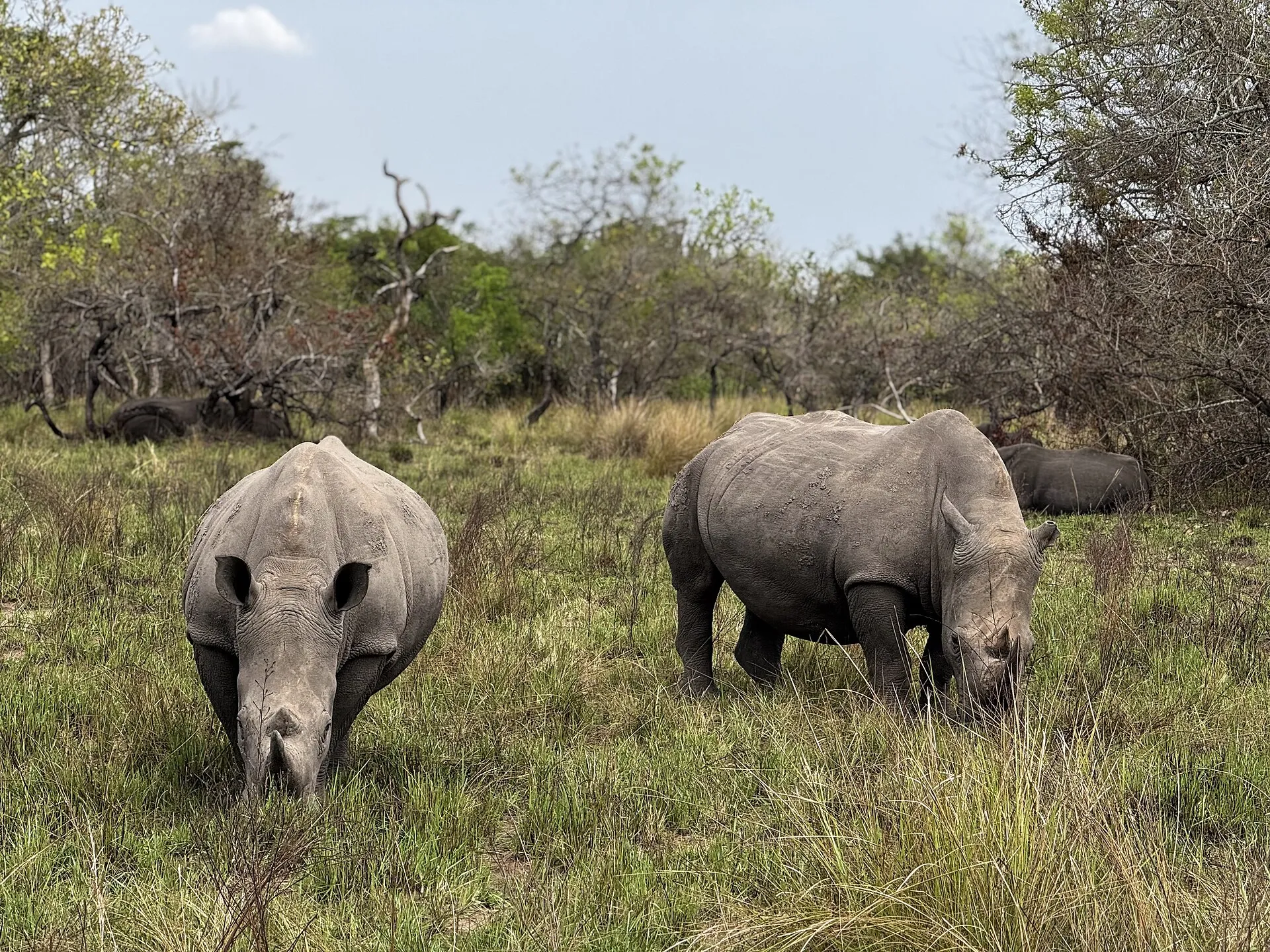
About white rhinos
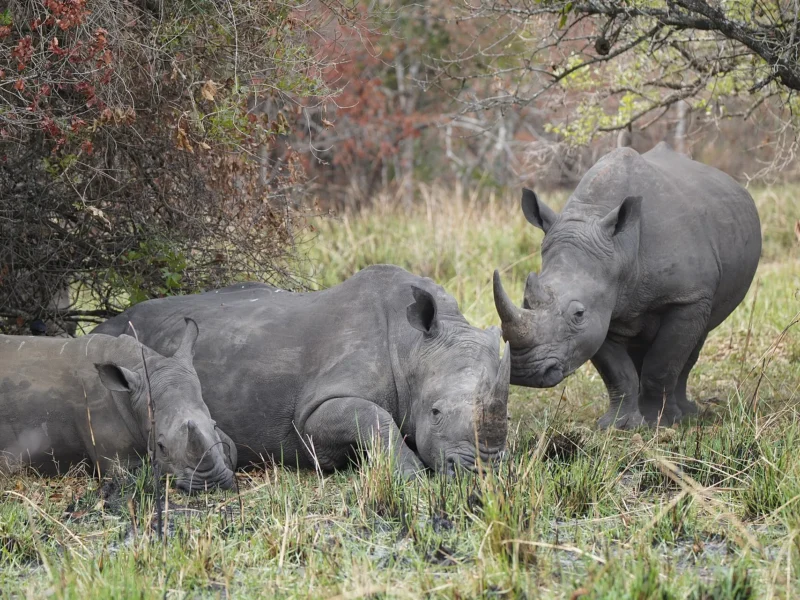
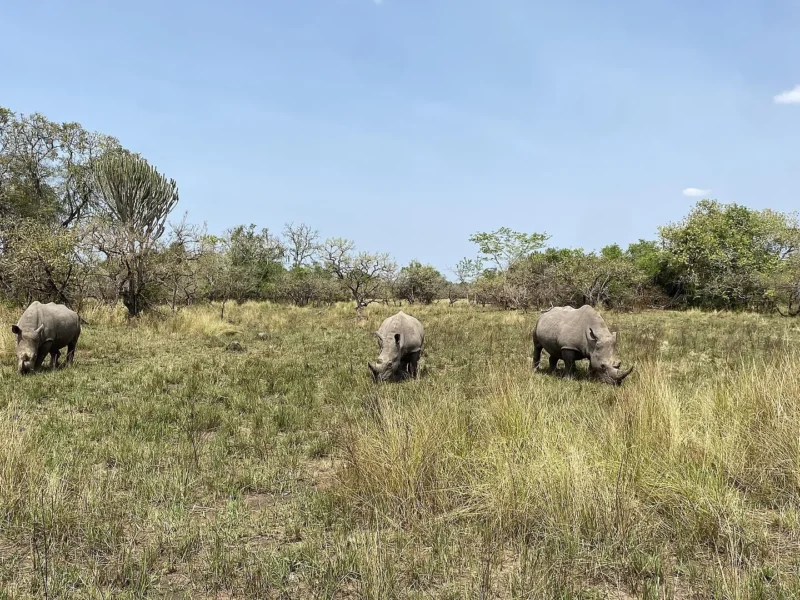
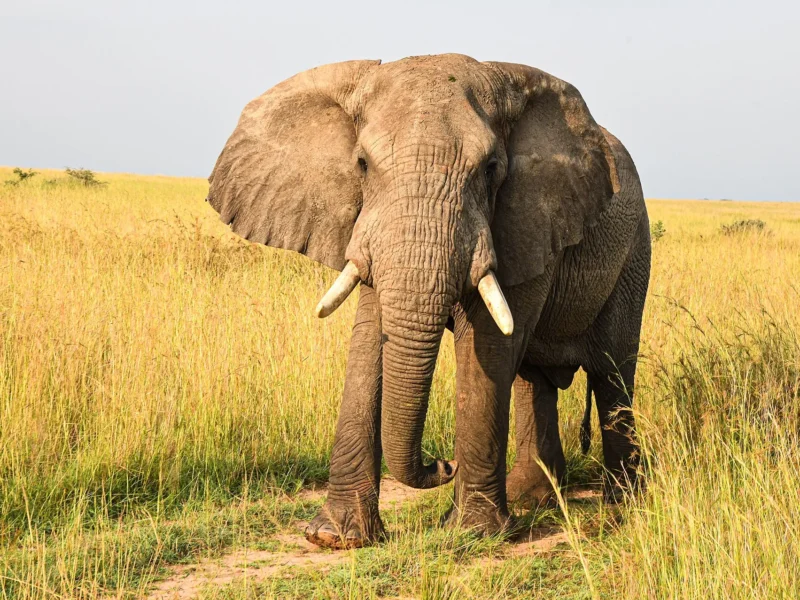
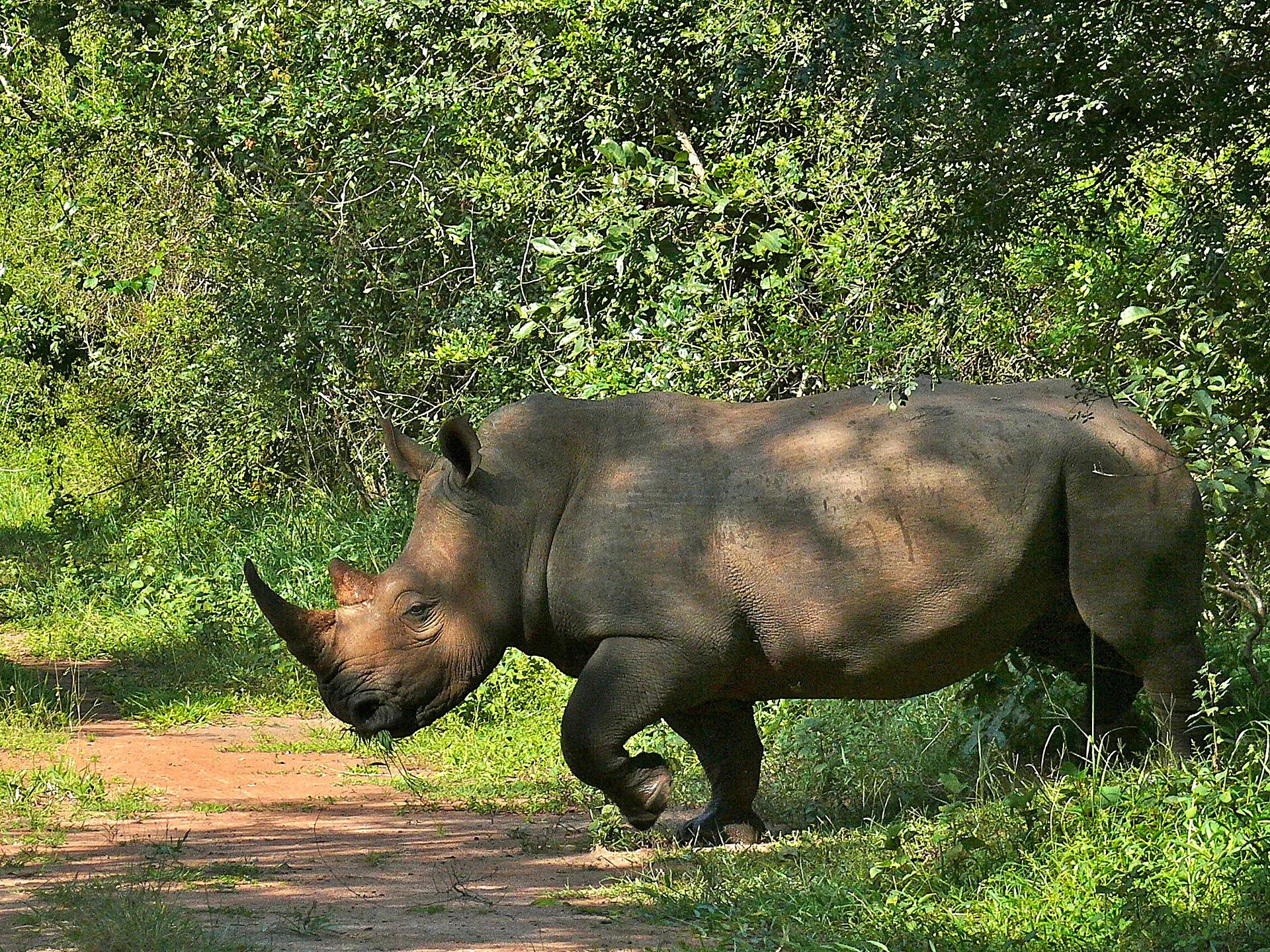
White rhinos are the largest rhino species and the second-largest land mammal after the elephant. They are grazers, using their wide, square lip to crop short grass, and often live in small groups of females and their young, while adult males hold territories. They have poor eyesight but excellent hearing and smell.
A calf is born after a pregnancy of about 16 months and stays with its mother for two to three years.
Tracking rhinos on foot
At Ziwa, rangers monitor every rhino day and night. After a briefing, you drive a short way and continue on foot with a ranger until you find the rhinos, often resting in the shade or grazing in the grassland. You watch from a safe distance while the ranger explains each rhino’s history. Read rhino tracking on foot for tips.
Move slowly, keep together and stay behind your ranger. Rhinos rely on smell and hearing, so a quiet, downwind approach gives the best views.
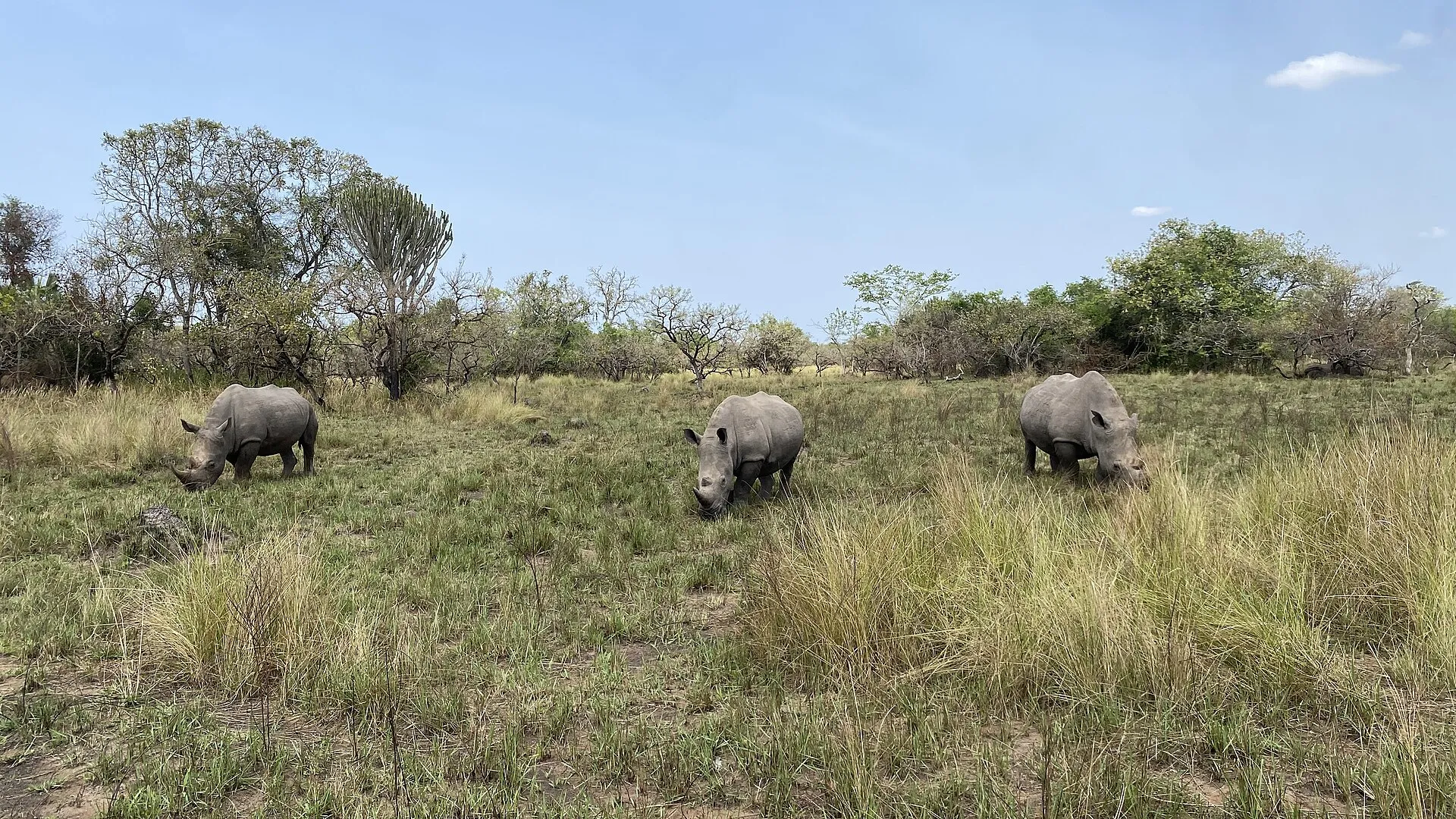
Remarkable rhino facts
- A rhino’s horn is made of keratin, the same material as human hair and nails.
- White rhinos can weigh more than two tonnes and run at up to about 40 km/h over short distances.
- Oxpeckers often ride on rhinos, eating ticks and acting as an early warning system.
- Rhinos communicate using dung middens, shared toilets that act as message boards.
Threats and conservation
The southern white rhino recovered from fewer than 100 animals a century ago to many thousands today, but poaching for horn remains a severe threat across Africa, and it is listed as Near Threatened. The northern white rhino, once found in Uganda, is now functionally extinct, with only two females left in Kenya. That history makes Ziwa’s success, and the return of rhinos to Ajai, especially meaningful.
Where else to see rhinos
In Kenya, Lake Nakuru and Ol Pejeta have both white and black rhinos. Tanzania’s Ngorongoro Crater is one of the best places for black rhino, and Rwanda’s Akagera has both species.
How the rhinos are protected
Every rhino at Ziwa is watched by a dedicated team of rangers who record where it feeds, rests and drinks, around the clock. The sanctuary is surrounded by an electric fence, and around 78 rangers and security staff patrol it. This intensive protection is why no rhino has been poached at Ziwa, and why rangers can always lead visitors to them on foot.
Frequently asked questions
Why is it called the white rhino?
A popular explanation is that ‘white’ comes from a mistranslation of the Afrikaans or Dutch word for ‘wide’, describing its broad, square lip, though historians debate this. White rhinos are grey, like black rhinos.
What is the difference between white and black rhinos?
White rhinos are larger, graze on grass with a wide, square lip and are generally calmer. Black rhinos are smaller, browse on bushes with a pointed, hooked lip and are more temperamental.
How close can I get at Ziwa?
Usually 20–40 metres, depending on the rhinos’ behaviour and the ranger’s judgement.
Can I see rhinos in Uganda’s national parks?
Not yet. Rhinos are being reintroduced to Ajai Wildlife Reserve, with the long-term aim of returning them to national parks.
Where else can I see rhinos in East Africa?
Lake Nakuru, Ol Pejeta and Nairobi National Park in Kenya; the Ngorongoro Crater in Tanzania; and Akagera in Rwanda.

Written by our Kampala-based planners and guides, who arrange these trips every season. Prices and rules are checked before every quote.