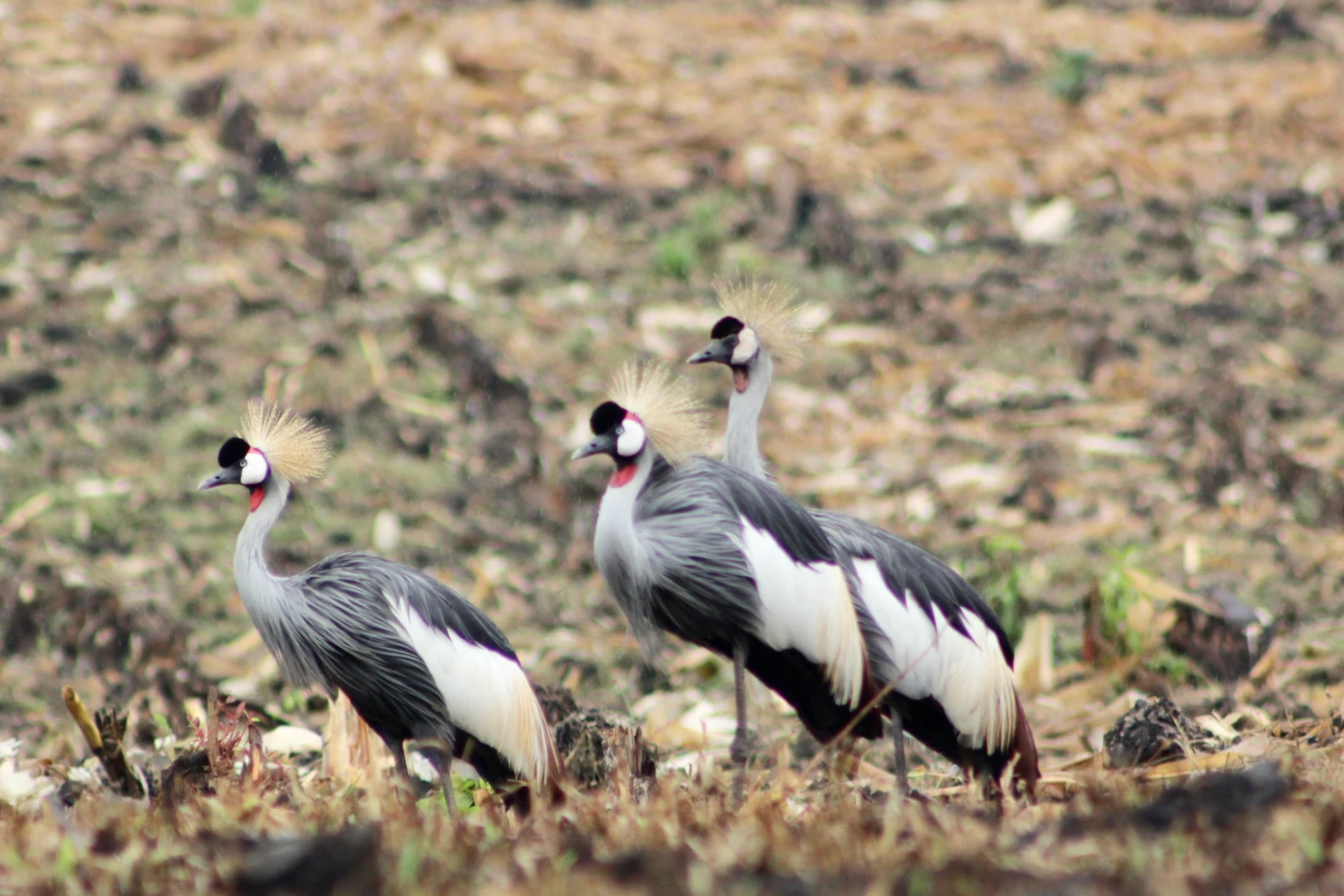
The grey crowned crane (Balearica regulorum) is Uganda’s national bird and appears on the national flag and coat of arms. It is a tall wetland bird with a grey body, white and golden wing panels and a stiff golden crown. Listed as Endangered since 2012, its numbers in Uganda have fallen from an estimated 100,000 four decades ago to about 10,000–20,000. It is often seen in Queen Elizabeth, Lake Mburo and wetlands across the south-west.
Key takeaways
- The grey crowned crane is Uganda’s national bird.
- It appears on the flag and coat of arms.
- It is famous for dancing displays and pairs for life.
- It is listed as Endangered due to wetland loss and capture.
- It is one of the few cranes that roosts in trees.
With its velvety black forehead, red throat pouch and spray of golden feathers, the grey crowned crane is one of Africa’s most beautiful birds. It is also a national emblem: Uganda’s flag carries its image, and the national football team is known as the Cranes.
Appearance
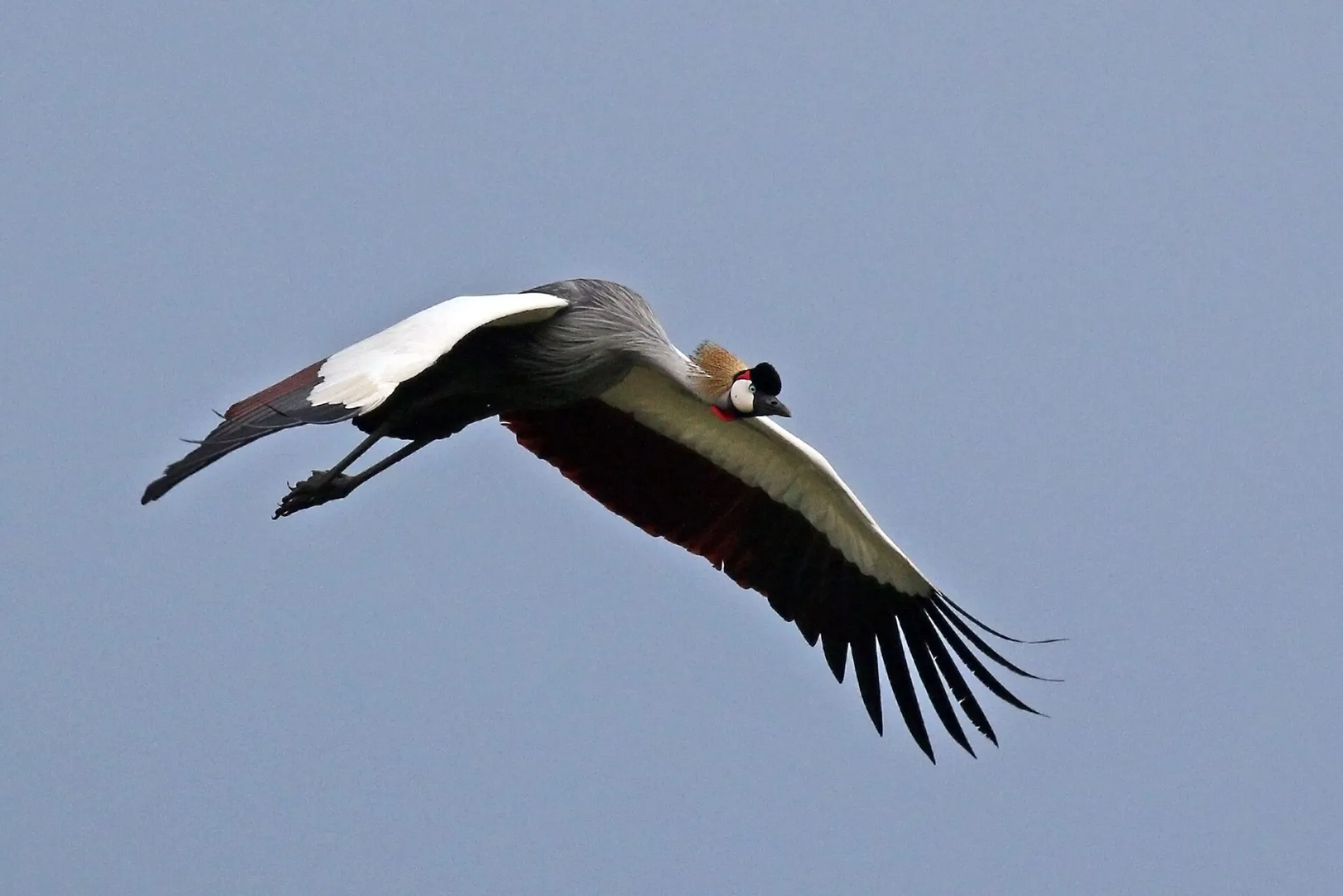
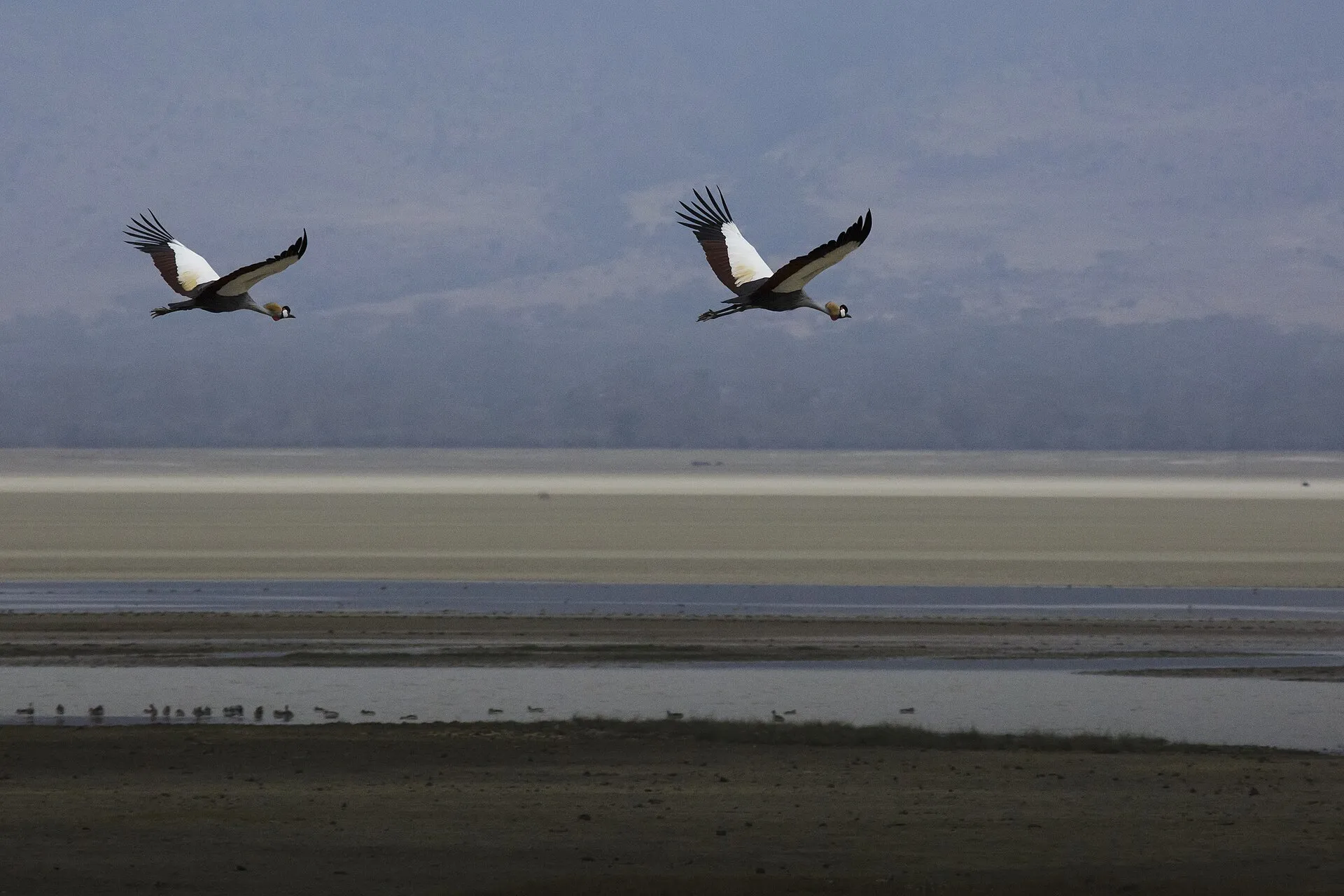
Grey crowned cranes stand about a metre tall, with a pale grey body, white and gold wing panels visible in flight, a black velvet forehead, white cheeks, a bright red throat pouch and a crown of stiff golden feathers. Males and females look alike.
Dancing and pair bonds
Crowned cranes are famous for their dances. Pairs and groups bow, leap into the air, spread their wings and call with a deep honking ‘boom’. Dancing strengthens pair bonds, which usually last for life, and is also seen in young birds and groups outside the breeding season.
Life in the wetlands
Cranes feed in grassland, farmland and the edges of wetlands, eating seeds, grasses, insects, frogs and small reptiles. They nest in wetlands, building a platform of grass and sedge surrounded by water, where they lay two to four eggs. Unusually for cranes, they have a long hind toe that allows them to perch and roost in trees.
A national bird in danger
The grey crowned crane was listed as Endangered by the IUCN in 2012. In Uganda, its numbers are estimated at about 10,000–20,000, compared with around 100,000 four decades ago. The main threats are:
- Wetland loss: drainage for farming, brick-making and settlement destroys nesting sites.
- Capture and trade: birds and eggs are taken for the pet trade and as ornamental birds in compounds and hotels.
- Poisoning and disturbance in farmland.
Conservation organisations work with communities to protect breeding wetlands and discourage keeping cranes in captivity.
Where to see crowned cranes
- Queen Elizabeth National Park: often on the Kasenyi plains and near the crater lakes.
- Lake Mburo National Park: in the swamps and grassland.
- Lake Bunyonyi and the south-west: in farmland and wetlands.
- Mabamba and Lake Victoria’s shores.
Read grey crowned crane for more places and tips.
Cranes are often seen in pairs or small groups feeding in open grassland. Listen for their deep, honking calls in the early morning.
Remarkable crane facts
- Crowned cranes are one of the oldest crane lineages, with fossils dating back millions of years.
- They can live for over 20 years in the wild.
- The golden crown is made of stiff, bristle-like feathers.
- Young cranes, called colts, can leave the nest within a day of hatching.
How visitors can help
- Choose lodges and operators that do not keep captive cranes for display.
- Support community wetland projects, such as those around Mabamba and in the south-west, by visiting with local guides.
- Report sightings of captive or injured cranes to the Uganda Wildlife Authority or conservation organisations.
- Respect nesting areas: keep a distance from cranes in wetlands during the breeding season.
Where cranes and other birds meet
Wetlands that support crowned cranes are also home to many other species, from the shoebill and the papyrus gonolek to herons, storks and kingfishers. Protecting these wetlands benefits all of them, and a birding walk in a crane wetland is often one of the richest experiences on a Uganda trip.
Frequently asked questions
Why is the crowned crane Uganda’s national bird?
It was chosen for its beauty and its presence across the country. It appears on the flag, the coat of arms and the uniform of the national football team, the Cranes.
Why is it endangered?
Mainly because of the drainage and conversion of wetlands where it nests, the capture of birds and eggs for trade and domestic ‘pets’, and poisoning.
Do crowned cranes really dance?
Yes. Pairs and groups bow, jump, spread their wings and call in displays that strengthen pair bonds and may help young birds learn courtship.
Can crowned cranes perch in trees?
Yes. Unlike most cranes, they have a long hind toe that lets them grip branches and roost in trees.
Where can I see crowned cranes in Uganda?
In Queen Elizabeth and Lake Mburo national parks, around Lake Bunyonyi and Mabamba, and in farmland and wetlands across the south-west.

Written by our Kampala-based planners and guides, who arrange these trips every season. Prices and rules are checked before every quote.