The Uganda kob (Kobus kob thomasi) is a medium-sized antelope of open grassland near water, found mainly in Uganda and parts of South Sudan and Congo. It appears on Uganda’s coat of arms. Males gather on traditional breeding grounds called leks, where each defends a tiny territory to attract females. Huge herds live on the Kasenyi plains of Queen Elizabeth and north of the Nile in Murchison Falls.
Key takeaways
- The Uganda kob features on Uganda’s national coat of arms.
- Only males have the lyre-shaped, ridged horns.
- Males compete on traditional breeding grounds called leks.
- It is the main prey of lions in Queen Elizabeth and Murchison.
- It is easy to see on almost every game drive in those parks.
On almost every game drive in Queen Elizabeth or Murchison Falls you will see the Uganda kob: golden-brown antelope grazing in herds, the males with elegant, ridged horns. They may be common, but they are at the heart of these ecosystems and of Uganda’s identity.
A national symbol
The Uganda kob appears on Uganda’s coat of arms, facing the grey crowned crane across the shield. It represents the abundance of wildlife in the country, and it is a familiar sight in the savannah parks of the west and north-west.
Appearance
Kob are sturdy, medium-sized antelope with golden-brown coats, white rings around the eyes, white throat patches and black markings on the front of the legs. Males are larger than females and carry thick, ridged horns shaped like a lyre. Females are hornless.
The lek: a unique breeding system
Uganda kob have one of the most unusual mating systems among antelope. Males gather on traditional breeding grounds, called leks, which can be used for generations. Each male defends a tiny territory, sometimes only 15–30 metres across, and the most central territories are the most sought-after. Females visit the lek to choose a mate, usually from the males in the centre.
Holding a territory is exhausting: males fight, display and rarely feed, so they hold their ground for only days or weeks before being replaced. On the Kasenyi plains you can watch males sparring, whistling and displaying on the leks.
Prey for predators
Kob are the main prey of lions in Queen Elizabeth National Park and Murchison Falls. On a dawn game drive, watching how the kob herds react, alert, staring, alarm-whistling, is often the best way to find a hunting lioness. Leopards and hyenas also hunt them.
Where to see Uganda kob
- Kasenyi plains, Queen Elizabeth: the classic place, with large herds on the leks. See lions of the Kasenyi plains.
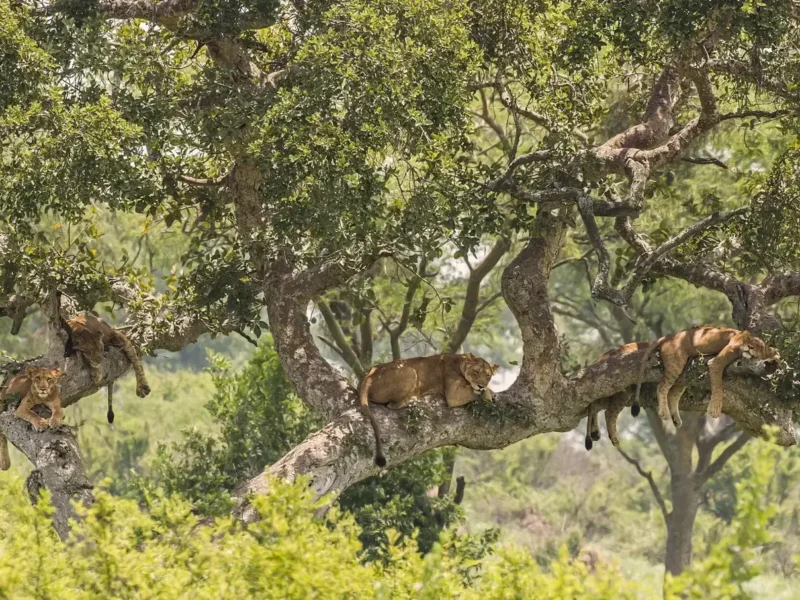
- Ishasha, Queen Elizabeth: herds grazing below the tree-climbing lions.
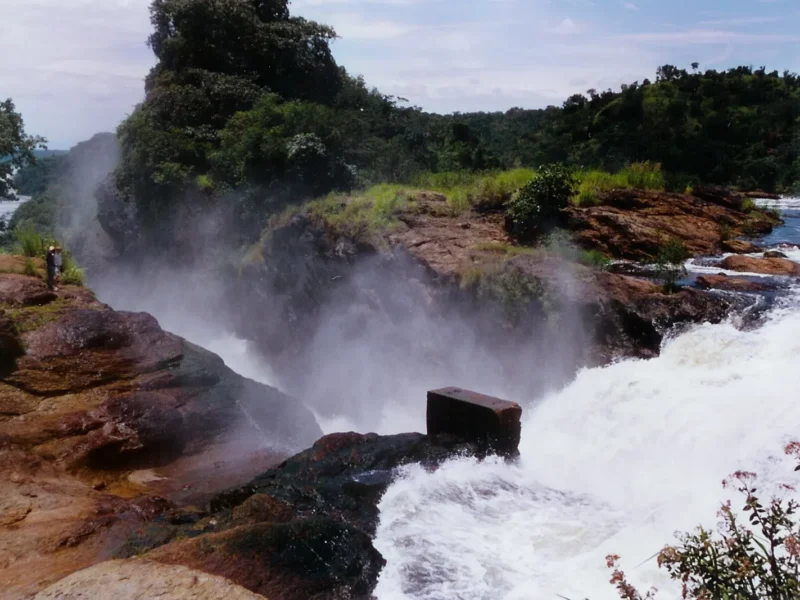
- Murchison Falls: the Buligi plains north of the Nile.
- Semuliki Wildlife Reserve and Toro: smaller numbers in the Semuliki valley.
When kob suddenly stop grazing and stare in one direction, follow their gaze. They have often spotted a predator before you.
Behaviour through the day
Kob graze in the cooler hours of morning and late afternoon and rest in the heat of the day, often near water. They need to drink regularly, so they rarely stray far from rivers, lakes and swamps.
Best time to see them
Kob are present year-round. The dry seasons, June to September and December to February, bring shorter grass, which makes the herds and their predators easier to see.
Remarkable kob facts
- Leks can be used by generations of kob in exactly the same places for decades.
- Territorial males whistle loudly to advertise themselves and warn rivals.
- Kob are excellent at spotting predators, and their alarm calls alert other animals nearby.
- Females usually give birth to a single calf, which hides in long grass for its first weeks.
Kob and the wider savannah
Kob share the plains with buffalo, waterbuck, topi, warthogs and elephants, and their grazing helps keep the grassland short and open, which benefits other grazers. Their numbers are a good indicator of the health of Queen Elizabeth and Murchison, and the recovery of kob herds since the 1980s mirrors the recovery of Uganda’s parks as a whole.
Seeing kob on your trip
Our 6-day gorillas, chimps and Queen Elizabeth safari includes a dawn drive on the Kasenyi plains, the best time to see the leks and the predators that follow the herds.
Frequently asked questions
Why is the kob on Uganda’s coat of arms?
It represents the country’s abundant wildlife and stands opposite the grey crowned crane, Uganda’s national bird.
Do female kob have horns?
No. Only males have the thick, ridged, lyre-shaped horns.
What is a lek?
A traditional breeding ground where males defend very small territories, sometimes only a few metres across, and females visit to choose a mate.
Where is the best place to see kob?
The Kasenyi plains in Queen Elizabeth National Park, where thousands gather on the breeding grounds.
Are kob endangered?
No. The Uganda kob is not threatened overall and is common in protected areas, though it depends on their protection.

Written by our Kampala-based planners and guides, who arrange these trips every season. Prices and rules are checked before every quote.