Key takeaways
- Be on the water at sunrise for the most activity.
- Allow about three hours in the canoe.
- Bring binoculars, a long lens, a rain jacket and a hat.
- Fits easily on an arrival or departure day.
Why Mabamba?
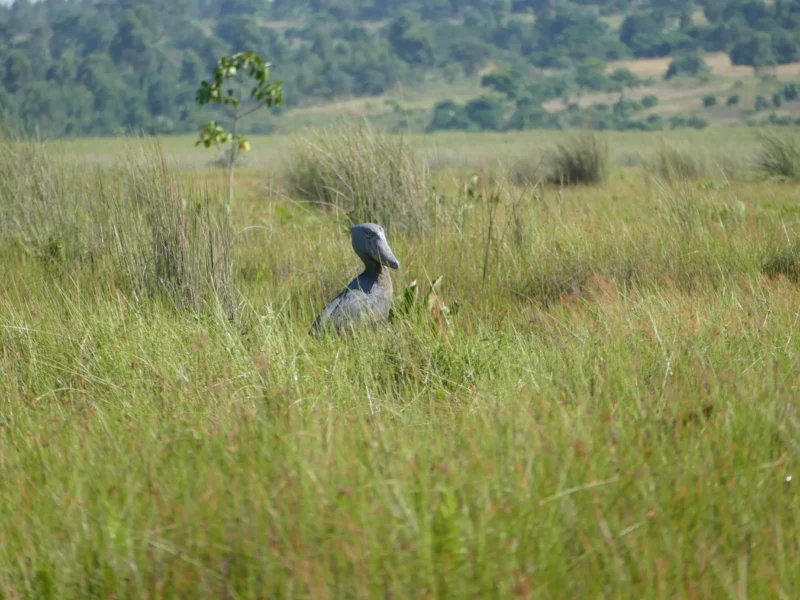
Plenty of African swamps hold Shoebills, but few are this easy to reach. Mabamba Bay sits on the northern shore of Lake Victoria, roughly 45 minutes by road from Entebbe, so a sighting is possible on the morning you land or the morning you fly home. The bay is a Ramsar-listed wetland and an Important Bird Area, a maze of papyrus, water lilies and open channels that local fishing communities have worked in for generations.
The other reason is the people. The canoe polers and guides at Mabamba are from the surrounding villages, and the fees you pay go to them. That arrangement is a large part of why the birds are protected here rather than disturbed.
The morning, hour by hour
5:00–5:30am: pickup
Your guide collects you from your hotel in Entebbe (or a little earlier from Kampala). It is dark, quiet and cool, and coffee is a good idea. The road heads west through villages waking up for the day, then onto a murram track down to the landing site.
6:30am: the landing
The water is usually glassy at first light. You step into a long wooden dugout canoe, sit low and still, and your poler pushes off with a pole rather than an engine. The only sounds are birds and the drip of water.
6:30–9:30am: on the water
The poler reads the swamp: which channels are open this week, where fishermen have seen the birds, where the lungfish are rising. Shoebills are usually spotted as a grey shape at the edge of the papyrus, and the canoe drifts closer in silence. When you find one, the waiting begins. A Shoebill can stand motionless for twenty minutes, then suddenly collapse forward into the water and rise with a fish.
The best sightings come to patient people. Turn your engine off, so to speak, and let the swamp come to you.
9:30–10am: tea on the shore
Back at the landing there is tea and a light breakfast, and time to look through your photos. Depending on your plans you then head to Entebbe, the airport, or on towards Lake Mburo and the southwest.
What else you might see
Even without a Shoebill, a morning at Mabamba is excellent birding. Regulars include:
- African Jacana and Lesser Jacana, walking across lily pads on long toes
- Malachite Kingfisher and Pied Kingfisher
- Papyrus Gonolek, a scarlet-breasted papyrus specialist that is heard far more often than seen
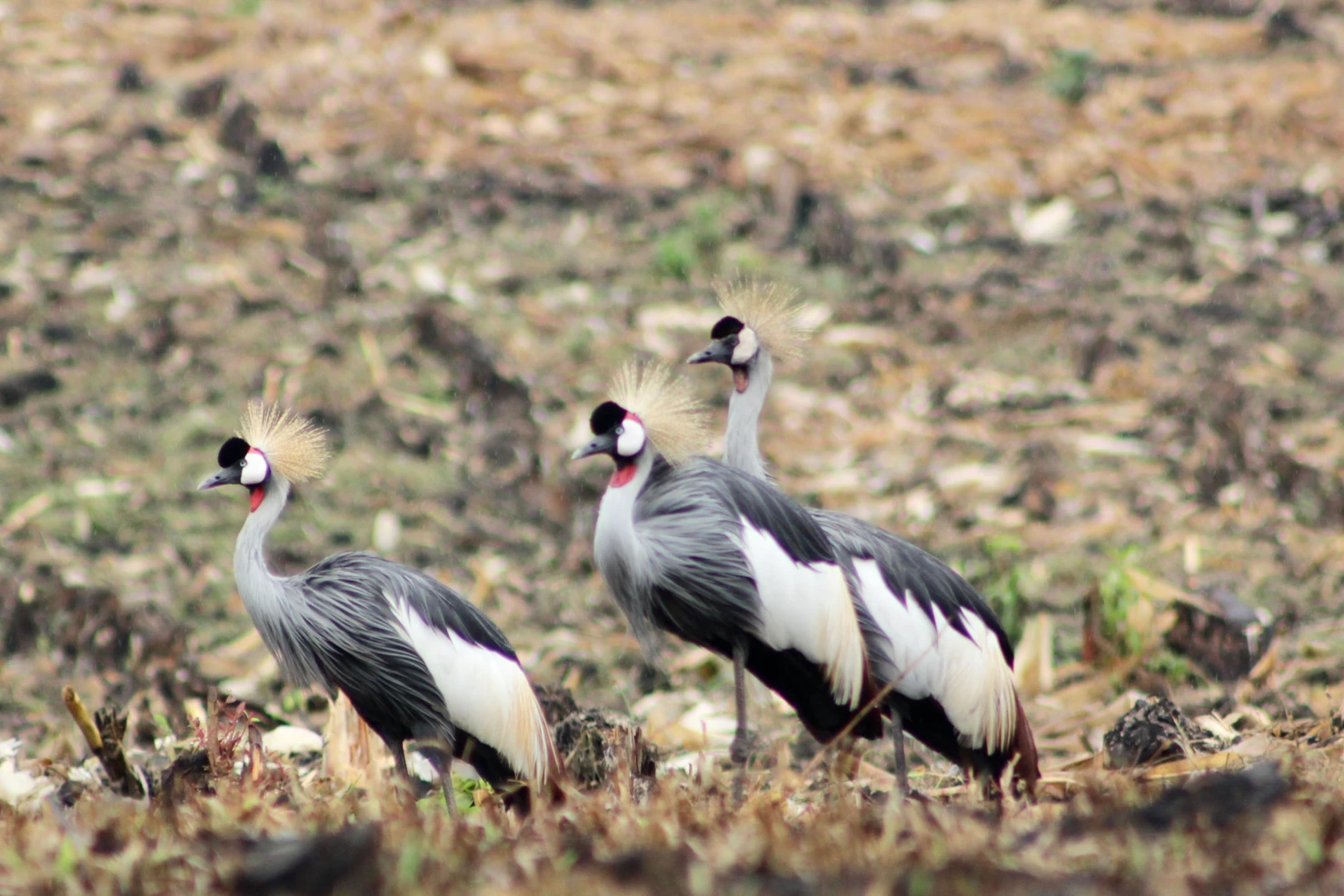
- Grey Crowned Crane, Uganda’s national bird
- Herons and egrets, including Purple Heron, plus Long-toed Lapwing and Blue-breasted Bee-eater
Sitatunga, a shy swamp antelope with splayed hooves, also lives in the papyrus and is sometimes glimpsed at dawn.
How to give yourself the best chance
- Go as early as possible. Activity and light are best in the first three hours.
- Allow enough time. Three hours on the water is ideal; a rushed hour often isn’t enough.
- Bring binoculars and a long lens. A 300–600 mm lens is ideal for photography.
- Dress in muted colours, bring a rain jacket, hat and sunscreen, and wear shoes you don’t mind getting wet.
- Keep still and quiet in the canoe, especially when the poler slows down.
- Manage expectations. Sightings are frequent but never guaranteed; that is part of what makes them special.
Combining Mabamba with a safari
Because it is so close to the airport, Mabamba works best at the very start or end of a trip:
- 1-Day Mabamba Shoebill Day Trip: from US$250, back at your hotel or the airport by early afternoon.
- 4-Day Shoebill & Gorilla Safari: Mabamba on day one, a rest afternoon in Entebbe, then gorillas in Bwindi.
- 8-Day Gorillas, Wildlife & Primates: Mabamba at dawn, then straight on to Lake Mburo the same day.
For more on the bird itself, read our Shoebill guide.
Getting there
From Entebbe the drive to the landing site takes about 45 minutes; from Kampala allow a little longer, depending on traffic. The last section is on unpaved roads through farmland and fishing villages. There is a small landing site with a community office where fees are paid and canoes are allocated. Toilets are basic, so use the facilities at your hotel before you leave.
What to wear and bring
- Muted colours and a light layer for the cool early start
- A rain jacket, hat and sunscreen; there is no shade in the canoe
- Shoes that can get wet, as the landing can be muddy
- Binoculars, a camera with a long lens and a dry bag for electronics
- Water and a small snack for the time on the water
Photography tips
The canoe moves, the light starts low and the bird may be partly hidden in papyrus. A few settings help:
- Use a fast shutter speed (1/1000 s or quicker) to freeze the canoe’s movement and any sudden lunge.
- Raise your ISO in the first hour rather than losing sharpness.
- Use continuous autofocus and burst mode for the strike.
- Keep your elbows inside the canoe and your movements slow; the poler will position you for the light.
Frequently asked questions
How far is Mabamba from Entebbe?
About 45 minutes by road, which is why it fits on an arrival or departure day.
What is the best time of day for Shoebills?
Early morning. We aim to be on the water around sunrise.
Is the canoe safe?
Yes. The water in the channels is calm, and polers are experienced locals. Keep valuables in a dry bag and follow your guide’s seating instructions.
Do I need a permit?
No national park permit is needed. A community wetland fee and canoe hire are included in our trips.

Written by our Kampala-based planners and guides, who arrange these trips every season. Prices and rules are checked before every quote.