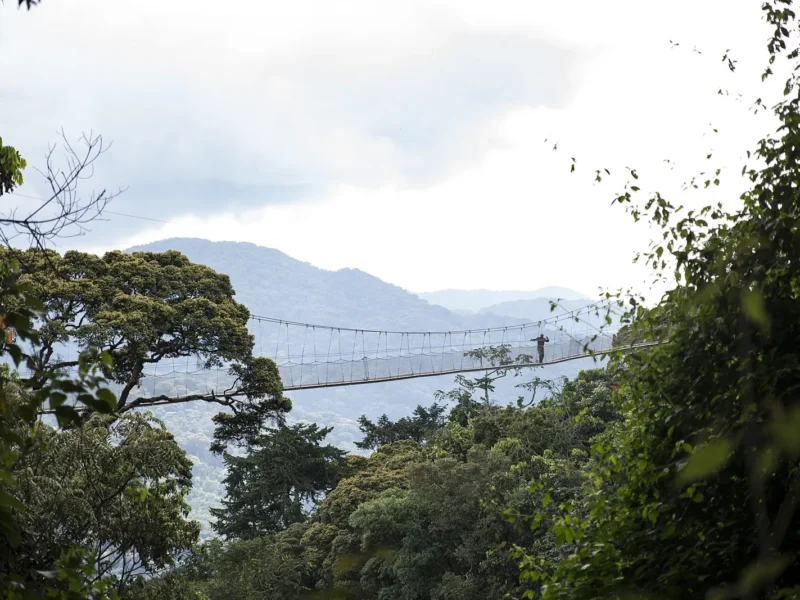
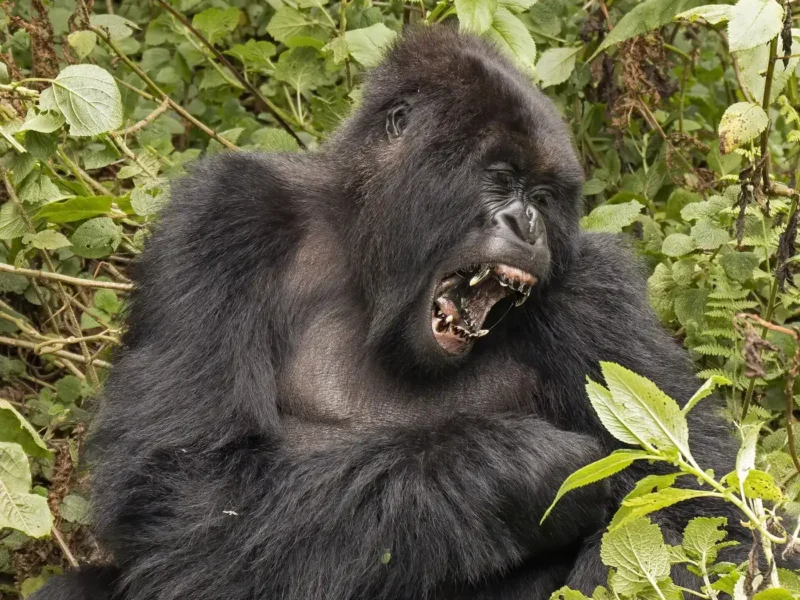
Nyungwe National Park is home to Rwenzori black-and-white colobus monkeys living in unusually large troops, sometimes several hundred strong. Guided colobus walks find them in the forest or along the tea estates at the park edge, often in the early morning. It is an easy, rewarding activity that combines well with chimp trekking and the canopy walk.
Key takeaways
- Troops can number several hundred monkeys.
- Rwenzori black-and-white colobus.
- Often seen near the Gisakura tea estate.
- Easy walk, ideal for all ages.
Most colobus troops in Africa number a dozen or so animals. In Nyungwe, the Rwenzori black-and-white colobus form super-troops that can number several hundred, among the largest primate groups in Africa.
What you see
Colobus have glossy black coats with long white mantles and white tail tufts. When a large troop moves, the canopy erupts with leaping monkeys, their white capes flowing behind them. They feed mainly on leaves, resting for long periods to digest, which gives you time to watch and photograph.
Where and how
Guided walks start from Uwinka or Gisakura. Some troops spend time around the Gisakura tea estate at the forest edge, which makes for easy, open viewing. Walks take one to three hours depending on where the troop is.
Why do it
- A spectacular, easy primate experience.
- Excellent photography in open light at the forest edge.
- Combines perfectly with chimp trekking and the canopy walk.
Colobus against the bright sky are tricky to expose. Shoot when they are against green foliage, and expose for the white mantle.
About the Rwenzori colobus
Rwenzori black-and-white colobus, also known as Angolan colobus, have black bodies with long white hair on the shoulders and white tails. They live in the canopy, feeding on leaves, and can leap great distances between trees.
Super troops
In Nyungwe, colobus gather in huge troops, sometimes numbering in the hundreds. Scientists believe these groups form because of the rich food supply in the forest. Watching hundreds of monkeys move through the canopy is unforgettable.
The walk
Walks start from Gisakura or Uwinka and follow trails into the forest. Guides locate the troop by sound and sight. Walks are usually short and easy, and you can spend time watching the monkeys feed and play.
Other primates
Nyungwe is home to 13 primate species, including chimpanzees, L’Hoest’s monkeys, grey-cheeked mangabeys, blue monkeys and red-tailed monkeys.
Photography tips
Colobus are often high in the canopy against bright sky. Expose for the monkeys, use a long lens, and look for troops at forest edges near the tea estates, where the light is better.
When to go
Colobus can be seen year-round. The drier months, June to August and December to February, make trails easier, and early mornings bring active troops and soft light.
Combining with chimps
Many visitors track chimps at dawn and join the colobus walk later the same day or the next morning.
Plan it
Add a colobus walk to our 3-day Nyungwe chimpanzees and canopy walk or the 8-day Rwanda forests, lakes and savannah. Read about chimpanzees in Nyungwe.
When to go
Colobus can be seen year-round. Early mornings are best, when troops are active and the light is soft. In the dry seasons, troops near the tea estates are easier to reach.
Good to know
- Walks are short and suitable for families.
- Bring a zoom lens and binoculars.
- Combine with chimps or the canopy walk.
- Gisakura is the best base.
Combine it with
A colobus walk pairs naturally with chimpanzee trekking at dawn, the canopy walkway in the afternoon, and a tea estate stroll at Gisakura, making a perfect two-day stay in Nyungwe.
Who it suits
Nyungwe is famous for one of the largest colobus troops recorded anywhere in Africa, a gathering that has numbered in the hundreds. Watching them leap across the canopy is unforgettable. Walks are gentle and short, so they suit children, photographers and anyone who wants a relaxed half day in the forest.
Frequently asked questions
Why are Nyungwe’s colobus troops so large?
Researchers believe abundant food in Nyungwe’s montane forest supports unusually large groups.
Is the colobus walk hard?
Generally easy, especially when troops are near the forest edge.
Can children join?
Yes. It is suitable for families.
What other primates live in Nyungwe?
Chimpanzees, L’Hoest’s monkeys, grey-cheeked mangabeys, silver monkeys and more: 13 primate species in total.
Are colobus monkeys endangered?
Rwenzori black-and-white colobus are vulnerable to habitat loss, which is why protected forests like Nyungwe matter.
How large are the colobus troops in Nyungwe?
Some troops number in the hundreds, among the largest in Africa.
Is the colobus walk easy?
Yes, it is usually short and suitable for families.
Can I see colobus without a guide?
Walks in the park must be guided, and guides know where the troops are feeding that day.
Are colobus easy to photograph?
They are often high in the canopy, so a long lens and patience help. Troops near the tea estates at Gisakura are sometimes lower and in better light.

Written by our Kampala-based planners and guides, who arrange these trips every season. Prices and rules are checked before every quote.