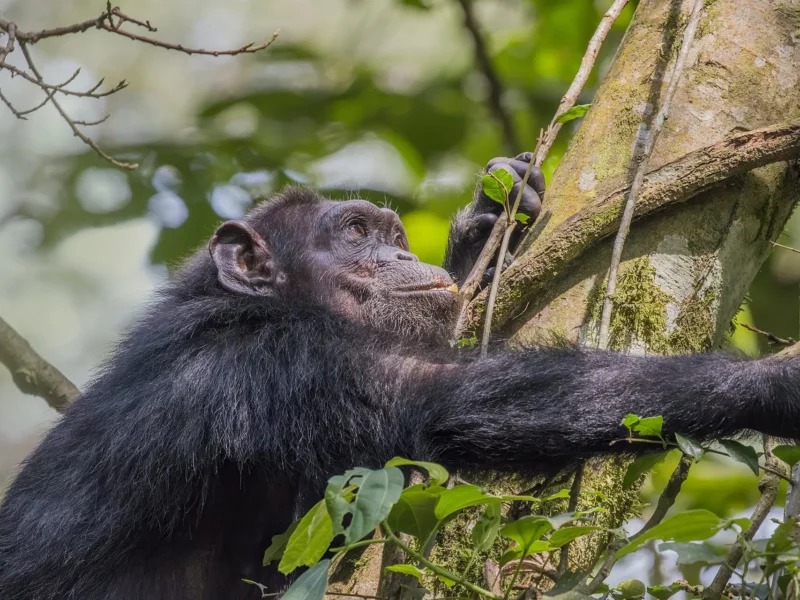
The chimpanzee habituation experience in Kibale lets a small group spend up to four hours with a community still being habituated, alongside Uganda Wildlife Authority researchers and rangers. It starts early, often in time to see chimps leave their nests, and costs US$300 in 2026 (US$400 from 1 January 2027), including park entry.
Key takeaways
- Up to four hours with the chimpanzees.
- Small group with researchers and rangers.
- US$300 in 2026; US$400 from 2027.
- Early start, longer and harder than tracking.
Habituating chimpanzees is a long, patient process: researchers follow a community day after day until the chimps accept human presence. The habituation experience lets you join this work in Kibale.
What happens
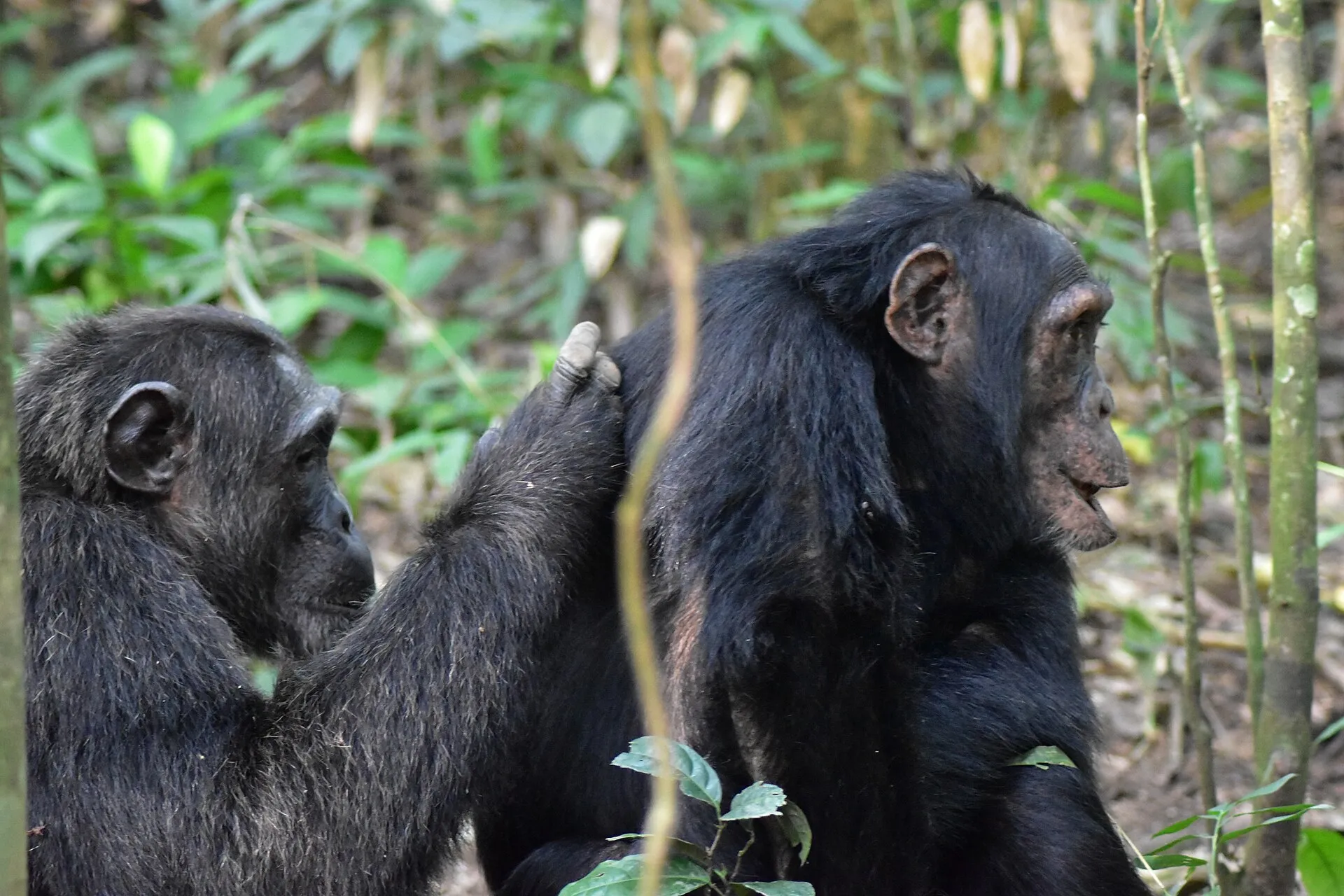
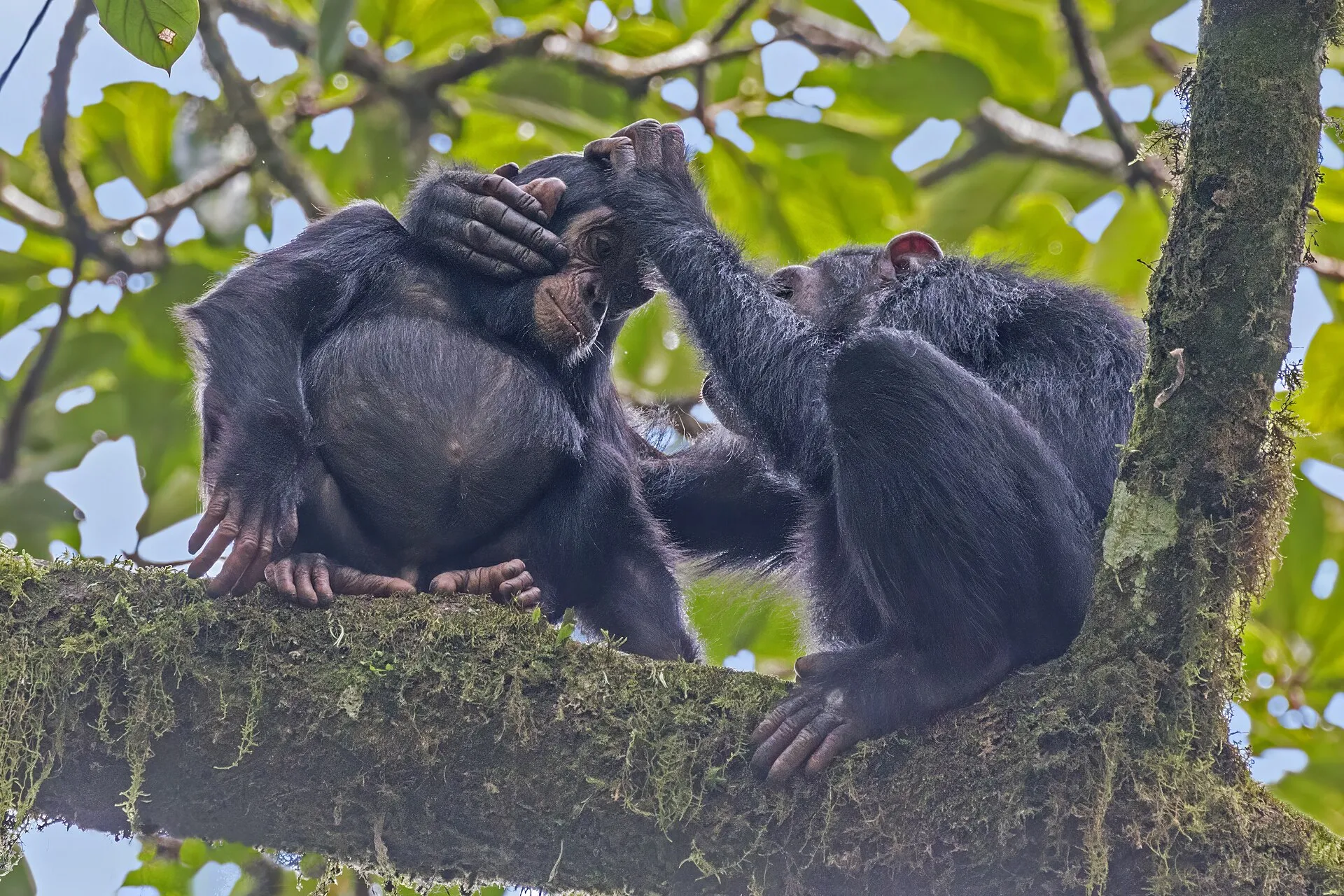
You meet the team early in the morning and head into the forest, often reaching the chimps around their night nests as they wake and climb down. For up to four hours, you follow them as they feed in fruiting trees, rest, groom, travel and call. Researchers explain individual personalities, relationships and the data they collect.
Why choose it
- Much more time than standard tracking.
- Natural behaviour, including early-morning activity.
- Excellent for photography, with changing light and situations.
- A real insight into primate research and conservation.
What it demands
The day is longer and more physical than standard tracking. You may leave trails and push through undergrowth to keep up. Good boots, long trousers, gloves and water are essential.
Spaces are limited. Book early, and ideally in 2026 before the price rises to US$400.
Compare the options
Read chimpanzee tracking vs habituation in Kibale to decide which suits you, and our chimpanzee guide for background.
A habituation day
You meet researchers and trackers early in the morning, sometimes before 7:00am, and head to where the chimps nested the night before. You spend up to four hours with the community as they wake, feed, groom and move through the forest. Following them can mean walking quickly off-trail, so expect a physically active day.
How it compares
| Habituation experience | Standard tracking | |
|---|---|---|
| Time with chimps | Up to 4 hours | 1 hour |
| Price 2026 | US$300 | US$250 |
| Start | Early morning | 8:00am or 2:00pm |
| Pace | Active, off-trail | Mostly on trails |
What you learn
Researchers explain how chimps are habituated, how individuals are identified, and how behaviour is recorded. You may see hunting, tool use and complex social interactions that are rarely seen in a one-hour visit.
Tips
- Wear long sleeves, long trousers tucked into socks, and gloves.
- Bring a packed lunch, snacks and at least two litres of water.
- Use a camera with good low-light performance, as the forest is dark.
- Listen to the researchers and keep up with the group.
Who it suits
The experience suits keen wildlife watchers, photographers and anyone who wants more than an hour. It is less suitable for travellers with limited mobility. Read chimpanzee tracking vs habituation in Kibale.
Where to stay
Lodges near Kanyanchu and Bigodi are closest for the early start. Staying at the crater lakes adds about 30–45 minutes of driving each way.
Plan it
Allow two nights in Kibale so you can rest after the long day. The experience can be added to our 6-day gorillas, chimps and Queen Elizabeth safari or any Uganda itinerary through Kibale.
When to go
The habituation experience runs year-round. Dry months make following the chimps off-trail easier; the wetter months are quieter. Book early in any season because places are limited.
Good to know
- Start early, often before 7:00am.
- Pack lunch, snacks and plenty of water.
- Wear long sleeves, gloves and sturdy boots.
- Allow two nights in Kibale.
Combine it with
The habituation day pairs well with a relaxed afternoon at the crater lakes or Bigodi Wetland the next day, and with gorilla trekking or the gorilla habituation experience in Bwindi for the ultimate primate safari.
Who it suits
The experience suits keen wildlife watchers, photographers and anyone who found one hour too short. You spend up to four hours with the community, watching grooming, feeding and the noisy displays that a short visit often misses. Children under 15 cannot take part.
Frequently asked questions
How long is the habituation day?
Several hours in the forest, with up to four hours with the chimps.
Is it suitable for children?
It is designed for adults; standard tracking (minimum age 12) suits families.
Do I see more than on standard tracking?
Usually yes: more time means more behaviour and better photographs.
Is park entry included?
Yes, park entry for the day is included in the fee.
What is the difference from gorilla habituation?
Both let you spend longer with primates being habituated; chimps move faster and range more widely, so the day can be more active.
How much is the chimpanzee habituation experience?
US$300 in 2026, rising to US$400 from 1 January 2027.
Is it suitable for children?
The minimum age is 12, and the day is long and active.
What should I bring?
Lunch, plenty of water, a rain jacket, gloves and long clothes.
Will I definitely see chimps?
Sightings are very likely because researchers follow the community from dawn.

Written by our Kampala-based planners and guides, who arrange these trips every season. Prices and rules are checked before every quote.