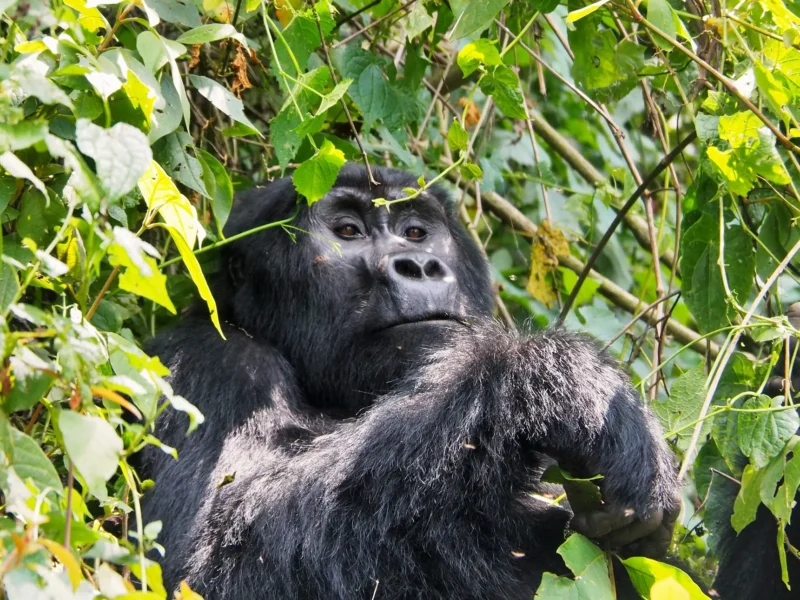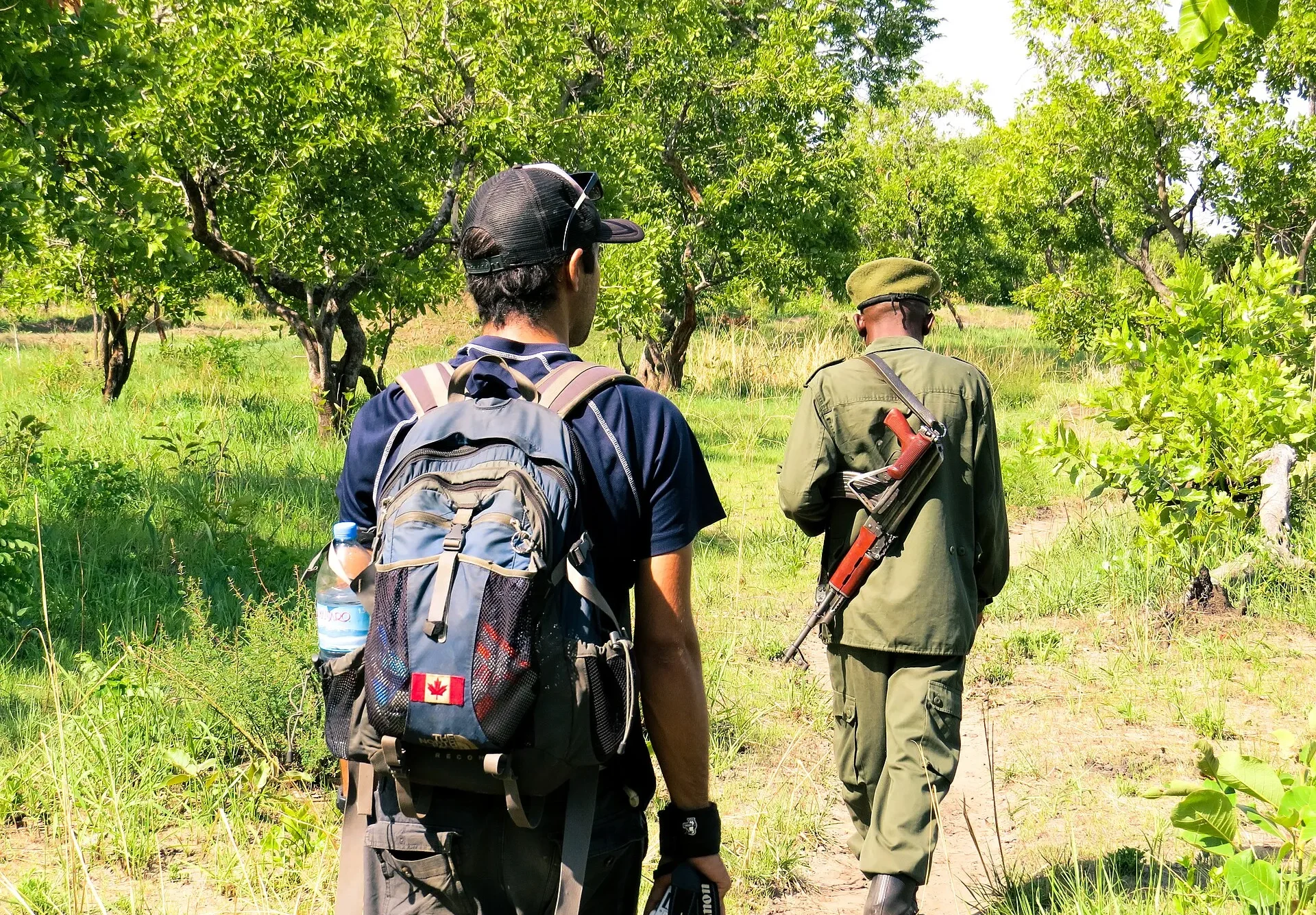
A walking safari is a guided walk in the bush with an armed ranger or guide. It focuses on tracks, plants, birds and smaller animals, with the chance of approaching larger animals safely on foot. In Uganda, walks are offered in Lake Mburo, Queen Elizabeth and Murchison; in Tanzania, in Ruaha, Nyerere and areas around Tarangire and Ngorongoro; and in Kenya, mainly in private conservancies.
Key takeaways
- Guided by armed rangers or trained guides.
- Focus on tracks, plants, birds and small animals.
- Uganda, Tanzania and Kenya all offer walks.
- Walks usually last 1–3 hours.
Walking is the oldest way to experience Africa’s wildlife. Without the engine and the vehicle, you hear, smell and notice far more.
What to expect
You walk slowly in single file behind the ranger, stopping often to look at tracks, dung, termite mounds, medicinal plants and birds. When larger animals are seen, the ranger decides how close you can safely go, using the wind and cover.
Where to go
- Lake Mburo, Uganda: walks among zebras, impala and eland; see Lake Mburo.
- Queen Elizabeth and Murchison, Uganda: nature walks, Kyambura Gorge and the hike to the top of the falls.
- Ruaha and Nyerere, Tanzania: classic walking safaris; see southern Tanzania’s wild parks.
- Kenya: private conservancies in Laikipia and around the Masai Mara.
Safety
Walks are led by armed rangers or experienced guides. Stay in single file, keep quiet, never run and follow instructions at all times. Walks are planned to avoid dangerous situations.
When to go
The dry seasons are best, when grass is short and visibility is good. Morning walks avoid the heat.
Good to know
- Wear neutral colours, closed shoes and a hat.
- Bring water and sun protection.
- Minimum ages often apply, commonly 12 to 16 years.
- Walks cost extra; in Uganda, nature walks in Lake Mburo and Queen Elizabeth cost about US$25.
Who it suits
Walking safaris suit active travellers, photographers who enjoy details and anyone who has done game drives before and wants a deeper experience. They are perfect for those who like to learn about the bush.
What you learn on foot
Walking guides read the bush like a book. You learn to tell elephant from buffalo dung, why termite mounds matter, which plants local people use as medicine, and how to tell where an animal went from its tracks. Many visitors say a walk gave them a new understanding of the animals they saw on game drives.
Combine it with
Walks pair well with game drives, boat safaris and primate treks. Even a short walk on your first or last morning adds a new dimension to a safari.
A typical walking safari
Walks usually start at dawn, when it is cool and animals are active. After a safety briefing, you set off in single file behind the guide and an armed ranger. The guide stops often to explain tracks, plants and birds. When an animal is seen, the group stops, and the guide decides whether to approach. Walks last two to three hours, ending with breakfast or a drink.
Multi-day walking safaris
In parts of Tanzania and Kenya, multi-day walking safaris use simple fly camps, moving from one camp to another on foot. They are the most immersive way to experience the bush.
Who it suits
Walking safaris suit active travellers who want to learn more. Short walks are suitable for most ages over about 12; multi-day walks need good fitness.
Walking safari etiquette
- Walk in single file and keep up with the group.
- Talk quietly, and only when the guide stops.
- Never run from an animal; follow the guide’s instructions.
- Do not wander off to take photos.
Walking safari highlights
- Lake Mburo: zebras, impala and eland on foot.
- Murchison Falls: the hike to the top of the falls.
- Ruaha and Nyerere: classic walking safaris.
- Laikipia: walks with Maasai and Samburu guides.
Best time to walk
The dry seasons are best, when the grass is shorter and visibility better. In East Africa, that means roughly June to October and December to February. Early mornings are cool and animals are active; walks usually finish before the midday heat. In the rains, walks are still possible in many areas, but tall grass and muddy ground can make them harder.
Plan it
Walks are part of our 2-day Lake Mburo safari and 3-day Queen Elizabeth National Park safari. See also horseback safari.
Frequently asked questions
Is a walking safari dangerous?
With an armed ranger and good rules, it is very safe.
Can children join?
Minimum ages often apply, usually 12 to 16 years.
Will I see big animals?
Possibly, but the focus is on the whole ecosystem.
Do I need to be fit?
Average fitness is enough; walks are slow and short.
What should I wear on a walking safari?
Neutral colours, sturdy shoes, a hat and long trousers.
How long is a walking safari?
Usually two to three hours.

Written by our Kampala-based planners and guides, who arrange these trips every season. Prices and rules are checked before every quote.