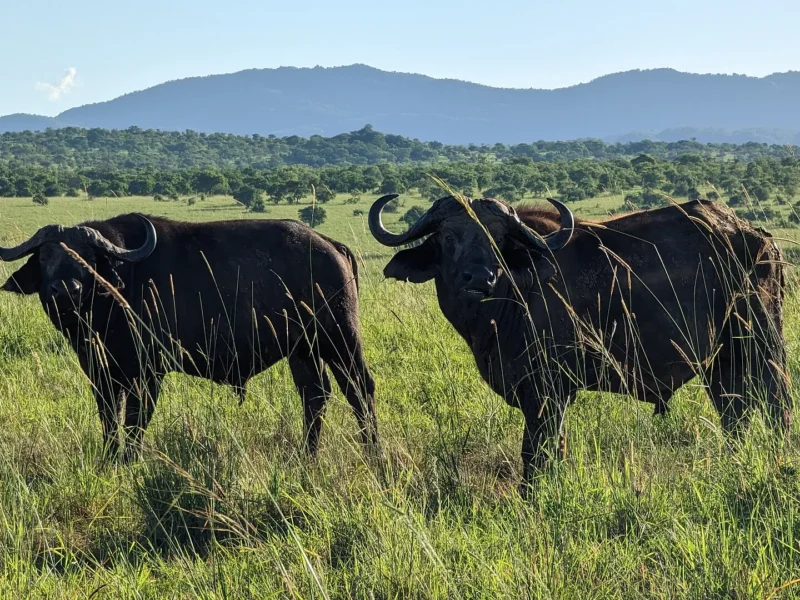
African buffalo are found in almost every major savannah park in East Africa. The biggest herds gather in the Serengeti, the Masai Mara, Ruaha, Nyerere and Uganda’s Kidepo Valley, while Queen Elizabeth and Murchison Falls in Uganda and Akagera in Rwanda also have good numbers. In Uganda’s western forests you may see the smaller, reddish forest buffalo. Buffalo are one of the Big Five because hunters considered them among the most dangerous animals to hunt on foot.
Key takeaways
- Buffalo live in almost every big savannah park in East Africa.
- Herds can number in the hundreds, sometimes more than a thousand.
- Lone old males, called ‘dagga boys’, can be bad-tempered.
- The smaller forest buffalo lives in Central and western Ugandan forests.
- Lions are the buffalo’s main predator, and battles between them can be dramatic.
Buffalo look like heavy cattle, but they have a fearsome reputation. Big-game hunters ranked them among the most dangerous animals in Africa, and they still command respect from guides and rangers. On safari, though, they are usually calm and curious, staring at vehicles with their heads raised and noses wet.
Where to see buffalo
- Serengeti and the Masai Mara: large herds on the plains and in the riverine woodland, often watched by lions.
- Ruaha and Nyerere, Tanzania: big herds and lion prides that hunt them. See Ruaha National Park.
- Kidepo Valley, Uganda: some of the largest herds in Uganda, gathering in the Narus Valley in the dry season. See Kidepo Valley National Park.
- Queen Elizabeth, Uganda: buffalo wallow along the Kazinga Channel and graze in Ishasha, often with lions nearby. See Queen Elizabeth National Park.
- Murchison Falls, Uganda: herds on the northern plains and along the Nile. See Murchison Falls National Park.
- Akagera, Rwanda: buffalo on the lake shores and savannah of Rwanda’s only Big Five park. See Akagera National Park.
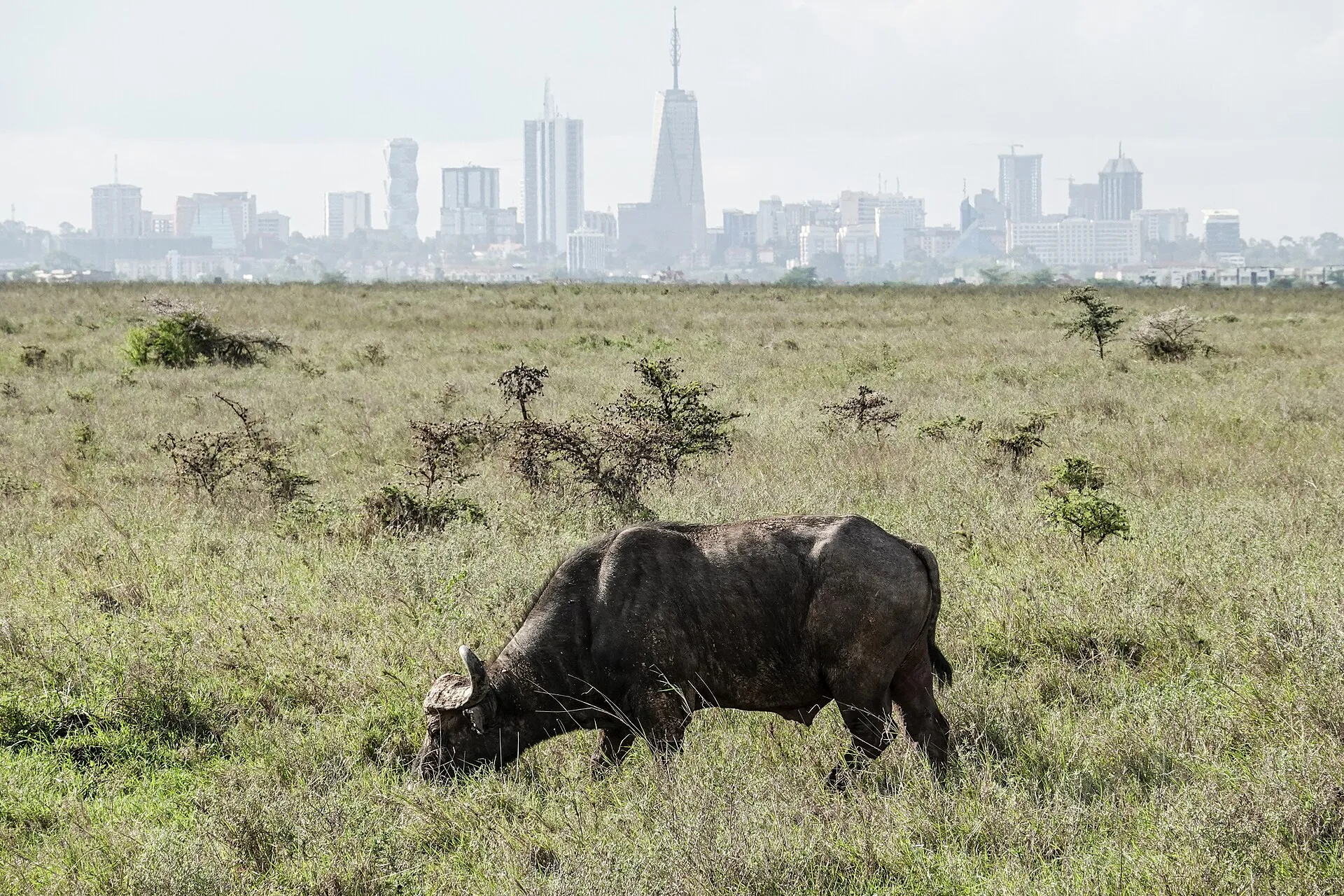
- Ngorongoro Crater and Lake Nakuru: easy sightings in compact areas.
Herd life
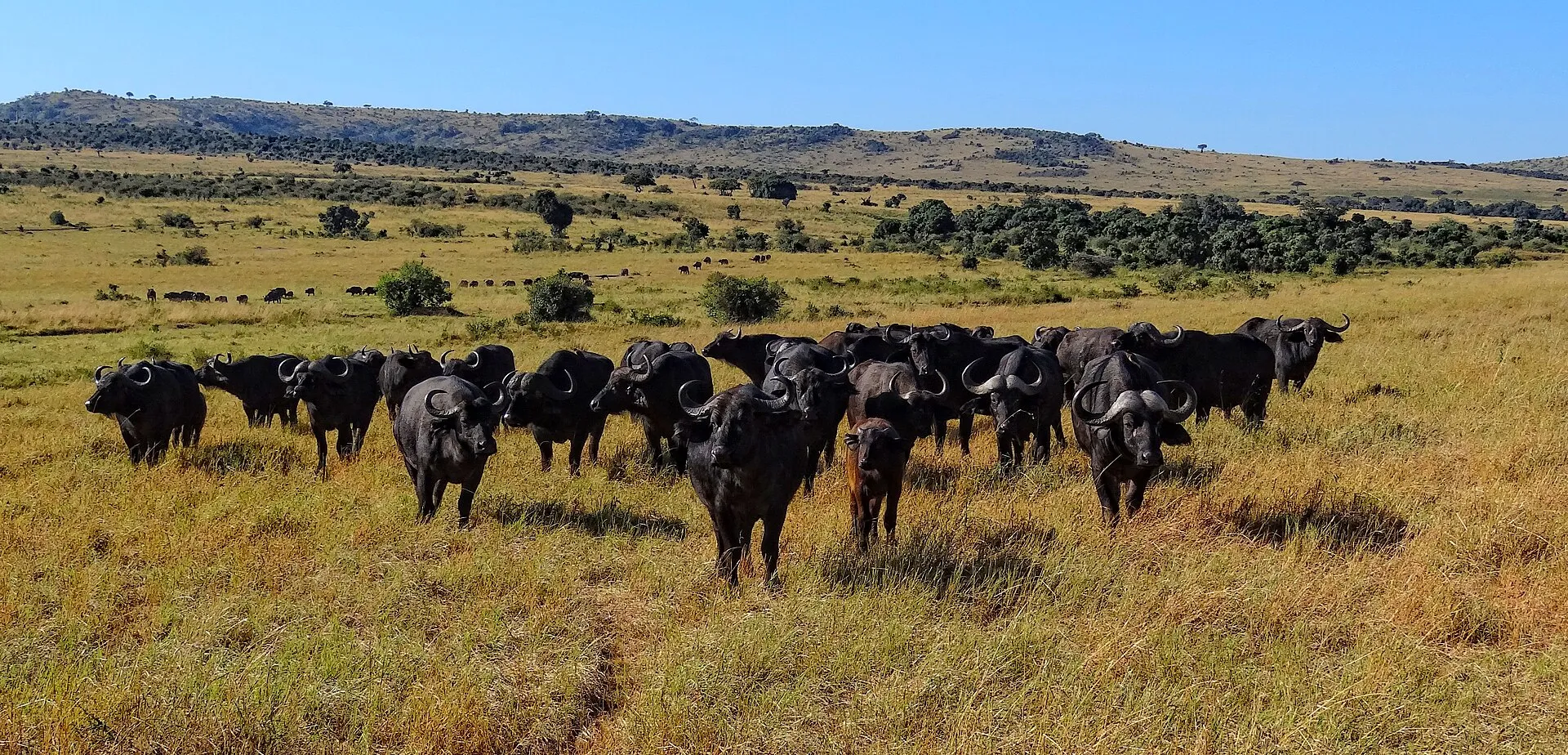
Buffalo live in mixed herds of females, their young and some males, which may number in the hundreds and occasionally more than a thousand. They graze mostly at night and in the cooler hours, and need to drink every day, so they rarely stray far from water. Herds act together to defend themselves, and adults will gang up to chase lions away from a calf.
Older males often leave the herd and live alone or in small bachelor groups. Hunters and guides call them ‘dagga boys’, from a local word for the mud they love to wallow in. These old bulls are the ones to watch carefully on walking safaris.
Savannah and forest buffalo
The large black Cape buffalo of the savannah is the one most travellers see. In Central Africa, a much smaller, reddish forest buffalo lives in rainforest clearings, and in western Uganda, where forest meets savannah, buffalo can show features of both. Look out for reddish animals in Semuliki and near the forests of Queen Elizabeth.
Buffalo and lions
Buffalo are a lion’s most dangerous prey. A single buffalo can kill a lion with its horns, so lions usually hunt them as a pride, working together to separate a weak or young animal. Watching a herd turn to face a pride, or chase lions away, is one of the most dramatic encounters on safari.
Staying safe around buffalo
on foot, always stay behind your ranger and never walk between a buffalo and thick cover. In a vehicle, buffalo are rarely a concern.
- Keep a respectful distance on nature walks and around camps.
- Be careful at night in unfenced lodges; use your escort.
- Watch for the ‘dagga boys’ resting in mud wallows near water.
Remarkable buffalo facts
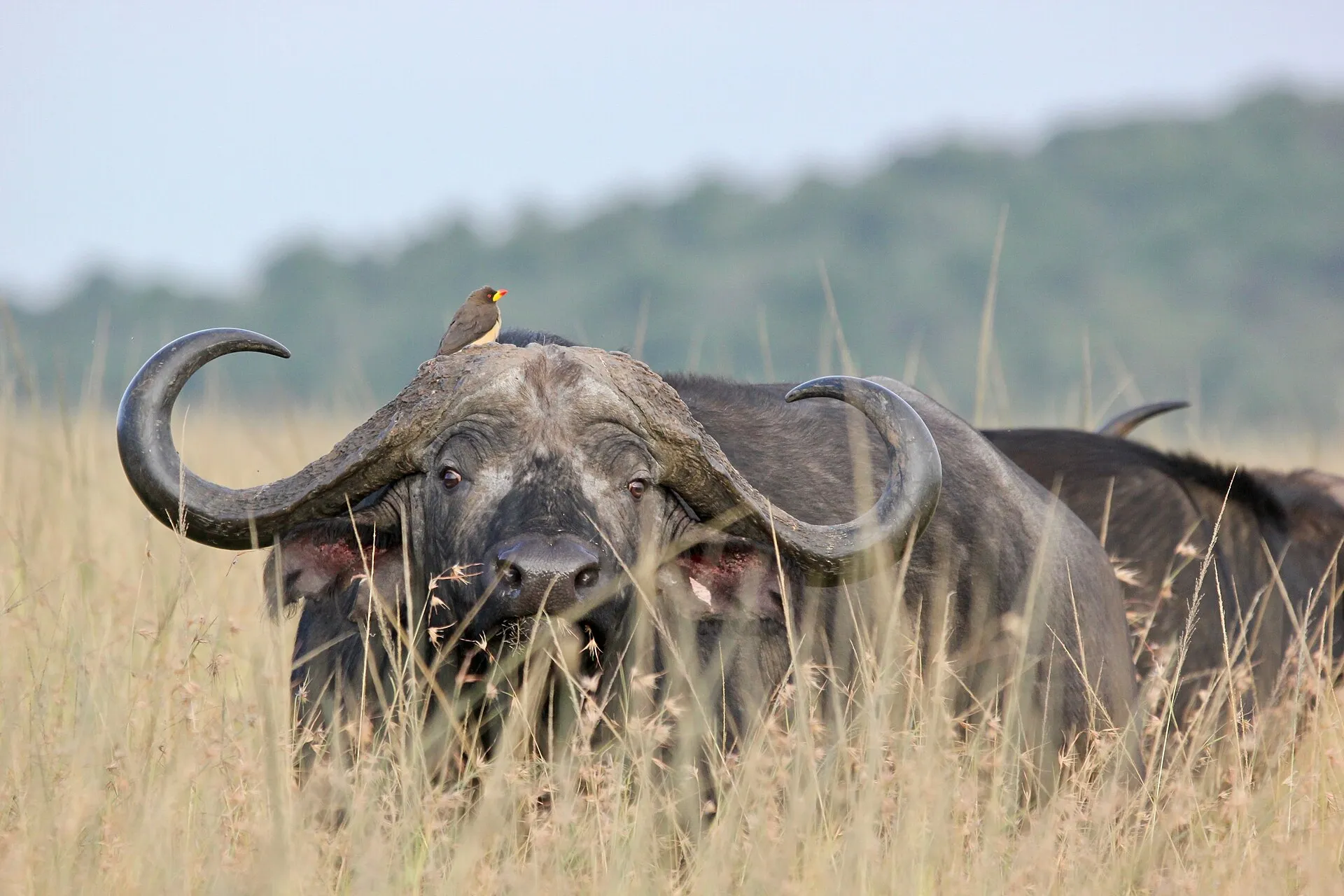
- A buffalo’s horns join in a heavy shield across the forehead, called the boss.
- Herds have been observed ‘voting’ on which direction to move, with females standing and facing their preferred way.
- Buffalo can live for more than 20 years in the wild.
Frequently asked questions
Are buffalo dangerous?
They are usually calm around vehicles, but a wounded or surprised buffalo, especially a lone old male, can charge. On walks, rangers keep a safe distance.
Why are buffalo part of the Big Five?
The term comes from big-game hunting: the buffalo was one of the five animals considered most dangerous to hunt on foot, partly because wounded buffalo were known to circle back on hunters.
What is a forest buffalo?
A smaller, reddish-brown form of the African buffalo that lives in Central African forests. In Uganda you may see forest buffalo or forest-savannah hybrids in Semuliki and the western parks.
What are the birds on buffalo?
Oxpeckers eat ticks and parasites from the buffalo’s skin, and cattle egrets follow herds to catch insects disturbed by their feet.
What eats buffalo?
Lions are the main predator. Prides that specialise in buffalo, such as some in Ruaha, Nyerere and the Serengeti, are often large and powerful.
Written by our Kampala-based planners and guides, who arrange these trips every season. Prices and rules are checked before every quote.