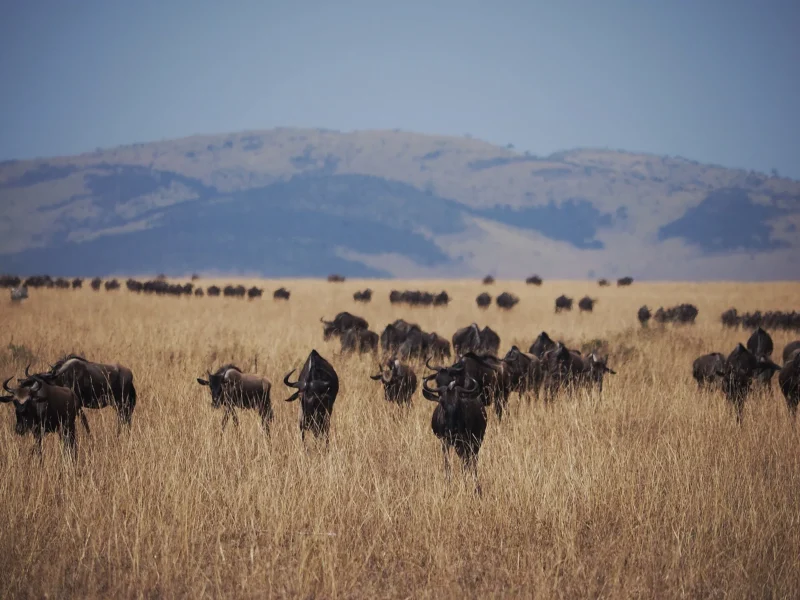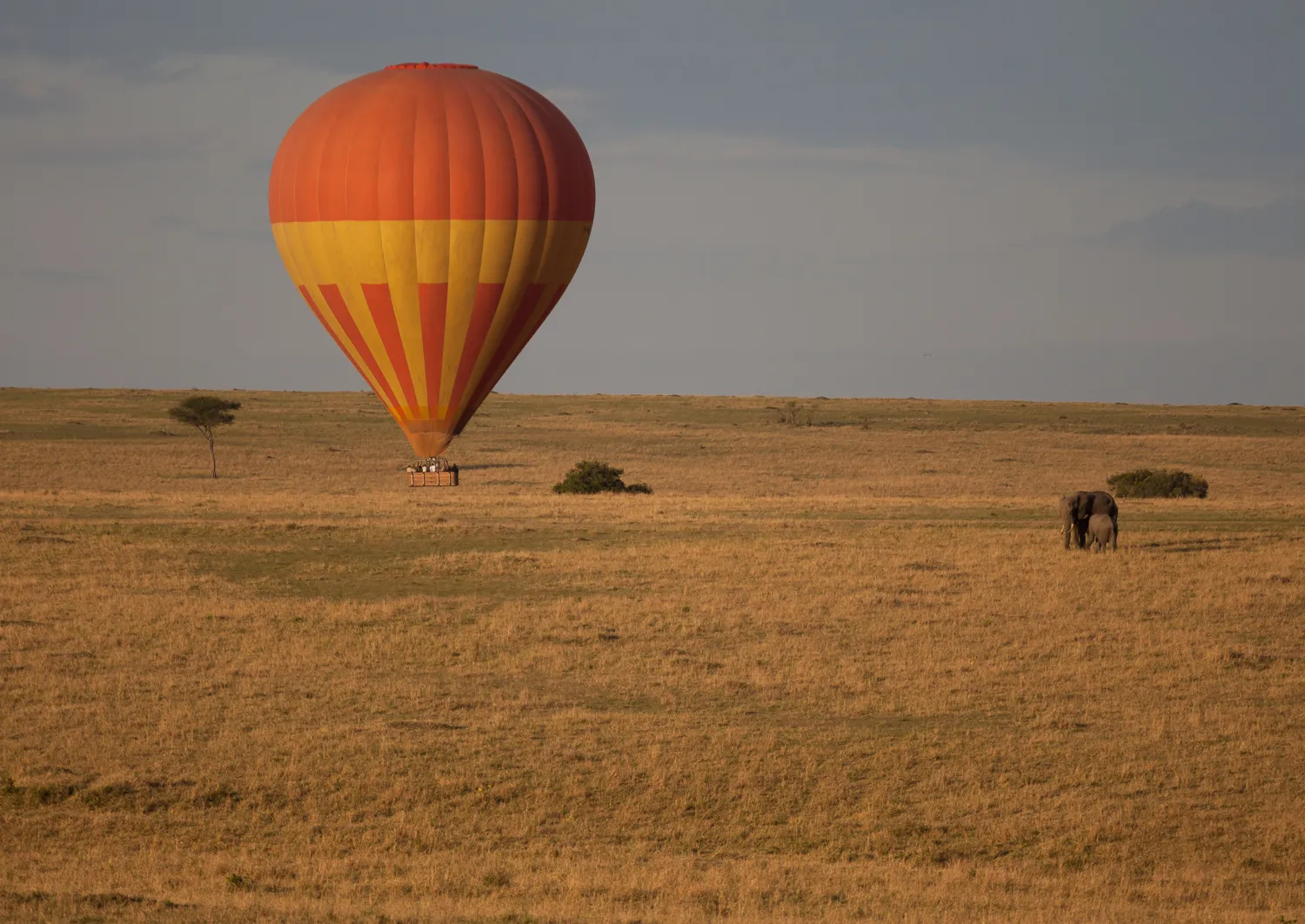
A hot-air balloon safari over the Masai Mara launches at dawn and flies for about an hour over the plains and rivers, depending on the wind. Pilots follow the breeze, often over herds of wildebeest, zebras, elephants and giraffes. After landing, guests enjoy a champagne bush breakfast before a game drive back to camp. Flights usually cost about US$450–650 per person.
Key takeaways
- Launches at dawn; about an hour in the air.
- Silent views of herds and rivers.
- Champagne bush breakfast after landing.
- About US$450–650 per person.
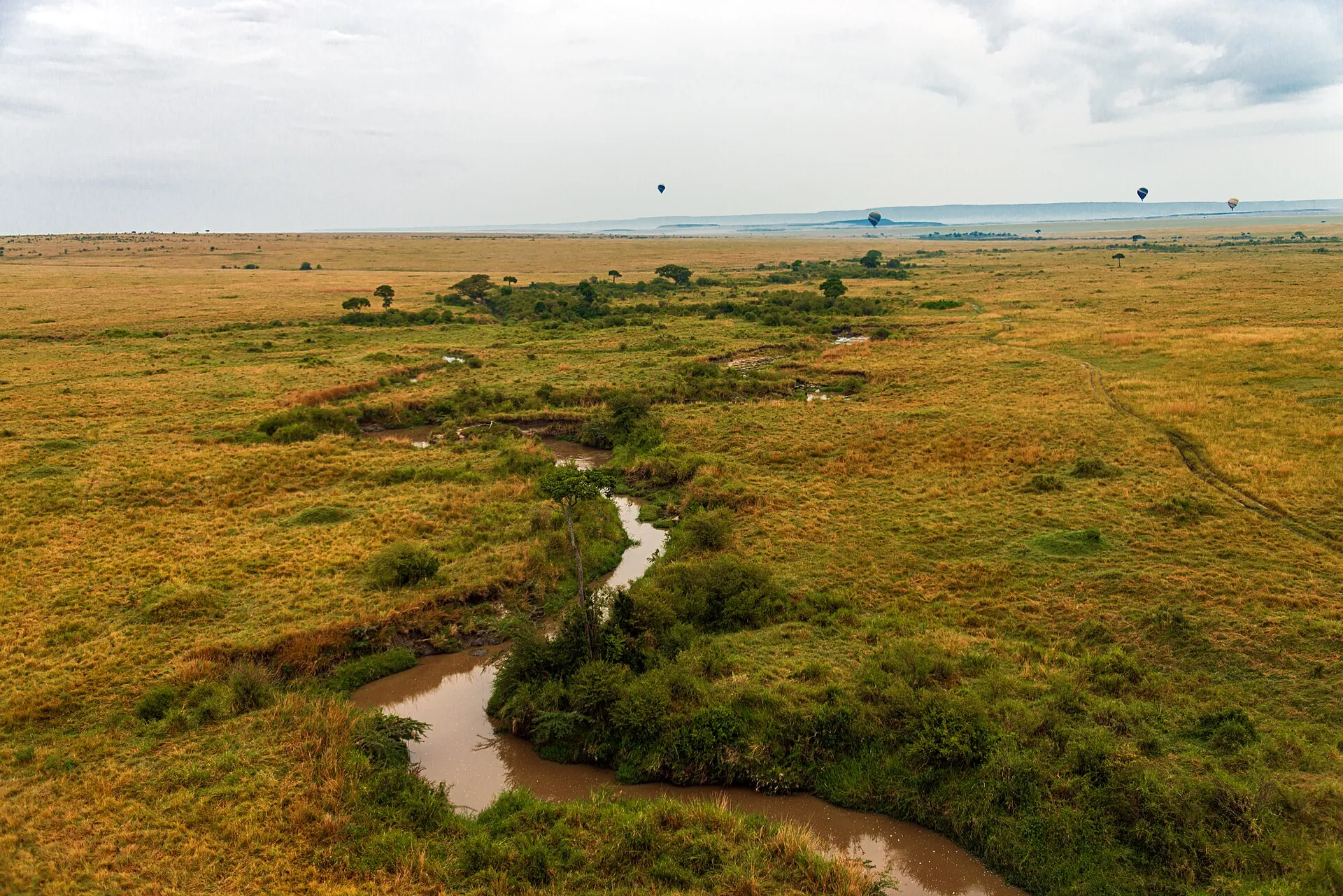
A balloon flight is the most magical way to see the Masai Mara. From above, you see the patterns of the plains, the winding Mara River and the herds spread across the grass, in a silence broken only by the burner.
How it works
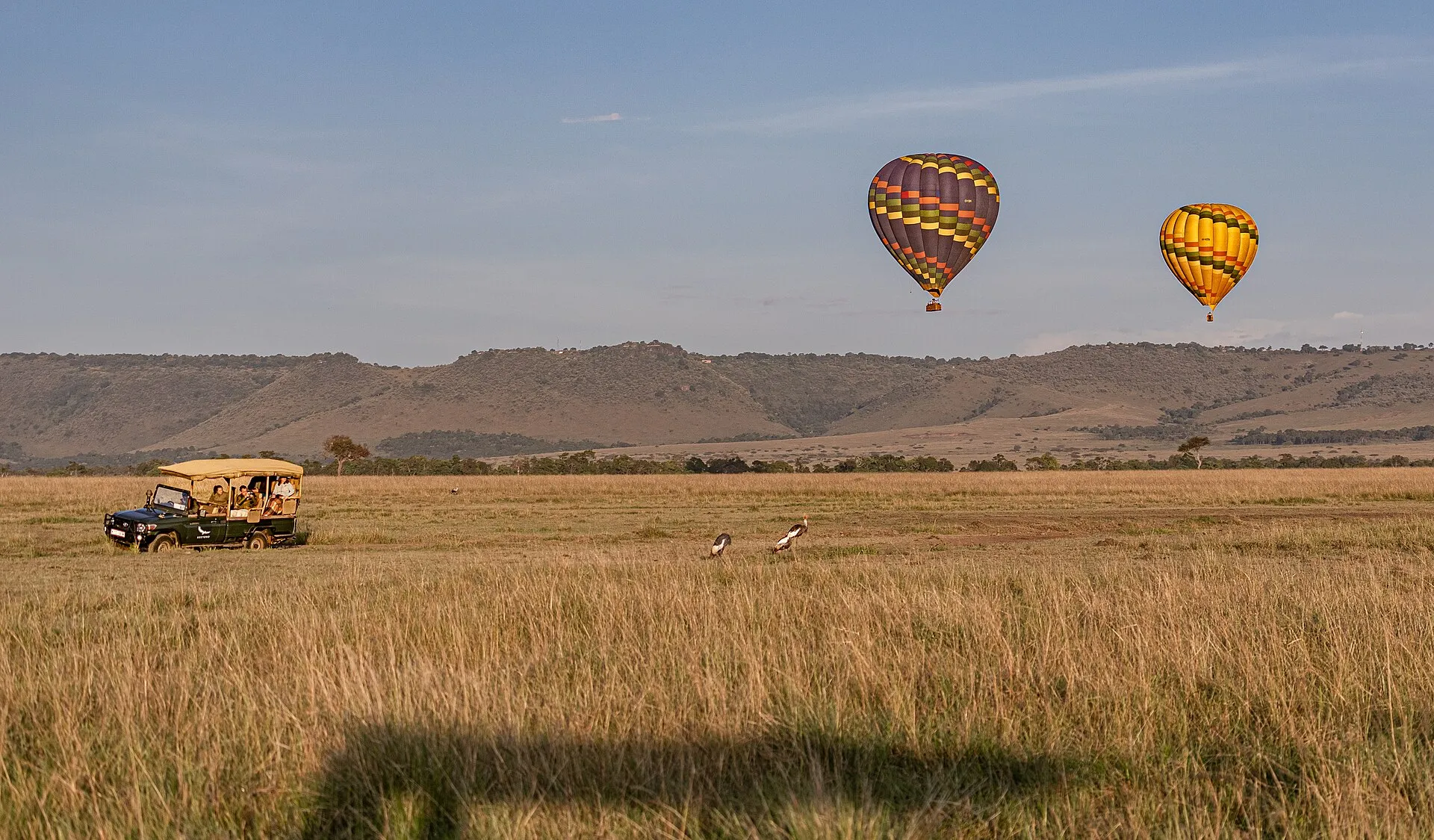
You are collected from camp very early, often around 5:00am, and driven to the launch site while the crew inflates the balloon. After a safety briefing, you climb into the basket, which usually holds between about 8 and 16 passengers in sections. The balloon lifts off around sunrise and drifts with the wind. Pilots control height, dropping low over animals and rising high for wide views.
The landing and breakfast
Landings are usually gentle, though the basket may tip or drag a little. The crew follows by vehicle, and a champagne breakfast is set up on the plains. Then you enjoy a game drive back to camp, arriving mid-morning.
What you see
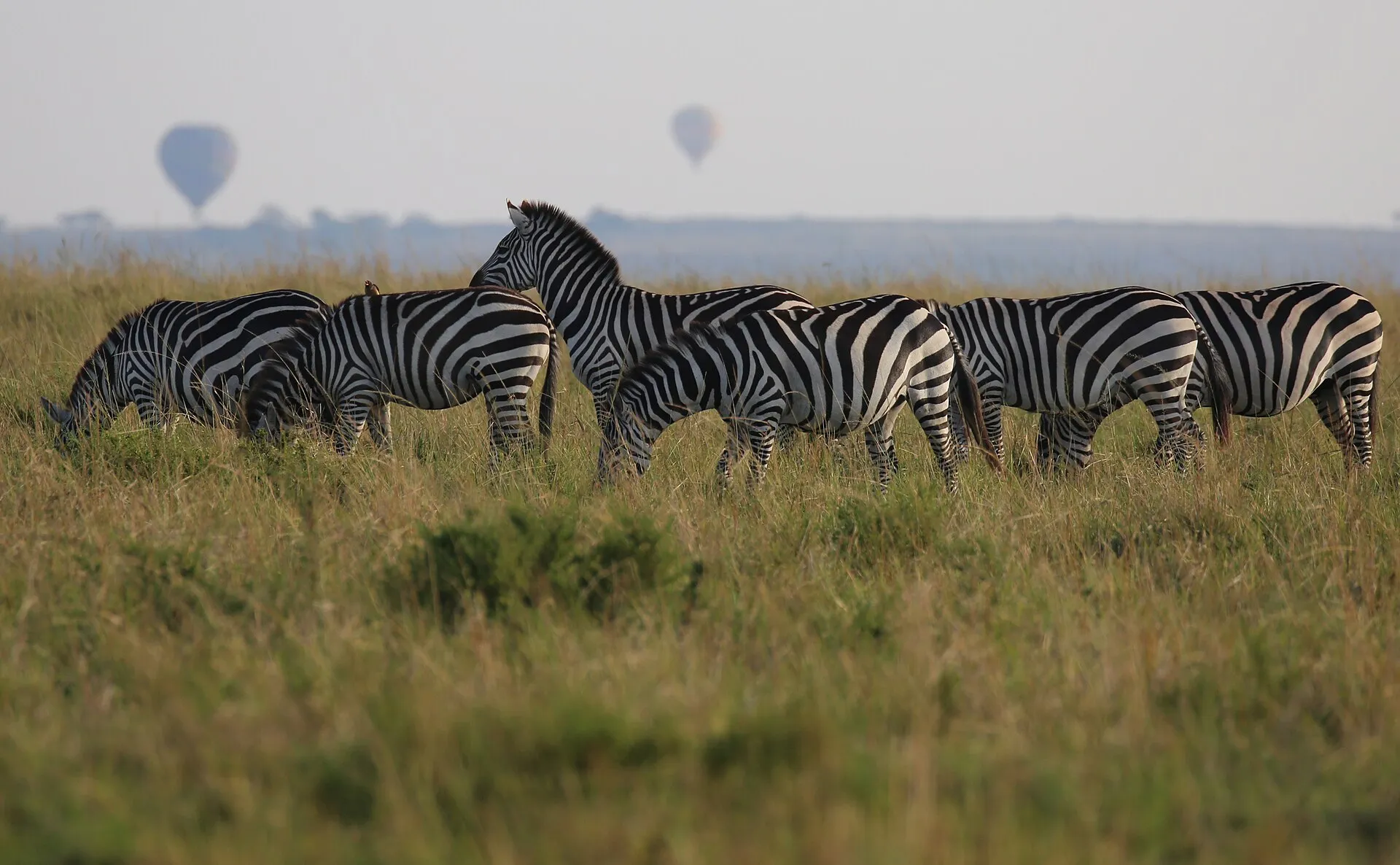
- Herds of wildebeest and zebras, especially during the migration.
- Elephants, giraffes, buffalo and hippos in the river.
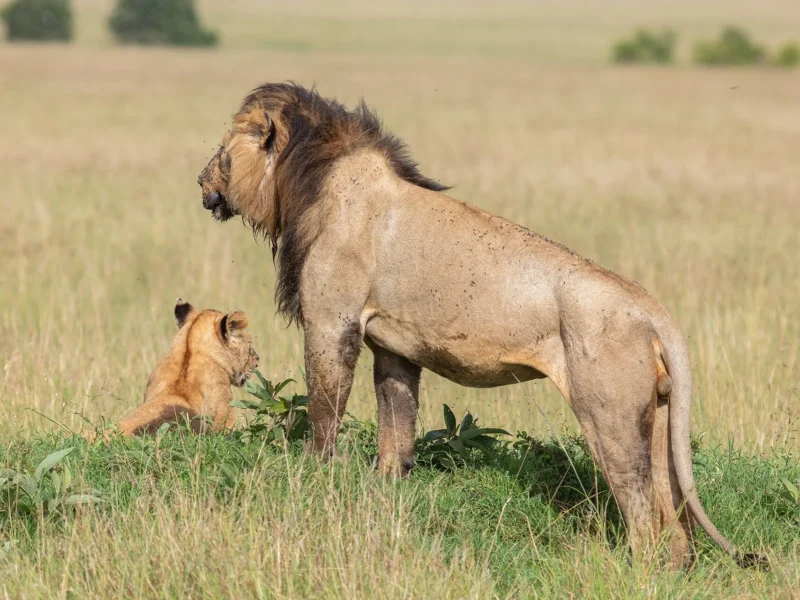
- Lions and other predators, if you are lucky.
- The sun rising over the Oloololo Escarpment.
When to go
Flights run year-round, weather permitting. July to October, the migration season, is the most spectacular, with herds below. The green season gives lush landscapes and fewer passengers.
Good to know
- Flights depend on the weather and may be cancelled for safety.
- There is usually a minimum age, often around seven years.
- Wear layers; it is cold before sunrise.
- Bring a camera with a wide-angle and zoom lens.
Who it suits
Balloon flights suit honeymooners, photographers, families with older children and anyone celebrating a special occasion. They are not suitable for pregnant women or people with certain health conditions.
Is it worth it?
It is expensive, but most guests say it was one of the highlights of their trip. The combination of silence, sunrise and wildlife below is hard to match. Book early, especially from July to October.
What to wear
Wear warm layers and closed shoes. A hat helps under the heat of the burner.
Your balloon morning, step by step
- Around 4:30–5:00am: a wake-up call and hot drink at camp.
- Transfer: a drive in the dark to the launch site, sometimes 30 minutes or more, depending on where you are staying.
- Inflation: watch the crew fill the huge balloon with cold air, then heat it with the burners as the sky lightens.
- Briefing and boarding: the pilot explains the landing position and safety rules; you climb into your section of the basket.
- Lift-off: the balloon rises gently around sunrise. Most passengers are surprised by how calm and quiet it feels.
- The flight: about an hour drifting over the plains, rivers and herds, with the pilot changing altitude for views and wildlife.
- Landing: you crouch in the landing position as the basket touches down; the crew arrive by vehicle.
- Breakfast: a full bush breakfast, often with sparkling wine, is set up nearby.
- Game drive back: you return to camp mid-morning, often with sightings on the way.
How balloon flights work
Hot-air balloons have no steering: they move with the wind. Pilots read wind direction at different heights and climb or descend to find currents that carry the balloon in the right direction. Launch sites are chosen each morning depending on the weather. Because winds change, the landing site is never fixed, and the ground crew follows the balloon across the plains.
Safety
Balloon operators in Kenya are regulated by the Kenya Civil Aviation Authority. Pilots are licensed and experienced, and baskets are divided into compartments for stability. Flights are cancelled if winds are too strong or the weather is unsafe. Passengers must be able to climb into the basket and adopt the landing position, so tell the operator about any back, knee or mobility problems in advance.
What you can and cannot expect
You will see the landscape and herds from above, and often elephants, giraffes and hippos. Big cats are possible but less predictable from the air. The magic is the combination of light, silence and space rather than close-up sightings, so enjoy the moment and save close-ups for game drives.
Where flights launch
Several operators fly from launch sites across the reserve and some conservancies, including near the Mara River and in the Mara Triangle. Your camp books the flight with the nearest operator to reduce transfer time.
Photography tips
Bring a wide-angle lens for landscapes and a zoom of about 70–200 mm for animals. Shoot during the first 20 minutes, when the light is warm and low. Keep your camera strap around your wrist or neck at all times.
Who it suits
Honeymooners, photographers, families with older children and anyone celebrating a special occasion. Book early for July to October.
Plan it
Add a balloon flight to our 5-day Masai Mara Great Migration safari or 4-day Masai Mara fly-in safari. See also hot-air balloon over the Serengeti.
Frequently asked questions
How much does a Mara balloon flight cost?
About US$450–650 per person, including breakfast.
How long is the flight?
About an hour, depending on the wind.
Is ballooning safe?
Yes, with licensed operators and experienced pilots.
What is the minimum age?
Often around seven years; it varies by operator.
Can children fly?
Children are usually accepted from about seven years old, depending on the operator; they must be tall enough to see over the basket.
What happens if the flight is cancelled?
If weather prevents a flight, operators usually offer another morning or a refund, depending on their terms.

Written by our Kampala-based planners and guides, who arrange these trips every season. Prices and rules are checked before every quote.