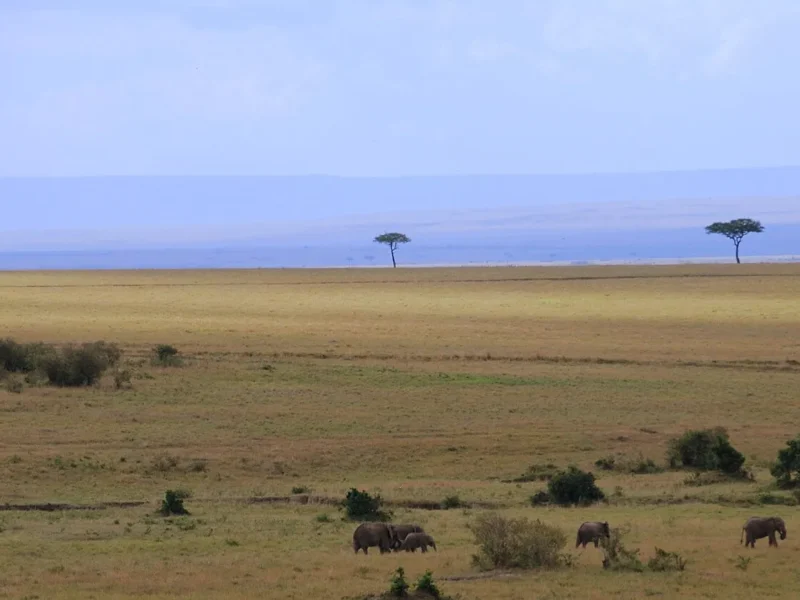
Fly-in 4 days4-Day Masai Mara Fly-in Safari
Skip the long drive: fly from Nairobi to the Masai Mara in 45 minutes and spend three nights at a camp in a private conservancy, with game drives, walks and night drives away from the crowds.

Built for the Great Migration: four nights in the Masai Mara between July and October, with full days near the Mara River to give you the best chance of seeing a dramatic crossing.
This safari is designed around the Great Migration’s time in the Masai Mara, usually from July to October. You fly in from Nairobi to make the most of your time and stay four nights at a camp close to the Mara River, with three full days of game drives to follow the herds and wait at the crossing points.
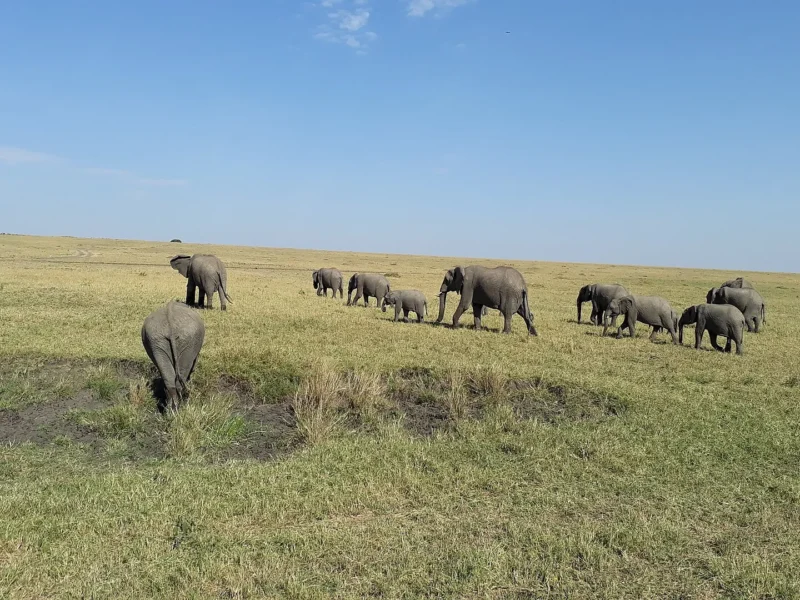
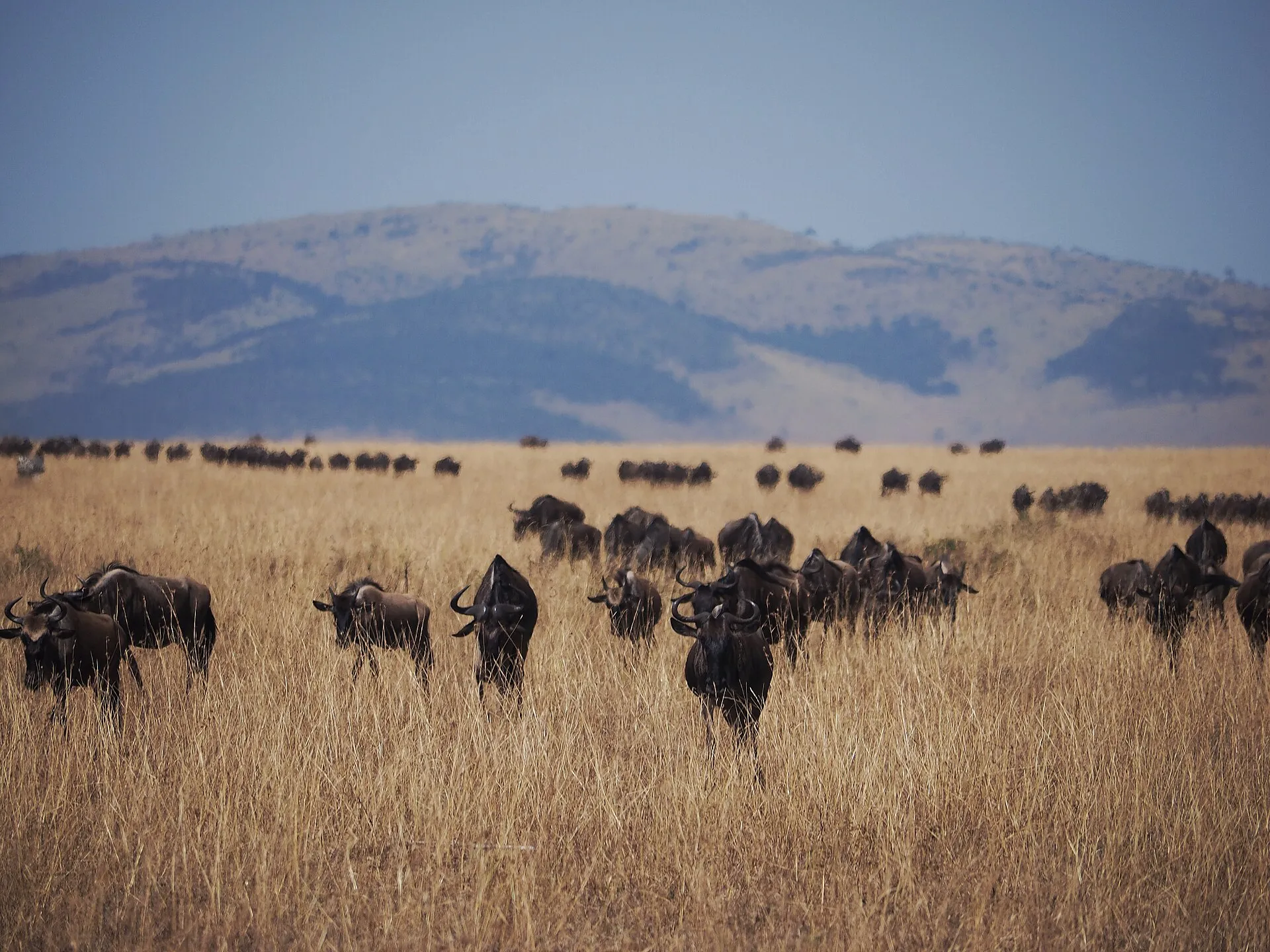
The Mara in migration season is one of the greatest wildlife spectacles on earth: endless lines of wildebeest and zebra, predators at every turn and the chaos of a river crossing. Days are long and exciting, with picnic lunches in the field so you never have to leave the action.
A camp close to the Mara River saves time each morning and puts you near the crossing points. Seasonal and permanent tented camps in the northern and western Mara are ideal from July to October; we choose based on where the herds tend to cross on your dates.
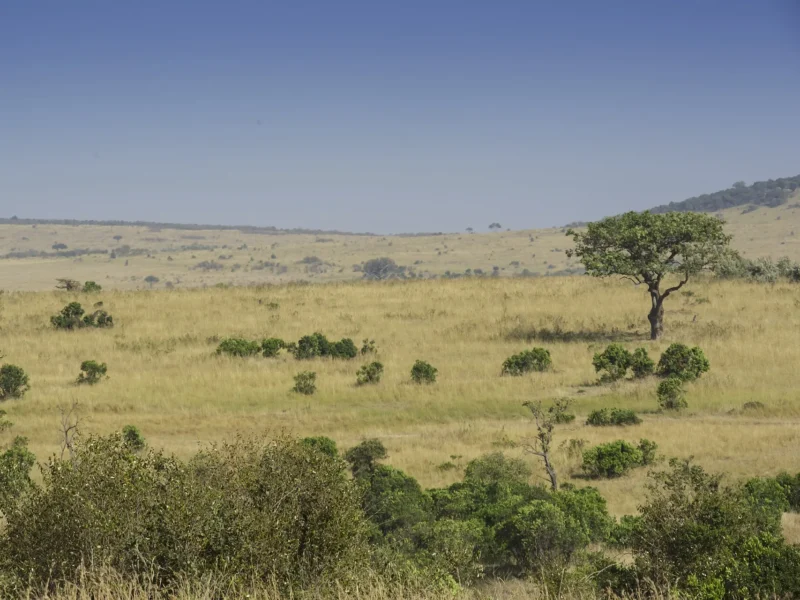
Transfer to Nairobi’s Wilson Airport for the morning flight to the Masai Mara, about 45 minutes over the Ngong Hills and the Great Rift Valley. Your guide meets you at the airstrip, and the drive to camp often begins with sightings of the herds. Settle into your camp near the Mara River and enjoy lunch looking over the plains.
In the afternoon, take your first game drive to see where the wildebeest and zebra are gathering and which crossing points are active. Your guide will plan the next days around the herds’ movements, which change daily.
Head out at dawn with a picnic lunch and spend the day following the herds. Wildebeest and zebra gather in long lines on the riverbank, sometimes for hours, before the first animal leaps and the crossing begins. Crocodiles wait in the water and lions and hyenas on the far bank. Your guide positions the vehicle at a respectful distance with a clear view, and you wait: patience is the key to a crossing.
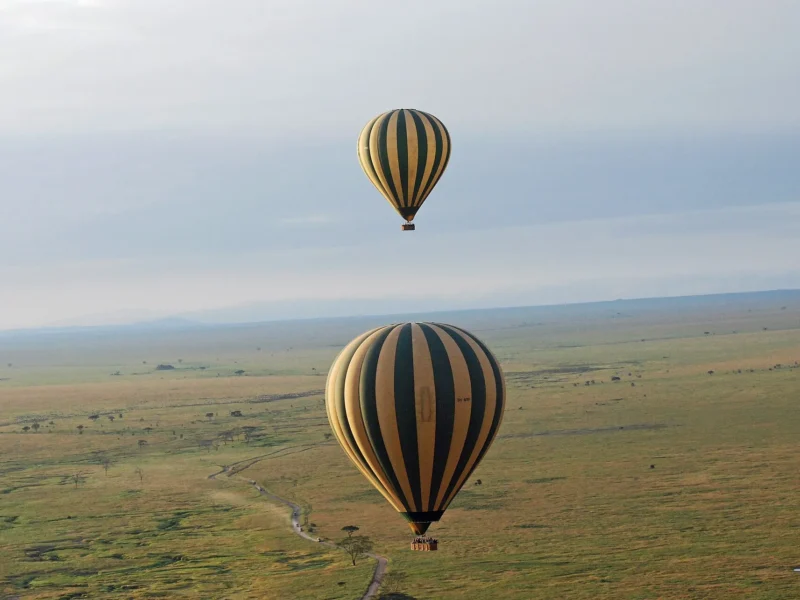
The arrival of the migration brings the Mara’s predators to their peak. Spend the day with your guide following lion prides, cheetahs hunting on the open plains and leopards in the riverine forest, returning to the river in the afternoon if the herds are massing for a crossing. An optional sunrise balloon flight can be added.
A third full day gives you the best chance of seeing a major crossing. Your guide may take you to different crossing points or across into the Mara Triangle in the west, beneath the Oloololo escarpment, where the herds also cross and vehicle numbers can be lower.
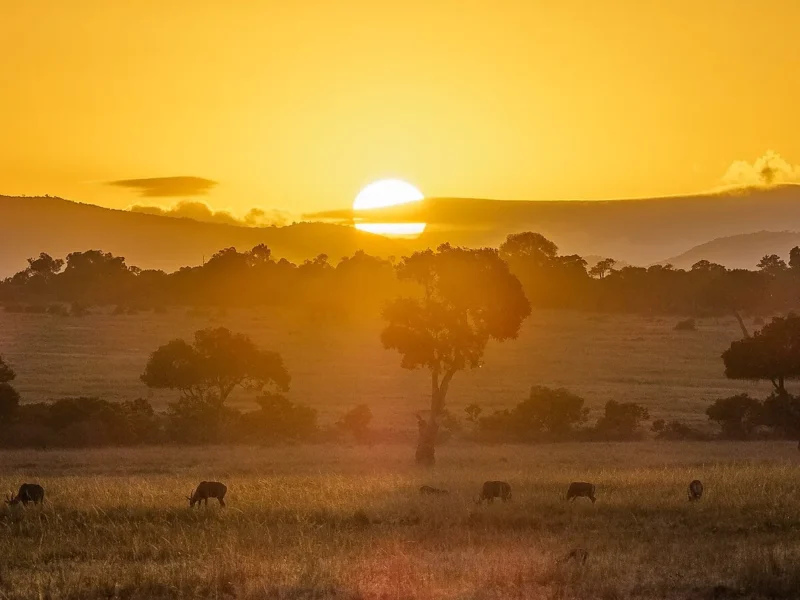
Take a final early game drive, when predators are active after the night and the plains are bathed in golden light. Return to camp for breakfast, then transfer to the airstrip for the flight back to Nairobi’s Wilson Airport, arriving around midday in time to connect to your onward flight.
Lodges shown match the quoted price. Ask us about mid-range and luxury upgrades.

| Permit or fee | 2026 rate (foreign non-resident adult) |
|---|---|
| Masai Mara National Reserve: park entry | US$200 per day (July–December), US$100 (January–June) |
The fees that apply to this trip are included in your quote. Park authorities set them and can change them, so we always confirm the current rates when we quote.
For a full breakdown, see how much a Kenya safari costs.
Every itinerary is private, so you choose the style of each stay. These are lodges we use at each stop, by comfort level:
In Kenya, the Great Migration is usually in the Masai Mara from July to October, and January to February is another dry, excellent window. The long rains fall mainly in April and May, when parks are quieter and greener. See the best time to visit Kenya.
Every trip can be adjusted to your dates, budget and pace. Ask for a free quote and a specialist will reply within 24 hours.


Usually August and September, though the timing varies each year with the rains. Crossings can also happen in July and October.
No. Herds may gather for hours or days without crossing. Four nights greatly improves your chances.
Popular crossing points can attract many vehicles. Reserve rules and good guides help keep viewing respectful.
US$200 per adult per day from July to December 2026, included.
Yes. See our Kenya and Tanzania itineraries for the full migration circuit.
Binoculars, a camera with a long lens, a hat, sunscreen and neutral layers; mornings are cool and middays warm, and full days in the vehicle call for comfortable clothing.
Flying saves about ten hours on the road, giving you an extra half day at the river in each direction.
Fly-in 4 daysSkip the long drive: fly from Nairobi to the Masai Mara in 45 minutes and spend three nights at a camp in a private conservancy, with game drives, walks and night drives away from the crowds.
Signature 10 daysThe best of both worlds: chimpanzees, savannah and mountain gorillas in Uganda, then a short flight to Kenya for three nights among the big cats and great herds of the Masai Mara.
Signature 18 daysThe ultimate East African journey across four countries: chimps and gorillas in Uganda, golden monkeys in Rwanda, the Masai Mara in Kenya and the Serengeti and Ngorongoro Crater in Tanzania.
Change the dates, add a night, upgrade a lodge or combine it with Rwanda or Kenya. Tell us what you have in mind and we’ll send a revised plan and price.