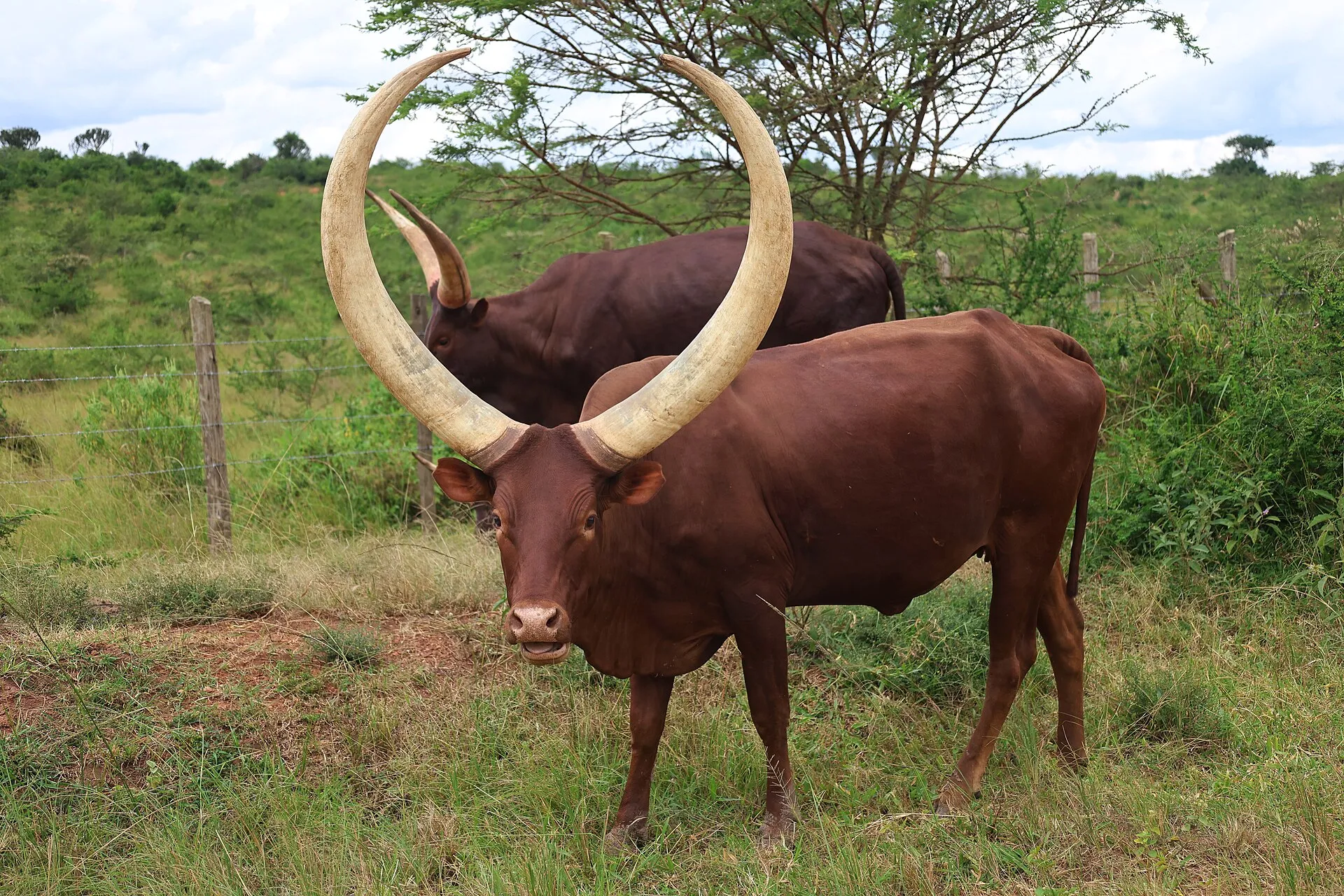
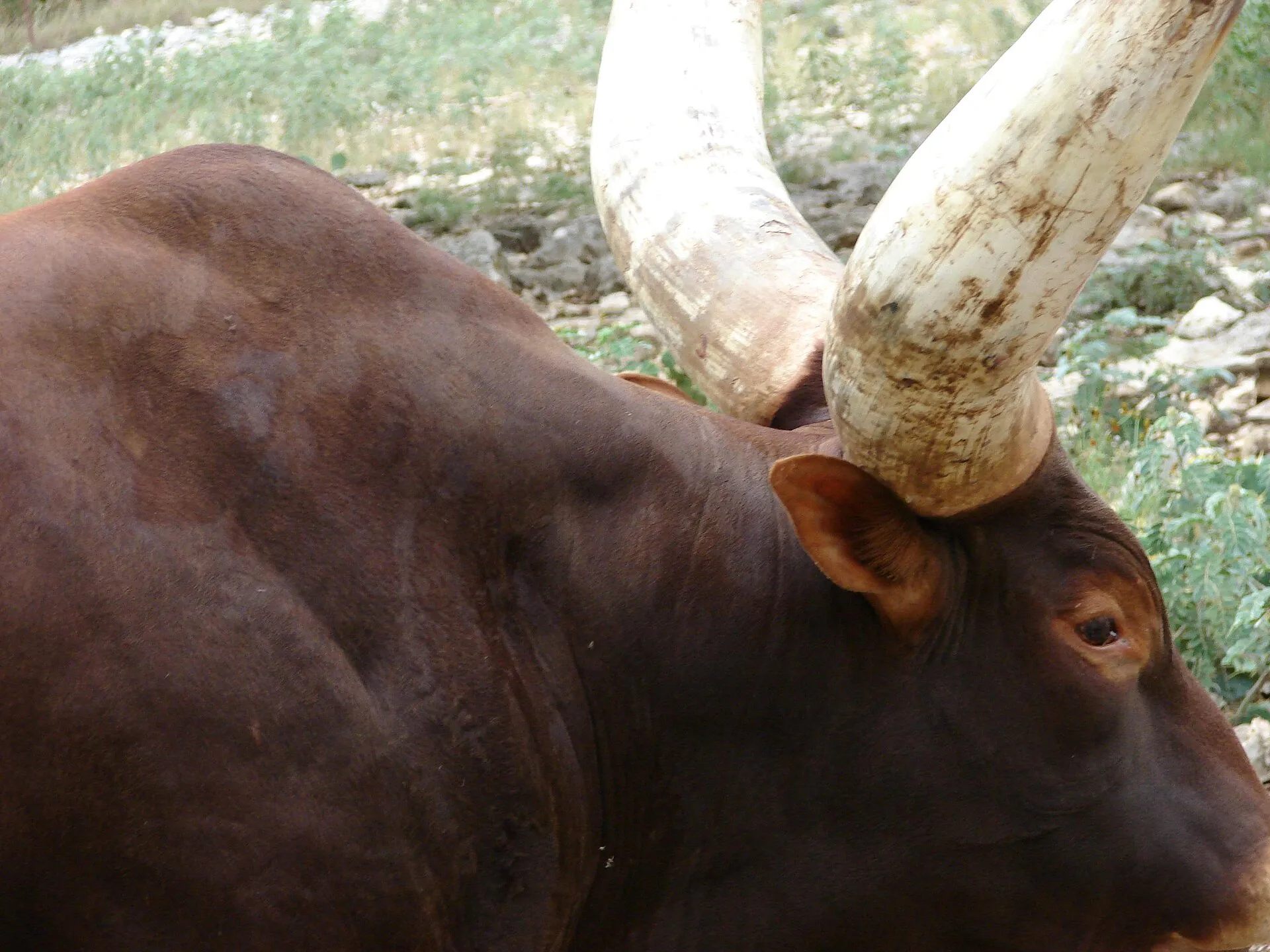
Ankole cattle are a breed of East African cattle known for their huge, curved horns, which can measure well over a metre from tip to tip. In western Uganda, around Mbarara and Lake Mburo, they are herded by the Bahima and other Banyankole pastoralists, for whom cattle are a measure of wealth and status. Visitors can meet herders, watch milking and learn about milk traditions.
Key takeaways
- Huge, curved horns.
- Herded by Bahima and Banyankole pastoralists.
- Cattle are central to wealth and culture.
- See them around Mbarara and Lake Mburo.
On the road from Kampala to Lake Mburo and Bwindi, you will see them: herds of long-horned cattle grazing on rolling hills, often with a herder carrying a stick. They are an icon of western Uganda.
The horns
Ankole cattle’s horns are large, curved and often lyre-shaped. They contain blood vessels that may help the cattle cool down in hot weather. Herders take great pride in beautiful horns, and cattle with especially fine horns are prized.
Cattle and culture
For the Bahima and other Banyankole pastoralists, cattle have long been the centre of life. They are a measure of wealth, given as bride wealth and used in ceremonies. Cattle have individual names, and herders sing and recite poems praising them. Read Ankole cattle and western Uganda culture.
Milk traditions
Milk is central to the traditional diet, drunk fresh or fermented, and turned into ghee. Milk was stored in carved wooden pots and woven containers. Today, fresh milk and yoghurt are sold along the roads around Mbarara.
Visiting a farm
Around Lake Mburo, cattle-keeping communities welcome visitors. You can watch milking, learn how cattle are cared for and how ghee is made, and taste fresh milk. A local guide makes the visit respectful and informative.
When to go
Visits are possible year-round. Early morning and evening are the best times to see milking.
Good to know
- Ask before taking photos of people and homes.
- Wear closed shoes on farms.
- Combine with Lake Mburo and the Igongo Cultural Centre.
- Cattle are sometimes seen inside Lake Mburo’s boundaries, a sign of the challenges of sharing land.
Who it suits
Cattle visits suit families, photographers and travellers interested in rural life and traditions.
Rwanda’s Inyambo cattle
In Rwanda, related long-horned cattle called Inyambo were kept by the royal court and trained to “dance”. You can see them at the King’s Palace Museum in Nyanza; see the King’s Palace at Nyanza.
A day in the life of a herder
The day begins before dawn with milking, often by hand into wooden or plastic containers. The herd is then led out to graze and drink, sometimes walking many kilometres in the dry season to find water. Calves stay closer to home. In the evening, the cattle return to the kraal, a fenced enclosure, where they are milked again and checked for injury or illness. Herders know each animal by name and personality.
Cattle and the land
Pastoralists and wildlife have shared the Ankole landscape for centuries. Today, farms, fences and growing herds put pressure on the grasslands around Lake Mburo. Conservation projects work with cattle keepers to reduce conflict with predators and to protect water sources, so that both cattle and wildlife have a future. Visiting farms that work with these projects supports that balance.
Photography tips
Cattle look best in the soft light of early morning or late afternoon, with the horns outlined against the sky. Always ask the herder before photographing, and offer to show them the pictures.
Getting there
Ankole country stretches west from Lake Mburo to Mbarara and beyond, about three and a half to four and a half hours by road from Kampala. Cattle are seen along the main road to Bwindi and Queen Elizabeth, and farm visits are easiest from lodges around Lake Mburo, which can arrange a guide and a visit to a family farm.
The Ankole breed abroad
Ankole-Watusi cattle are kept on farms and in zoos in North America and Europe, where they are admired for their horns. In East Africa, many herders now cross them with other breeds to increase milk production, which is one reason why pure long-horned herds are becoming less common.
Plan it
See Ankole cattle on our 2-day Lake Mburo safari or 4-day Bwindi gorillas and Lake Mburo safari.
Frequently asked questions
Why do Ankole cattle have such big horns?
Selective breeding by herders, and the horns may help them stay cool.
Where can I see Ankole cattle?
Around Mbarara and Lake Mburo, on the road to Bwindi.
Can I visit a cattle farm?
Yes, with a local guide around Lake Mburo.
Are Ankole cattle the same as Watusi?
They are related; Ankole-Watusi is the name used for the breed outside Africa.
Can I taste the milk?
Yes, on a farm visit or from roadside sellers.
Do the cattle live inside Lake Mburo National Park?
Herders graze cattle around the park, and herds sometimes enter its edges, especially in the dry season.

Written by our Kampala-based planners and guides, who arrange these trips every season. Prices and rules are checked before every quote.