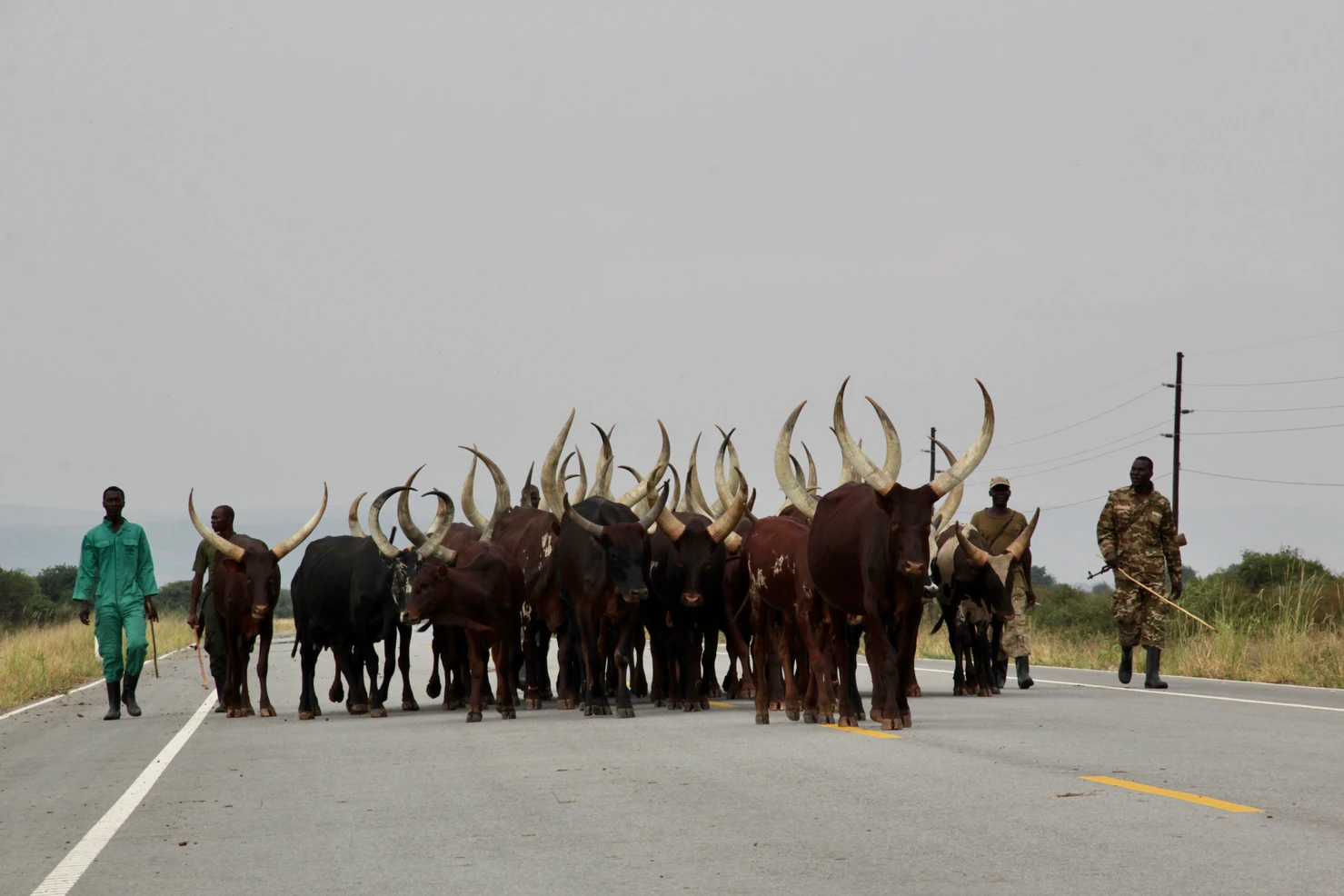
Ankole long-horned cattle are a traditional breed of western Uganda, kept by the Bahima and Banyankole people of the former Ankole kingdom around Mbarara. Their huge horns can span well over a metre and a half. Cattle are central to wealth, marriage, food (especially milk) and culture. Visitors see them along the road to Lake Mburo and Bwindi, and learn more at the Igongo Cultural Centre near Mbarara.
Key takeaways
- Ankole cattle are famous for their huge, curved horns.
- They are central to Banyankole and Bahima culture.
- Milk and dairy have long been the heart of the traditional diet.
- You see them on the road from Kampala to Lake Mburo and Bwindi.
- The Igongo Cultural Centre near Mbarara explains Ankole heritage.
Drive west from Kampala on the road to Lake Mburo and Bwindi, and the landscape opens into rolling grassland. Herds of cattle cross the road, guided by herders, and their horns are unforgettable: long, curved and spreading wide. These are Ankole cattle, and they tell the story of a whole region.
The breed
Ankole long-horned cattle are a traditional breed of the Great Lakes region, closely related to the long-horned cattle found in Rwanda and Burundi. They are hardy, adapted to the heat and grasslands, and known for their enormous horns, which can span well over a metre and a half. Their coats are usually rich red-brown, though other colours occur.
Cattle and culture
For the Banyankole people, and especially the Bahima pastoralists, cattle are far more than livestock:
- Wealth and status: the size of a herd, and the beauty of individual cattle, reflects a family’s standing.
- Marriage: cattle have traditionally been central to bride wealth.
- Food: milk, ghee and other dairy products were the heart of the traditional diet.
- Language and art: cattle are named, praised in poetry and song, and admired for their horns and colour.
The Ankole kingdom
Ankole was one of the historic kingdoms of Uganda, centred on what is now Mbarara. The kingdom was abolished in 1967 and, unlike Buganda, has not been restored, but Ankole identity, language (Runyankore) and traditions remain strong.
Where to see Ankole cattle
- Along the Masaka–Mbarara highway, especially between Lyantonde and Mbarara.
- Around Lake Mburo National Park, where herders graze cattle on community land bordering the park.
- Community visits near Lake Mburo, where families show milking, dairy-making and traditional homesteads.
Read Ankole long-horned cattle for more.
The Igongo Cultural Centre
Near Mbarara, the Igongo Cultural Centre presents the history and culture of Ankole and the wider south-west through a museum, traditional architecture and a restaurant serving local dishes. It makes an excellent stop on the way to Bwindi or Queen Elizabeth.
Ask your guide to stop when you see a herd crossing the road. Herders are often happy to chat, and the cattle make wonderful photographs, but always ask before photographing people.
Cattle and wildlife
Around Lake Mburo, cattle and wildlife share the landscape, which brings both opportunities and challenges, from competition for grazing to conflict with predators. Conservation and community programmes work to help people and wildlife coexist.
Experience it on safari
Our 4-day Bwindi gorillas and Lake Mburo safari and 2-day Lake Mburo safari pass through the heart of Ankole cattle country.
Food and milk culture
Traditional Banyankole and Bahima households prized milk above all other foods, fresh or fermented, along with ghee. Milk was stored and carried in carved wooden pots and woven containers, and caring for the cattle and dairy was surrounded by customs and etiquette. Today’s diet is more varied, but dairy remains important, and fresh milk and yoghurt are sold along the roadside around Mbarara.
Frequently asked questions
Why do Ankole cattle have such big horns?
They are a long-established breed selected over generations; the horns may help with heat regulation and are prized for their beauty and status.
Are they the same as Watusi cattle?
They are closely related to the long-horned cattle of the wider region, often called Ankole-Watusi cattle.
Can I visit a cattle farm?
Yes. Community visits near Lake Mburo show traditional cattle keeping, milking and dairy products.
What is the Igongo Cultural Centre?
A museum and cultural centre near Mbarara presenting the history and culture of Ankole and the wider south-west.
Is there still an Ankole king?
The Ankole kingdom was abolished in 1967 and, unlike Buganda, has not been restored, though Ankole culture remains strong.
What language is spoken in Ankole?
Runyankore, closely related to Rukiga spoken around Kabale; English is widely understood.
Can I try local dairy?
Yes. Fresh milk, yoghurt and ghee are sold around Mbarara, and community visits often include a taste.

Written by our Kampala-based planners and guides, who arrange these trips every season. Prices and rules are checked before every quote.