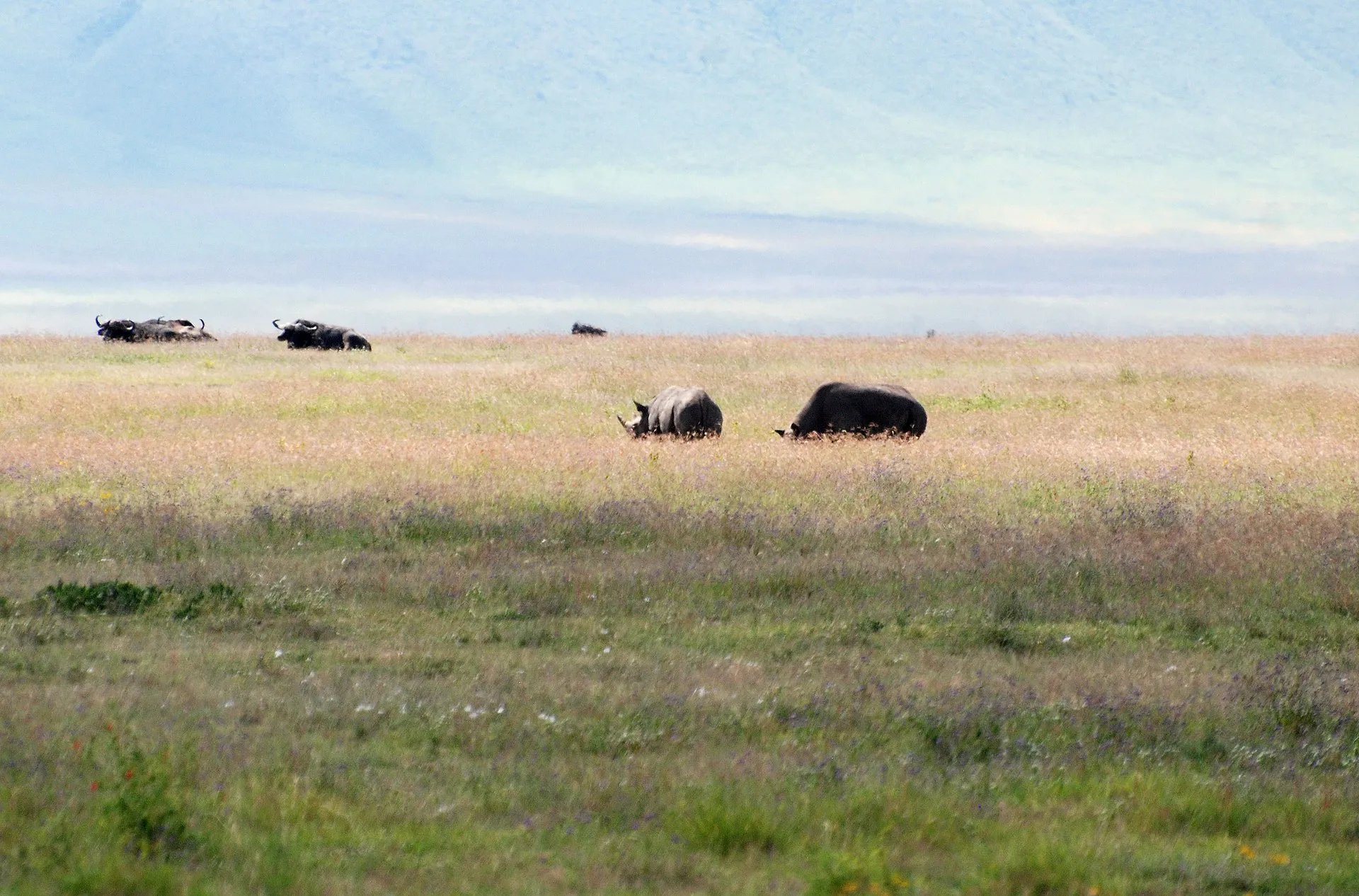
The best places to see black rhinos in East Africa are Tanzania’s Ngorongoro Crater, Kenya’s Ol Pejeta Conservancy, Lake Nakuru and Nairobi National Park, and Rwanda’s Akagera National Park, where they were reintroduced in 2017. Uganda has no black rhinos today; its rhinos are white rhinos at Ziwa Rhino Sanctuary. The eastern black rhino is critically endangered, and Kenya holds most of the world’s population of this subspecies.
Key takeaways
- Ngorongoro, Ol Pejeta, Lake Nakuru and Akagera are the best places to see black rhinos.
- Uganda has white rhinos at Ziwa but no black rhinos.
- Black rhinos are browsers with a pointed, hooked lip.
- The species is critically endangered, with only a few thousand left in Africa.
- Kenya holds most of the world’s eastern black rhinos.
The black rhino once ranged across much of eastern and southern Africa. Poaching for horn in the 1970s and 1980s destroyed most populations, and East Africa’s survivors now live in heavily protected parks and sanctuaries. Seeing one, often half-hidden in a thicket or crossing open ground at dawn, is a privilege.
Where to see black rhinos
- Ngorongoro Crater, Tanzania: a small resident population on the open crater floor, often seen at a distance with binoculars. See black rhino in Ngorongoro and the Ngorongoro Crater.
- Ol Pejeta Conservancy, Kenya: the largest black rhino sanctuary in East Africa, with good chances on game drives. See Ol Pejeta and Laikipia.
- Lake Nakuru, Kenya: both black and white rhinos in a fenced park. See Lake Nakuru National Park.
- Nairobi National Park, Kenya: black rhinos within sight of the city skyline.
- Akagera, Rwanda: eastern black rhinos returned in 2017, making Akagera a Big Five park again. See Akagera’s Big Five.
- Serengeti, Tanzania: a few rhinos around the Moru Kopjes, rarely seen.
Black or white?
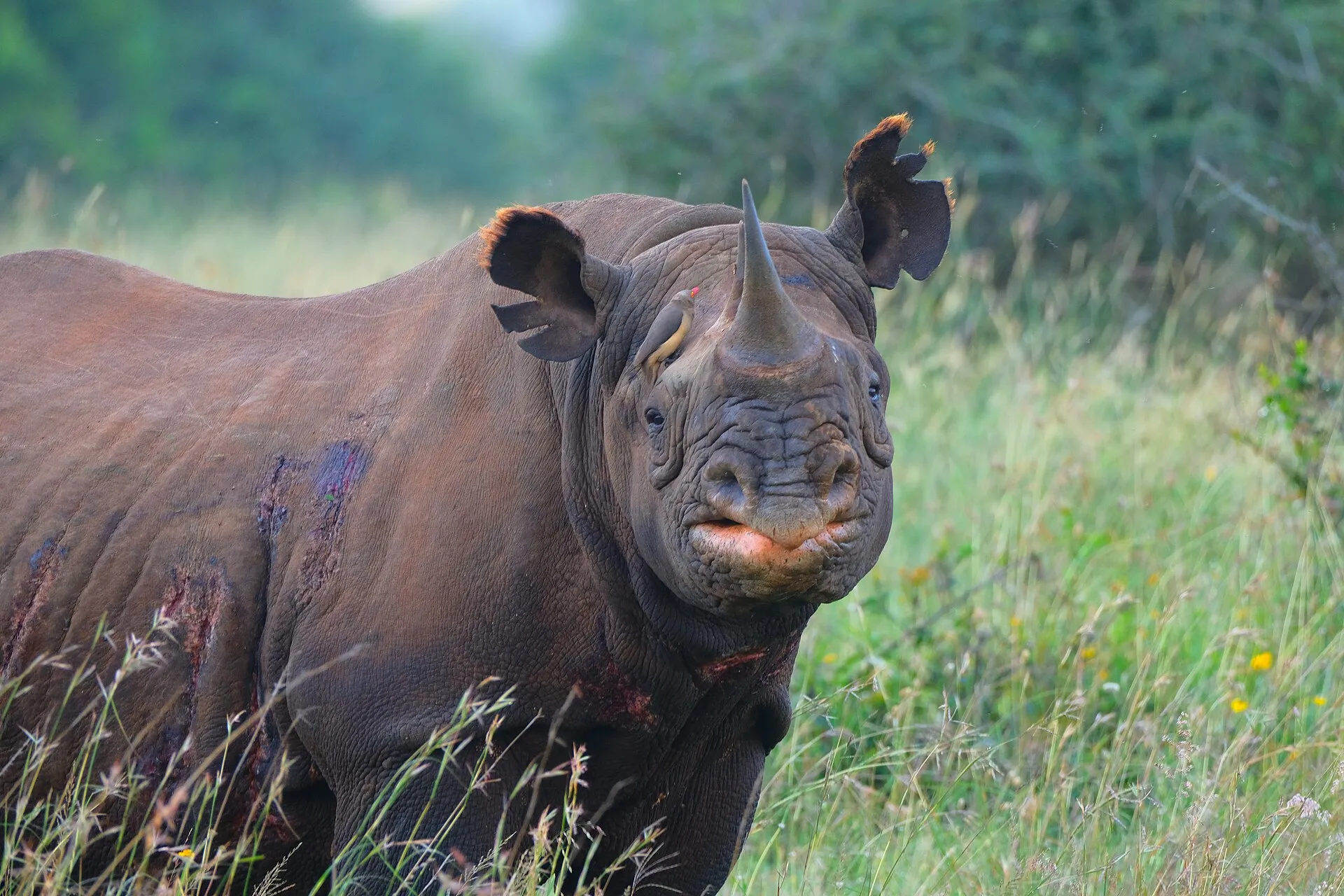
The names are confusing, because both species are grey. The real difference is the lip. The black rhino has a pointed, hooked upper lip for browsing on leaves and twigs, while the white rhino has a wide, square lip for grazing grass. Black rhinos are smaller, carry their heads higher, and usually live alone or as a mother and calf. White rhinos are larger and more social. Read about white rhinos at Ziwa.
Life of a black rhino
Black rhinos are mostly solitary and live in home ranges marked with dung piles and urine sprays. They feed on hundreds of plant species, including thorny acacias and euphorbias that few other animals can eat. A female gives birth to a single calf after a pregnancy of about 15 months, and the calf runs at its mother’s side, ready to hide in thick cover.
They have poor eyesight but excellent hearing and smell, and they can be nervous and quick to charge when surprised. Oxpeckers riding on their backs often give the first warning.
A conservation story
Black rhino numbers across Africa fell by more than 95 percent between 1970 and the early 1990s. Intensive protection, fenced sanctuaries, ranger teams and moving rhinos to safe new homes have since allowed numbers to grow again slowly. Kenya’s sanctuaries hold most of the world’s eastern black rhinos, and Rwanda’s reintroduction to Akagera has been one of the great recent successes.
scan the edges of thickets in the early morning and late afternoon, when black rhinos come into the open to feed.
Tips for seeing a black rhino
- Bring good binoculars; rhinos are often seen at a distance.
- Spend a full day in the Ngorongoro Crater or two nights at Ol Pejeta.
- Combine with Ziwa in Uganda to track white rhinos on foot.
- Never ask a guide to approach too closely; rhinos are sensitive to disturbance.
Remarkable rhino facts
- A black rhino’s horn is made of keratin, the same material as hair and fingernails, and has no proven medicinal value.
- Black rhinos can run at up to about 50 km/h despite their size.
- In Swahili a rhino is called kifaru, and many rangers know each animal in their care by name, ear notches and horn shape.
Frequently asked questions
What is the difference between black and white rhinos?
Black rhinos are smaller browsers with a pointed, hooked upper lip for pulling leaves from bushes, and they tend to live alone in thicker cover. White rhinos are larger grazers with a wide, square lip and often live in small groups. Both are grey.
Can I see black rhinos in Uganda?
No. Uganda’s native black rhinos were wiped out by the early 1980s. You can track white rhinos on foot at Ziwa Rhino Sanctuary on the way to Murchison Falls.
Where is the easiest place to see a black rhino?
Ol Pejeta in Kenya and the Ngorongoro Crater in Tanzania give the best chances, as rhinos are protected in a defined area with good visibility.
Are black rhinos aggressive?
They have a reputation for short tempers and may charge if surprised, which is why they are always watched from a vehicle or with armed rangers.
How many black rhinos are left?
Only a few thousand across Africa, up from a low point in the 1990s thanks to intensive protection, but still critically endangered.

Written by our Kampala-based planners and guides, who arrange these trips every season. Prices and rules are checked before every quote.