The common hippopotamus (Hippopotamus amphibius) spends its days in rivers and lakes and comes out at night to graze, walking several kilometres to feed on grass. Males can weigh well over 1.5 tonnes. Hippos are listed as Vulnerable. The Kazinga Channel in Uganda’s Queen Elizabeth National Park has one of Africa’s highest concentrations, and boat cruises on the Nile and Lake Naivasha also give close views.
Key takeaways
- Hippos spend the day in water and graze on land at night.
- They secrete a reddish fluid that protects their skin from the sun.
- They are territorial in water and among Africa’s most dangerous large animals.
- They are listed as Vulnerable.
- Boat cruises are the best way to see them safely.
Wondering where to see hippos? They are among the most familiar African animals, yet their lives are full of surprises. They spend the day half-submerged in rivers and lakes, grunting and yawning, then leave the water at dusk to graze on land through the night. They are social, territorial and, for all their bulk, remarkably agile.
Life in the water
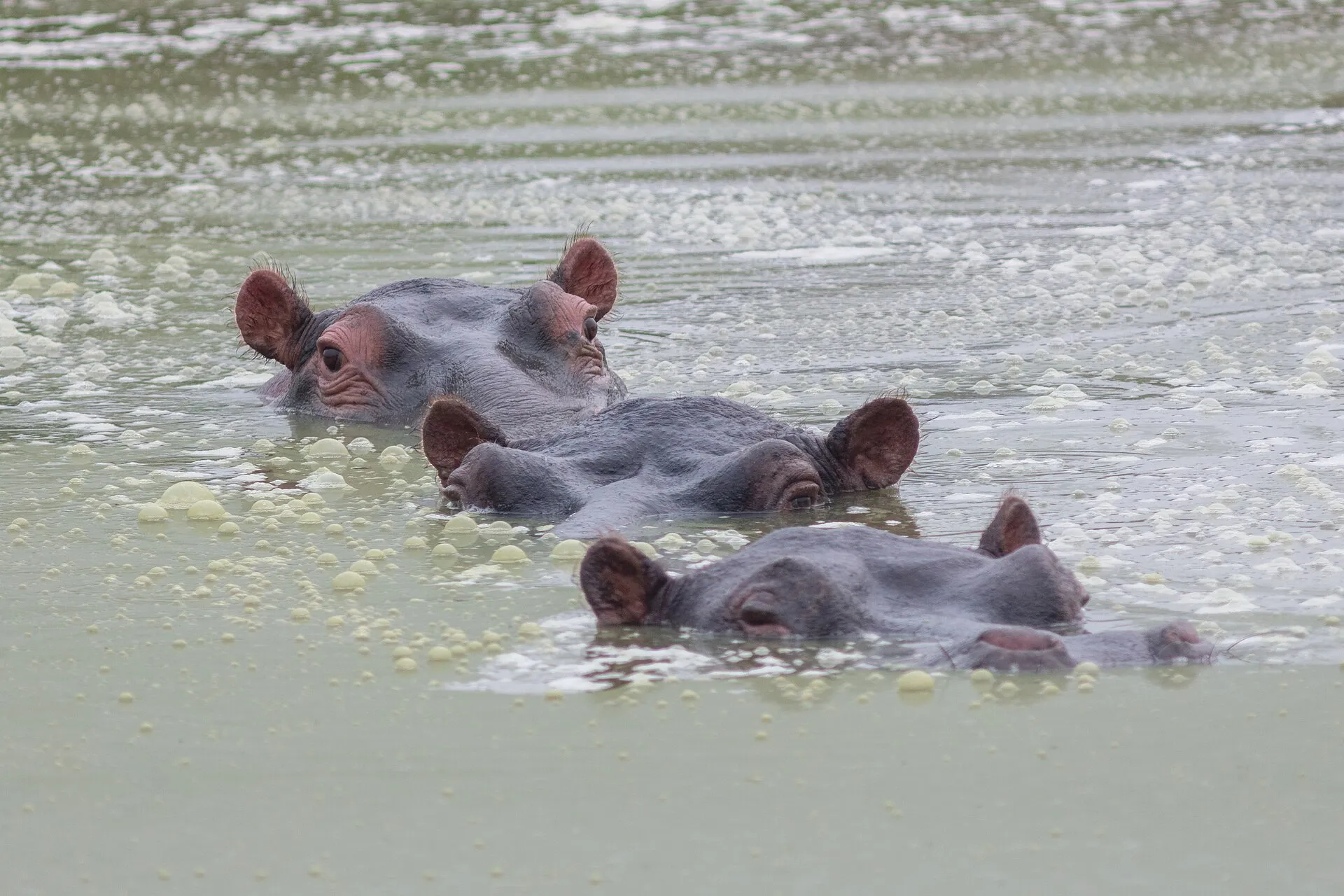
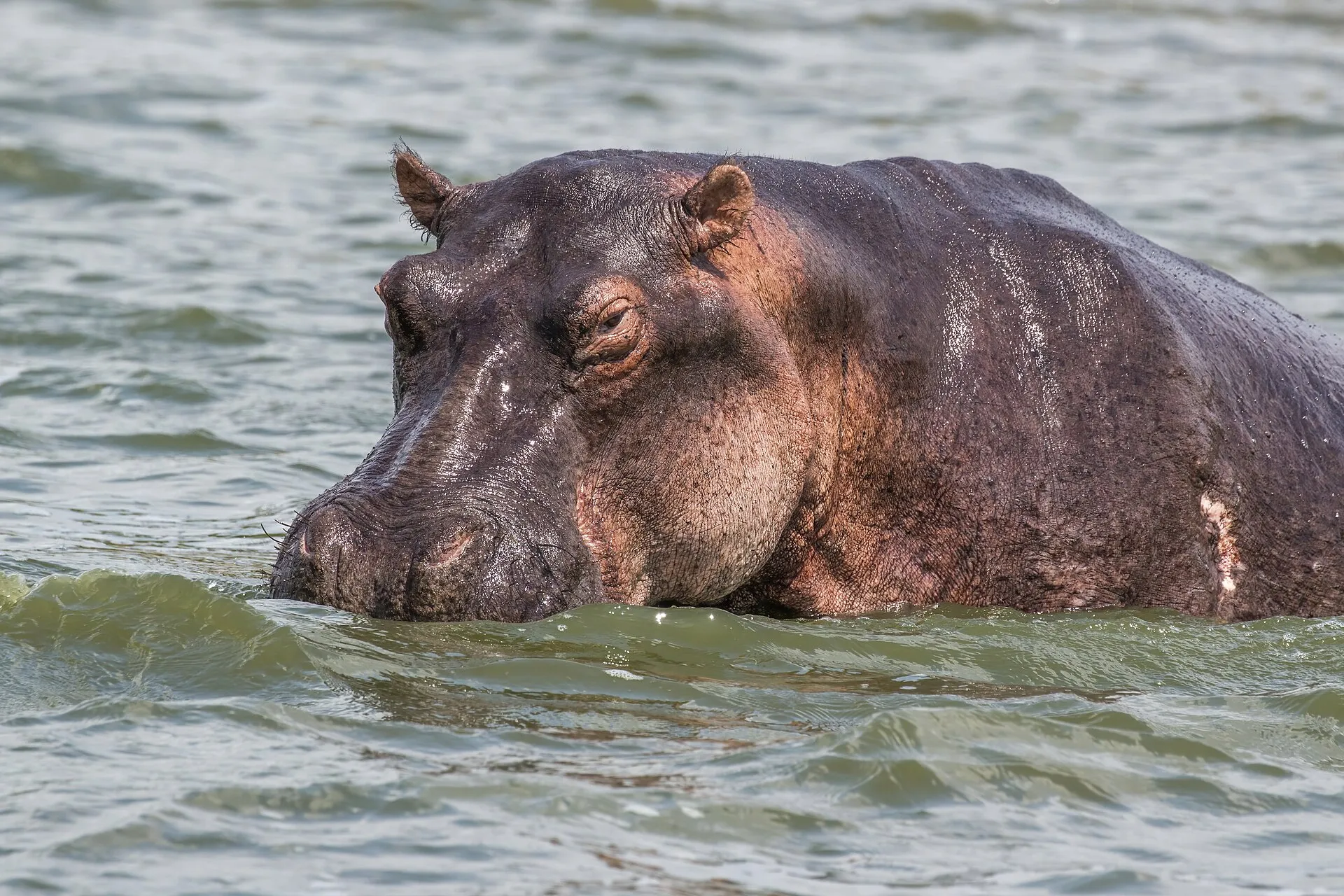
During the day hippos rest in water to keep cool and protect their sensitive skin from the sun. They live in groups, or pods, often of 10–30, sometimes many more, usually dominated by a territorial male. Eyes, ears and nostrils sit on top of the head, so they can see, hear and breathe while almost entirely submerged.
Hippos cannot really swim. They walk or push off the bottom, and can stay underwater for several minutes before surfacing to breathe.
A night-time grazer
At dusk, hippos leave the water and follow well-worn paths to grazing areas, sometimes walking several kilometres. They eat grass, cropping it with their wide lips, and return to the water before dawn. Their dung, spread in the water and on land, fertilises the rivers and supports fish and other life.
‘Blood sweat’
Hippos secrete a reddish, oily fluid from glands in their skin. Once thought to be blood, it acts as a natural sunscreen and moisturiser and may help protect wounds from infection.
Why hippos are dangerous
Hippos are among the most dangerous large animals in Africa. Males defend their stretch of water fiercely, mothers protect their calves, and on land a hippo can run faster than a person over short distances. Most dangerous encounters happen when people come between a hippo and the water at night. On safari, you watch them safely from a boat or vehicle with an experienced guide.
Where to see hippos
- Kazinga Channel, Queen Elizabeth NP, Uganda: one of the highest concentrations in Africa, seen at close range from the launch.
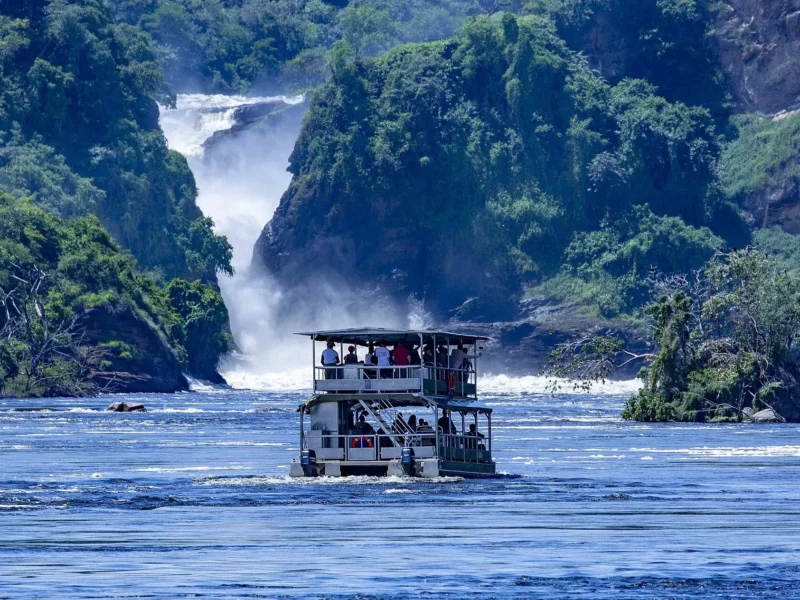
- Murchison Falls, Uganda: pods all along the Nile on the launch trip to the falls.
- Lake Mburo, Uganda and Lake Ihema in Akagera, Rwanda, both on boat trips.
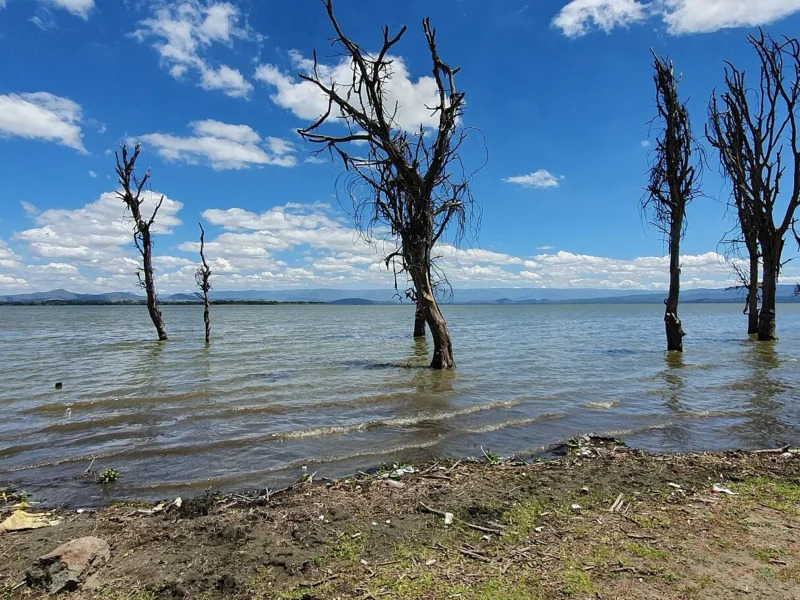
- Lake Naivasha and the Masai Mara, Kenya, and the hippo pool in the Ngorongoro Crater, Tanzania.
Hippos yawn to display their tusks, especially males. Keep your camera ready and focused on the dominant male in a pod; the yawn usually comes without warning.
Conservation
The common hippopotamus is listed as Vulnerable. It is threatened by habitat loss, conflict with farmers whose crops it eats at night, and poaching for meat and ivory (hippo teeth). Protected areas like Queen Elizabeth hold healthy populations and are vital for the species’ future.
Best time to see hippos
Hippos are visible all year. In the dry seasons they concentrate in the remaining deep pools and channels, which makes them easier to see in large numbers.
Remarkable hippo facts
- The name hippopotamus comes from Greek for ‘river horse’, but their closest living relatives are whales and dolphins.
- A hippo’s canine tusks keep growing throughout its life and can be over 30 cm long.
- Calves are often born in water and can suckle underwater.
- Hippos communicate with grunts and wheezes that carry over water, and with sounds transmitted underwater.
Frequently asked questions
Do hippos sweat blood?
No. They secrete a reddish, oily fluid from their skin that acts as a sunscreen and may have antibacterial properties. It looks like blood, hence the myth.
Can hippos swim?
Not really. They walk or bounce along the bottom of rivers and lakes and can hold their breath for several minutes.
Why are hippos dangerous?
They are territorial in water and protective of their young, and on land they can run surprisingly fast. Most incidents happen when people come between hippos and water.
What do hippos eat?
Mainly grass, grazed at night on land, often several kilometres from the water.
Where is the best place to see hippos?
The Kazinga Channel in Queen Elizabeth National Park, Uganda, and the Nile below Murchison Falls.
How many hippos live in the Kazinga Channel?
Thousands of hippos live along the channel and in the neighbouring Lakes George and Edward, one of the highest concentrations in Africa, though numbers vary with water levels and seasons.

Written by our Kampala-based planners and guides, who arrange these trips every season. Prices and rules are checked before every quote.