The leopard (Panthera pardus) is a solitary big cat found across sub-Saharan Africa, recognisable by its rosette-patterned coat. It is mostly active at night, hunts by stalking and ambush and often drags its kill into a tree away from lions and hyenas. Leopards are listed as Vulnerable. The Serengeti’s Seronera valley, the Masai Mara, Samburu, Queen Elizabeth and Murchison are among the best places to see them.
Key takeaways
- Leopards are solitary and mostly nocturnal.
- They store kills in trees to keep them from lions and hyenas.
- Each leopard’s rosette pattern is unique.
- They are listed as Vulnerable.
- Seronera, the Mara and Samburu are top leopard areas; night drives help in Uganda.
Spotting a leopard is the moment many safari-goers remember most. A tail hanging from a sausage tree, a pair of eyes in the long grass, or a cat slinking across the track at dusk: leopards are masters of concealment, and every sighting feels earned.
Appearance
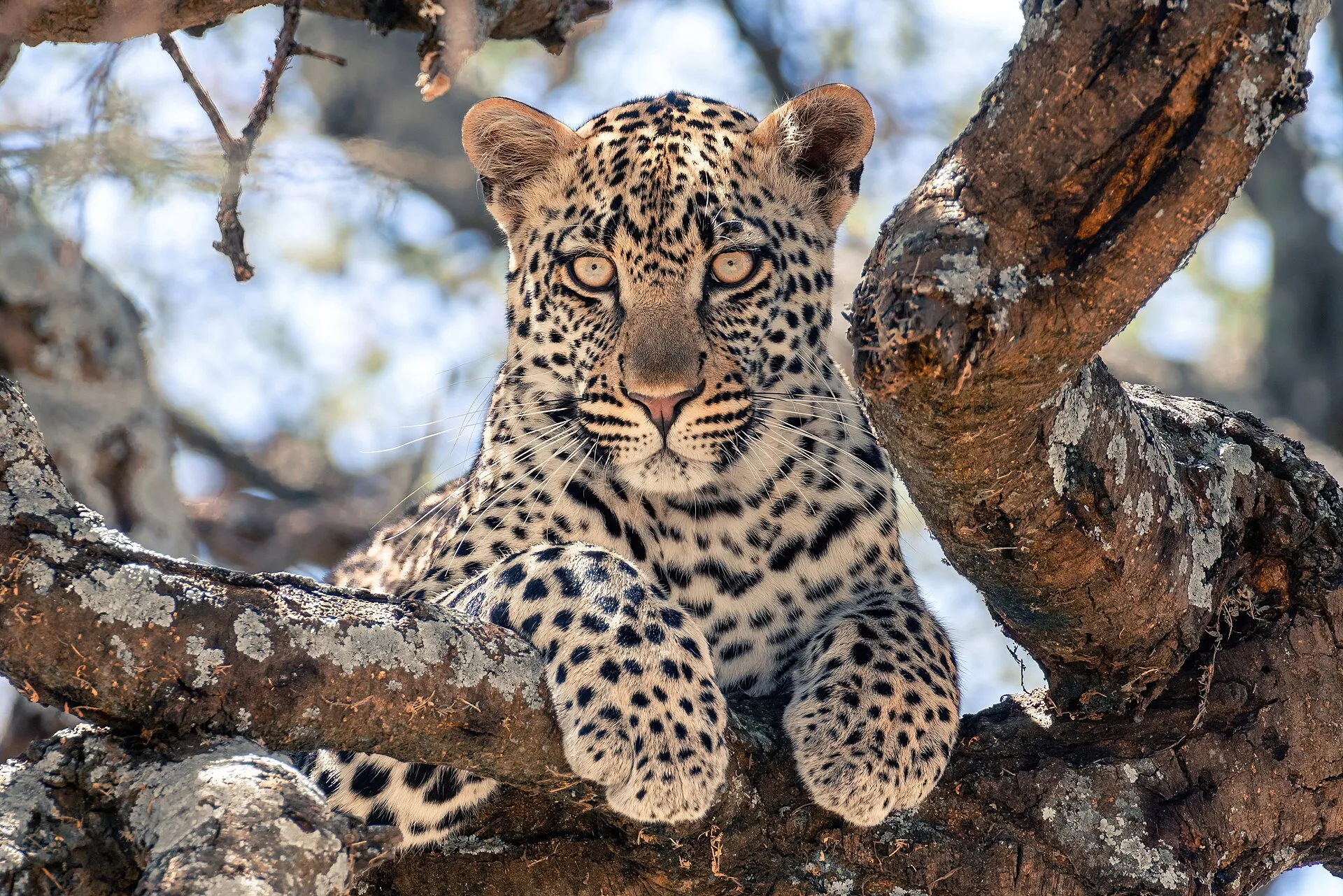
Leopards have golden coats covered in rosettes, rings of black spots, which break up their outline in dappled light. Each leopard’s pattern is unique. They are powerfully built, with a large head, strong jaws and a long tail used for balance in trees. Males are noticeably larger than females.
A solitary life
Leopards live alone, except for mothers with cubs and pairs during mating. Each holds a territory, marked with scent and scratch marks, which may overlap with those of the opposite sex. They are mostly active at night and during dawn and dusk, resting in trees, thickets or rocky outcrops during the day.
Hunting
Leopards are opportunistic hunters with one of the widest diets of any big cat: antelope, warthogs, monkeys, hares, birds and even fish. They stalk close to their prey before a short, powerful rush. To protect their kill from lions and hyenas, they often drag it up into a tree, where they can return to feed over several days.
Where to see leopards
| Area | Country | Notes |
|---|---|---|
| Seronera valley, Serengeti | Tanzania | One of Africa’s best leopard areas, in sausage and acacia trees along rivers |
| Masai Mara | Kenya | Riverine forests along the Talek and Mara rivers |
| Samburu | Kenya | Famous for leopards along the Ewaso Ng’iro |
| Queen Elizabeth | Uganda | Channel Track and Kasenyi at dawn and dusk |
| Lake Mburo | Uganda | Night game drives |
Listen for alarm calls. Baboons barking, vervet monkeys chattering or impala snorting often mean a leopard is nearby.
Remarkable leopard facts
- Leopards can leap several metres and climb trees with ease, even carrying heavy prey.
- They are strong swimmers and will catch fish and crabs.
- Black leopards, often called black panthers, are leopards with a genetic variation that makes their coat dark; the rosettes are still faintly visible.
- Leopards communicate with a rasping call that sounds like sawing wood.
Threats and conservation
Leopards are listed as Vulnerable. Across Africa they have lost much of their range to farming and settlement, and they are threatened by conflict with livestock owners, snares and illegal trade in skins. Large protected areas like the Serengeti, the Mara and Uganda’s national parks are strongholds, and responsible tourism helps make living leopards more valuable than dead ones.
Best time to see leopards
Leopards are seen year-round. In the dry season, shorter grass and thinner foliage make them easier to spot, and they concentrate near rivers where prey comes to drink.
Leopard or cheetah?
| Feature | Leopard | Cheetah |
|---|---|---|
| Build | Stocky and muscular | Slender, long-legged |
| Coat | Rosettes (rings of spots) | Solid round spots |
| Face | No tear lines | Black ‘tear lines’ from eyes to mouth |
| Activity | Mostly night, dawn and dusk | Mostly daytime |
| Hunting | Stalk and ambush, often hoists prey into trees | High-speed chase in the open |
Photographing leopards
Leopards are often found resting in trees in dappled light. Expose for the cat rather than the bright sky behind it, use a long lens and be patient: a leopard that is asleep may wake, stretch and climb down, giving you the best shots of the day.
Frequently asked questions
How do you find leopards on safari?
Guides scan large trees along rivers for dangling tails, look for fresh tracks and follow the alarm calls of baboons, monkeys and antelope.
What is the difference between a leopard and a cheetah?
Leopards are stockier, with rosettes (rings) rather than solid spots, and no black tear lines on the face. Cheetahs are slender, built for speed, and hunt by day.
Can leopards climb with prey?
Yes. A leopard can haul a carcass heavier than itself several metres up a tree.
Are leopards seen in Uganda?
Yes, in Queen Elizabeth (especially along the Channel Track), Murchison Falls and on night drives at Lake Mburo, though sightings need luck.
When is the best time to see leopards?
Early morning and late afternoon, and on night drives where they are permitted.
Can I see leopards on a gorilla safari?
Yes, with luck. Queen Elizabeth National Park is on most gorilla routes, and a dawn or dusk drive along the Channel Track gives a chance of a leopard; a night drive at Lake Mburo is another good option.

Written by our Kampala-based planners and guides, who arrange these trips every season. Prices and rules are checked before every quote.