Rothschild’s giraffe is now considered part of the Nubian giraffe (Giraffa camelopardalis camelopardalis), one of the rarest giraffes in Africa. Most of the world’s wild Nubian giraffes live in Uganda, with about 2,250 in Murchison Falls National Park. They are recognised by their unmarked white lower legs. Uganda has moved giraffes to Lake Mburo, Kidepo and Pian Upe to spread the population.
Key takeaways
- Rothschild’s giraffe is now grouped with the Nubian giraffe.
- Murchison Falls holds about 2,250, the world’s largest population.
- Recognise them by their white, unpatterned lower legs.
- Uganda has translocated giraffes to Lake Mburo, Kidepo and Pian Upe.
- Kenya’s Lake Nakuru also has a population.
The sight of a tower of giraffes walking across the plains north of the Nile in Murchison Falls is one of Uganda’s great safari moments. These are Rothschild’s giraffes, one of the rarest kinds of giraffe in Africa, and Uganda holds more of them than anywhere else.
Recognising Rothschild’s giraffe
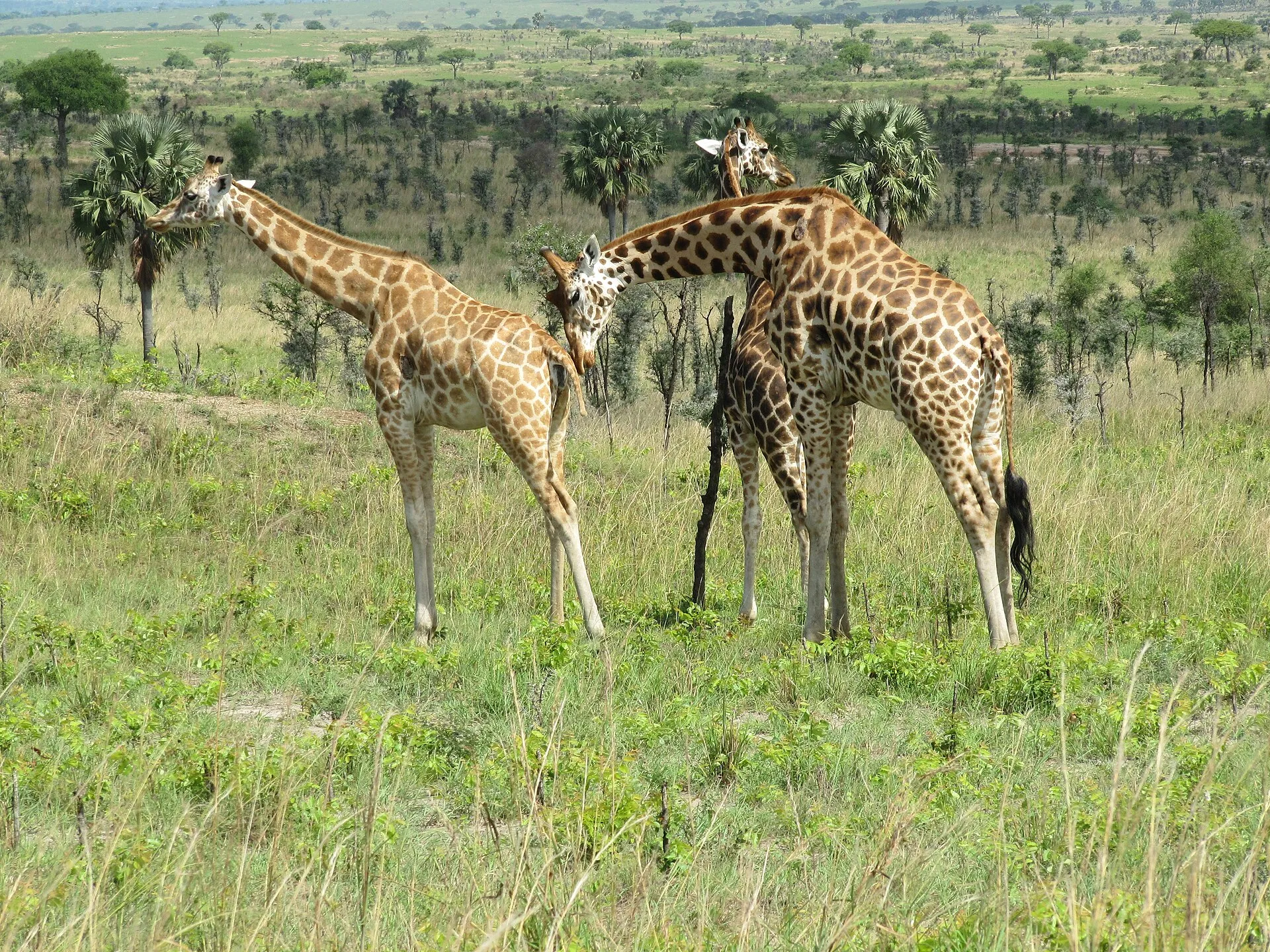
Rothschild’s giraffes are tall and dark, with large, deep-brown patches separated by creamy lines. The easiest feature to spot is the legs: below the knees they are white and unpatterned, as if the giraffe is wearing stockings. Males often have three to five horn-like ossicones, including a central bump on the forehead.
Rothschild’s or Nubian?
Genetic research over the past decade led giraffe experts to group Rothschild’s giraffe with the Nubian giraffe (Giraffa camelopardalis camelopardalis). In practice, the name Rothschild’s giraffe is still widely used by guides and visitors in Uganda and Kenya. Whatever the name, it is one of Africa’s most threatened giraffes.
Giraffes in Uganda
In the 1990s only a small number of giraffes survived in Uganda. Today the population in Murchison Falls National Park is about 2,250, according to photographic surveys in 2022–23, making it the largest in the world. To spread the risk and restore giraffes to their former range, the Uganda Wildlife Authority and partners have moved giraffes to:
- Lake Mburo National Park, where 15 arrived in 2015.
- Kidepo Valley National Park, strengthening the existing small herd.
- Pian Upe Wildlife Reserve in eastern Uganda.
A small herd also lives south of the Nile in Murchison.
Behaviour and diet
Giraffes browse on the leaves of acacias and other trees, using their long, prehensile tongues to strip leaves from thorny branches. They live in loose herds that change composition, and they can go long periods without drinking, getting much of their water from leaves. When they do drink, they splay their front legs awkwardly, a vulnerable moment when lions may attack.
Where to see them
- Murchison Falls: the Buligi tracks north of the Nile are the best place in the world to see Rothschild’s giraffes, often in groups of dozens. See game drives in Murchison Falls.
- Lake Mburo: easy to combine with a gorilla safari.
- Lake Nakuru, Kenya: a translocated population in the Lake Nakuru rhino sanctuary.
Giraffes look best silhouetted against the sky at sunset or framed by acacias. Position yourself low and use the Nile or the Murchison plains as a backdrop.
Conservation
Giraffe numbers across Africa have fallen by about a third in recent decades, a ‘silent extinction’. Nubian giraffes are among the most threatened, so Uganda’s growing population is an important success, supported by anti-poaching patrols, translocations and monitoring.
Remarkable giraffe facts
- A giraffe’s neck has seven vertebrae, the same number as a human’s, but each can be over 25 cm long.
- Their tongues are dark blue-black and about 45 cm long, protecting them from sunburn while feeding.
- Giraffes sleep very little, often in short naps of a few minutes, sometimes standing up.
- Calves are born from a height of nearly two metres and can stand within an hour.
- Each giraffe’s coat pattern is unique, like a fingerprint, which researchers use to identify individuals in photographic surveys.
Seeing them on your trip
Murchison Falls fits easily into a northern Uganda safari, combined with rhino tracking at Ziwa on the way. Lake Mburo is the easiest option on a gorilla safari, as it lies on the road between Entebbe and Bwindi.
Frequently asked questions
How do I recognise a Rothschild’s giraffe?
Look at the legs: Rothschild’s (Nubian) giraffes have no markings below the knees, as if wearing white stockings. Their patches are large, dark and separated by cream lines.
Why the name change?
Genetic studies led giraffe experts to group Rothschild’s giraffe within the Nubian giraffe. The name Rothschild’s giraffe is still widely used.
Where are most Nubian giraffes?
In Uganda, especially Murchison Falls National Park.
Can I see them at Lake Mburo?
Yes. Fifteen giraffes were moved from Murchison to Lake Mburo in 2015, and the population there has grown.
How tall are giraffes?
Adult males can reach about 5.5–6 metres, making them the tallest animals on earth.
How do giraffes defend themselves?
With powerful kicks from their long legs, which can injure or kill a lion. Adults have few predators, but calves are vulnerable to lions and hyenas.

Written by our Kampala-based planners and guides, who arrange these trips every season. Prices and rules are checked before every quote.