Adventure 7 days7-Day Kilimanjaro Climb: Rongai Route
The only route from the north, close to the Kenyan border: quiet, drier trails, wide views over the plains and a night beneath the jagged spires of Mawenzi before the climb to Uhuru Peak.

Kilimanjaro’s classic hut route: six days with a night in mountain huts each evening and an acclimatisation day, climbing to Gilman’s Point and Uhuru Peak at 5,895 metres.
The Marangu route is Kilimanjaro’s oldest route and the only one with hut accommodation for the whole climb. This six-day version includes an extra acclimatisation day at Horombo Hut, which improves your chances of reaching Uhuru Peak at 5,895 metres.
You walk through rainforest, heath and moorland, and across the alpine desert of the saddle to Kibo Hut, before the summit night climb to Gilman’s Point and Uhuru Peak. Nights are spent in simple huts with bunks, which many climbers find more comfortable than tents.
Tipping guides, cooks and porters is customary on Kilimanjaro and makes up an important part of their income. We give you clear, fair guidelines before the climb, and tips are usually handed over at a small ceremony at the end of the trek.
After registration at Marangu Gate, walk through beautiful rainforest on a well-made path, looking for blue monkeys and black-and-white colobus. Arrive at Mandara Hut, a group of wooden A-frame huts in a forest clearing. In the afternoon, walk to the nearby Maundi Crater for views over the plains.
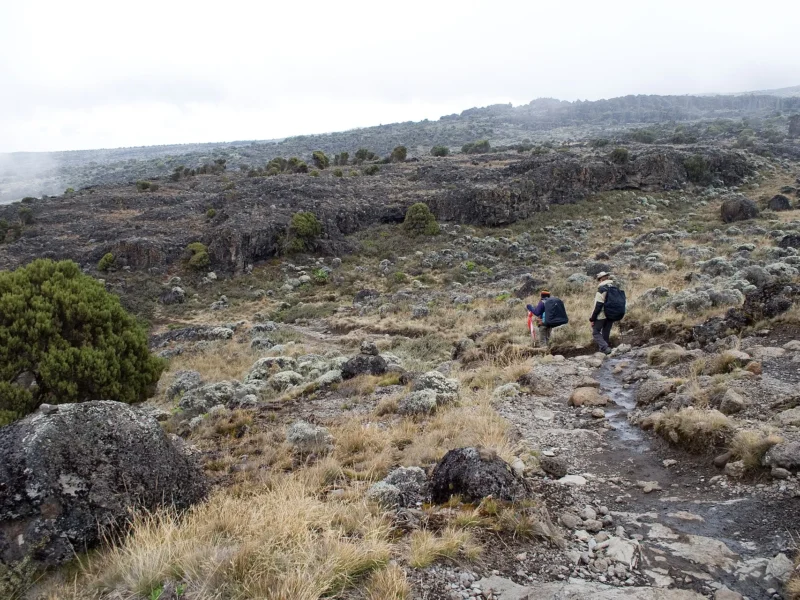
Leave the forest and climb through heath and moorland dotted with giant lobelias and groundsels, with the peaks of Kibo and Mawenzi ahead. Horombo Hut sits on a ridge with views over the clouds.
An important rest and acclimatisation day. Hike up towards Zebra Rocks or the Mawenzi saddle, gaining height before returning to Horombo to sleep, following the ‘climb high, sleep low’ principle. The extra day greatly improves your chance of reaching the summit.
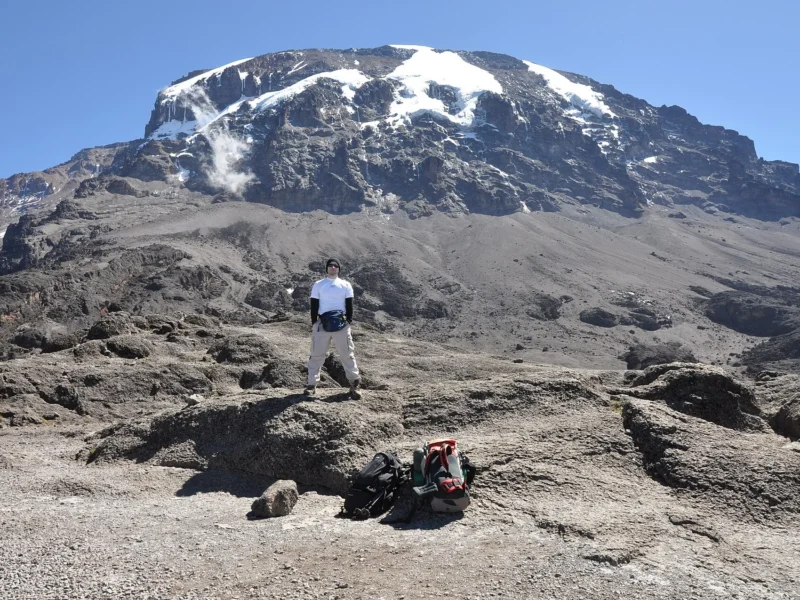
Cross the stark alpine desert of the saddle between Mawenzi and Kibo to Kibo Hut at the foot of the summit cone. Eat early, prepare your gear and rest: the summit attempt begins around midnight.
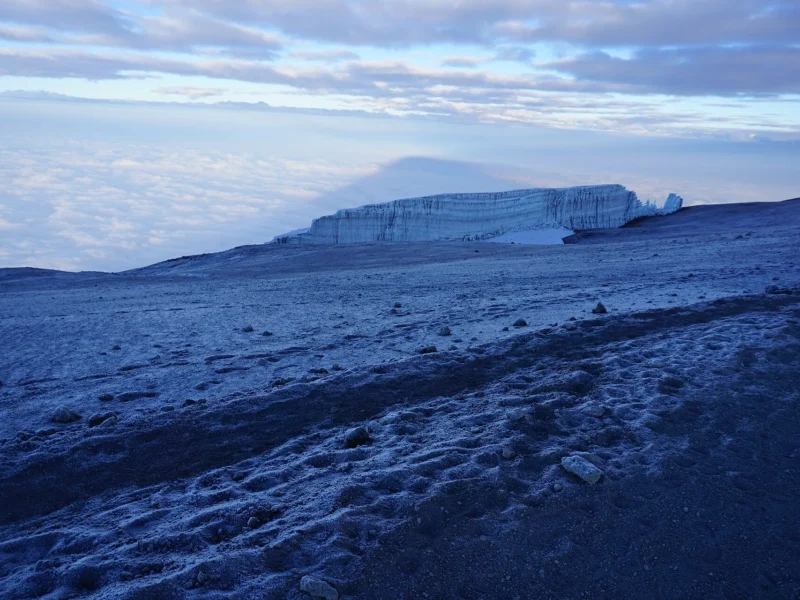
Climb by headlamp up steep scree and switchbacks to Gilman’s Point on the crater rim at about 5,685 metres, reached around sunrise. Continue along the rim, past glaciers, to Uhuru Peak, the highest point in Africa. Then descend to Kibo Hut for a rest and on to Horombo Hut for the night.
After breakfast at Horombo, descend through the moorland and back into the rainforest, a long but easy walk on a good path, often with monkeys in the trees near the gate. At Marangu Gate, sign out of the park and collect your summit certificate, then share a final celebration with your guides and porters before transferring to your hotel in Moshi or Arusha for a hot shower and a well-earned rest.
Lodges shown match the quoted price. Ask us about mid-range and luxury upgrades.


Its gradients are gentler and it has huts, but the summit day is just as hard. The acclimatisation day helps success rates.
Simple dormitory huts with bunks and mattresses, shared toilets and dining halls. They are warmer and drier than tents.
The extra acclimatisation day at Horombo greatly improves the chance of reaching the summit compared with the five-day version.
January to mid-March and June to October are the driest months.
No technical skills are needed, but good fitness and preparation are essential.
Yes. The huts are dormitory-style and shared with other groups, which adds to the sociable atmosphere of the route. Bring earplugs for a better night’s sleep.
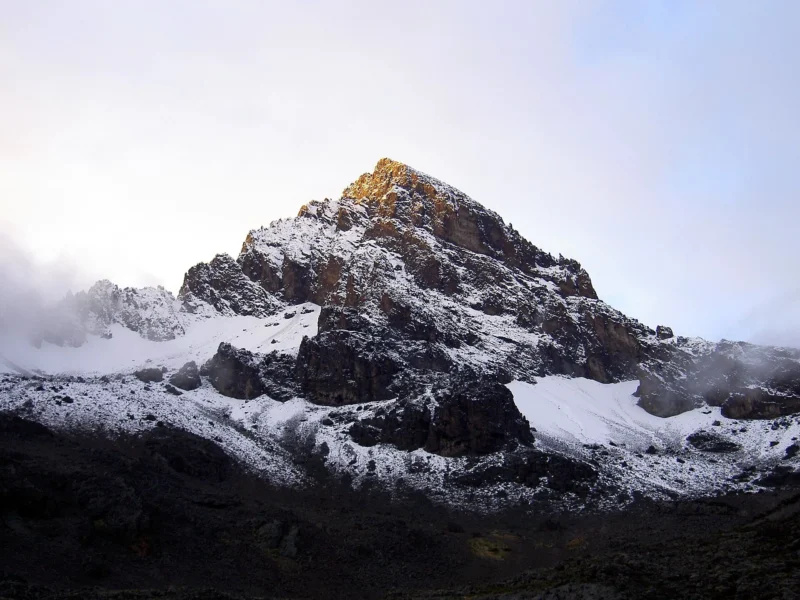
Yes. Mawenzi, Kilimanjaro’s jagged second peak, dominates the views from Horombo and the saddle, and the acclimatisation hike takes you towards it.
Adventure 7 daysThe only route from the north, close to the Kenyan border: quiet, drier trails, wide views over the plains and a night beneath the jagged spires of Mawenzi before the climb to Uhuru Peak.
Adventure 8 daysThe quiet western approach to Africa’s highest mountain: eight days from remote rainforest across the Shira Plateau and round the southern slopes, with the slow ascent that gives climbers the best chance of reaching Uhuru Peak.
Wildlife 7 daysAfrica’s wild south: boat safaris on the Rufiji River and wild dogs in Nyerere, then the baobab hills, kudu and huge lion prides of Ruaha, linked by light aircraft and shared with very few other travellers.
Change the dates, add a night, upgrade a lodge or combine it with Rwanda or Kenya. Tell us what you have in mind and we’ll send a revised plan and price.