Adventure 6 days6-Day Kilimanjaro Climb: Marangu Route
Kilimanjaro’s classic hut route: six days with a night in mountain huts each evening and an acclimatisation day, climbing to Gilman’s Point and Uhuru Peak at 5,895 metres.

The only route from the north, close to the Kenyan border: quiet, drier trails, wide views over the plains and a night beneath the jagged spires of Mawenzi before the climb to Uhuru Peak.
The Rongai route is the only trail that climbs Kilimanjaro from the north, starting close to the Kenyan border. It is one of the quietest routes on the mountain and the driest, because the northern slopes are in the rain shadow of the peak. The seven-day version adds a night at Mawenzi Tarn, one of the most spectacular campsites on Kilimanjaro, which also improves acclimatisation.
You go up on the north side and come down on the Marangu route to the south-east, so you see two very different faces of the mountain.
Rongai suits climbers who want a quieter, gentler trail and those climbing in the shoulder or rainy months. If you want the most varied scenery, the Lemosho route or the Machame route cross the southern slopes under the glaciers. Read climbing Kilimanjaro to compare all the routes.
The pace is slow and steady, porters carry all the camping equipment, and a cook prepares hot meals. Your guide checks your oxygen levels and pulse each day. Days on the north side are often clear and sunny, and nights are cold, especially at Mawenzi Tarn and Kibo. Summit night is long and demanding, but reaching the crater rim at dawn is the reward.
Many climbers rest for a night in Moshi and then join a safari to Tarangire, the Ngorongoro Crater and the Serengeti, or fly to Zanzibar for a few days on the beach. See the 7-day Tanzania northern circuit safari.
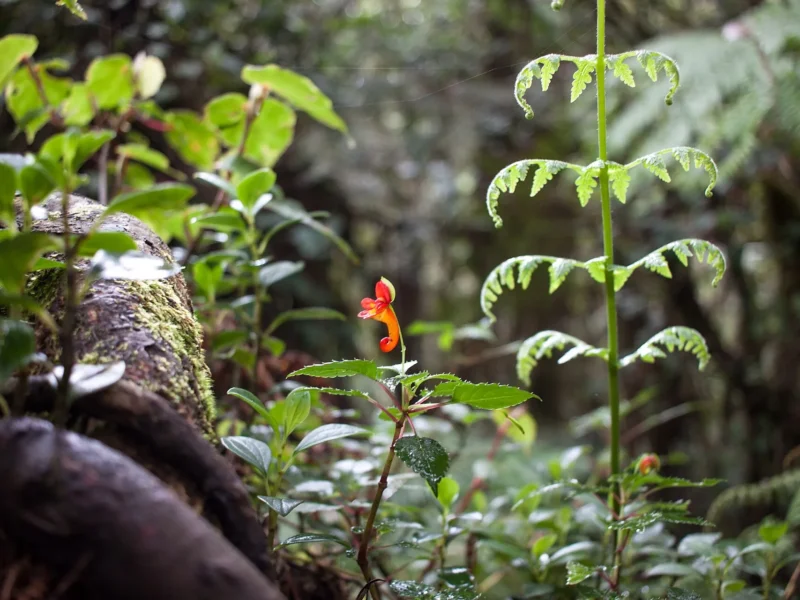
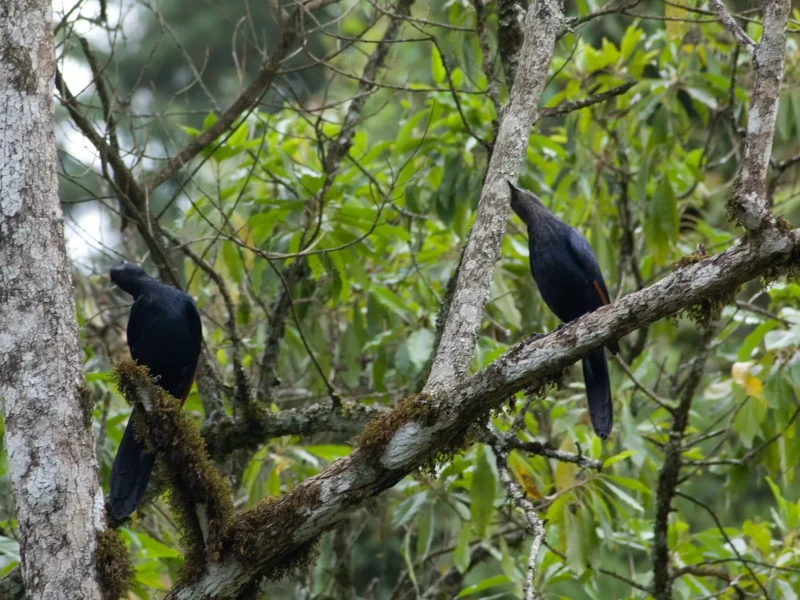
Drive from Moshi round the eastern side of the mountain to the village of Nale Moru near the Kenyan border, the start of the Rongai route. After registration, walk up through farmland and a belt of pine and montane forest, where colobus monkeys are often seen, to Simba Camp on the edge of the moorland.
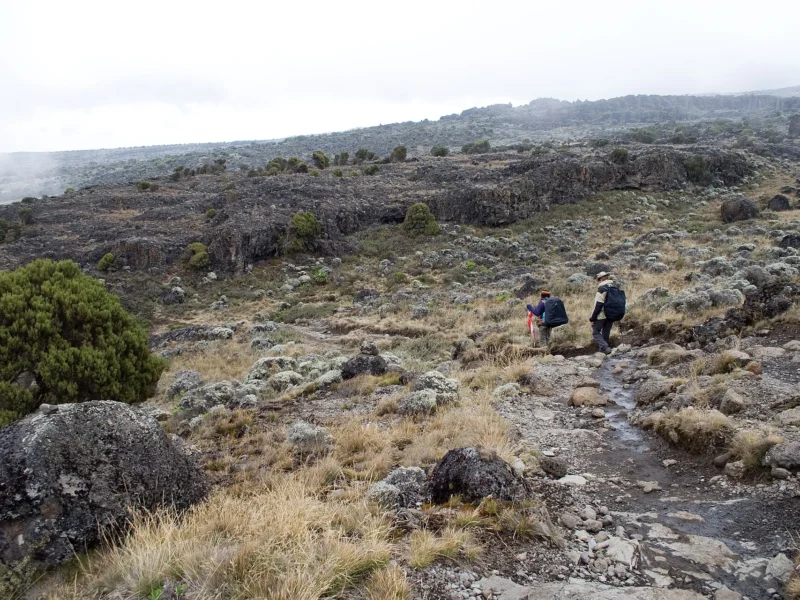
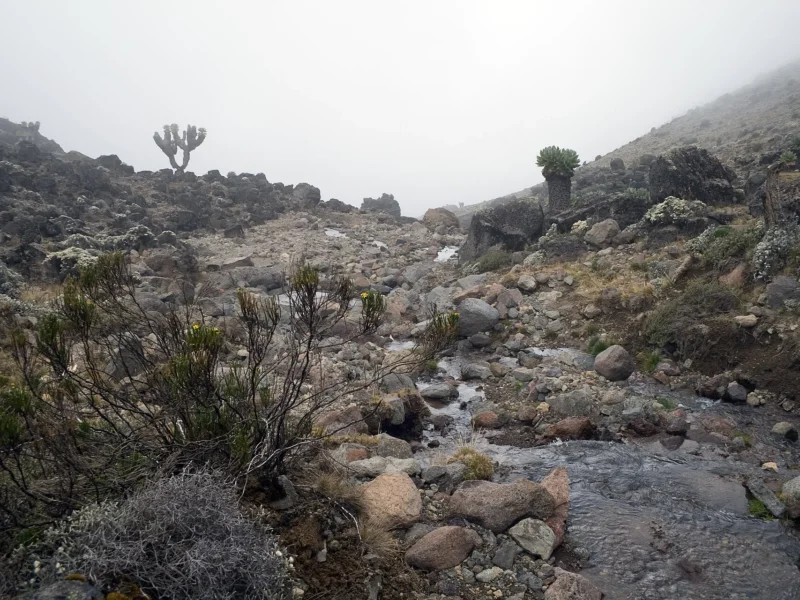
Climb steadily through heath and moorland with views back over the plains of Kenya and, ahead, the snows of Kibo. Camp is near a rock shelter called Second Cave, once used by early climbers.
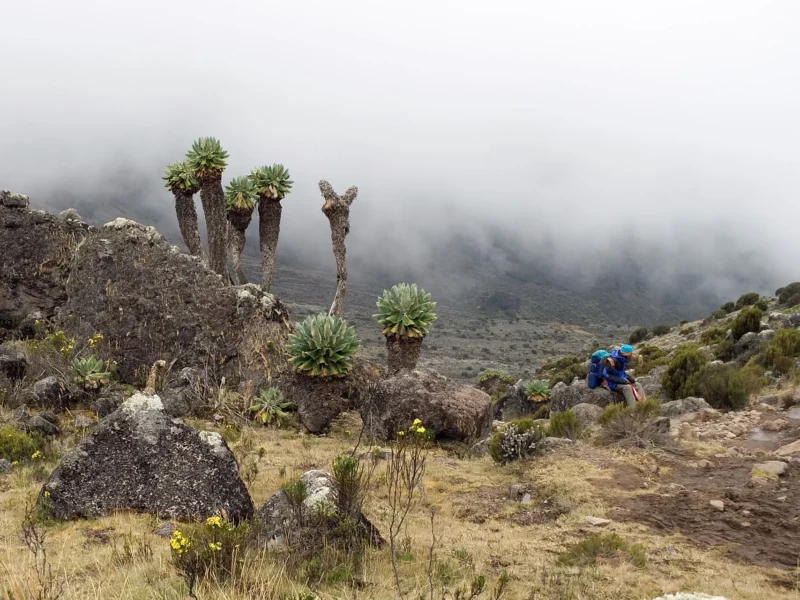
Leave the main path and head across the moorland towards the jagged peaks of Mawenzi. This short day is planned to help acclimatisation, and Kikelewa Camp, in a sheltered valley with giant groundsels, is a peaceful place to rest.
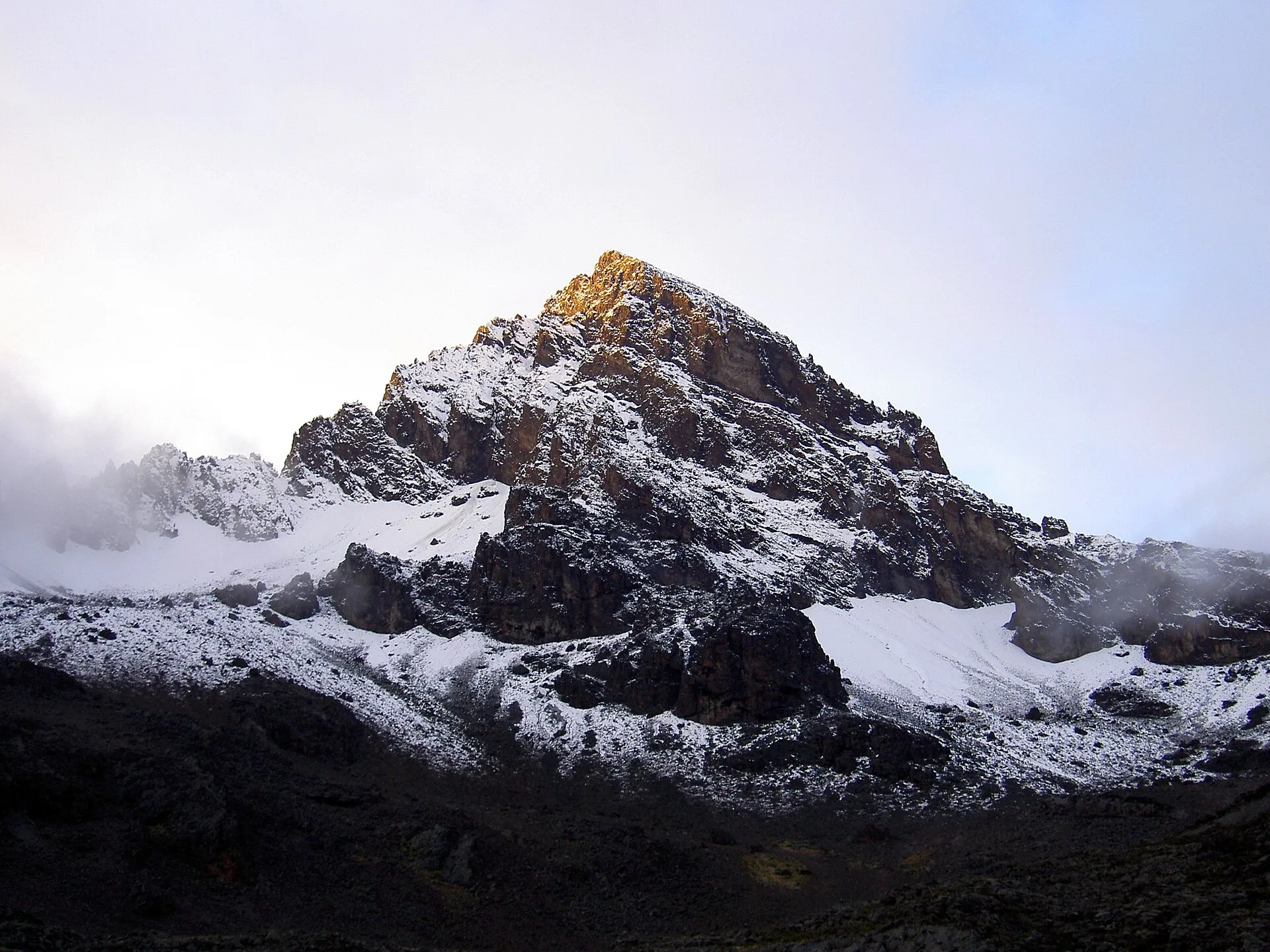
A steep but short climb brings you to Mawenzi Tarn, a small lake in a natural amphitheatre below the spires of Mawenzi, Kilimanjaro’s second summit. In the afternoon, an acclimatisation walk higher up the ridges helps your body prepare for the days ahead.
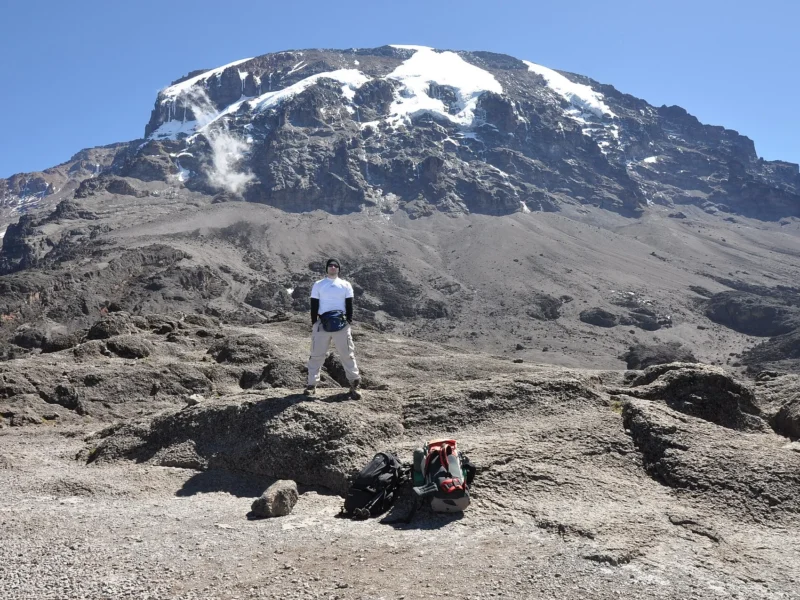
Cross the Saddle, a wide, empty alpine desert between Mawenzi and Kibo, with the summit cone getting closer all the time. Arrive at Kibo Hut, the base camp for the summit, for an early dinner and rest before midnight.
Begin around midnight and climb by headlamp up the steep scree, past Hans Meyer Cave to Gilman’s Point on the crater rim (about 5,685 m). Continue along the rim past the glaciers to Uhuru Peak for sunrise or soon after. Descend to Kibo Hut for a rest and a meal, then walk down to Horombo.
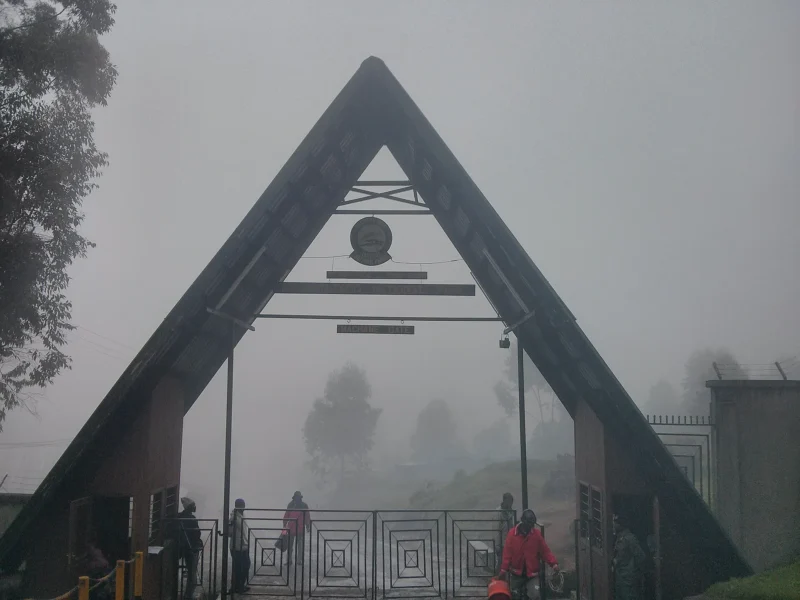
Descend through moorland and rainforest on the Marangu route to Marangu Gate, where you receive your summit certificate and celebrate with your crew. Transfer back to your hotel.
Lodges shown match the quoted price. Ask us about mid-range and luxury upgrades.
National park, camping and rescue fees for the climb are included in your quote, together with your guides, porters and cook. We confirm the current fees when we quote.
For a full breakdown, see how much a Tanzania safari costs.
In Tanzania, June to October is the long dry season, the classic time for the northern circuit and the river crossings in the north of the Serengeti. Calving around Ndutu peaks from roughly January to March, and April and May bring the long rains. See the best time to visit Tanzania.
For the climb itself, the driest and most popular windows are January to early March and June to October.
Every trip can be adjusted to your dates, budget and pace. Ask for a free quote and a specialist will reply within 24 hours.


It is quieter, drier and gentler than the southern routes, which makes it a good choice in the rainy months and for climbers who prefer fewer people. The night at Mawenzi Tarn is a highlight.
The gradients are gentler and there is no Barranco Wall, but the summit night from Kibo Hut is just as hard. Seven days with the Mawenzi Tarn stop gives good acclimatisation.
Rongai has less forest and fewer views of the southern glaciers, but it has wide views over the plains of Kenya, Mawenzi’s spires and the stark beauty of the Saddle.
All year, but especially in the wetter months, as the northern side receives less rain. January to March and June to October are driest overall.
No, all nights are in tents, including at Kibo and Horombo, where we camp near the huts.
Adventure 6 daysKilimanjaro’s classic hut route: six days with a night in mountain huts each evening and an acclimatisation day, climbing to Gilman’s Point and Uhuru Peak at 5,895 metres.
Adventure 7 daysAfrica’s highest summit on its most scenic route: seven days through rainforest and moorland, over the Barranco Wall and up to Uhuru Peak at 5,895 metres for sunrise above the clouds.
Adventure 8 daysThe quiet western approach to Africa’s highest mountain: eight days from remote rainforest across the Shira Plateau and round the southern slopes, with the slow ascent that gives climbers the best chance of reaching Uhuru Peak.
Change the dates, add a night, upgrade a lodge or combine it with Rwanda or Kenya. Tell us what you have in mind and we’ll send a revised plan and price.