Bigodi Wetland Sanctuary, next to Kibale National Park, is a community-run reserve protecting a papyrus swamp and its fringing forest. A guided walk of two to three hours on boardwalks and trails brings red colobus, L’Hoest’s monkeys and other primates, plus around 200 bird species, including the great blue turaco. Fees support local schools and health projects through the community association.
Key takeaways
- Community-run by a local association since the early 1990s.
- Primates including red colobus and L’Hoest’s monkeys.
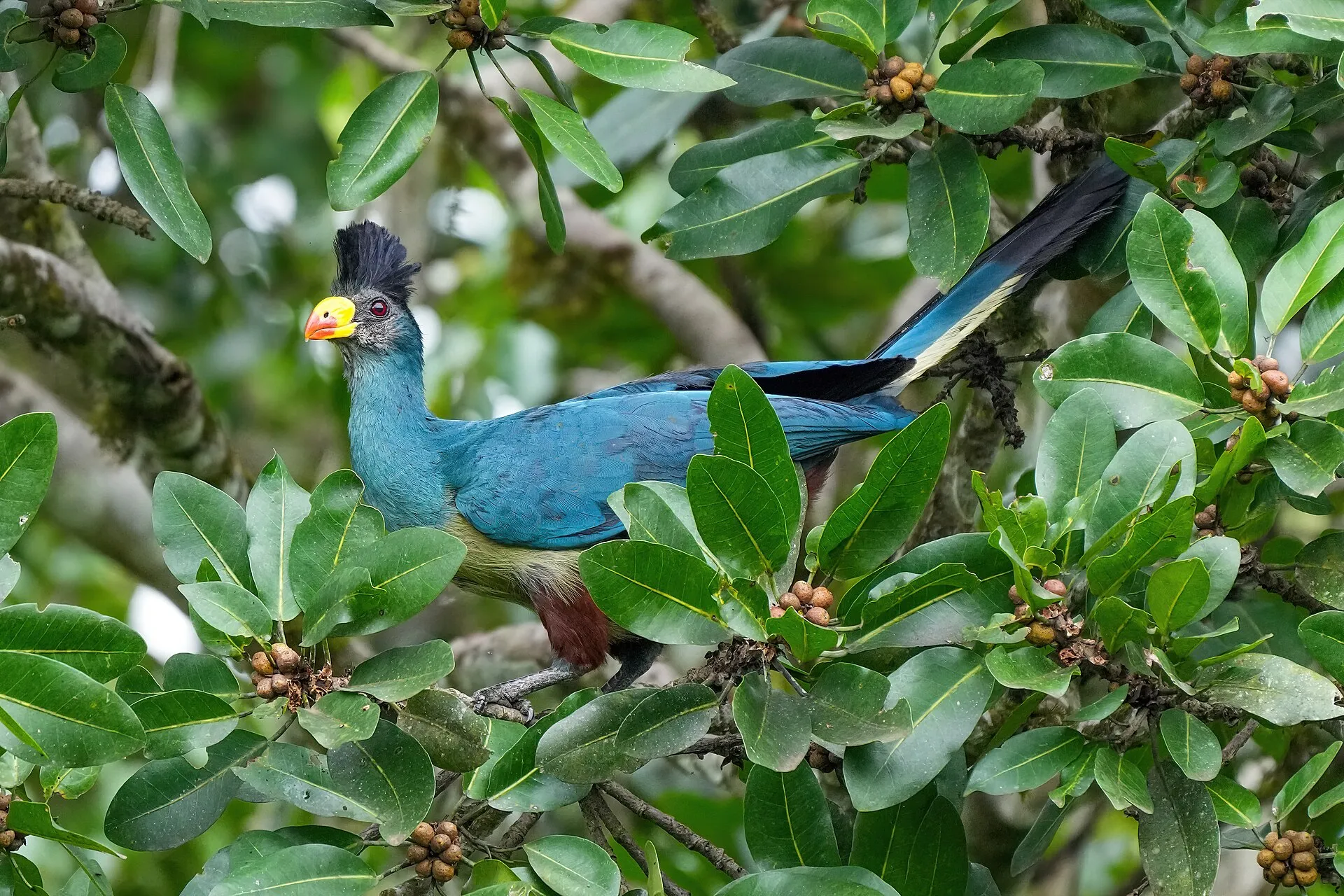
- Excellent birding, including the great blue turaco.
- Perfect afternoon after Kibale chimp tracking.
Bigodi Wetland Sanctuary lies just outside Kibale National Park, around a papyrus swamp in the Magombe valley. It is run by a local community association that uses visitor fees to fund schools, a health centre and community projects, a model of community-based tourism.
The walk
A local guide leads you along boardwalks and trails through papyrus, wild palms and fringing forest. Expect:
- Primates: red colobus, black-and-white colobus, L’Hoest’s monkeys, red-tailed monkeys and grey-cheeked mangabeys.
- Birds: the great blue turaco, papyrus gonolek, white-winged warbler, kingfishers and many more.
- Other wildlife: occasionally sitatunga in the swamp.
Why go
- It complements chimp tracking with a gentler walk.
- It is one of the best places in Uganda for the great blue turaco.
- Your visit directly supports the village.
Do the walk in the afternoon after morning chimp tracking, or early in the morning for the best birding.
About the sanctuary
Bigodi Wetland Sanctuary is a papyrus swamp next to Kibale National Park, protected by the local community through the Kibale Association for Rural and Environmental Development (KAFRED). Founded in the early 1990s, it has become a well-known example of community-based tourism in Uganda.
The walk
The guided walk follows a loop of about 4.5 km on boardwalks and paths through papyrus swamp, forest edge and farmland. It takes about three hours and is gentle and flat. Guides point out primates, birds and plants, and explain how the community protects the wetland.
Primates
Look for red colobus, black-and-white colobus, L’Hoest’s monkeys, red-tailed monkeys, grey-cheeked mangabeys and olive baboons. Chimps are occasionally seen at the forest edge.
Birds
Bigodi is famous for birds, with over 100 species recorded on many walks, including the great blue turaco, papyrus gonolek, white-winged warbler and many weavers and sunbirds. See great blue turaco.
Community benefits
Fees support the local school, a health centre and community projects. You can also join village walks, visit women’s craft groups and enjoy local food.
When to go
Early mornings are best for birds; afternoons work well after chimp tracking in Kibale. The walk runs year-round, though parts can be muddy in the rains, so waterproof shoes help.
Who it suits
Families, birders, photographers and anyone who wants a gentle walk with plenty of wildlife and a strong community story.
Plan it
Bigodi is included in our 6-day gorillas, chimps and Queen Elizabeth safari and 2-day Kibale chimpanzee safari. Birders should read birding in Uganda: Albertine Rift endemics.
When to go
The walk is good year-round. Early mornings are best for birds, and afternoons work well after chimp tracking in Kibale. In the rains, parts of the trail can be muddy.
Good to know
- Walks are led by local guides from the community.
- Binoculars greatly improve the experience.
- Wear waterproof shoes.
- Buy crafts from the women’s group to support the village.
Combine it with
Bigodi pairs naturally with chimpanzee tracking in Kibale the same morning, a crater lakes walk around Fort Portal, and, for birders, early mornings in Kibale for the green-breasted pitta and other forest specials.
Who it suits
The sanctuary is run by a local community organisation, KAFRED, and walk fees fund the village school, health projects and conservation work. The guided trail loops for about 4.5 km on boardwalks and paths through papyrus swamp, and takes around three hours. It is gentle and flat, ideal for families and less mobile travellers. Look for the great blue turaco, papyrus gonolek and the shy sitatunga antelope.
Frequently asked questions
Is the Bigodi walk suitable for children?
Yes. It is a gentle, flat walk.
Can I see chimpanzees at Bigodi?
Occasionally, but they are not the focus; chimp tracking is in Kibale.
Do I need rubber boots?
The boardwalks help, but parts can be muddy; waterproof shoes are useful.
How does the community benefit?
Fees are managed by the community association and support education, health and conservation.
How many primate species can I see?
Several, including red colobus, black-and-white colobus, L’Hoest’s monkeys and red-tailed monkeys.
How long is the Bigodi walk?
About three hours, covering roughly 4.5 km.
Is it suitable for children?
Yes, it is gentle and flat.
Do I need binoculars?
They are highly recommended for birds and monkeys in the canopy. Guides often carry a pair, but having your own makes a big difference on this walk.
Can I do Bigodi on the same day as chimp tracking?
Yes. Track chimps in the morning and walk Bigodi in the afternoon; the two are only about 15 minutes apart by road.

Written by our Kampala-based planners and guides, who arrange these trips every season. Prices and rules are checked before every quote.