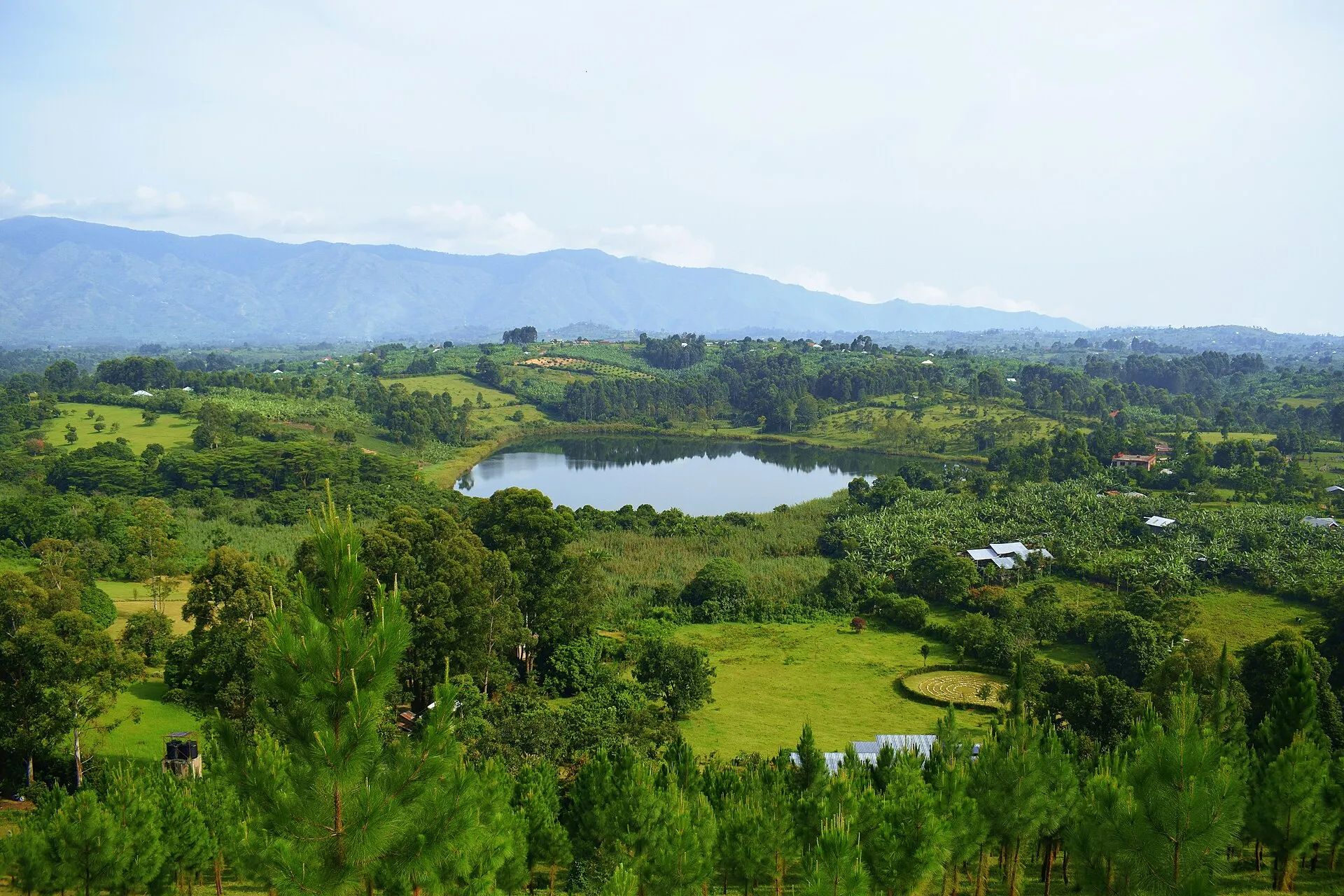
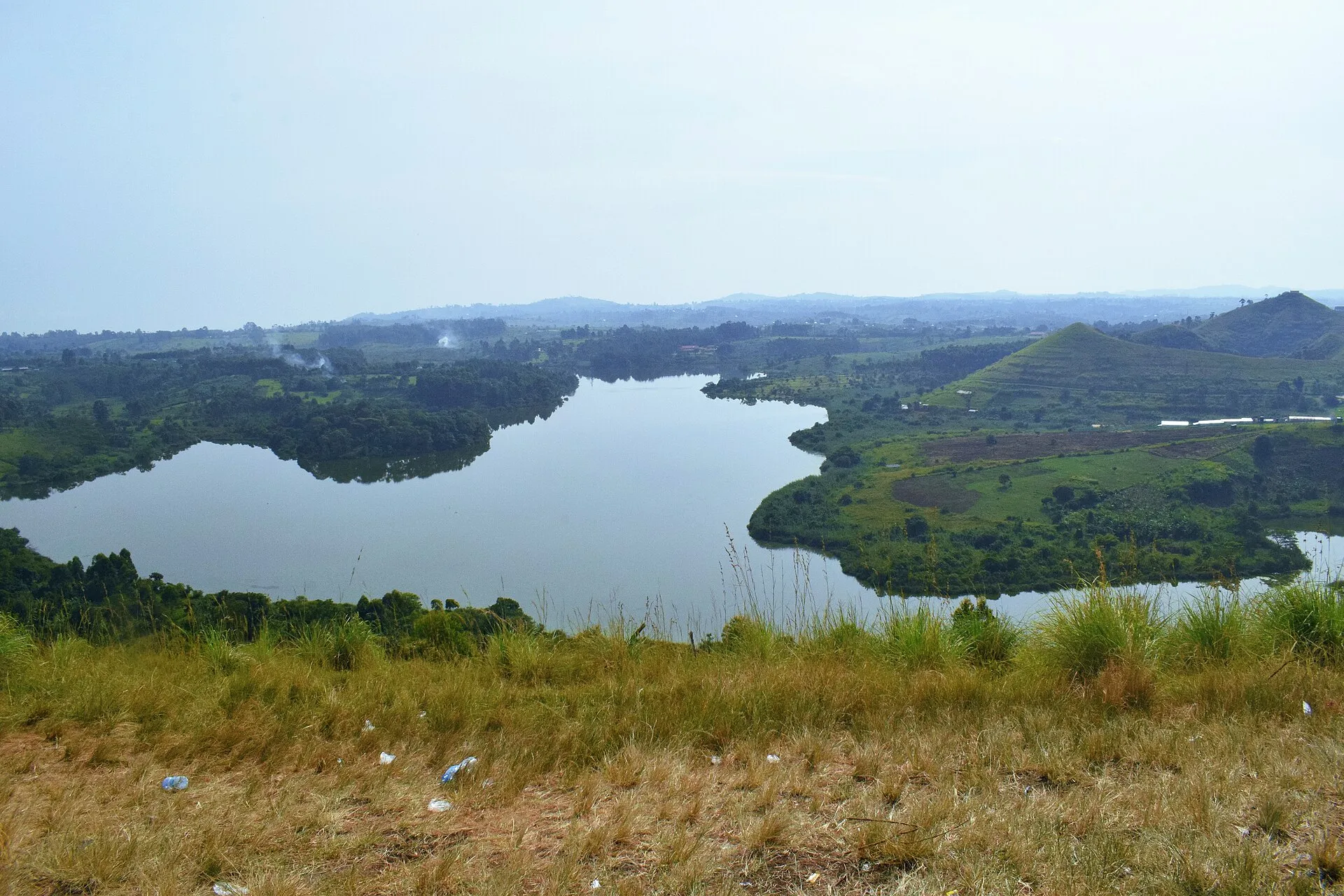
The crater lakes near Fort Portal, in western Uganda, fill old volcanic craters among green hills close to Kibale Forest. Guided walks lead between lakes such as Nkuruba and Nyinambuga, past villages and farms, to viewpoints like the Top of the World, where several lakes are visible at once. Walks range from one to several hours.
Key takeaways
- Dozens of crater lakes around Fort Portal.
- Top of the World viewpoint.
- Village walks and swimming.
- Close to Kibale Forest.
The crater lakes were formed by volcanic eruptions thousands of years ago. Today, they are surrounded by forest, farmland and villages, and form one of Uganda’s most scenic regions.
The walks
Local guides lead walks between the lakes on footpaths and village roads. You pass banana plantations, small farms and schools, and meet people along the way. Walks can be short and gentle or long and hilly.
Highlights
- Top of the World: a hilltop viewpoint over several lakes.
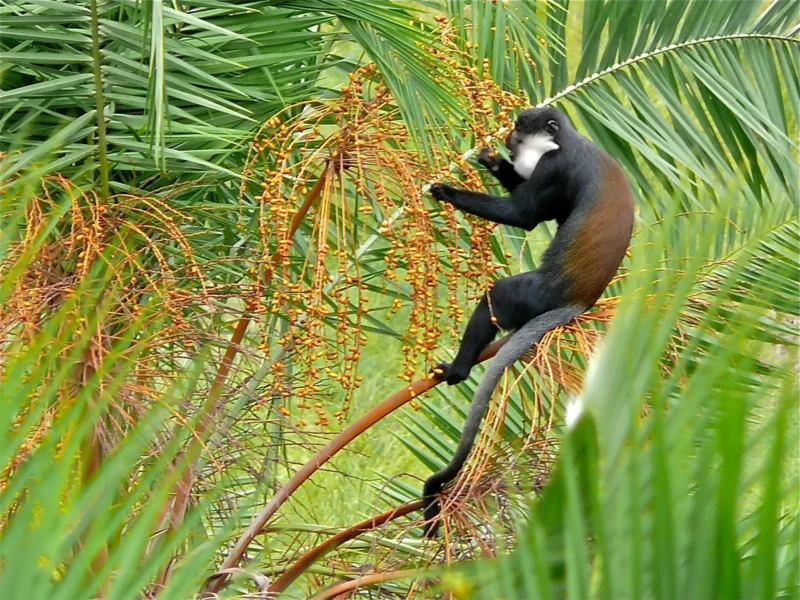
- Lake Nkuruba: a small forested lake with monkeys.
- Lake Nyinambuga: a deep blue lake below a lodge viewpoint.
- Amabere caves and waterfall: with stalactites and local legends.
Swimming
Some lakes are considered safe for swimming. Ask your guide which ones; lodges near the lakes advise guests.
When to go
Walks are possible year-round. The dry seasons, June to August and December to February, are best for clear views.
Good to know
- Bring good shoes and water.
- Guides are recommended for route-finding and village visits.
- Combine with chimpanzee tracking in Kibale.
- Fort Portal has good cafés and markets.
Who it suits
The crater lakes suit walkers, families and photographers. It is a lovely half-day activity after chimp tracking.
Fort Portal
Fort Portal is the capital of the Tooro kingdom, with a royal palace on a hill overlooking the town. It is a pleasant base, with views of the Rwenzori Mountains on clear days.
A suggested day
After morning chimp tracking in Kibale, have lunch at a lodge overlooking a crater lake. In the afternoon, walk with a local guide to the Top of the World viewpoint, passing farms and villages, and finish with a swim or a drink at sunset. The next morning, visit the Amabere caves and waterfall, then continue to Queen Elizabeth National Park, about two to three hours to the south.
Where to stay
Lodges around the crater lakes range from simple community guesthouses to comfortable lodges with lake views. Staying here, rather than in Fort Portal town, puts you closer to the walks and the quiet of the countryside.
How the crater lakes formed
The crater lakes near Fort Portal formed thousands of years ago, when volcanic explosions blasted craters into the landscape. Rainwater and groundwater filled the craters, creating deep, round lakes surrounded by steep slopes. There are dozens of them in the Ndali–Kasenda and Fort Portal areas, each with its own colour and character.
A day around the lakes
Start with a morning walk to the Top of the World viewpoint, passing farms and villages. Visit Lake Nkuruba, where colobus and other monkeys live in the forest around the lake. After lunch with a view, walk to the Amabere caves and waterfall, where guides tell the legend of a princess and her lost child, said to explain the stalactites. End the day with a swim or a drink by your lodge’s lake.
Where to stay
Lodges and guesthouses around the crater lakes range from community campsites to comfortable lodges with spectacular views. Fort Portal town also has hotels.
Who it suits
Walkers, photographers, families and anyone wanting a relaxed day after chimp tracking.
Getting there
The crater lakes lie south of Fort Portal, between the town and Kibale National Park. Fort Portal is about five to six hours from Kampala by road, or a short flight to Kasese followed by a drive. From the lakes, Kibale’s Kanyanchu visitor centre is about 30–45 minutes away, and Queen Elizabeth National Park about three hours to the south. Many travellers spend two nights here, combining chimp tracking with the crater lakes and the Bigodi Wetland walk at an easy pace.
Plan it
Add a crater lakes walk to our 2-day Kibale chimpanzee safari or 7-day Uganda primates and wildlife safari. See also Bigodi Wetland primate walk.
Frequently asked questions
How many crater lakes are there?
Dozens, scattered around Fort Portal.
Can I swim in the crater lakes?
Some are considered safe; ask your guide.
How long is a walk?
From one hour to a full day.
Is it close to Kibale?
Yes, about 30–45 minutes.
Do I need a guide?
A local guide is recommended to find the paths and explain the villages.
Are the crater lakes good for birding?
Yes. Forest, farmland and lakes attract many species, including turacos and kingfishers.
Do I need to book the crater lakes walk in advance?
It is best to book a local guide through your lodge a day ahead, especially for longer walks.
Is the walk difficult?
Most routes are gentle, but some paths around the craters are steep, so wear good shoes.

Written by our Kampala-based planners and guides, who arrange these trips every season. Prices and rules are checked before every quote.