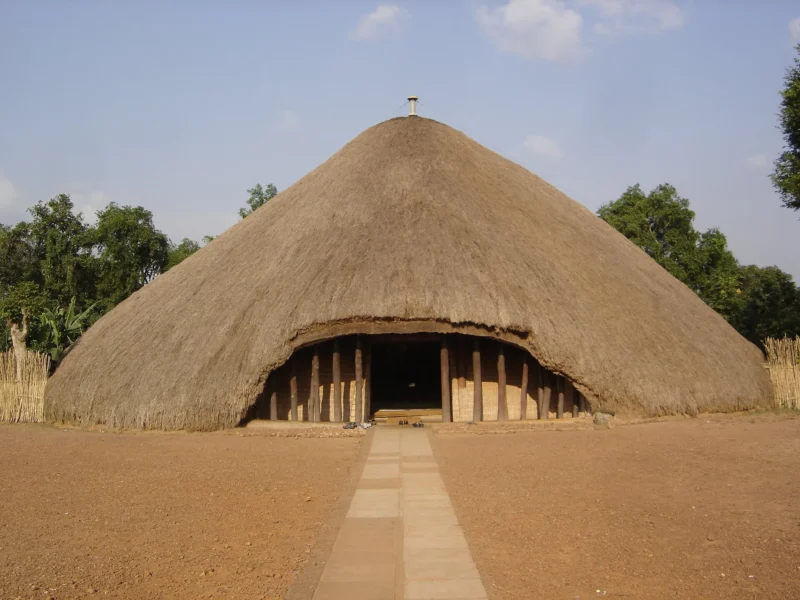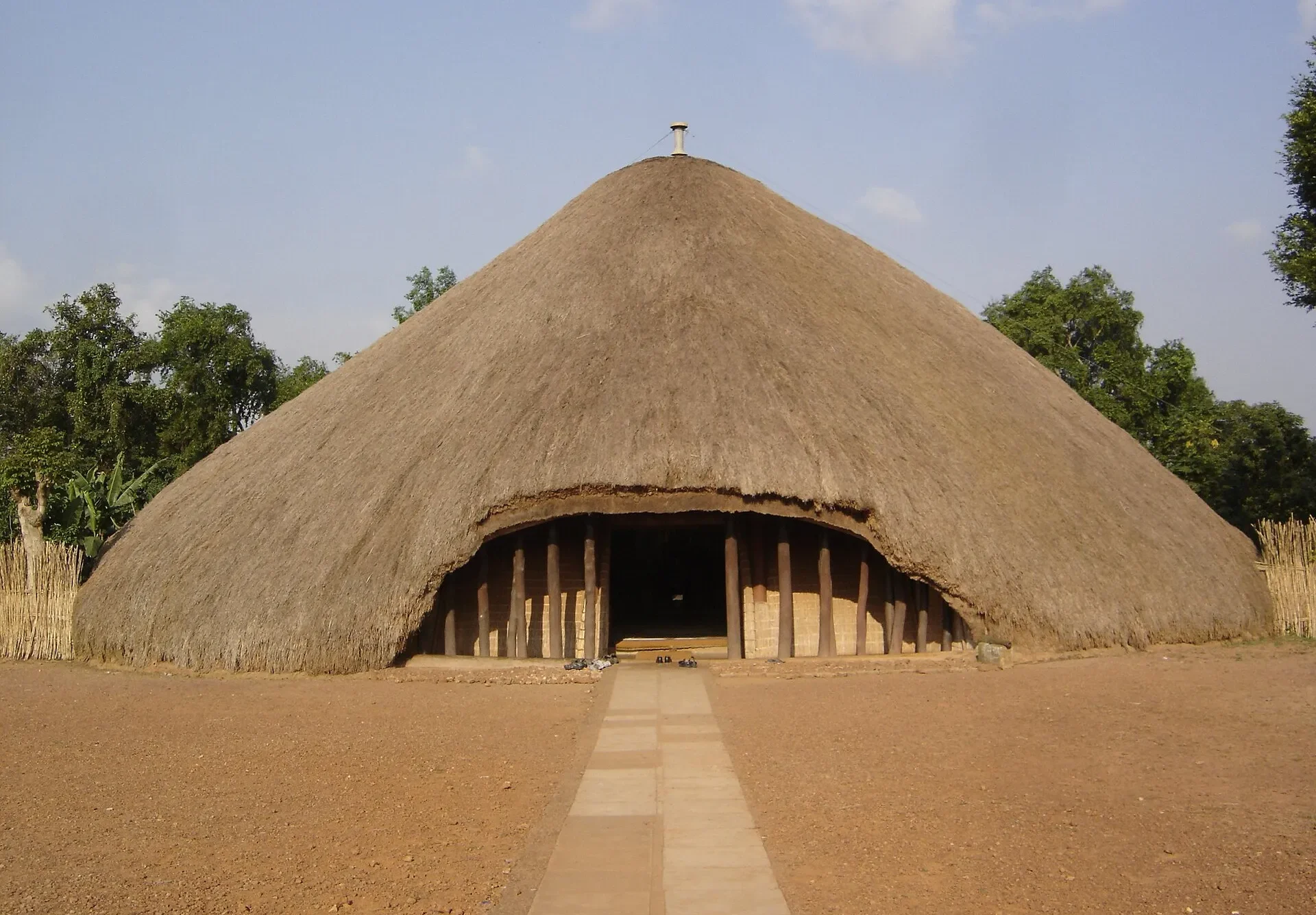
The Kasubi Tombs, on Kasubi hill in Kampala, are the burial site of four kabakas (kings) of Buganda. The main building, Muzibu Azaala Mpanga, is a huge thatched structure made from wood, reeds, grass and bark cloth. It is a UNESCO World Heritage Site. After a fire in 2010 destroyed it, the building was rebuilt using traditional methods, and UNESCO removed it from its danger list in 2023.
Key takeaways
- Burial site of four kabakas of Buganda.
- UNESCO World Heritage Site since 2001.
- Rebuilt after a fire in 2010.
- About 5 km from central Kampala.
The Kingdom of Buganda is the largest of Uganda’s traditional kingdoms, and the Kasubi Tombs are its spiritual heart. The site was built in 1882 as the palace of Kabaka Muteesa I and became a royal burial ground after his death in 1884.
Who is buried here
Four kabakas lie inside the main building:
- Muteesa I, who welcomed the first European explorers and missionaries.
- Mwanga II, his son, remembered in connection with the Uganda Martyrs.
- Daudi Chwa II, king during most of the colonial period.
- Sir Edward Muteesa II, Uganda’s first president after independence, who died in exile in London in 1969.
The architecture
Muzibu Azaala Mpanga is one of the largest grass-thatched buildings in the world. Its dome is supported by wooden poles wrapped in bark cloth, and the inside is divided by a great bark-cloth curtain that hides the “forest” where the kings lie. The thatch is laid in rings, each representing a clan. The Bujjabukala gatehouse leads into the courtyard, where the homes of royal widows and guardians stand.
The fire and rebuilding
On 16 March 2010, a fire destroyed the main building. With support from the Ugandan government, the Buganda Kingdom, UNESCO and international donors, it was rebuilt by craftsmen of the clans who traditionally maintain it, using the original methods. A firefighting system was added. In September 2023, UNESCO removed the site from its List of World Heritage in Danger.
Visiting
A guide leads you through the gatehouse into the courtyard and explains the history, clan roles and royal traditions. Visitors remove their shoes before entering buildings. Women are asked to wear a long skirt or wrap, which is usually provided at the entrance.
When to go
The tombs are open year-round. Mornings are cooler and quieter. Avoid days of royal ceremonies unless your guide has arranged a visit.
Good to know
- Dress modestly; cover shoulders and knees.
- Photography may be restricted inside the main building.
- An entrance fee includes a guide.
- Combine with the Buganda Kingdom palace and Kampala markets.
Who it suits
Kasubi suits history lovers, families, students and anyone wanting to understand Ugandan culture beyond the safari. It is a highlight of a Kampala city tour.
The Buganda Kingdom today
The kingdom was abolished in 1967 and restored in 1993, when Ronald Muwenda Mutebi II was crowned kabaka. It remains a cultural institution with its own parliament, the Lukiiko, and great influence in central Uganda.
Inside the courtyard
Around the main tomb, smaller houses are home to the widows of former kings and the women of the royal household, who guard and care for the site. Each clan of Buganda has a traditional role at Kasubi, from thatching the roof to keeping the drums. The drum house holds royal drums used in ceremonies, and the reed fence around the compound is built in a special woven pattern that marks a royal site.
Bark cloth
Bark cloth, made by beating the inner bark of the mutuba fig tree into a soft, rust-coloured fabric, was once worn by the Baganda and is still used in ceremonies and at Kasubi. UNESCO recognises bark-cloth making in Uganda as part of the intangible cultural heritage of humanity. Look for it on the walls and poles inside the tomb, and in craft shops in Kampala.
Getting there
Kasubi hill is about 5 km north-west of central Kampala. Depending on traffic, the drive takes 20 to 45 minutes. Most visitors come with a driver-guide as part of a city tour, which also makes it easy to continue to Mengo and Namugongo. The site is about an hour from Entebbe airport, so it can fit into an arrival or departure day.
Plan it
The tombs are part of our 1-day Kampala city tour. Add a Kampala day to the 14-day Uganda grand safari or 8-day Uganda family safari.
Frequently asked questions
Who is buried at the Kasubi Tombs?
Four kabakas of Buganda: Muteesa I, Mwanga II, Daudi Chwa II and Sir Edward Muteesa II.
Is Kasubi a UNESCO site?
Yes, since 2001.
Was it rebuilt after the fire?
Yes. It was rebuilt using traditional methods and removed from UNESCO’s danger list in 2023.
What should I wear?
Modest clothing; women are asked to wear a long skirt or wrap.
How long does a visit take?
About an hour with a guide.

Written by our Kampala-based planners and guides, who arrange these trips every season. Prices and rules are checked before every quote.