Samburu National Reserve, in northern Kenya, is famous for the Samburu Special Five: Grevy’s zebra, reticulated giraffe, beisa oryx, gerenuk and Somali ostrich, all adapted to dry country. The Ewaso Ng’iro River runs through the reserve and attracts elephants, leopards, lions and many birds. It is about five to six hours by road from Nairobi, or a short flight.
Key takeaways
- Home of the Samburu Special Five.
- The Ewaso Ng’iro River draws elephants and leopards.
- Dry, dramatic landscapes and Samburu culture.
- About 5–6 hours by road from Nairobi.
Samburu feels very different from Kenya’s southern parks. Red earth, doum palms and rocky hills replace the open grassland, and the animals are adapted to heat and little water.
The Samburu Special Five
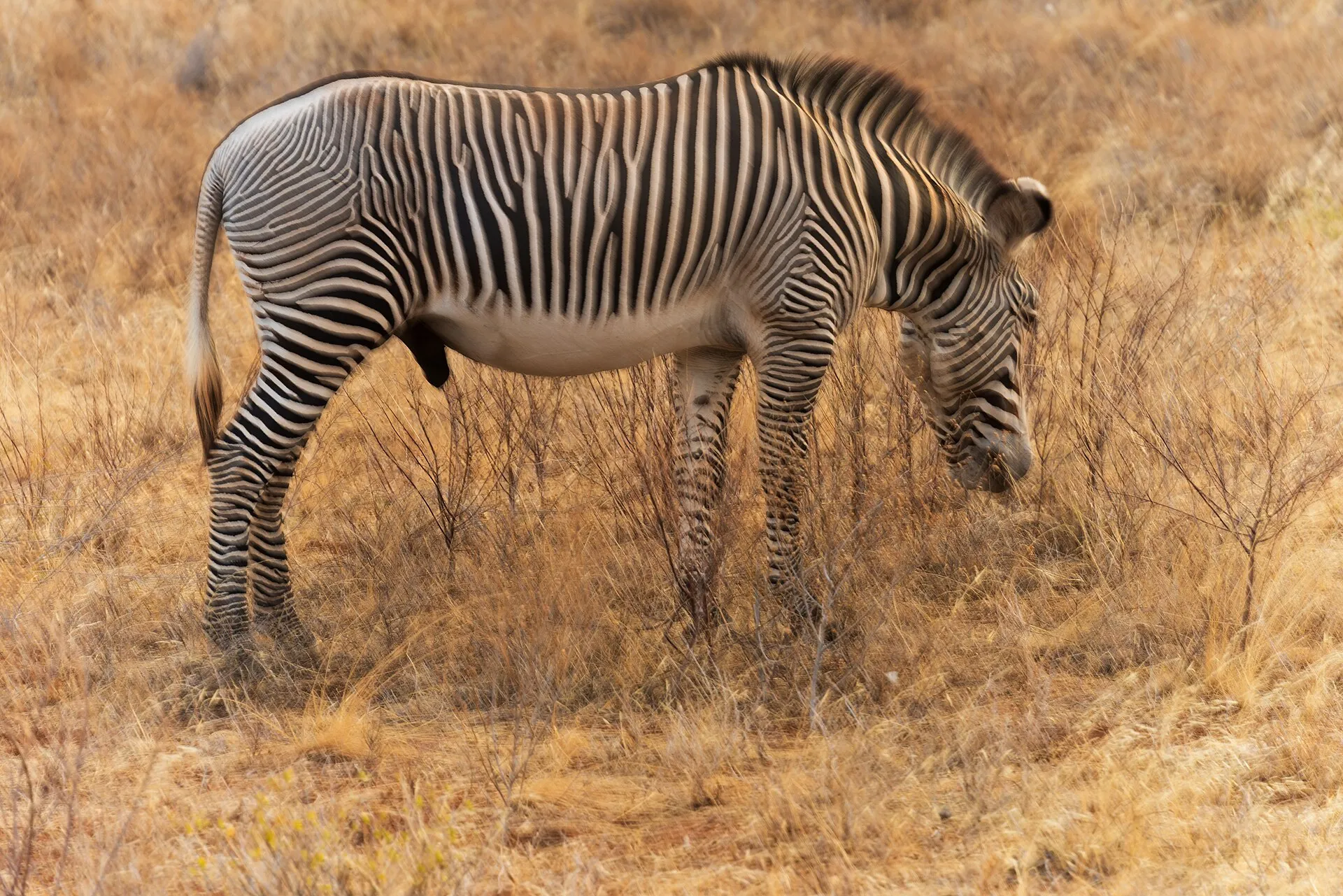
- Grevy’s zebra: the largest zebra, with narrow stripes and big round ears. It is endangered, and northern Kenya holds most of the world’s population.
- Reticulated giraffe: with bold, net-like patterns.
- Beisa oryx: a desert antelope with long straight horns.
- Gerenuk: a long-necked antelope that stands on its hind legs to feed.
- Somali ostrich: the males have blue-grey legs and necks.
The river
The Ewaso Ng’iro River is the reserve’s lifeline. Elephants come to drink and dig for water in the dry season, and research on Samburu’s elephants has been running since the late 1990s. Leopards rest in the riverine trees, and crocodiles lie on the banks.
Samburu culture
The Samburu people are pastoralists related to the Maasai. Community conservancies around the reserve let visitors meet them and support conservation.
When to go
The dry seasons, June to October and January to March, are best, when animals gather at the river. The short rains in November and long rains in April and May bring green growth and many birds.
Good to know
- Samburu is hot; pack light clothes and sun protection.
- Buffalo Springs and Shaba reserves are nearby.
- Lodges and camps line the river.
- Combine with Ol Pejeta, about three hours to the south.
Who it suits
Samburu suits returning safari-goers, photographers and anyone who wants rare species and quieter game drives. It pairs naturally with Ol Pejeta and the Masai Mara.
A typical day
Game drives start at first light along the Ewaso Ng’iro, when elephants come down to drink and leopards are still active. Midday is hot, so most visitors rest at camp by the river before a late-afternoon drive into the drier country, where gerenuk, oryx and Grevy’s zebra feed. Some conservancy camps add guided walks with Samburu warriors and visits to a local village.
Conservation
Grevy’s zebra numbers fell sharply in the late 20th century. Community conservancies, local scouts and research projects now protect them, and visiting helps fund that work.
Buffalo Springs and Shaba
Samburu is one of three neighbouring reserves along the Ewaso Ng’iro River. Buffalo Springs, south of the river, has springs and open plains. Shaba, to the east, has rocky hills and is where Joy Adamson, author of Born Free, lived and worked in her later years. Game drives can cross between the reserves.
Where to stay
Lodges and tented camps line the river in Samburu and Buffalo Springs, and community conservancies such as Kalama and Westgate offer quieter camps with walking and cultural activities. Camps along the river are perfect for watching elephants come to drink.
Elephants of Samburu
Samburu’s elephants have been studied by the research organisation Save the Elephants for decades. Researchers know many individuals by name and track their movements with collars, showing how they use the river and travel far across northern Kenya.
Getting there
Samburu is about five to six hours by road from Nairobi, via Nanyuki and Isiolo, with views of Mount Kenya on the way. Daily scheduled flights from Nairobi take about an hour.
A Samburu day
Morning drives follow the river, where elephants, leopards and lions are often seen. Midday is for resting at camp. In the afternoon, explore the drier country for gerenuk, oryx and Grevy’s zebra, ending with a sundowner on a hill above the river.
Samburu or the Masai Mara?
The Mara is famous for big cats and the migration, while Samburu offers rare northern species, a dramatic dry landscape and fewer vehicles. Many travellers combine both for contrast. Samburu is especially good from June to October and from January to March, when animals gather along the river, while the Mara is best from July to October for the crossings.
Plan it
We can add Samburu to any Kenya safari, such as our 6-day Kenya safari. Ask us for tailor-made pricing.
Frequently asked questions
What is the Samburu Special Five?
Grevy’s zebra, reticulated giraffe, beisa oryx, gerenuk and Somali ostrich.
Are there big cats in Samburu?
Yes. Leopards are a highlight, and lions and cheetahs are also present.
How long should I stay?
Two or three nights.
Can I fly to Samburu?
Yes. Daily flights from Nairobi land at reserve airstrips.
Is Samburu safe?
Yes. The reserves are well established safari destinations; we follow current advice for northern Kenya.
How many days should I spend in Samburu?
Two or three nights for game drives and cultural visits.

Written by our Kampala-based planners and guides, who arrange these trips every season. Prices and rules are checked before every quote.