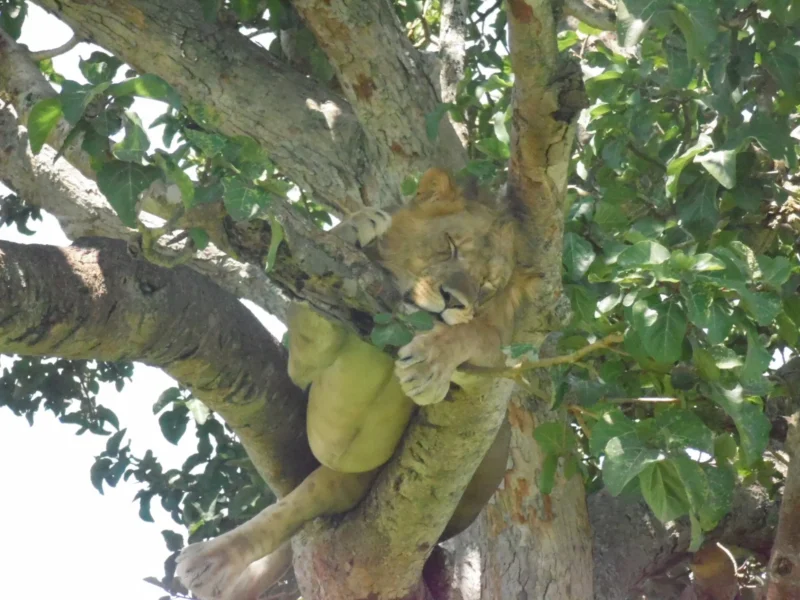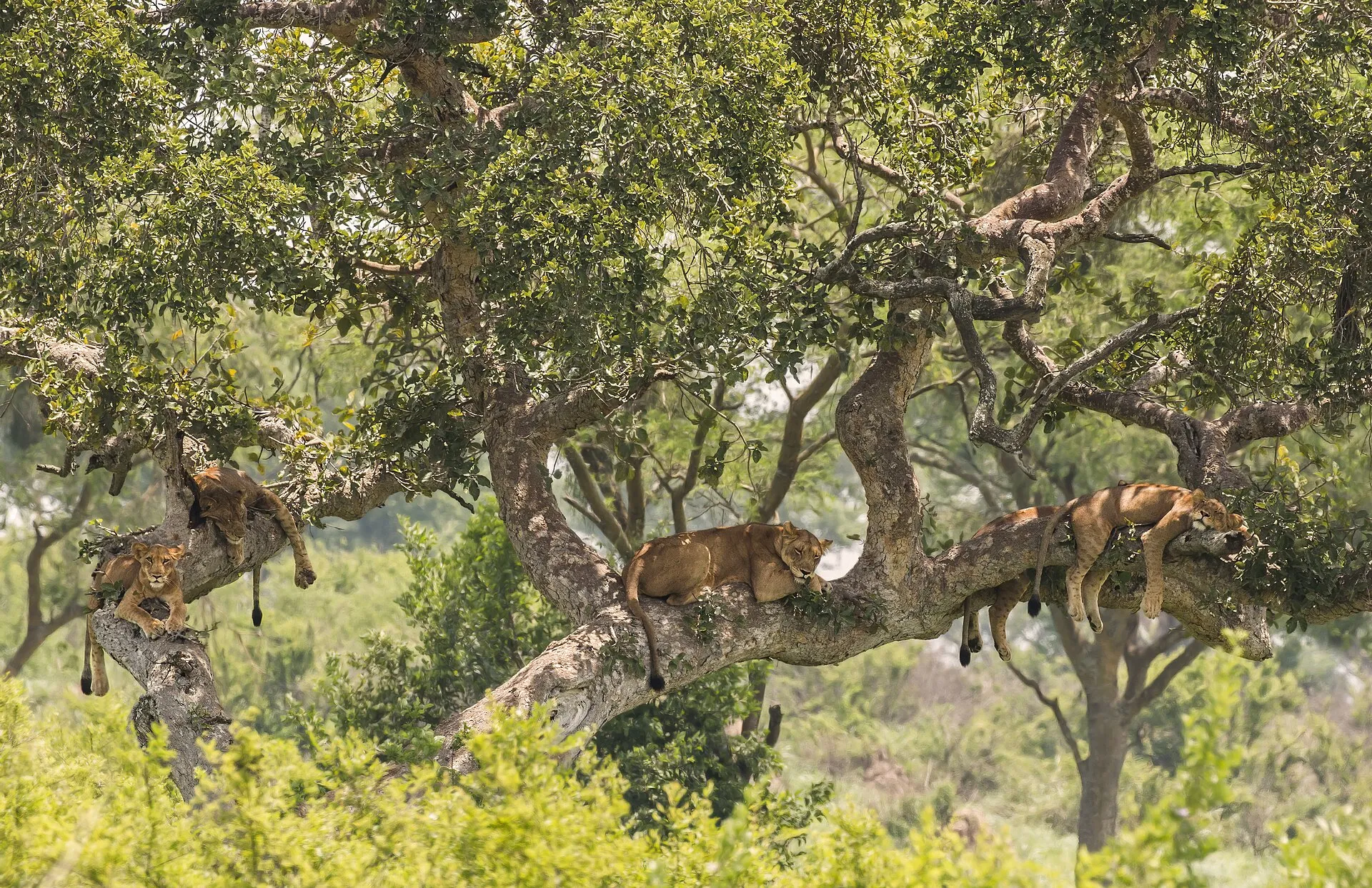
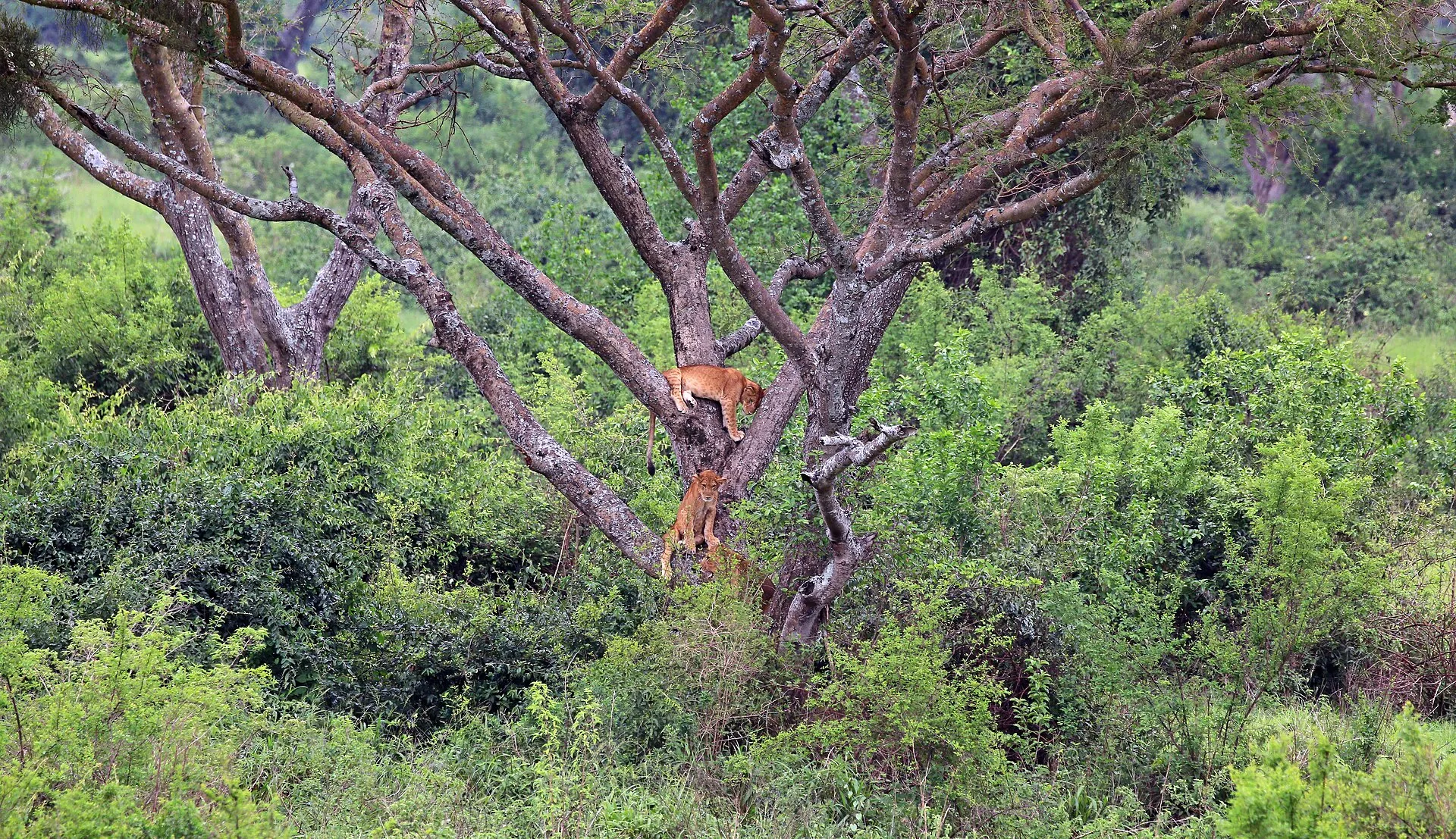
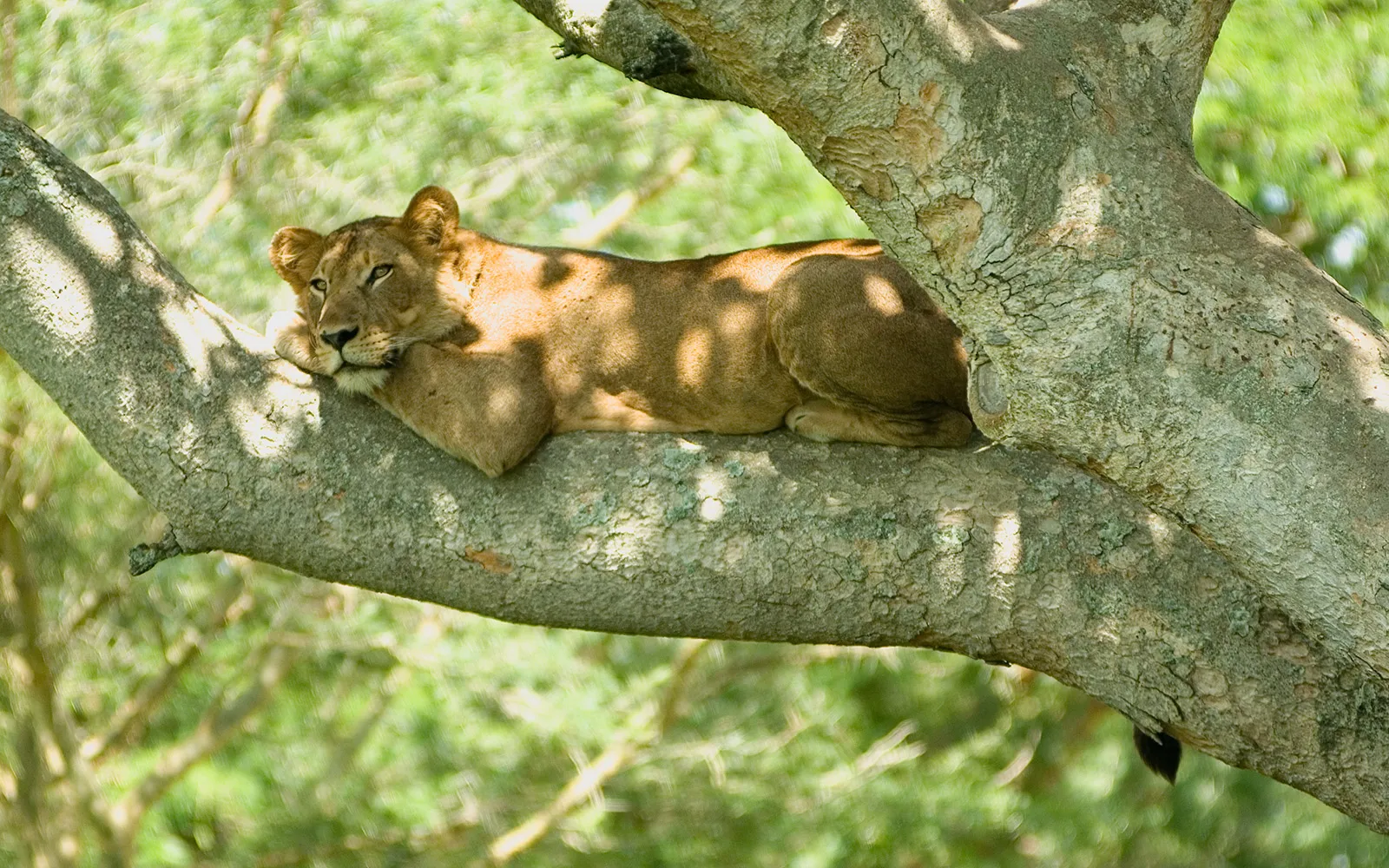
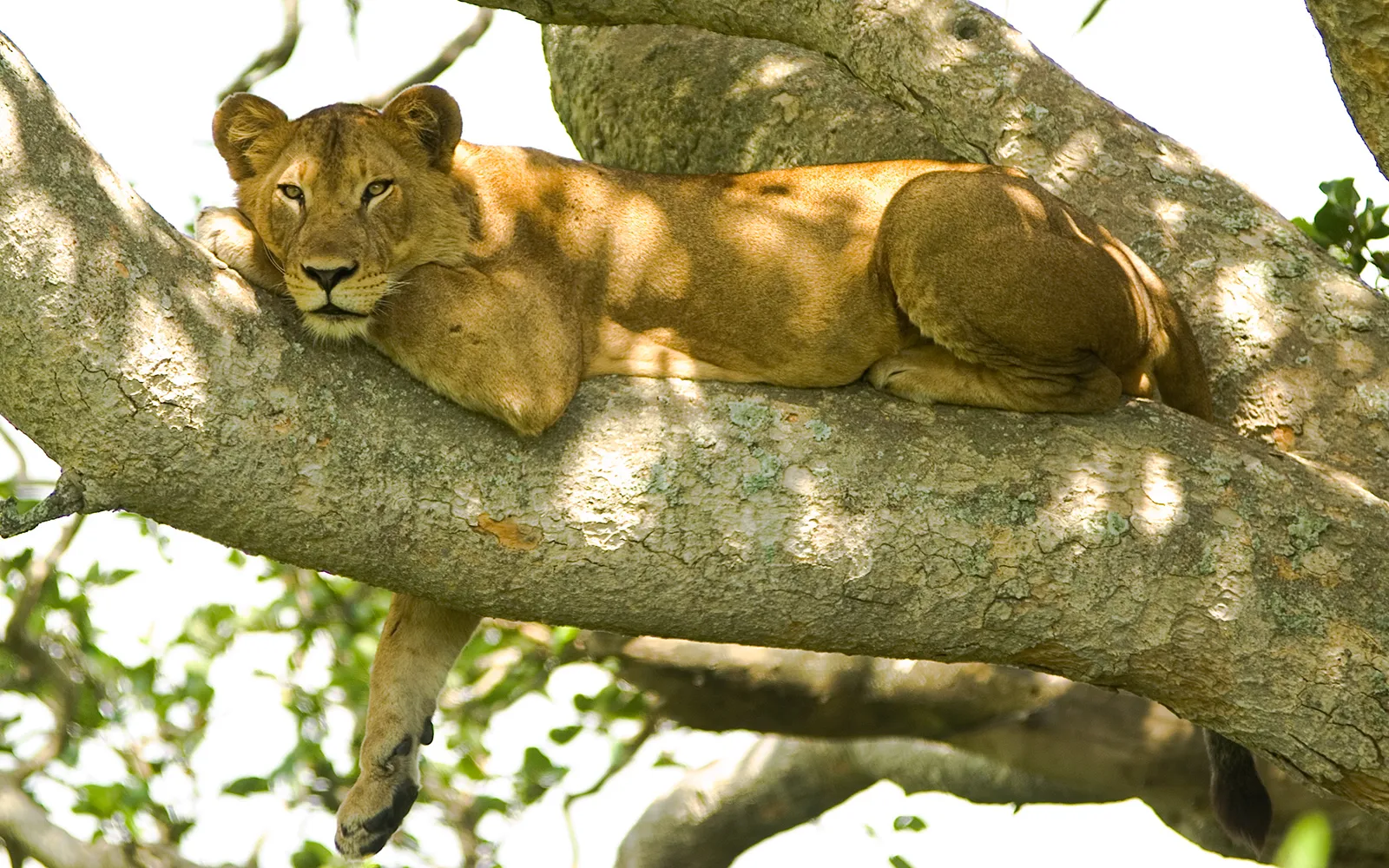
The Ishasha sector in the south of Queen Elizabeth National Park is famous for lions that rest in large fig and acacia trees. Nobody knows exactly why they climb, but shade, cooler breezes, escape from biting flies and a lookout over the plains are likely reasons. Lion numbers in the park have fallen, so sightings are not guaranteed, but Ishasha remains a magical stop between Queen Elizabeth and Bwindi.
Key takeaways
- Lions rest in large fig and acacia trees.
- Best seen in the late morning and afternoon heat.
- Sightings are not guaranteed: lion numbers have fallen.
- An easy stop on the way to Bwindi.
Queen Elizabeth National Park stretches from the Rwenzori foothills to the Ishasha River on the Congo border. Its southern sector, Ishasha, is quieter and wilder than the north, with open grassland dotted with big fig trees, herds of topi and buffalo, and the famous tree-climbing lions.
Why do they climb?
Lions are heavy and not built for climbing, but in Ishasha they climb regularly. Likely reasons include shade and breezes in the heat of the day, escaping biting flies on the ground, and a good view of Uganda kob and other prey on the plains. The habit appears to be learned and passed on within the prides.
How to find them
Guides drive the tracks between the fig trees, scanning the branches for a dangling tail or paw. Sightings are best from late morning into the afternoon, when the lions climb up to rest. Read more in our Ishasha guide.
Conservation
Uganda’s lions have declined, and Queen Elizabeth lost a large part of its lions in recent years, mainly due to poisoning and snares linked to conflict with livestock. Visiting supports the park and the communities that protect it.
When to go
Ishasha can be visited year-round. The dry seasons, June to September and December to February, make tracks easier, and lions are more likely in the trees in the hot middle of the day.
Good to know
- Park entry is US$40 per day.
- Security patrols operate in the Ishasha area; we follow current advice.
- Ishasha River lodges offer a peaceful night by the water.
- Combine with gorillas in Bwindi, about two hours away.
Who it suits
Ishasha suits travellers combining gorillas with wildlife, and anyone who enjoys a quieter, more remote side of Uganda. It is an easy addition to the drive between the north of Queen Elizabeth and Bwindi, and a night by the Ishasha River makes the most of it.
A day in Ishasha
Most visitors arrive from the north of Queen Elizabeth or from Bwindi. Start with a morning drive on the Ishasha plains, when lions may still be on the ground and Uganda kob, topi and buffalo graze. Late morning, return to the fig trees, as lions climb up to rest in the heat. Have a picnic lunch by the Ishasha River, where hippos rest in the water on the border with Congo. In the afternoon, check the trees again before driving on.
Other wildlife in Ishasha
- Topi: an antelope found in Queen Elizabeth mostly in the Ishasha sector.
- Uganda kob: the lions’ main prey.
- Buffalo and elephants, often near the river.
- Hippos in the Ishasha River.
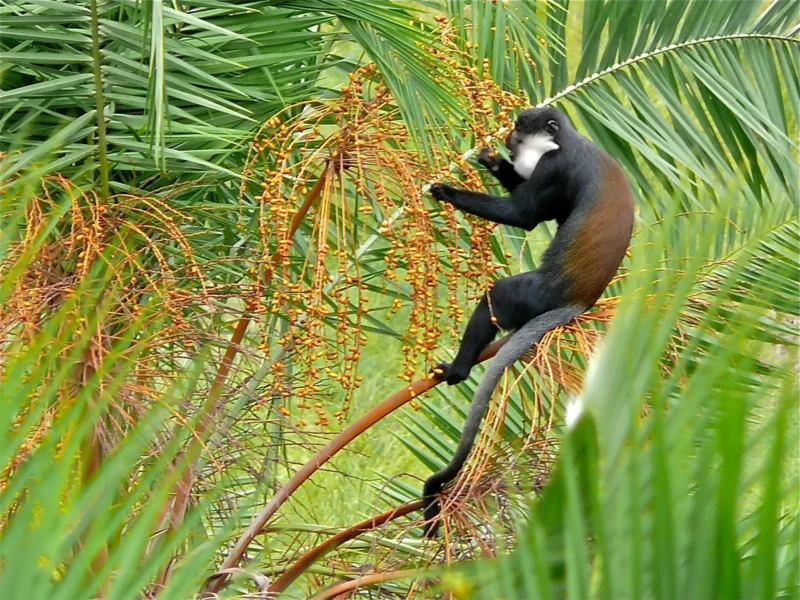
- Birds: grey crowned cranes, martial eagles and many savannah species.
Where to stay
Lodges and camps in Ishasha sit along the Ntungwe and Ishasha rivers. Staying overnight gives you a morning and an afternoon in the area, doubling your chances of seeing the lions in the trees.
Getting there
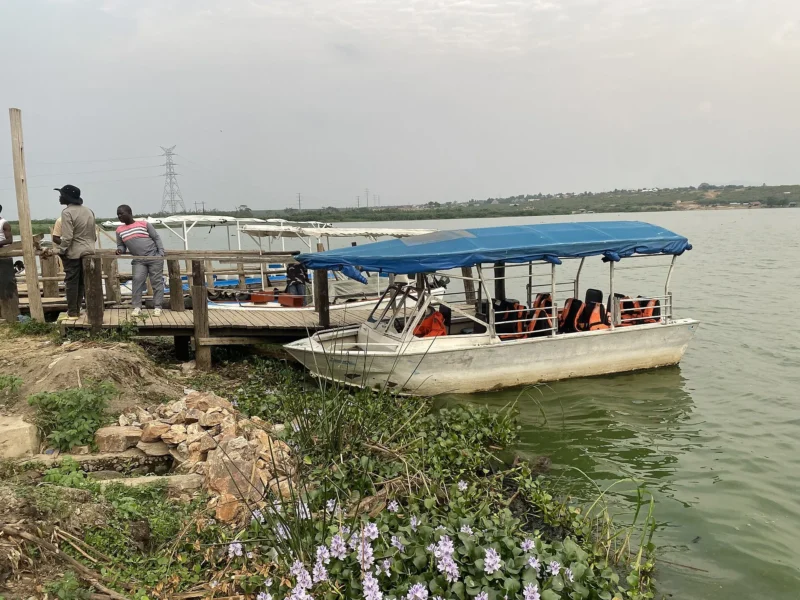
Ishasha is about two hours from Buhoma in Bwindi and about two and a half to three hours from Mweya in the north of Queen Elizabeth. The road from Bwindi passes through tea plantations and villages. Kihihi airstrip is nearby for fly-in safaris.
Photography tips
Lions in trees are often backlit against the sky. Use exposure compensation or spot metering, and wait for a lion to lift its head. A 100–400 mm lens is ideal. The best light for photographs is in the early morning and late afternoon.
Why visit Ishasha
Even when the lions are hidden, Ishasha is one of the quietest and most beautiful corners of Uganda, with wide plains and few vehicles. Read Tree-climbing lions of Ishasha for more background, and see the tree-climbing lion.
Ishasha or Lake Manyara?
| Ishasha (Uganda) | Lake Manyara (Tanzania) | |
|---|---|---|
| Tree-climbing lions | Regular, in fig and acacia trees | Occasional, rarely seen |
| Setting | Remote savannah | Forest and lake below the Rift escarpment |
| Visitors | Few | More, on the northern circuit |
| Combine with | Bwindi gorillas, Queen Elizabeth | Ngorongoro, Tarangire |
When to go
Lions can be seen in the trees year-round, but the hot middle of the day in the dry seasons, June to September and December to February, gives the best chances.
How we plan your Ishasha visit
We usually plan Ishasha as a full day between Bwindi and the north of Queen Elizabeth, or as an overnight stay for the best chances. Your guide checks the fig trees several times during the day, combining the search with the Ishasha River, the plains and a picnic lunch. If the lions are not in the trees, you still enjoy one of Uganda’s quietest and most scenic savannah areas, with topi, kob, buffalo and elephants.
Plan it
Ishasha is on the route of our 5-day gorillas and Queen Elizabeth wildlife safari and 6-day gorillas, chimps and Queen Elizabeth safari.
Frequently asked questions
Are tree-climbing lions a different species?
No. They are ordinary African lions with a learned habit of climbing.
Will I definitely see them?
No. Lion numbers have fallen, and sightings vary from day to day.
Where else do lions climb trees?
Lake Manyara in Tanzania is also known for it, though sightings are rare.
Is Ishasha safe?
Security patrols operate in the area, and we follow current guidance.
How long should I spend in Ishasha?
A full day or an overnight stay gives the best chance of seeing lions in the trees.
Can I stay in Ishasha?
Yes. Camps along the Ntungwe and Ishasha rivers let you explore in the morning and afternoon.
Do other animals climb trees in Ishasha?
Leopards and baboons regularly climb trees there too.

Written by our Kampala-based planners and guides, who arrange these trips every season. Prices and rules are checked before every quote.