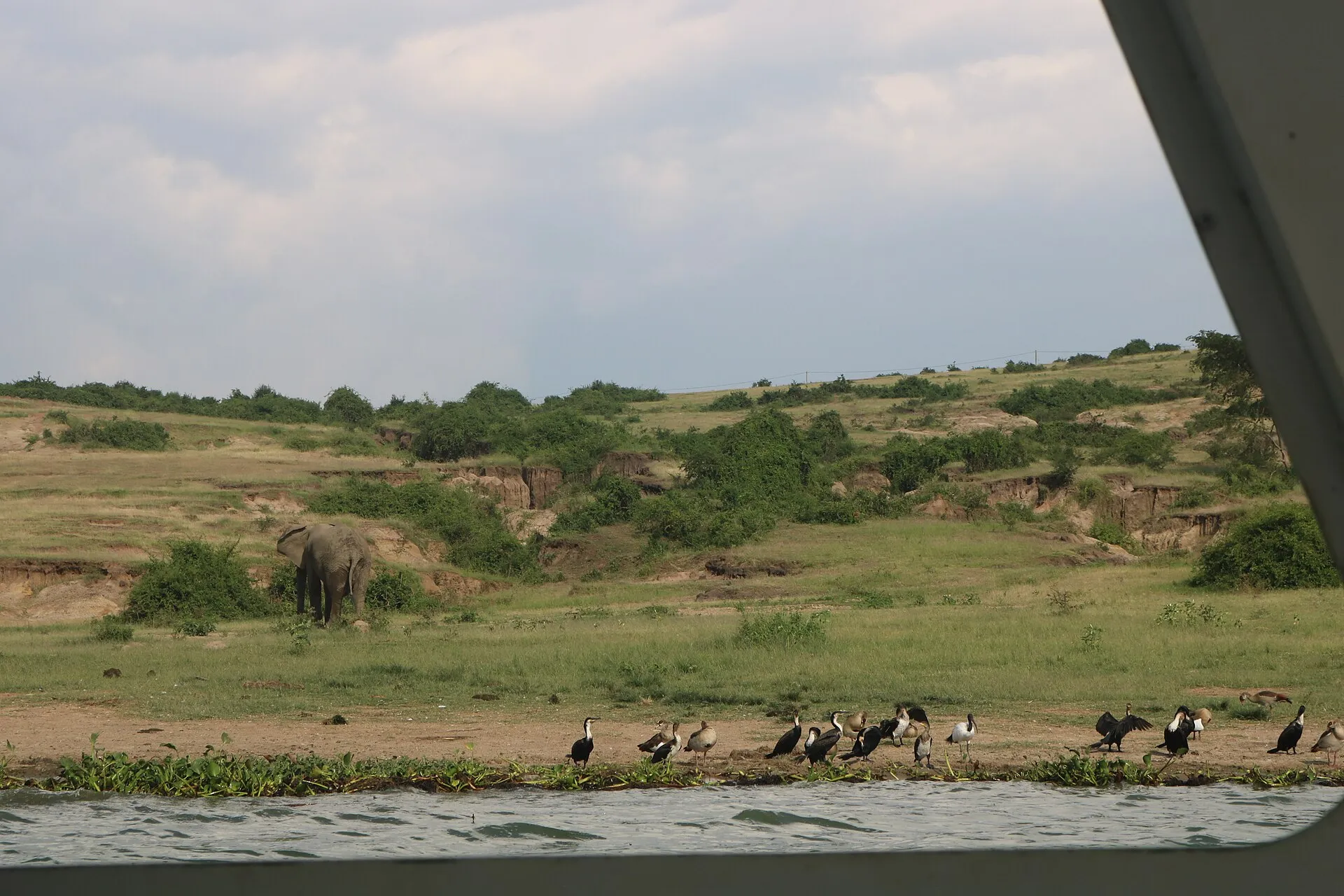
The Kazinga Channel links Lake George and Lake Edward in Queen Elizabeth National Park. Its banks support huge numbers of waterbirds, including great white pelicans, African skimmers, pied and malachite kingfishers, yellow-billed and open-billed storks and African spoonbills. The two-hour boat cruise from Mweya gives close views and is a favourite with birders and photographers.
Key takeaways
- Links Lake George and Lake Edward.
- Large numbers of waterbirds.
- Two-hour boat cruise from Mweya.
- Cruise fee US$30.
Queen Elizabeth National Park has over 600 recorded bird species, one of the highest totals of any park in Africa. The Kazinga Channel is where many visitors see the most birds in one go.
Birds to look for
- Great white and pink-backed pelicans.
- African skimmers, skimming the water with their lower bill.
- Pied, malachite and giant kingfishers.
- Yellow-billed and African open-billed storks.
- African spoonbills, sacred ibis and hamerkops.
- Water thick-knees and plovers on the shoreline.
- African fish eagles calling from the trees.
Other wildlife
The banks are also crowded with hippos, buffalo, elephants and Nile crocodiles, so even non-birders love this trip.
A typical cruise
Boats leave from below Mweya Lodge, usually in the morning and the afternoon. The cruise travels along the northern shore towards Lake Edward, stopping often for wildlife. The afternoon cruise is especially popular for photographers, with warm light.
When to go
The cruise runs year-round. Migrant birds from Europe and Asia arrive from about November to April, adding waders and terns.
Good to know
- The cruise fee is US$30 per person.
- Sit on the side closest to the bank for the best views.
- Bring a zoom lens and binoculars.
- Read the Kazinga Channel boat cruise guide.
Who it suits
The Kazinga Channel suits everyone, from families to serious birders and photographers. It is relaxing, easy and full of wildlife.
Photography tips
Birds are often close, so a 100–400 mm zoom is ideal. Watch for kingfishers diving and skimmers feeding. Use a fast shutter speed on a moving boat.
Beyond the channel
Queen Elizabeth’s birdlife is not limited to water. On game drives, look for martial eagles, bateleurs and grey crowned cranes on the Kasenyi plains, and for flocks of collared pratincoles and other migrants near the crater lakes. The Maramagambo Forest in the south holds forest birds, and the Ishasha sector has its own savannah species. A full day split between the plains and the channel can easily bring more than a hundred species, making Queen Elizabeth one of the most rewarding parks in Africa for a general safari with birding.
Where to stay
Lodges on the Mweya Peninsula overlook the Kazinga Channel and Lake Edward, so you can watch birds from your terrace. Lodges near Katunguru and Kasenyi are also close.
Birds to tick off
- Great white pelican
- Pink-backed pelican
- African skimmer
- Pied kingfisher
- Malachite kingfisher
- Giant kingfisher
- Yellow-billed stork
- African openbill
- African spoonbill
- Sacred ibis
- Hamerkop
- Goliath heron
- Grey heron
- Water thick-knee
- African fish eagle
- Great cormorant
- Long-tailed cormorant
Who it suits
Everyone, from families to serious birders. The cruise is easy, relaxing and full of wildlife.
Combine it with
Combine the cruise with a morning game drive on the Kasenyi plains, a walk in Kyambura Gorge and a visit to the crater lakes.
Why the channel is so rich
The Kazinga Channel connects two lakes with different water chemistry, and its shallow edges, sandbanks and papyrus provide feeding and nesting sites for fish and birds. Hippos fertilise the water with their dung, feeding plankton and fish, which in turn feed pelicans, cormorants and kingfishers. Large numbers of mammals come to drink, so the channel is a meeting place for wildlife from across the park. This rich food web makes a short boat trip so productive for birdwatchers and photographers, and explains why so many species can be seen in just two hours on the water.
Best time of day
The morning cruise is cooler and good for active birds, while the afternoon cruise brings warm light and more mammals at the water’s edge. Both give excellent birding, so choose the time that fits your game drives. Migrants from Europe and Asia add extra species from about November to April.
Plan it
The cruise is part of our 3-day Queen Elizabeth National Park safari and 7-day Uganda birding safari.
Frequently asked questions
How many birds can I see on the cruise?
Dozens of species are often seen in two hours.
Morning or afternoon cruise?
Both are good; the afternoon has warmer light.
Can I see the shoebill?
Rarely here; Mabamba is better.
Is the cruise good for children?
Yes. It is easy and full of animals.
When do migrant birds arrive?
Palearctic migrants such as waders and terns arrive from about November and stay until around April.
Is the cruise good for photography?
Yes. Birds are often close, and the boat moves slowly.
Can I see pelicans on the channel?
Yes. Great white and pink-backed pelicans are common.

Written by our Kampala-based planners and guides, who arrange these trips every season. Prices and rules are checked before every quote.

