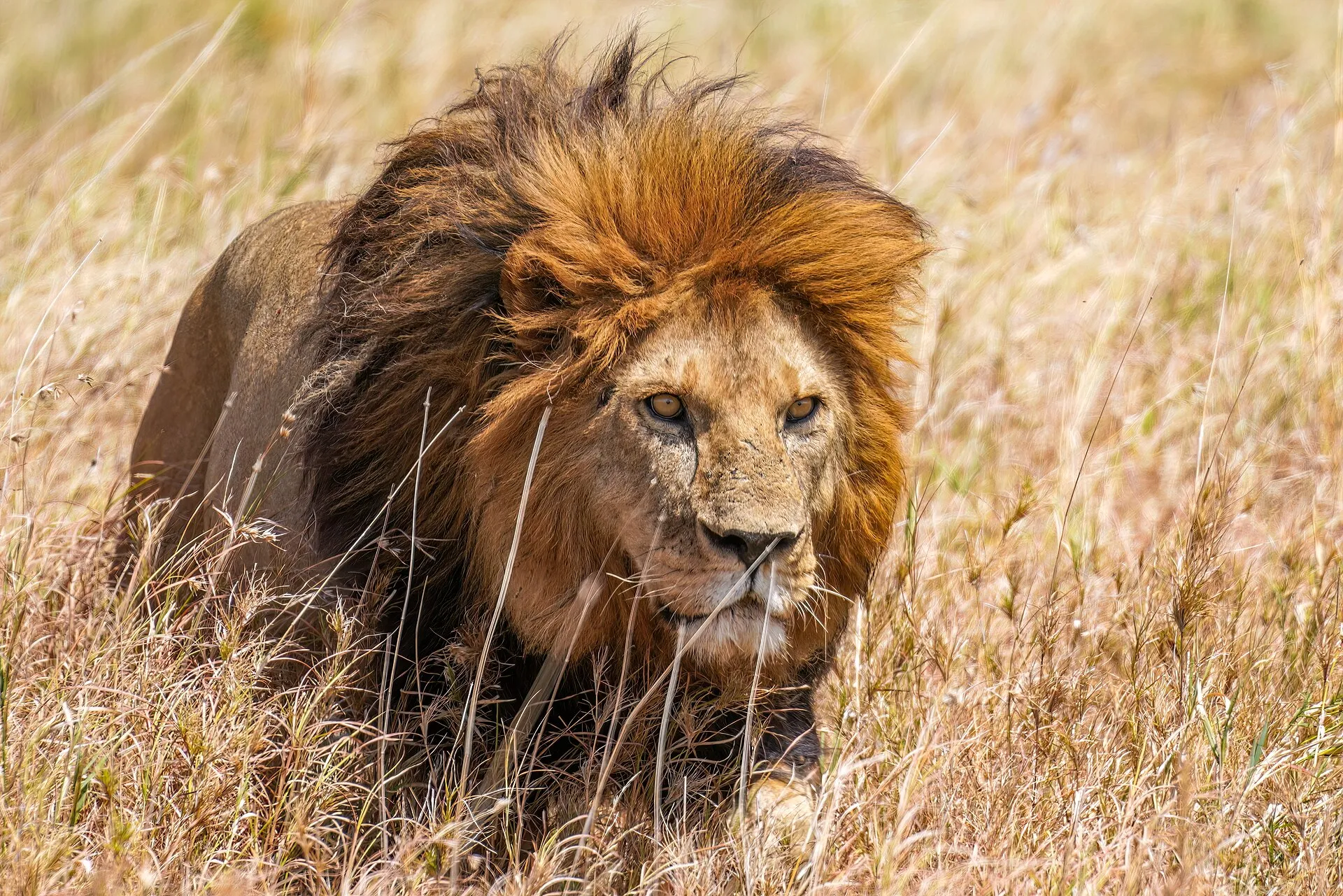
The best places to see lions in East Africa are the Serengeti and the Ngorongoro Crater in Tanzania and the Masai Mara in Kenya, where sightings on a two- or three-day visit are very likely. In Uganda, look for lions on the Kasenyi plains and in Ishasha in Queen Elizabeth National Park, and north of the Nile in Murchison Falls; Kidepo Valley has only a small number. Rwanda’s Akagera has had lions again since 2015. The dry seasons, roughly June to October and December to February, give the best viewing.
Key takeaways
- The Serengeti, Ngorongoro and the Masai Mara give the most reliable lion sightings.
- In Uganda, Queen Elizabeth and Murchison Falls are the best lion parks.
- Ishasha is famous for lions that climb fig trees.
- Lions are listed as Vulnerable; their numbers have fallen sharply over the last century.
- Early morning and late afternoon drives are the best times to find them active.
Seeing a pride of lions for the first time, perhaps stretched out in the grass or walking in single file at dawn, is one of the defining moments of any safari. East Africa is one of the last strongholds of the African lion, and the right parks give you a very good chance of watching them hunt, play and rest.
Where to see lions
- Serengeti, Tanzania: the classic lion park, with large prides on the central plains around Seronera and the kopjes, and on the southern plains during the calving season. See the Serengeti guide and big cats of the central Serengeti.
- Ngorongoro Crater, Tanzania: a small, enclosed world where lions are seen on most days, often close to the road. See the Ngorongoro Crater.
- Masai Mara, Kenya: famous prides, studied and filmed for decades, in the reserve and its conservancies. See the Masai Mara guide.
- Queen Elizabeth, Uganda: lions on the Kasenyi plains hunting Uganda kob, and the tree-climbing lions of Ishasha. See lions of the Kasenyi plains and tree-climbing lions.
- Murchison Falls, Uganda: lions on the Buligi tracks north of the Nile. Kidepo Valley has only a small population, so sightings there are a bonus.
- Ruaha and Nyerere, Tanzania: big prides in quieter, wilder country, where lions often hunt buffalo and giraffes.
- Akagera, Rwanda: lions were reintroduced in 2015 and have bred successfully.
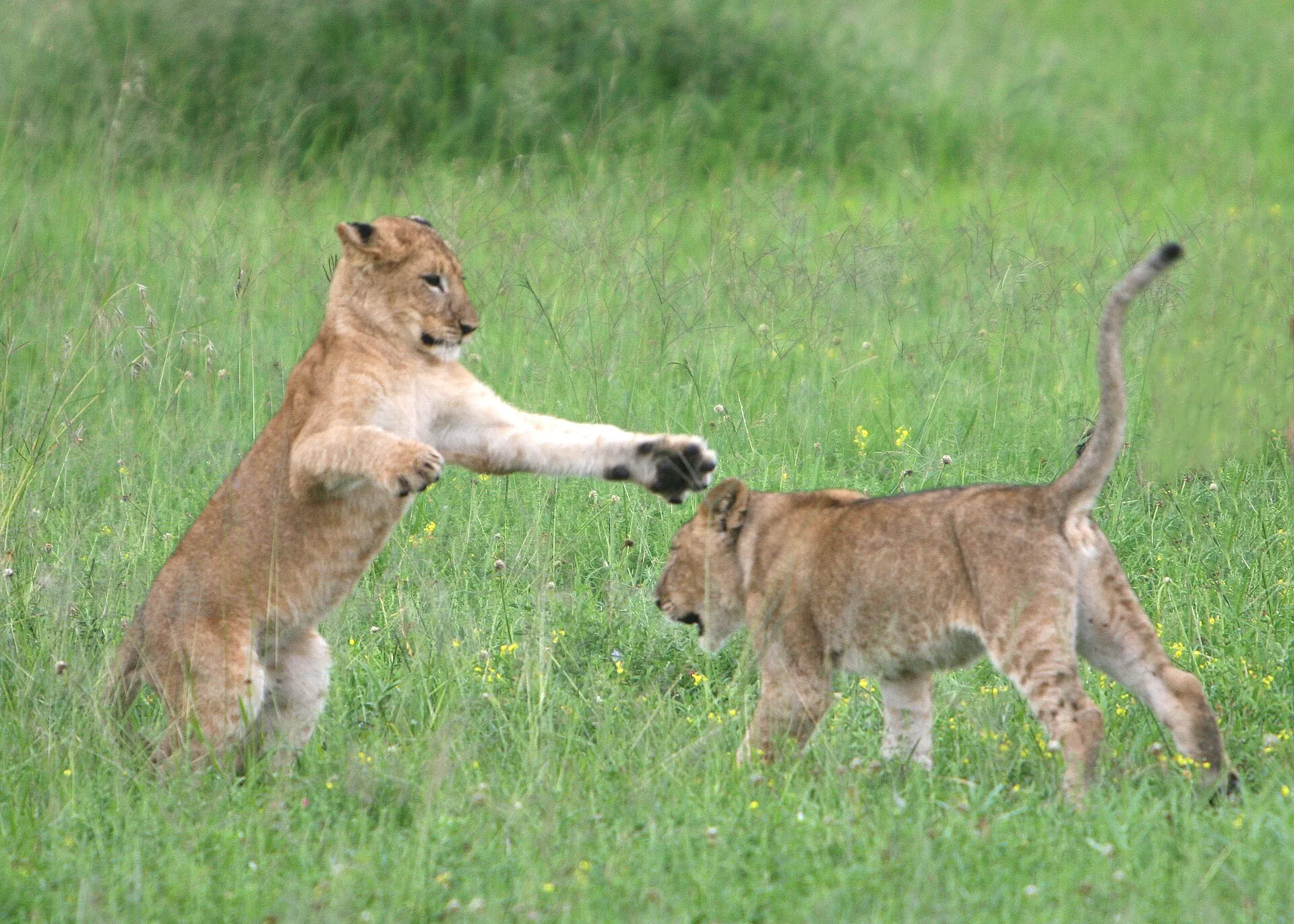
How a pride works
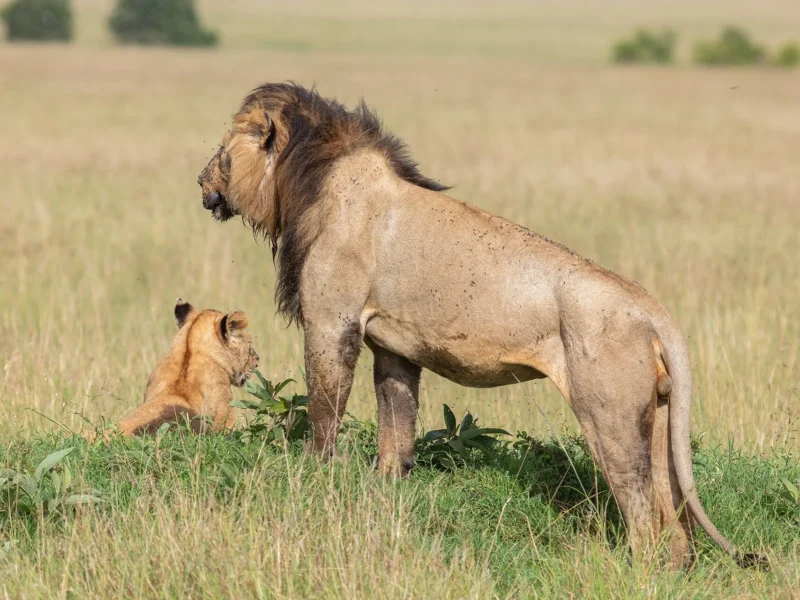
Lions are the only truly social cats. A pride is built around a group of related females, which stay together for life, raise their cubs together and do most of the hunting. One or more adult males, often brothers, hold the pride and defend its territory, roaring at night to warn rivals. When new males take over, they often kill young cubs so the females come into season again, which is why pride takeovers are such dramatic events.
Young males leave the pride at around two to three years old and live as nomads, often with their brothers, until they are strong enough to win a pride of their own.
Hunting and daily life
Lions hunt mainly at night and in the cool hours of the morning, working together to stalk and ambush wildebeest, zebras, buffalo and antelopes. In the Mara and Serengeti, the migration brings a feast; in Queen Elizabeth, Uganda kob are the main prey. Lions also steal kills from hyenas and cheetahs whenever they can. Most of the day is spent resting in the shade, which is why guides head out at first light.
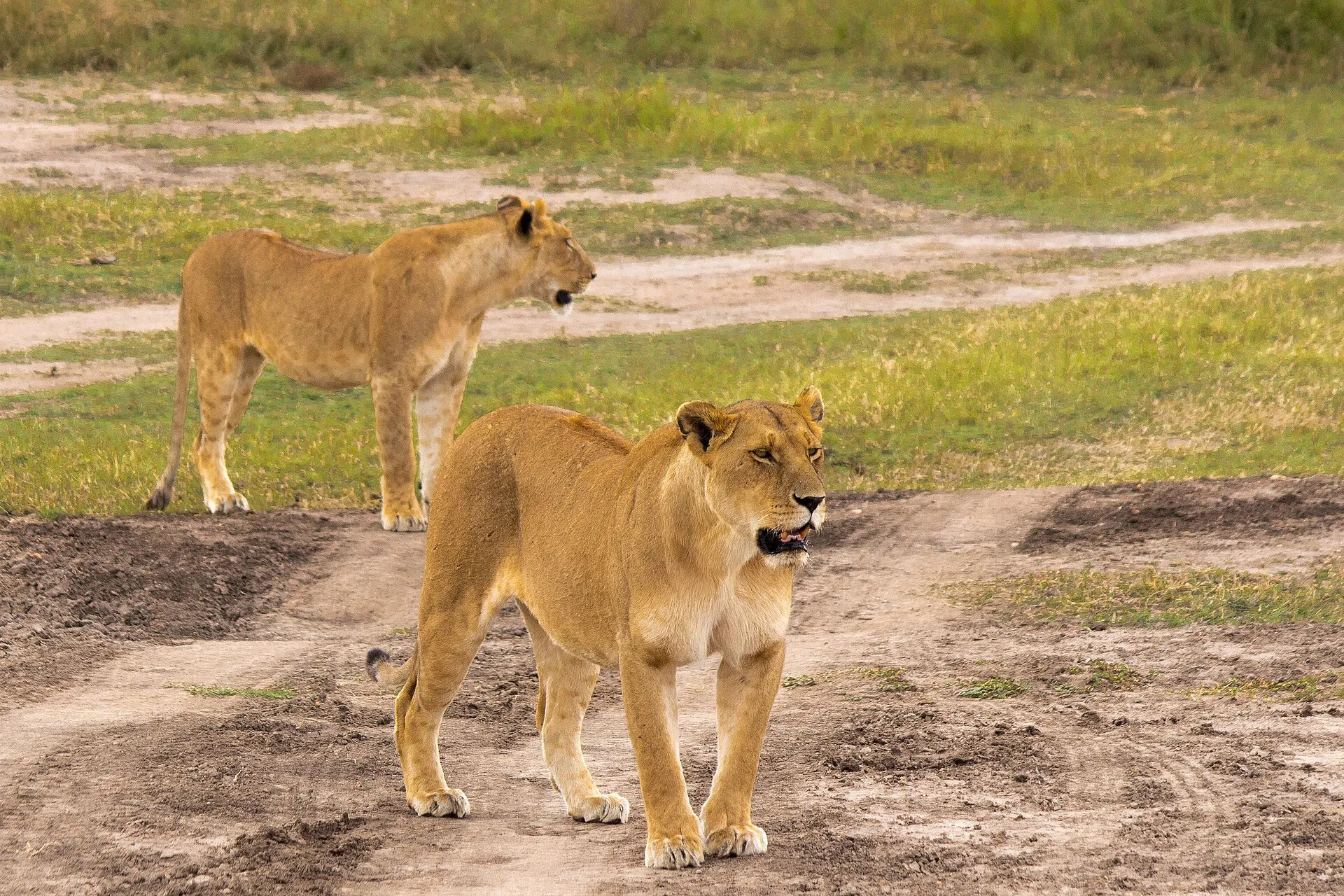
Lions under pressure
Africa’s wild lions have declined dramatically over the last century, and they now live in a small fraction of their former range. Conflict with livestock owners, the loss of prey and habitat, and poisoning are the main threats. Conservancies around the Mara, community projects in Tanzania and better protection in Uganda all help, and safari tourism gives lions a value that local people can share in.
listen for alarm calls from impala or baboons, and watch for vultures circling: both can lead you to lions.
Tips for the best lion sightings
- Go out at dawn, when lions are active and the light is soft.
- Spend at least two or three nights in a good lion area rather than rushing through.
- Choose the dry season, when grass is short and animals gather near water.
- Bring binoculars and a zoom lens; lions often rest in long grass or under bushes.
Frequently asked questions
Which country is best for seeing lions?
Tanzania holds the largest lion population of any country, and the Serengeti and Ngorongoro Crater are the most reliable places to see them. Kenya’s Masai Mara is equally good and closer to Nairobi.
Can I see lions in Uganda?
Yes. Queen Elizabeth National Park (Kasenyi and Ishasha) and Murchison Falls north of the Nile have lions, though in smaller numbers than in Kenya and Tanzania. Kidepo Valley has only a few.
When are lions most active?
In the early morning and late afternoon. Lions rest for up to 20 hours a day, so midday sightings are usually of sleeping cats.
Are lions dangerous on safari?
Lions generally ignore safari vehicles. Stay seated, keep your arms inside and follow your guide’s instructions, and they are perfectly safe to watch.
How close can we get?
Often within a few metres. Guides keep a respectful distance and never block a lion’s path or interfere with a hunt.

Written by our Kampala-based planners and guides, who arrange these trips every season. Prices and rules are checked before every quote.