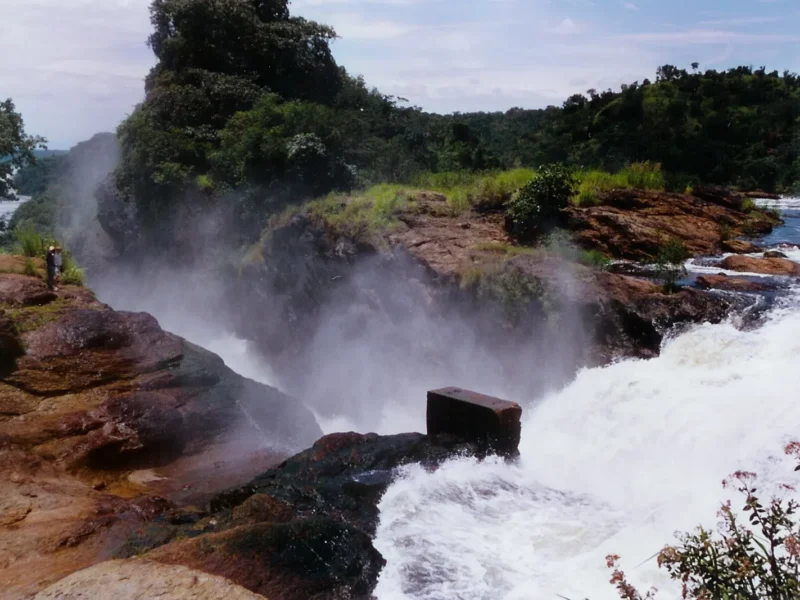
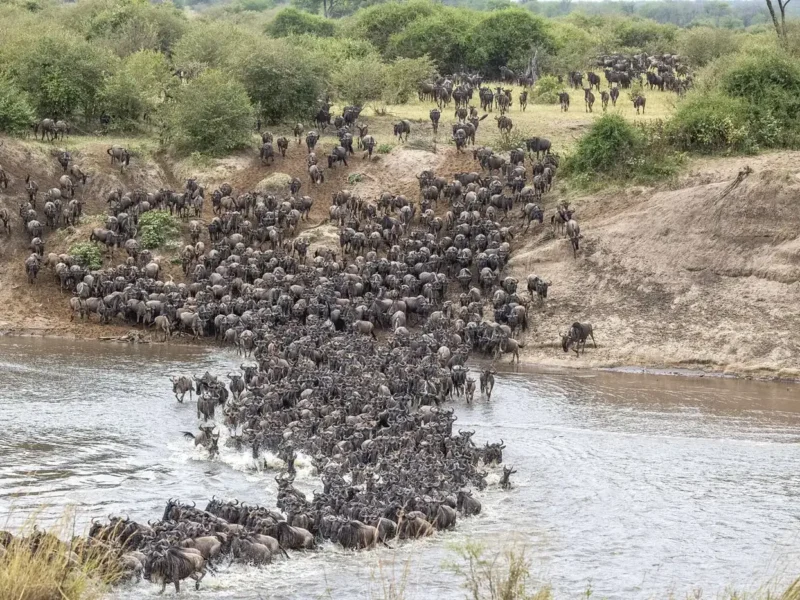
The Nile crocodile (Crocodylus niloticus) is Africa’s largest reptile; large males can exceed 5 metres. It ambushes fish, birds and mammals at the water’s edge, and is famous for attacking wildebeest during Mara River crossings. Females guard their nests and carry hatchlings to the water in their mouths. The launch trip on the Nile at Murchison Falls is one of the best places to see large crocodiles safely.
Key takeaways
- The Nile crocodile is Africa’s largest reptile.
- Large males can exceed 5 metres in length.
- They are ambush predators of fish, birds and mammals.
- Females guard nests and carry hatchlings in their jaws.
- Murchison’s Nile launch trip gives excellent, safe views.
Nile crocodiles have barely changed in millions of years, and for good reason. They are superbly adapted ambush predators, able to lie motionless for hours before exploding from the water. On a boat trip along the Nile, the sight of a five-metre crocodile sliding silently off a sandbank is unforgettable.
Size and appearance
Nile crocodiles are olive to grey-brown, darker on the back, with a long, powerful tail and a broad snout. Large males can exceed five metres in length and weigh hundreds of kilograms; females are smaller. Their eyes, ears and nostrils sit on top of the head, letting them watch and breathe while almost completely submerged.
Hunting
Young crocodiles eat insects, frogs and small fish. Adults take fish, birds and mammals, from antelope to zebra and wildebeest, ambushing them at the water’s edge. A crocodile grips its prey and drags it underwater, often spinning in a ‘death roll’ to tear off pieces. Crocodiles can go for long periods without eating, and a large meal may last them weeks.
Basking and behaviour
Crocodiles are cold-blooded and regulate their temperature by basking in the sun, often with their mouths open to release heat, and returning to the water to cool down. They are social to a degree, sharing basking sites and sometimes feeding together on large carcasses.
Nesting and parental care
Females lay eggs in holes dug in sandy riverbanks and guard the nest for about three months. The temperature of the nest determines the sex of the hatchlings. When the young hatch, they call from inside the eggs; the mother digs them out and carries them gently to the water in her jaws, then protects them for weeks. Despite this care, most hatchlings are eaten by birds, fish and other predators.
Where to see Nile crocodiles
- Murchison Falls, Uganda: some of the largest crocodiles in Africa line the Nile on the launch trip to the falls.
- Kazinga Channel, Uganda: crocodiles bask alongside hippos and buffalo.
- Mara River, Kenya and Tanzania: famous for ambushing wildebeest during the Great Migration river crossings.
- Lake Ihema in Akagera, Rwanda, and Lake Mburo, Uganda.
Never walk close to riverbanks or lake shores in parks, especially at dawn and dusk. Crocodiles are hard to see until they move.
Conservation
The Nile crocodile is listed as Least Concern across its wide range, though local populations have declined because of habitat loss and conflict with people. In protected rivers like the Nile in Murchison Falls, crocodiles thrive and play an important role as predators and scavengers.
Best time to see them
Crocodiles are visible year-round, often basking on sandbanks in the morning sun. In the dry season, lower water levels expose more sandbanks, making them easier to see.
Remarkable crocodile facts
- Crocodiles can close a special valve at the back of the throat, allowing them to open their mouths underwater without drowning.
- Their bite is among the strongest of any animal, but the muscles that open the jaws are weak.
- They can hold their breath for long periods when resting, though much less when active.
- Crocodiles swallow stones, which may help with digestion or buoyancy.
- Hatchlings are only about 30 cm long and grow quickly in their first years.
Crocodiles and people
In many East African communities, crocodiles are respected and feared. Fishermen and villagers living along rivers and lakes take care when collecting water or washing. Protected areas give crocodiles space away from people, and boat trips let visitors appreciate these ancient predators safely.
Frequently asked questions
How big do Nile crocodiles get?
Large males commonly reach 4–5 metres, and exceptional individuals more. Females are smaller.
How long do crocodiles live?
Often 50 years or more in the wild.
Do crocodiles eat people?
They can and occasionally do, which is why local communities and guides are careful near rivers. On safari you watch them from boats and vehicles at a safe distance.
Is the sex of crocodiles decided by temperature?
Yes. The temperature of the nest during incubation determines whether hatchlings are male or female.
Where can I see crocodiles catching wildebeest?
At the Mara River during the Great Migration, usually between July and October.
Are there crocodiles in Lake Bunyonyi or Lake Kivu?
No. Both lakes are considered free of crocodiles and hippos, which is why swimming there is popular.

Written by our Kampala-based planners and guides, who arrange these trips every season. Prices and rules are checked before every quote.