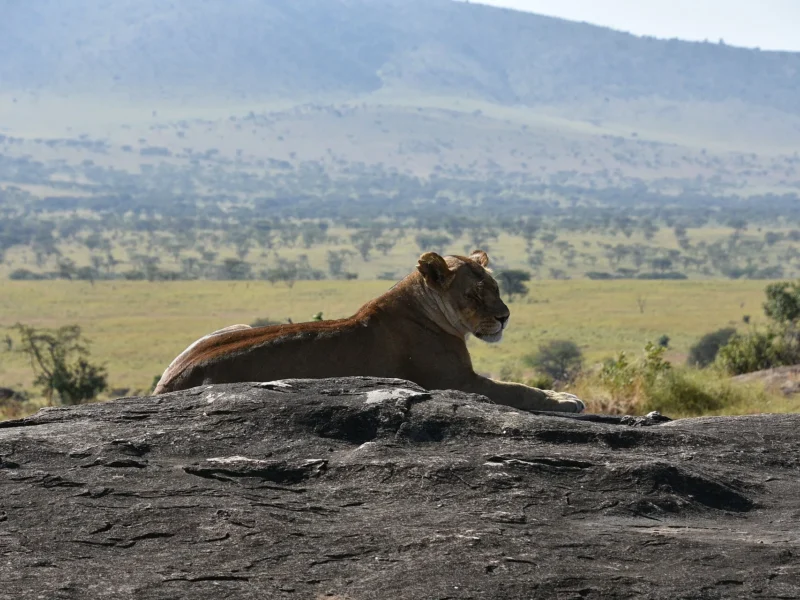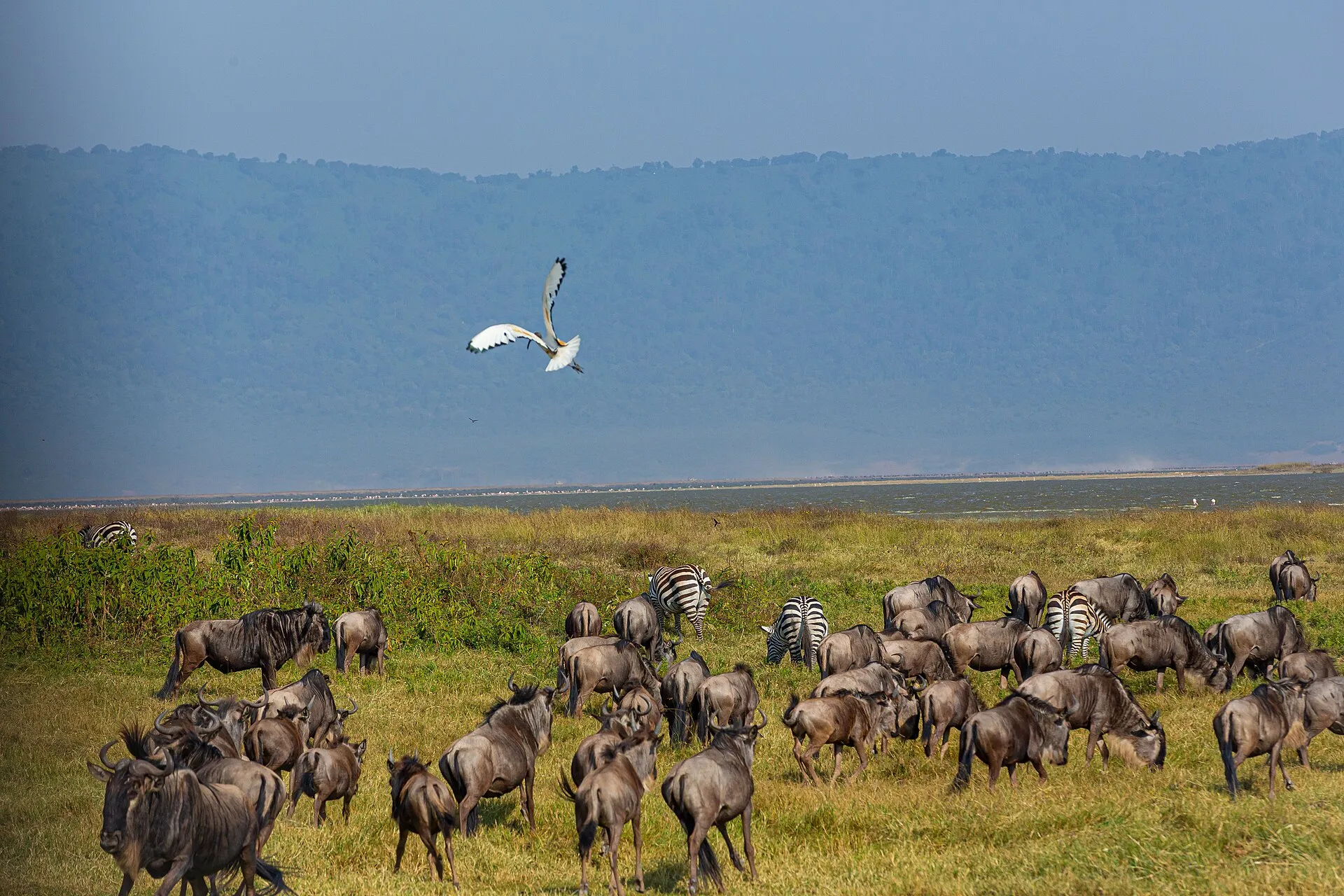
A game drive on the Ngorongoro Crater floor lasts about six hours, the time limit for each vehicle per descent. You drive down from the rim early in the morning and spend the day among wildebeest, zebra, buffalo, lions, hyenas, hippos and a small population of black rhino. Each vehicle pays a crater service fee of US$295 per descent, plus conservation area entry fees per person.
Key takeaways
- About six hours on the floor per descent.
- Crater service fee US$295 per vehicle per descent.
- One of the best places in East Africa to see black rhino.
- No giraffes: the walls are too steep for them.
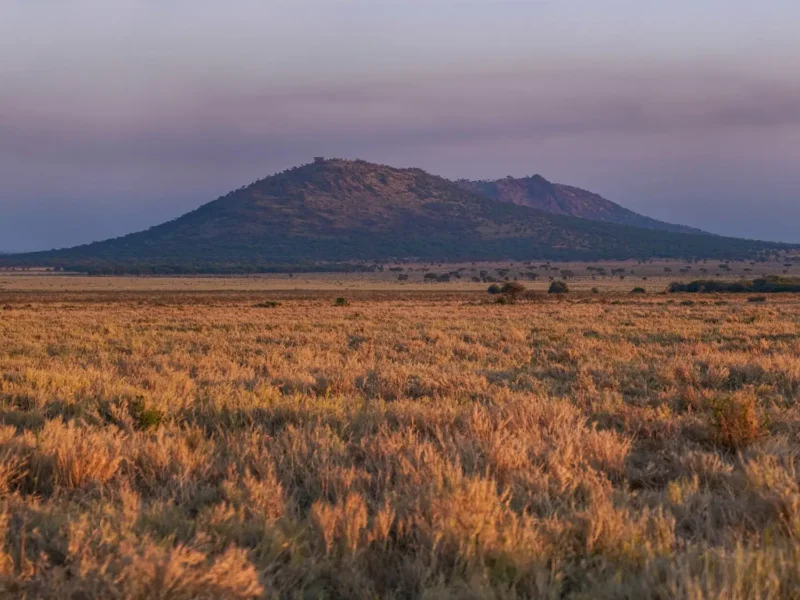
Ngorongoro Crater is the largest unbroken, unflooded volcanic caldera in the world. Its floor covers about 260 km², surrounded by walls about 600 metres high. Water, grass and protection keep a dense population of animals on the floor all year.
How the day works
Most visitors stay on the rim or in Karatu and start early. Vehicles descend by the Seneto road and climb out by the Lerai road. The descent gate closes for entries in the afternoon, and all vehicles must leave by 6:00pm. Each vehicle is allowed about six hours on the floor per descent, so the day is planned carefully.
What you see
- Lions often rest close to the tracks.
- Black rhinos, a small population of a few dozen, protected by rangers. See black rhino in Ngorongoro.
- Wildebeest, zebra and buffalo graze across the open grassland.
- Hippos wallow at the Ngoitokitok spring, a popular picnic spot.
- Flamingos gather on Lake Magadi, the soda lake on the floor.
- Elephant bulls feed in the Lerai Forest of yellow-barked acacias.
When to go
The crater is good all year because its animals do not migrate. June to October is dry, with shorter grass and easier viewing. The green season, November to May, brings flowers, newborn animals and fewer vehicles, but some tracks can be muddy.
Good to know
- Bring a warm layer: the rim, at over 2,200 metres, is cold early in the morning.
- Pack lunch; eat inside the vehicle at busy picnic sites, as kites snatch food.
- Expect several vehicles at popular sightings, especially in high season.
- Conservation area entry is charged per person per day, separate from the crater fee.
Who it suits
The crater suits almost everyone: first-time visitors, families with children and travellers with limited time. You can see a wide range of animals in a single morning, and the drive in and out is spectacular. Keen photographers who want quiet sightings should descend at first light, before most vehicles arrive.
The crater’s history
Ngorongoro formed about two to three million years ago, when a huge volcano collapsed after an eruption, leaving the caldera. The Maasai graze cattle in the wider conservation area, which was created in 1959 to balance wildlife and pastoral communities. The crater is part of the Ngorongoro Conservation Area, a UNESCO World Heritage Site.
A crater day, hour by hour
- 6:00am: leave your lodge with a packed breakfast.
- Around 6:30am: descend by the Seneto road as the mist lifts from the crater floor.
- Morning: look for lions, hyenas and black rhinos while it is cool.
- Mid-morning: visit the soda lake for flamingos and the swamps for hippos and elephants.
- Lunch: picnic at the Ngoitokitok spring or another designated site.
- Early afternoon: climb out by the Lerai road and continue your journey.
Where to stay
Lodges on the crater rim offer spectacular views and the shortest drive to the descent road, but they are cold at night. Lodges in the Karatu highlands, about 30–45 minutes from the gate, are warmer and often more affordable, among coffee farms and forest.
What to bring
- Warm layers for the early morning.
- Binoculars and a long lens.
- Sun protection for the middle of the day.
- A packed breakfast and lunch.
Crater versus Serengeti
The crater gives dense wildlife in a small area, often in a single morning; the Serengeti gives space, wilderness and the migration. Most safaris combine both.
Responsible visiting
The crater is busy, and its small area is sensitive. Stay on tracks, keep noise down and do not ask your guide to approach animals too closely. Vehicle numbers and time limits exist to protect the wildlife.
Animals you are likely to see
| Animal | Where on the floor |
|---|---|
| Lions | Grassland and near the tracks |
| Spotted hyenas | Open plains, often near kills |
| Black rhinos | Open grassland, often far away |
| Elephant bulls | Lerai Forest and swamps |
| Hippos | Ngoitokitok spring and Mandusi swamp |
| Flamingos | Lake Magadi |
| Buffalo, zebra, wildebeest | Everywhere |
| Grey crowned cranes, kori bustards | Grassland and marshes |
Combining the crater with other parks
Most northern Tanzania safaris combine one crater day with Tarangire, two hours to the east, and two or three nights in the Serengeti, about three hours to the west. Lake Manyara, with its forests and baboons, is also close. A classic route runs Arusha, Tarangire, Ngorongoro, the Serengeti and back by air.
Ngorongoro beyond the crater
The wider Ngorongoro Conservation Area includes the Empakaai Crater, with a soda lake and a steep walk down to the shore; the Olmoti Crater, with a waterfall; Olduvai Gorge, famous for early human fossils; and the Ndutu plains, where the migration calves from January to March. Maasai villages lie throughout the highlands. A second day in the area lets you add one of these to your crater visit, for a fuller picture of this remarkable landscape. See Olduvai Gorge.
Plan it
The crater is part of our 3-day Tarangire and Ngorongoro safari and 4-day Serengeti and Ngorongoro safari.
Frequently asked questions
Can I spend the whole day in the crater?
Vehicles are limited to about six hours per descent, which is plenty for most visitors.
Are there giraffes in the crater?
No. The steep walls keep giraffes out, though you may see them on the rim slopes.
Is Ngorongoro worth it?
Yes. It is one of the most reliable places in Africa to see many animals in one day.
Can I sleep on the crater floor?
No. Lodges and camps are on the rim or outside the conservation area.
What is the best time of day for the crater?
Early morning, when animals are active and before most vehicles arrive.
Are there toilets on the crater floor?
Yes, at the main picnic sites.

Written by our Kampala-based planners and guides, who arrange these trips every season. Prices and rules are checked before every quote.