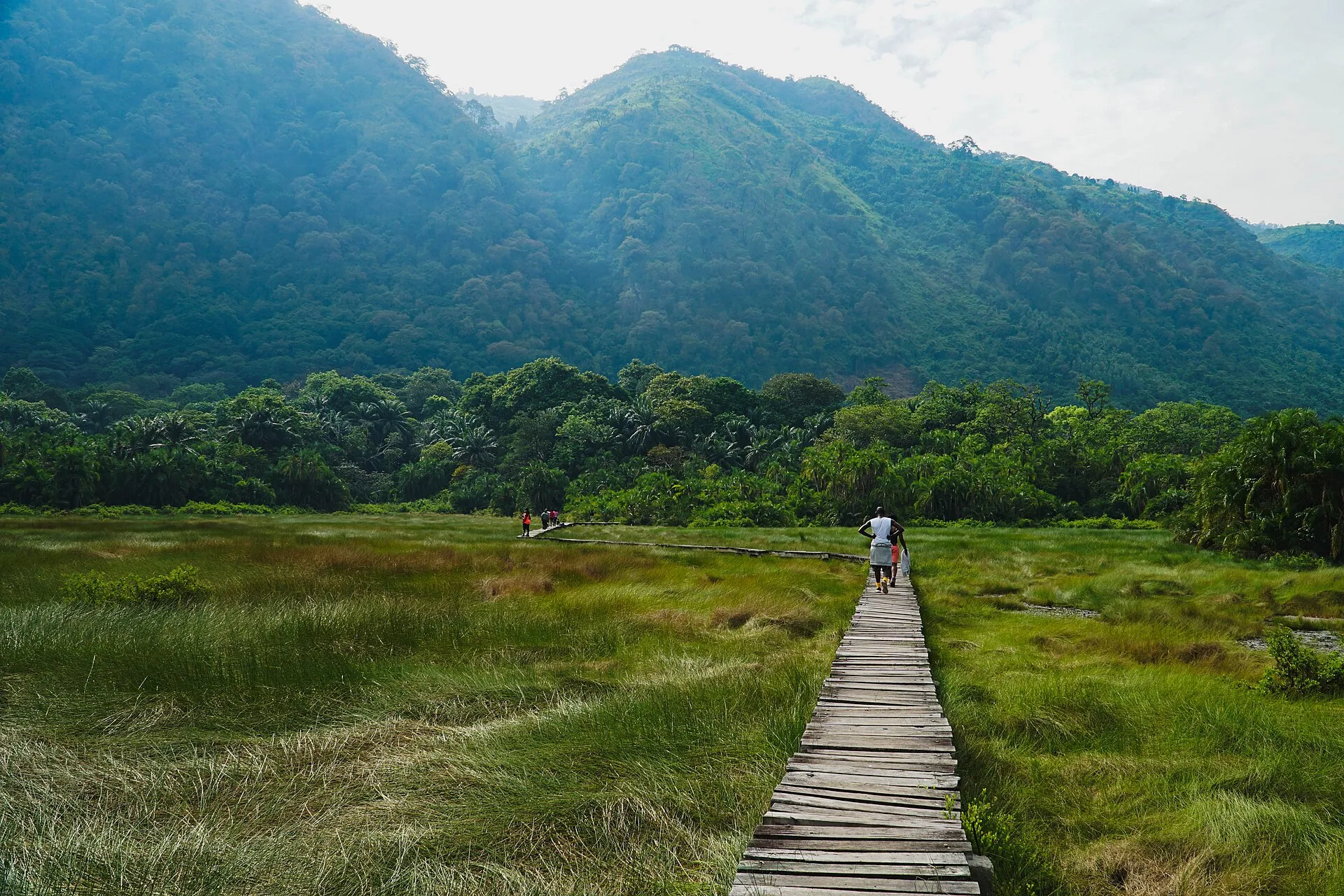
Semuliki National Park lies in western Uganda, on the border with the Democratic Republic of Congo, below the Rwenzori Mountains. Its lowland forest is an extension of the Congo Basin’s Ituri Forest, and many of its birds are found nowhere else in East Africa, including several hornbills, the Nkulengu rail and the lyre-tailed honeyguide. The park also has the Sempaya hot springs.
Key takeaways
- Lowland forest linked to the Congo Basin.
- Birds found nowhere else in East Africa.
- Several hornbill species.
- Sempaya hot springs.
Semuliki is flat and low compared with Uganda’s other forests. Its humid forest, swamps and river attract birds normally associated with Central Africa.
Key species
- Hornbills: including the black-casqued wattled, white-crested, black dwarf and red-billed dwarf hornbills.
- Nkulengu rail, heard calling at dawn and dusk.
- Lyre-tailed honeyguide.
- Congo serpent eagle.
- Many forest kingfishers, flycatchers and greenbuls.
Sempaya hot springs
Two springs, known locally as the male and female springs, bubble out of the ground. The female spring has a small geyser where water boils at about 100 °C; guides cook eggs in it. A boardwalk leads through the swamp to the springs.
A typical day
Birding walks start early on the Kirumia trail or near Sempaya. The forest is hot and humid, so take water and rest in the middle of the day. Return to Fort Portal or a nearby lodge in the evening.
When to go
Semuliki can be visited year-round. The drier months, December to February and June to August, make trails easier. Many birds are active and calling around the rains.
Good to know
- Park entry is US$35 per day; birding walks are US$40.
- Bring insect repellent; the forest is humid.
- A specialist birding guide makes a big difference.
- Combine with Kibale and the crater lakes.
Who it suits
Semuliki suits serious birders who want Central African species, and travellers who enjoy quieter, less visited parks.
Combine it with
Semuliki works well with Kibale and the crater lakes walk near Fort Portal, and with the Rwenzori Mountains.
Primates and other wildlife
Semuliki is also home to primates such as red-tailed monkeys, grey-cheeked mangabeys, black-and-white colobus and blue monkeys, and to forest elephants and buffalo, which are rarely seen. The Toro-Semliki Wildlife Reserve nearby offers savannah game drives and a famous research site for chimpanzees living in open woodland.
The Batwa
The Batwa communities living near Semuliki share their traditions and forest knowledge with visitors, an interesting cultural addition to a birding day.
Where to stay
Stay in Fort Portal, about an hour away, or at lodges near the park and the Toro-Semliki Wildlife Reserve. A few simple options lie close to Sempaya.
Target birds
- Nkulengu rail
- Lyre-tailed honeyguide
- Congo serpent eagle
- Black-casqued wattled hornbill
- White-crested hornbill
- Black dwarf hornbill
- Red-billed dwarf hornbill
- Piping hornbill
- Red-rumped tinkerbird
- Yellow-throated cuckoo
- Orange-tufted sunbird
Tips
Semuliki is hot and humid. Start early, drink plenty of water and wear light, long-sleeved clothing.
The Semuliki landscape
Semuliki National Park lies in the Semliki Valley, below the western slopes of the Rwenzori Mountains and beside the Semliki River, which forms the border with the Democratic Republic of Congo. The forest is a continuation of the great Ituri Forest of the Congo Basin, and it was one of the few forests in East Africa to survive the dry periods of the last ice age. This long history explains why it holds species found nowhere else in East Africa, from forest elephants to Congo-basin birds and butterflies. The nearby Toro-Semliki Wildlife Reserve adds open savannah and the shores of Lake Albert, where shoebills are sometimes seen.
Getting there
Semuliki is about an hour from Fort Portal by road, crossing the Rwenzori foothills with views over the Semliki Valley. Fort Portal is about five to six hours from Kampala.
Who it suits
Serious birders, photographers and travellers who enjoy remote, less-visited forests. Non-birders will enjoy the Sempaya hot springs, the boardwalk through the swamp and the forest walks with monkeys and butterflies.
Plan it
Semuliki is part of our 14-day Uganda birding safari and 30-day Uganda birding, primates and wildlife safari.
Frequently asked questions
What makes Semuliki special?
It holds Central African birds not found elsewhere in East Africa.
How far is Semuliki from Fort Portal?
About 1–1.5 hours by road.
Can I see primates?
Yes, several monkey species live in the forest.
Is it suitable for non-birders?
The hot springs and forest walks appeal to everyone.
How many days do I need in Semuliki?
Two full days of birding gives a good chance of the forest specials; one day is enough for the hot springs and a short walk.
Can I see shoebills near Semuliki?
Sometimes, on Lake Albert in the Toro-Semliki Wildlife Reserve.
Is Semuliki hot?
Yes. It is low and humid, so start early, carry water and rest in the middle of the day.
Are the hot springs safe to visit?
Yes, with a guide on the boardwalk; the water is boiling, so keep to the paths.

Written by our Kampala-based planners and guides, who arrange these trips every season. Prices and rules are checked before every quote.

