Birding 14 days14-Day Uganda Birding Safari
Uganda’s classic birding circuit in two weeks: from the shoebill at Mabamba to Albertine Rift endemics in Bwindi, Congo-basin species in Semuliki and the famous Royal Mile in Budongo Forest.

A deep, birder-led traverse of Uganda’s full ecological range, from papyrus swamps and Albertine Rift forests to Kidepo’s remote savannah, built around the Shoebill, forest endemics, primates and big game across ten premier wildlife areas.
This thirty-day safari is a deep, birder-led journey across Uganda’s full ecological range: papyrus swamp, savannah, terraced highland lake, montane rainforest, dry-country wilderness and Nile floodplain. It is built around Shoebill sightings, Albertine Rift endemics, primate walks and big game across ten of Uganda’s premier wildlife areas.
It combines slow, full-day birding at specialist sites (Mabamba, Bwindi’s Mubwindi Swamp trail and Budongo’s Royal Mile) with classic safari moments: the Kazinga Channel cruise, the boat to the foot of Murchison Falls, Ishasha’s tree-climbing lions and Kidepo’s remote Narus Valley. It closes with an easy, low-key run back through Mabira Forest and Kampala to Entebbe.
You are met on arrival at Entebbe International Airport and transferred to your guesthouse. In the afternoon, ease into Uganda at the Entebbe Botanical Gardens on the shore of Lake Victoria. Its mix of forest, lakeshore and garden habitats turns up great blue turaco, African grey parrot, palm-nut vulture, woodland kingfisher and Klaas’s cuckoo, alongside vervet monkeys and black-and-white colobus. See Entebbe Botanical Gardens.
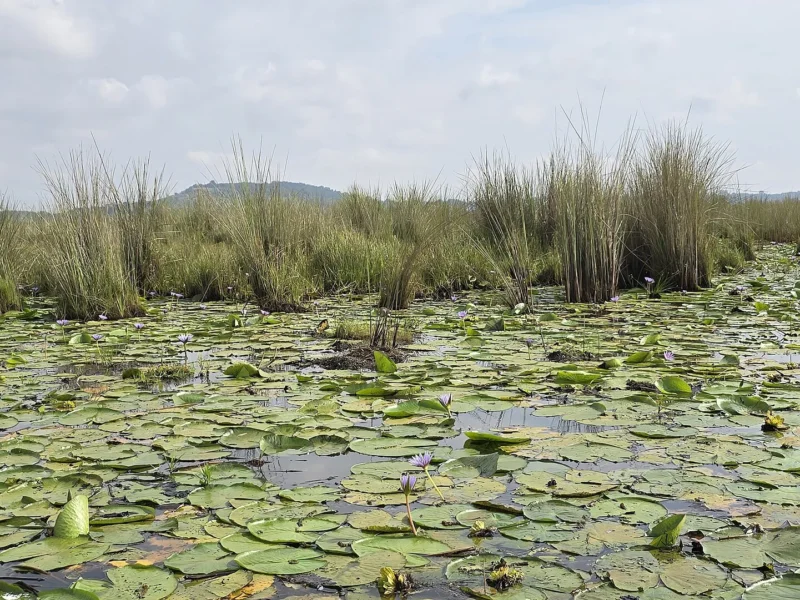
A pre-dawn transfer puts you on the papyrus channels of Mabamba Bay for the Shoebill’s most active hunting hours. After lunch on shore, head back out in the afternoon when boat traffic has thinned for a second, quieter search. Mabamba also holds African and lesser jacana, malachite kingfisher, papyrus gonolek and blue-headed coucal. Read our Mabamba Swamp guide.
A short drive brings you to a compact lowland forest reserve that punches above its size for birding. Guided trails through tall hardwoods turn up forest specialists alongside red-tailed monkeys and black-and-white colobus. It is a good day to tune your ear to forest calls before the bigger western forests.
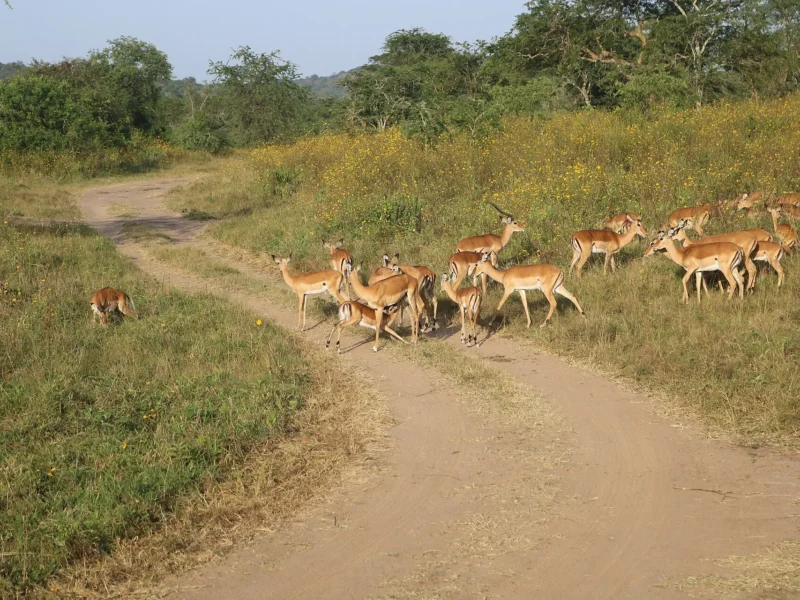
Drive south-west through Masaka onto the Mbarara highway as the landscape opens into acacia savannah. At Lake Mburo, one of the few parks in Uganda without resident lions or elephants, a guided walk with an armed ranger brings you close to zebra, eland, impala and warthog on foot.
An early game drive through acacia woodland looks for eland, buffalo and zebra, with over 330 recorded bird species keeping things interesting. In the afternoon, a trip on the lake brings the African finfoot, malachite and pied kingfishers, and close views of hippos and crocodiles.
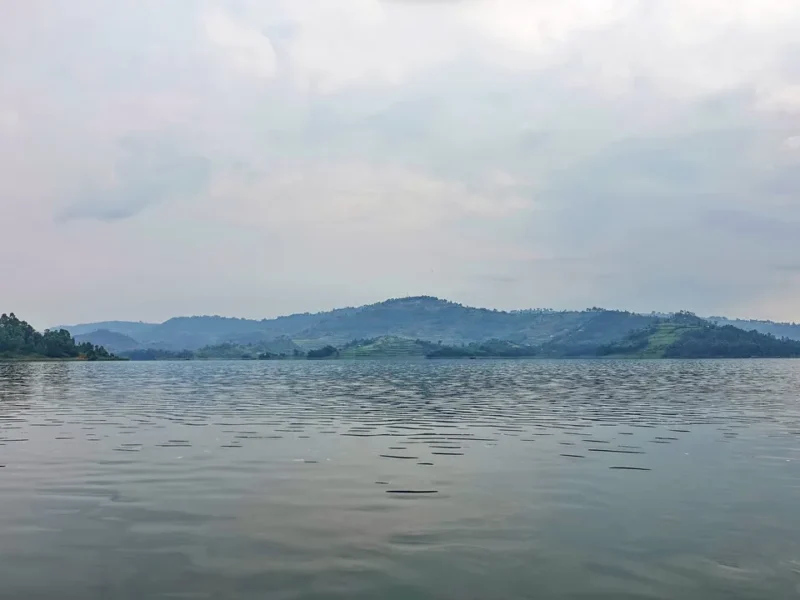
A longer drive via Mbarara and Kabale climbs into the terraced south-west before dropping into the Bunyonyi basin, a lake widely considered safe for swimming. A late-afternoon dugout canoe trip weaves among the lake’s many islands.
A slower-paced day exploring Bunyonyi by canoe, past Punishment Island and the terraced hillsides. The cooler highland air brings regal sunbird, red-chested sunbird and handsome francolin into the mix. It is as much a rest day as a birding one.
A shorter transfer takes you from Bunyonyi’s open hills into Bwindi’s dense, ancient forest at Ruhija, the park’s highest sector. Take an optional gentle walk around the lodge grounds, or rest ahead of tomorrow’s demanding forest day.
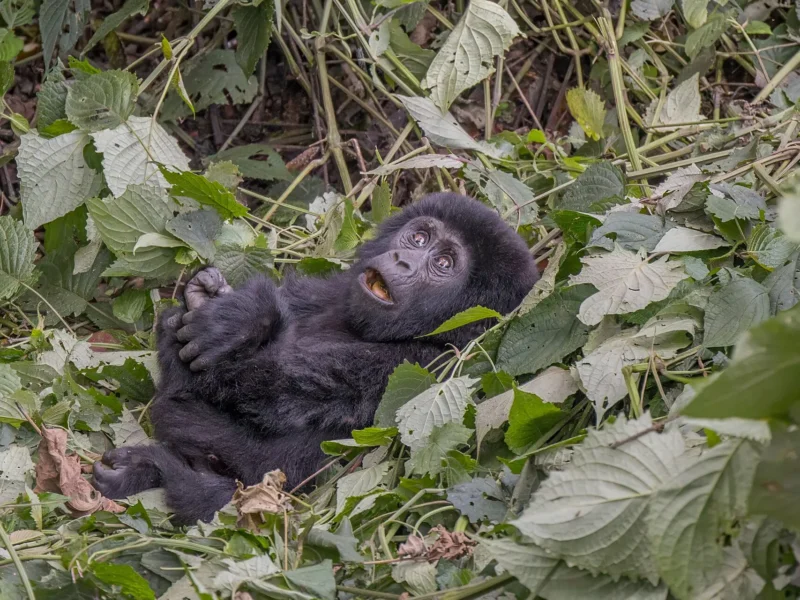
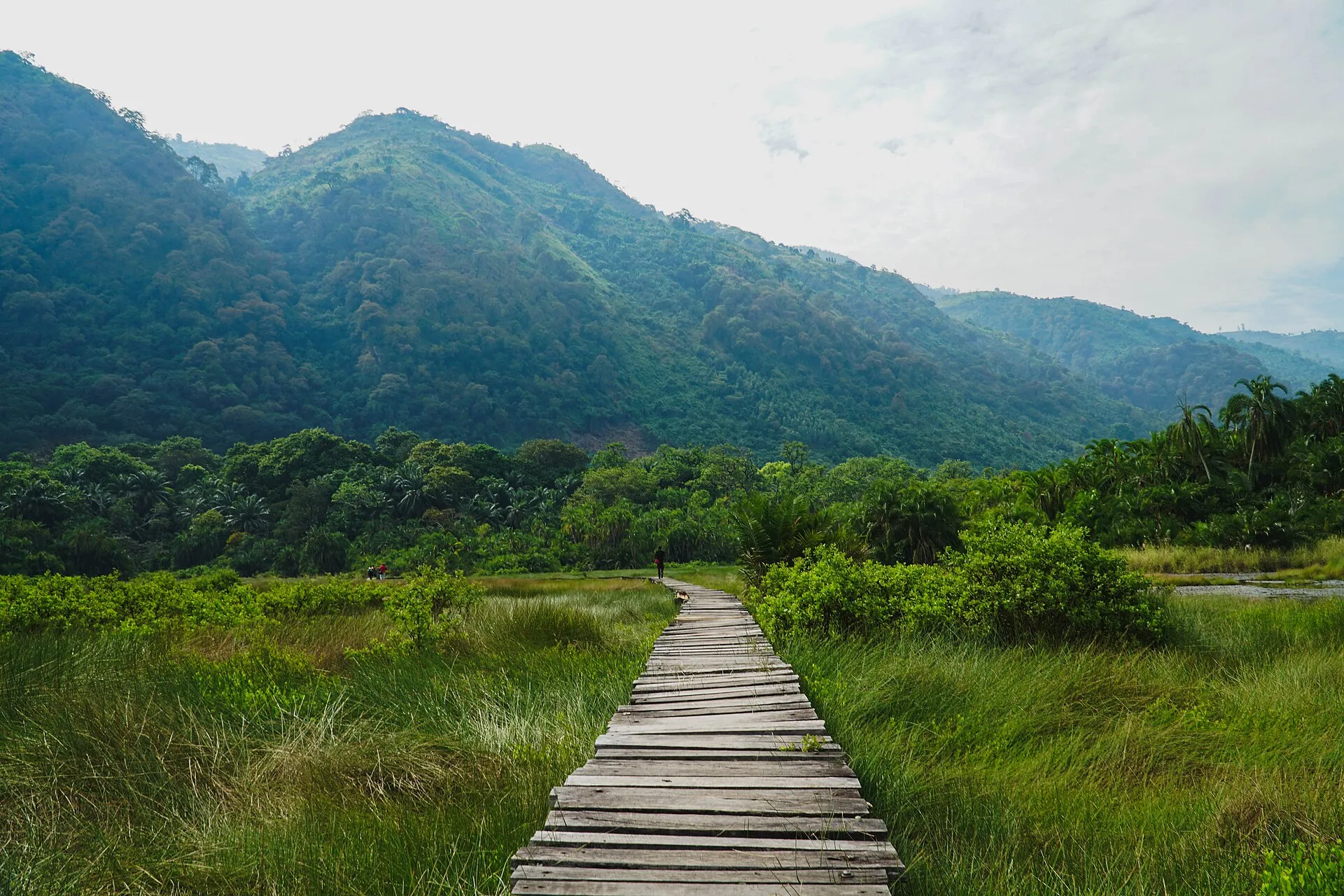
A long guided day on Ruhija’s forest trails, descending towards Mubwindi Swamp through several forest zones. Bwindi’s Albertine Rift endemic list is exceptional, with real chances of African green broadbill, Grauer’s rush warbler and Doherty’s bushshrike, while L’Hoest’s monkeys are often met along the way. See Albertine Rift endemics in Bwindi.
Drive north out of the forest to the Ishasha sector of Queen Elizabeth National Park. In the afternoon, scan the sycamore figs for Ishasha’s famous tree-climbing lions and explore the open plains for topi, buffalo and elephants. Your camp sits on the Ntungwe River, where hippos and forest birds keep you company.
Drive north through the park to Maramagambo Forest, where a short trail leads to a cave filled with thousands of fruit bats and the pythons that feed on them. Continue to Mweya for lunch, then take the afternoon boat cruise on the Kazinga Channel: one of Africa’s highest hippo densities, elephants coming to drink and dense waterbird concentrations including African skimmer, goliath heron and yellow-billed stork.
An early drive across the Kasenyi plains looks for lions, Uganda kob and buffalo. Then head north via Kasese and Fort Portal beneath the Rwenzori Mountains to Kibale. After dinner, a guided night walk at Bigodi Wetland Sanctuary searches for nightjars, owls, bushbabies and possibly a potto.
A full day of guided forest trails without the time pressure of a permit hour: red colobus, grey-cheeked mangabey, red-tailed monkey and black-and-white colobus, with black bee-eater and yellow-spotted barbet among the birds. Primate Lodge is the only lodge inside the forest, with over 300 species recorded on site. Chimpanzee tracking can be added (permit extra).
The longest drive since Bwindi, via Fort Portal, Hoima and Masindi, crossing from forested hills through changing landscapes to the Nile floodplain. Arrive at Paraa in time to watch the river from the lodge terrace.
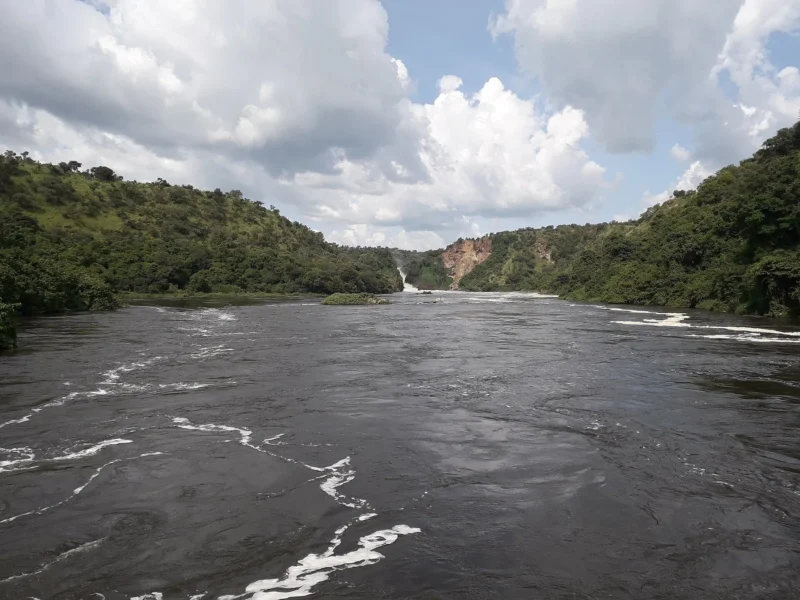
An early game drive on the Buligi tracks looks for lions, elephants, Rothschild’s giraffe and patas monkeys. In the afternoon, a private boat travels up the Nile to the base of Murchison Falls, where the entire river is forced through a gap barely seven metres wide. See our Murchison Falls guide.
A morning cruise downstream into the Nile Delta towards Lake Albert explores good shoebill habitat with dense concentrations of waterbirds and hippos. In the early afternoon, transfer south to Budongo Forest.
A full day of guided walking in the mahogany and ironwood forest of the Kaniyo Pabidi sector, looking for Nahan’s francolin and Ituri batis while chimpanzee calls carry through the canopy.
A day built around Budongo’s Royal Mile, widely regarded as Uganda’s best forest-birding stretch, with chocolate-backed and white-bellied kingfishers and Puvel’s illadopsis. Continue past the Sonso chimpanzee research site and explore the Nyabyeya forest edge.
Drive to Ziwa, the only place in Uganda to see rhinos, for guided tracking of southern white rhinos on foot, plus an evening nature walk as the light fades. Read our Ziwa guide.
A day dedicated to the papyrus wetlands around Nakasongola and the Lake Kyoga system, where shoebill has been recorded alongside papyrus gonolek and white-winged swamp warbler. A quieter, patient wetland-birding day.
The longest single drive of the trip, via Gulu and Kitgum, deep into Uganda’s remote north-east, ending in Kidepo’s dramatic mountain-ringed valleys.
The Narus Valley offers a completely different savannah: Karamoja apalis and ostrich alongside buffalo herds, elephants and antelope, with patas monkeys regularly crossing the valley floor. See our Kidepo guide.
A second full day, with an optional visit to the Kanangorok hot springs near the South Sudan border or further exploration of the Narus and Kidepo valleys.
A major transit day south and east, broken at the Mpologoma River wetlands near Mbale, good papyrus habitat with a chance of shoebill and, in season, the blue swallow, before continuing to Mabira Forest.
An easy, rewarding forest day close to Kampala: red-tailed monkeys and black-and-white colobus are common along the trails, and the strong bird list includes Weyns’s weaver.
A short drive to Griffin Falls, where a guided trail follows the river down through the forest to the falls: a scenic, low-key walk to round out the Mabira circuit.
Stop at Sezibwa Falls, a place of significance in Buganda tradition, for a last easy walk and photographs before continuing into Kampala.
A deliberately unstructured day to rest, sort through your photographs and enjoy Kampala at a slower pace. Optional visits include the Kasubi Tombs or a Kampala food and market tour.
A full day at Entebbe’s wildlife education centre for close, unhurried photographic access to species that are difficult to approach in the wild, including a resident shoebill, alongside chimpanzees, lions and rescued wildlife.
A relaxed final morning before your transfer to Entebbe International Airport for your onward or international flight.
Lodges shown match the quoted price. Ask us about mid-range and luxury upgrades.

| Permit or fee | 2026 rate (foreign non-resident adult) |
|---|---|
| Chimpanzee tracking permit, Kibale (optional extra) | US$250 per person (US$200 in April, May and November) |
| Kazinga Channel launch, Queen Elizabeth | US$30 per person |
| Rhino tracking on foot, Ziwa | paid at the sanctuary |
| Lake Mburo National Park: park entry | US$40 per day |
| Bwindi Impenetrable National Park: park entry | US$40 per day (included in the gorilla permit on trekking day) |
| Queen Elizabeth National Park: park entry | US$40 per day |
| Kibale Forest National Park: park entry | US$40 per day (included in the chimp permit on tracking day) |
| Murchison Falls National Park: park entry | US$45 per day |
| Kidepo Valley National Park: park entry | US$40 per day |
| Porter on trekking day (recommended, paid locally) | about US$20 |
The fees that apply to this trip are included in your quote. Park authorities set them and can change them, so we always confirm the current rates when we quote.
For a full breakdown, see how much a Uganda safari costs.
Every itinerary is private, so you choose the style of each stay. These are lodges we use at each stop, by comfort level:
In Uganda, gorilla and chimp trekking run all year. June to September and December to February are the driest months, with easier forest trails; April, May and November are wetter and quieter, and Uganda's gorilla permit drops to US$600. See the best time to visit Uganda.
Every trip can be adjusted to your dates, budget and pace. Ask for a free quote and a specialist will reply within 24 hours.


Keen birders and naturalists who want to see Uganda’s full range of habitats properly, with full days at specialist sites rather than quick stops. Non-birding partners enjoy the primates, big game, boat trips and lakes.
Uganda has over 1,000 species. A route covering Mabamba, the western forests, Budongo, the savannah parks and Kidepo typically produces several hundred, including many Albertine Rift endemics.
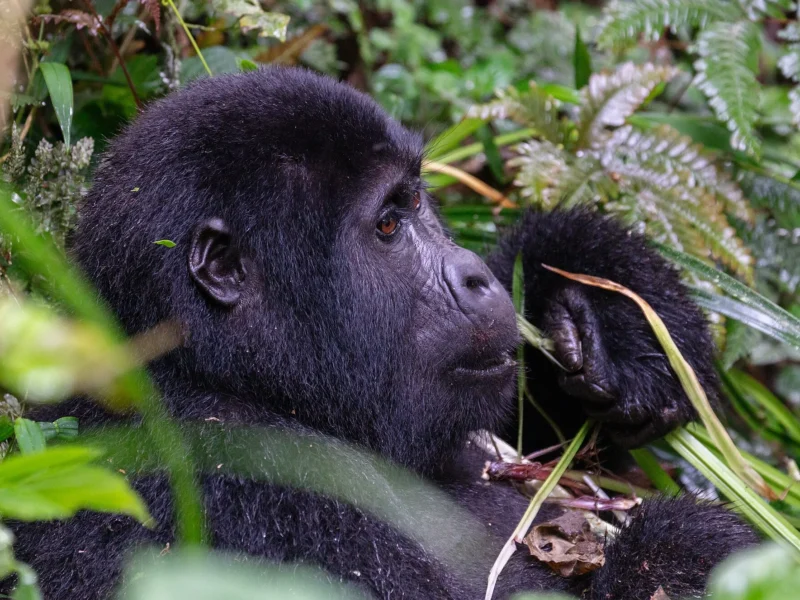
Yes. The itinerary is built around forest birding in Bwindi, but a gorilla trek can be added in Ruhija on day nine (permit US$800, or US$600 in April, May and November).
Birding is excellent all year. November to April adds Palearctic migrants; June to September is driest for travel to Kidepo and the savannah parks.
Yes. It can be split into a western section (Mabamba to Kibale) or a northern section (Murchison, Budongo, Ziwa and Kidepo). See also our 7-day and 14-day Uganda birding safaris.
Birding 14 daysUganda’s classic birding circuit in two weeks: from the shoebill at Mabamba to Albertine Rift endemics in Bwindi, Congo-basin species in Semuliki and the famous Royal Mile in Budongo Forest.
Signature 12 daysA slow, deep journey through Uganda: two nights in every major park, from the Nile at Murchison Falls to the gorillas of Bwindi, with crater lakes, Lake Bunyonyi and Lake Mburo along the way.
Signature 14 daysGorillas in Bwindi, chimps in Budongo, boat trips on the Kazinga Channel and the Nile, and Uganda’s lakes, on one two-week road safari.
Change the dates, add a night, upgrade a lodge or combine it with Rwanda or Kenya. Tell us what you have in mind and we’ll send a revised plan and price.