The Great Migration’s river crossings happen mainly on the Mara River, which runs through Kenya’s Masai Mara and Tanzania’s northern Serengeti, from about July to October. Earlier, from roughly late May to July, herds also cross the Grumeti River in the Serengeti’s western corridor. Crossings cannot be predicted to the day, so allow at least three full days in the area.
Key takeaways
- Mara River crossings: roughly July to October.
- Grumeti River crossings: roughly late May to July.
- Herds can wait for hours or days before crossing.
- Stay at least three nights near the river to improve your chances.
Around 1.5 million wildebeest, with hundreds of thousands of zebras and gazelles, move in a great loop through the Serengeti and the Masai Mara in search of fresh grass. Twice the route is blocked by rivers, and those crossings are what most wildlife lovers dream of seeing.
What a crossing looks like
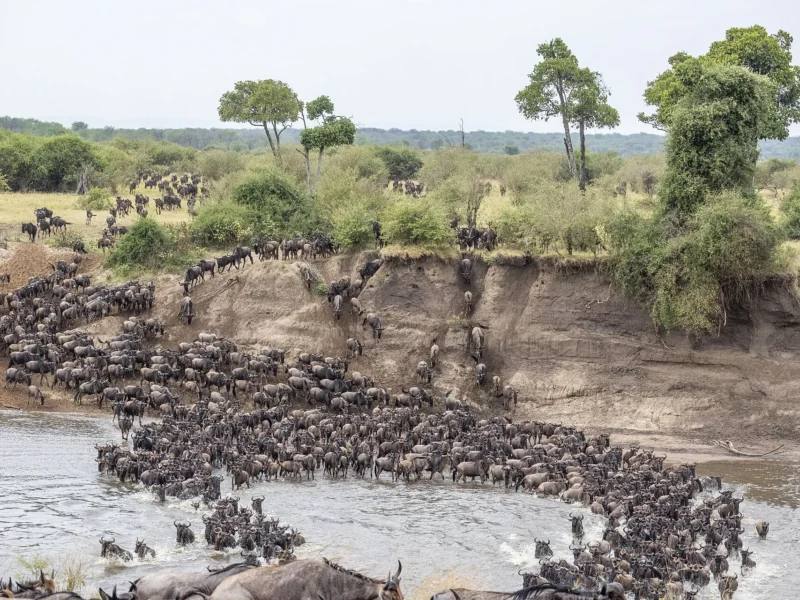
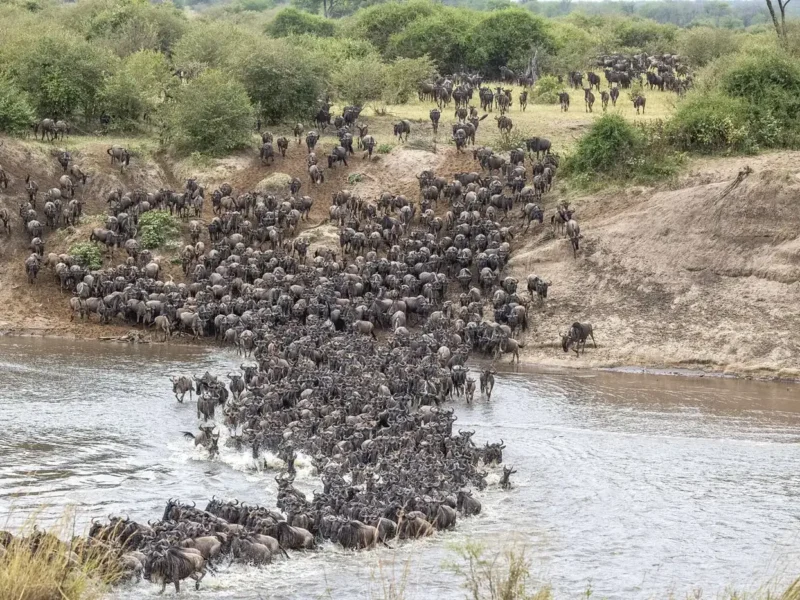
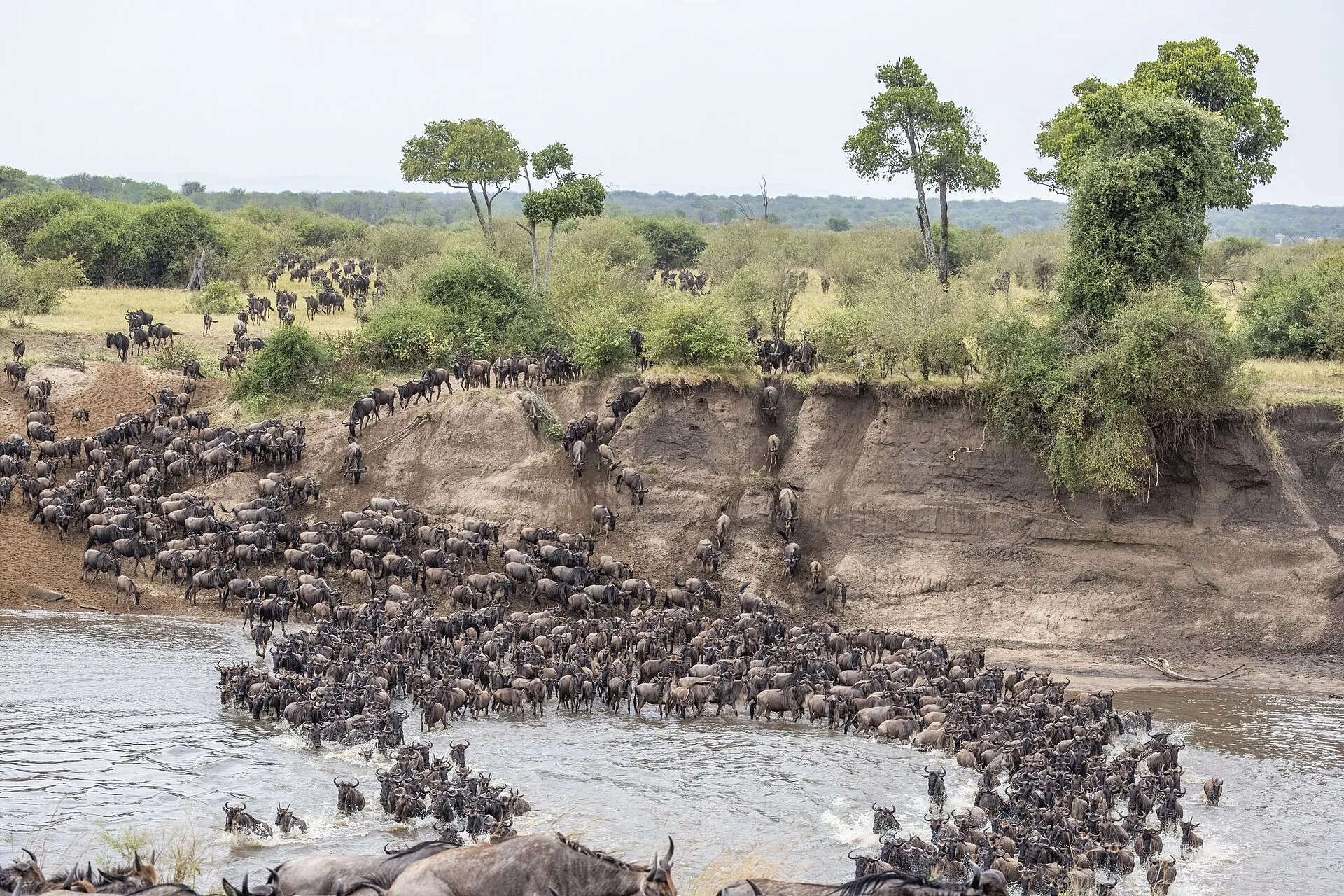
The herds gather on the bank, sometimes for hours. A few animals walk down to the water, turn back, and the tension builds. Then one leaps, and the rest follow in a pouring line of bodies, dust and spray. Nile crocodiles wait in the deeper pools, and lions often lie in ambush on the far bank. Some crossings last a few minutes; others continue for an hour or more. Read about the wildebeest and the Nile crocodile.
Where to see them
- Northern Serengeti (Kogatende and Lamai): fewer vehicles, wild scenery and many crossing points on the Mara River.
- Masai Mara: the most famous crossing points, easy access from Nairobi and many camps, but busier in August.
- Western corridor (Grumeti River): earlier in the season, with some of Africa’s largest crocodiles.
How a crossing day works
Guides leave early, check where the herds are gathering, and park back from the bank so that the animals are not disturbed. Then you wait. Bring a packed lunch, water and patience: the best crossings often come to those who stay all day. Follow your guide’s instructions; rangers in both countries enforce rules on where vehicles may stand.
When to go
July to October is the main season on the Mara River. Herds move back and forth across it, so you can see several crossings in one stay. Timing changes each year with the rains, which is why we follow the herds with camps and guides on the ground. See the Great Migration month by month.
Good to know
- Masai Mara fees are US$200 per adult per day from July to December.
- Serengeti park fees are about US$83 per day.
- Mobile camps move with the herds to stay close to the action.
- A long lens helps, but a wide lens shows the scale.
How the migration moves through the year
The herds follow the rain and fresh grass in a loop of roughly 800 km or more:
| Months | Where the herds usually are |
|---|---|
| January–March | Southern Serengeti and Ndutu: calving season |
| April–May | Moving north and west through the central Serengeti |
| June–July | Western corridor and Grumeti River crossings |
| July–October | Northern Serengeti and Masai Mara: Mara River crossings |
| November–December | Moving south through the eastern Serengeti |
Timing changes every year with the rains, so treat this as a guide rather than a timetable. Read the Great Migration month by month.
Why crossings are so dramatic
The Mara River has steep banks, deep pools and fast water after rain. Wildebeest gather in their thousands, but no animal wants to go first. When one finally jumps, the rest follow in a rush, and the pressure of bodies can push animals into the current. Crocodiles take some, others drown or are injured on the rocks, and lions and hyenas wait on the far side. It is raw, powerful nature, and some visitors find it hard to watch.
Crossing etiquette
Crossings attract many vehicles, especially in the Masai Mara. Rangers now control where vehicles can wait, and good guides park well back so that herds are not blocked from their chosen crossing point. If vehicles crowd the bank, the herds may turn back. Choose a guide and camp that follow the rules; the experience is better for everyone.
Kenya or Tanzania?
| Masai Mara (Kenya) | Northern Serengeti (Tanzania) | |
|---|---|---|
| Access | Short flights or 5–6 hours by road from Nairobi | Flights from Arusha to Kogatende or Lamai |
| Vehicles | Busier in August | Generally quieter |
| Camps | Many permanent and seasonal camps | Fewer camps, many seasonal |
| Fees | US$200 per day from July to December | About US$83 per day |
Both sides of the river see crossings, and the herds move back and forth across the border.
A crossing day, hour by hour
- 6:00am: leave camp with a packed breakfast.
- Morning: check crossing points where herds have gathered, often stopping for lions or cheetahs on the way.
- Midday: wait near a promising crossing point, often for hours.
- Afternoon: if the herds cross, watch and photograph from a respectful distance; if not, move on and try another point.
- Evening: return to camp at sunset to share stories.
Photography tips
Use a fast shutter speed (1/1000s or faster) to freeze splashing animals, and a long lens for the far bank. Switch to a wide lens to show the scale of the herd. A bean bag on the vehicle window keeps your camera steady during long waits.
Plan it
Our 7-day northern Serengeti Great Migration safari is timed for the crossings, and the 5-day Masai Mara Great Migration safari is the Kenyan option.
Frequently asked questions
Is a crossing guaranteed?
No. Herds can gather and turn back. Three or more days near the river gives you a good chance.
Kenya or Tanzania for crossings?
Both share the Mara River. The northern Serengeti is quieter; the Mara is easier to reach.
When do Grumeti crossings happen?
Usually from late May to July, depending on the rains.
Can I fly in?
Yes. Airstrips serve both the Mara and the northern Serengeti.
Is the migration in Kenya or Tanzania?
Both. The herds spend most of the year in Tanzania’s Serengeti and roughly July to October in and around Kenya’s Masai Mara.

Written by our Kampala-based planners and guides, who arrange these trips every season. Prices and rules are checked before every quote.