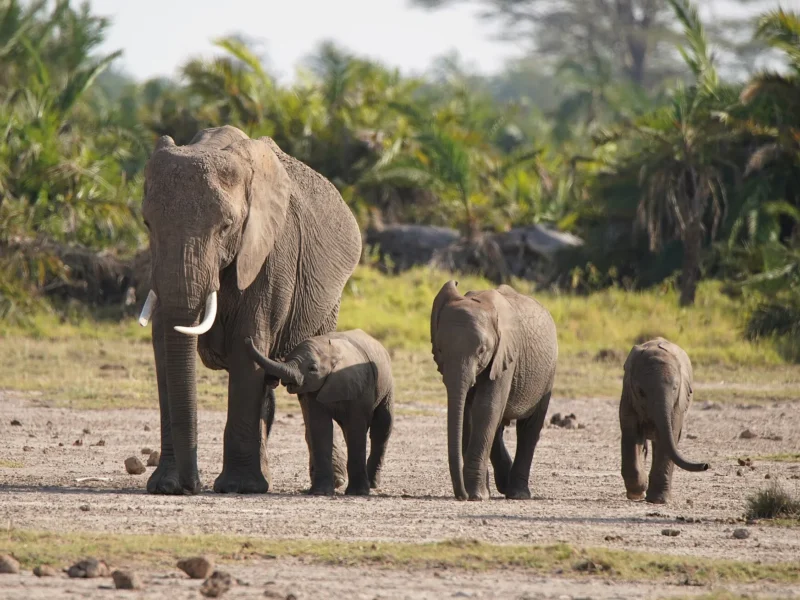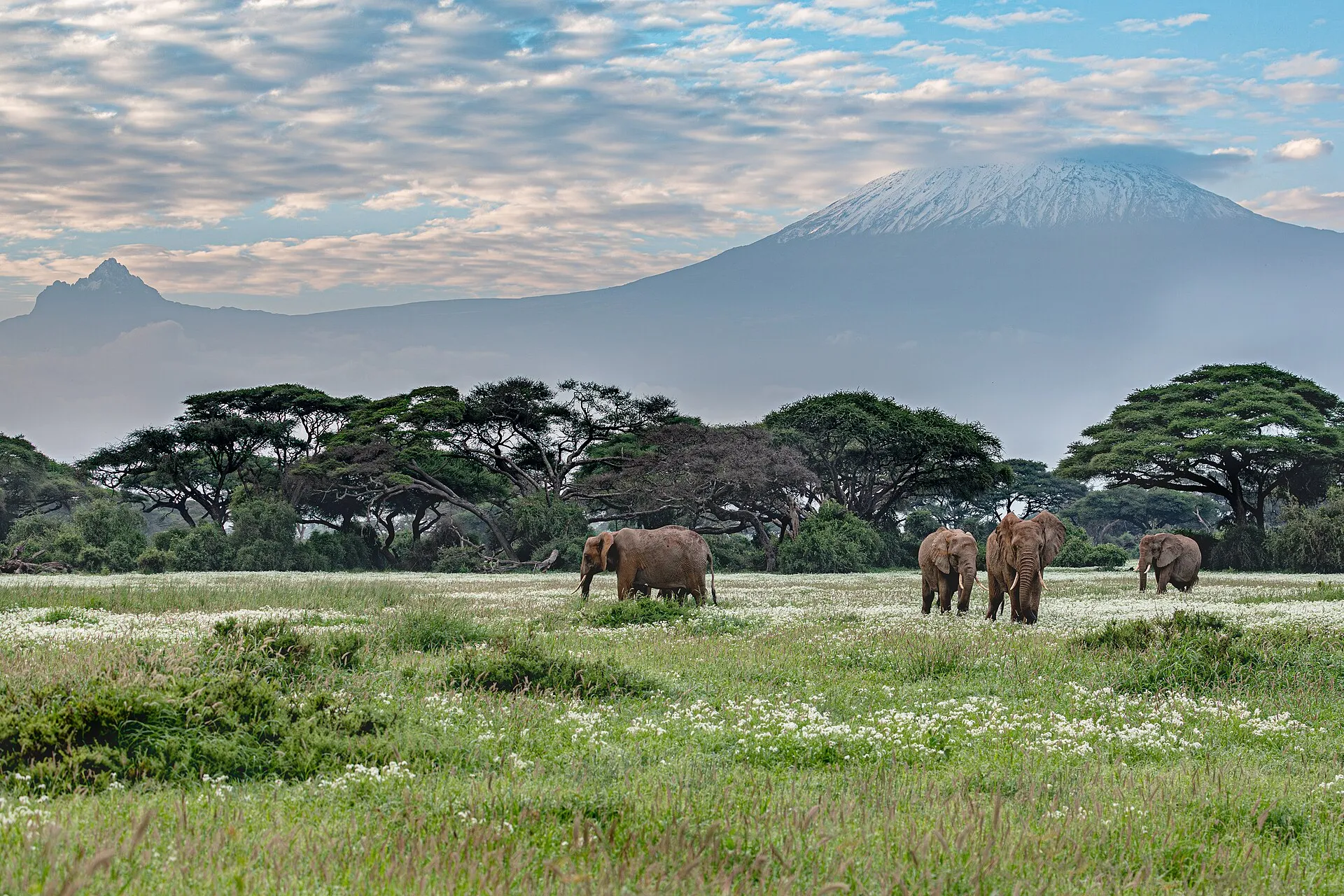
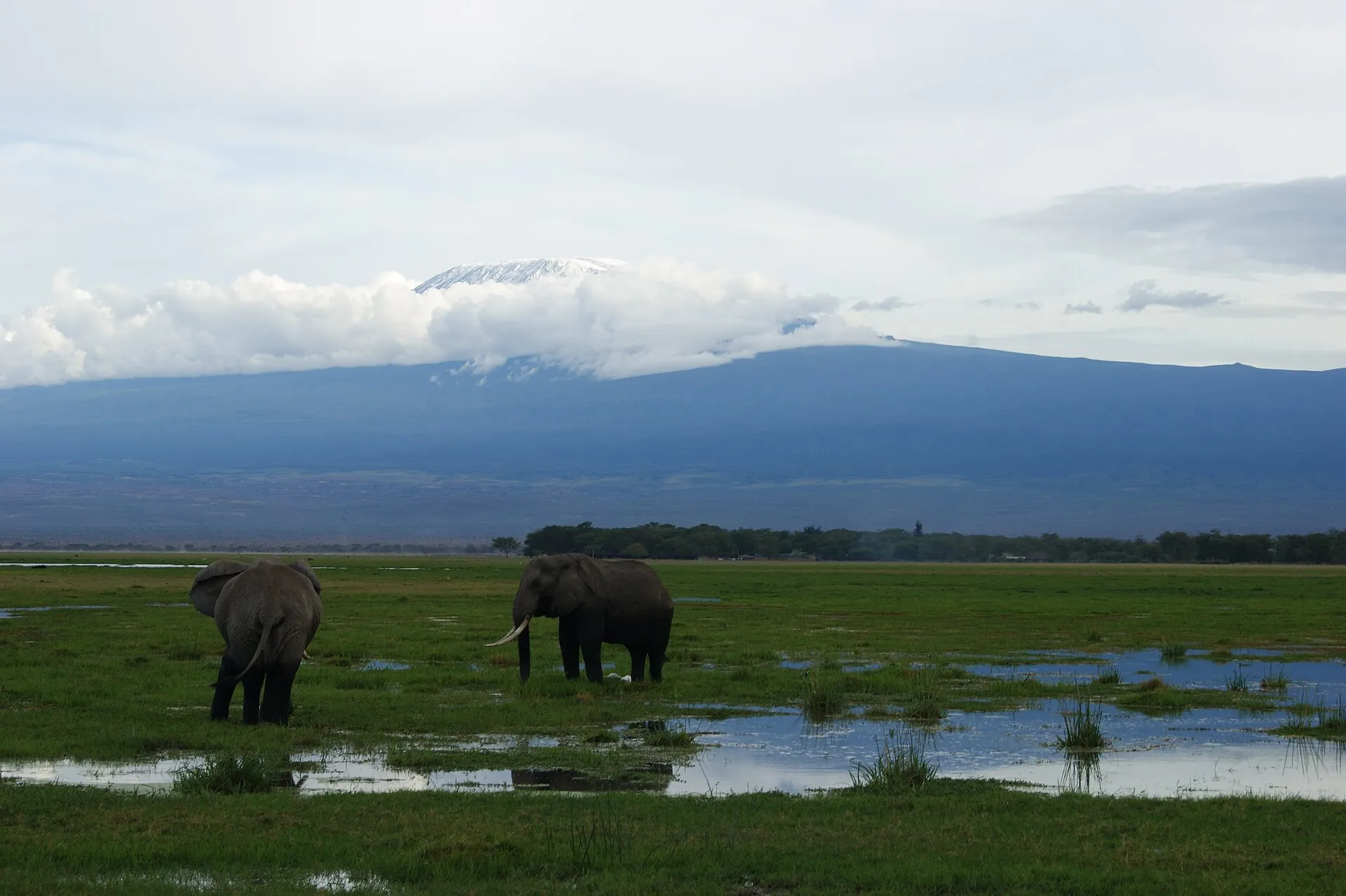
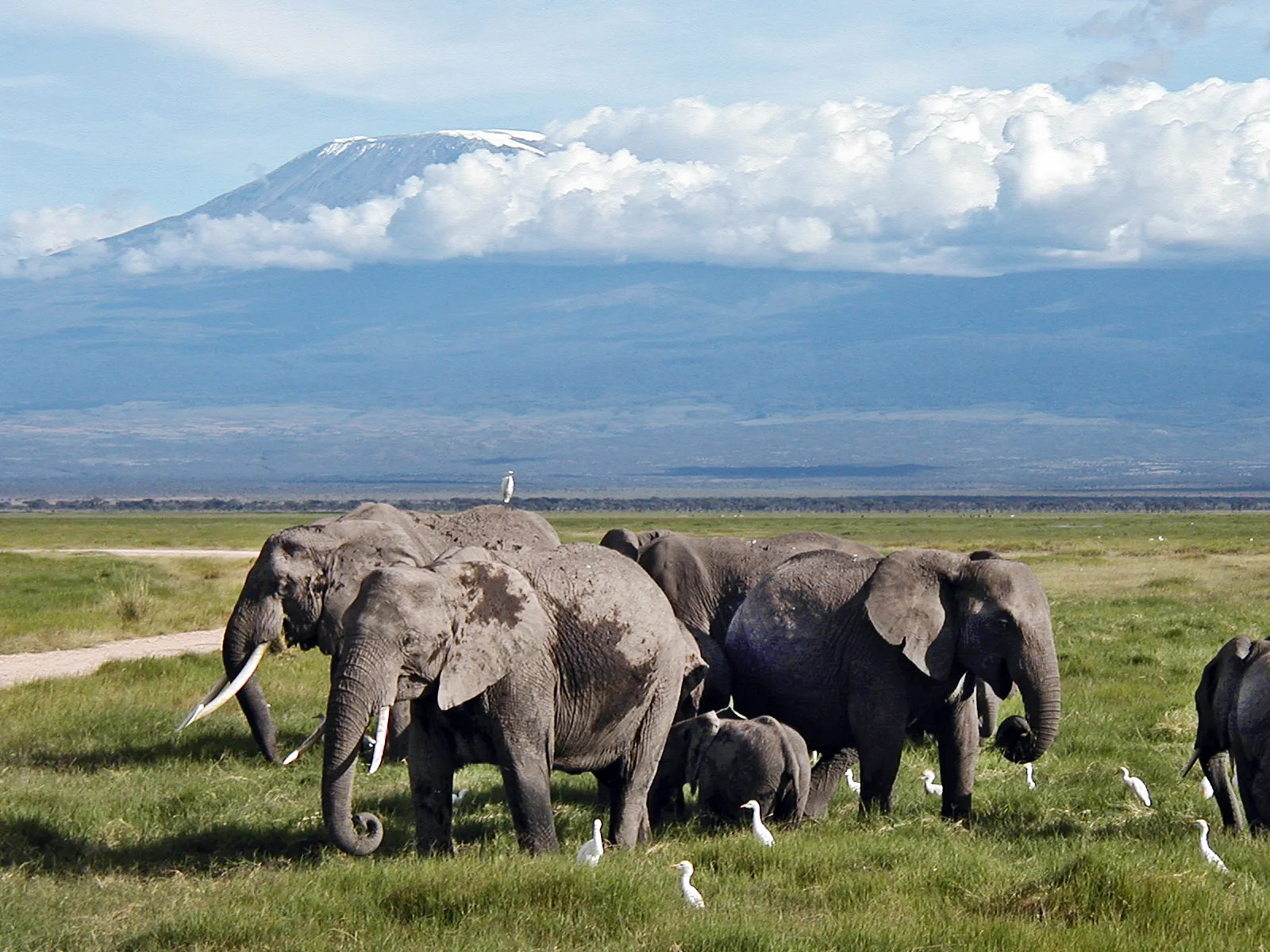
Amboseli National Park in southern Kenya is known for its elephants and its views of Mount Kilimanjaro across the border in Tanzania. The Amboseli Trust for Elephants has studied these elephants since 1972, and the population was about 2,000 at the end of 2025. Clear mountain views are most likely early in the morning and late in the afternoon.
Key takeaways
- About 2,000 elephants, studied since 1972.
- Kilimanjaro views are clearest at dawn and dusk.
- Swamps fed by underground water attract wildlife all year.
- Park fee US$90 per day.
Amboseli is a small park, about 392 km², but its open plains and swamps make wildlife easy to see. The elephants here are among the most studied in the world. Researchers know individual families by name, and their work has shaped what we understand about elephant memory, families and behaviour.
The swamps
Rain and snowmelt from Kilimanjaro seep underground and emerge as springs in Amboseli, feeding green swamps in a dry landscape. Elephants wade in to feed on sedges, sometimes up to their bellies, with buffalo, hippos and waterbirds around them.
Observation Hill
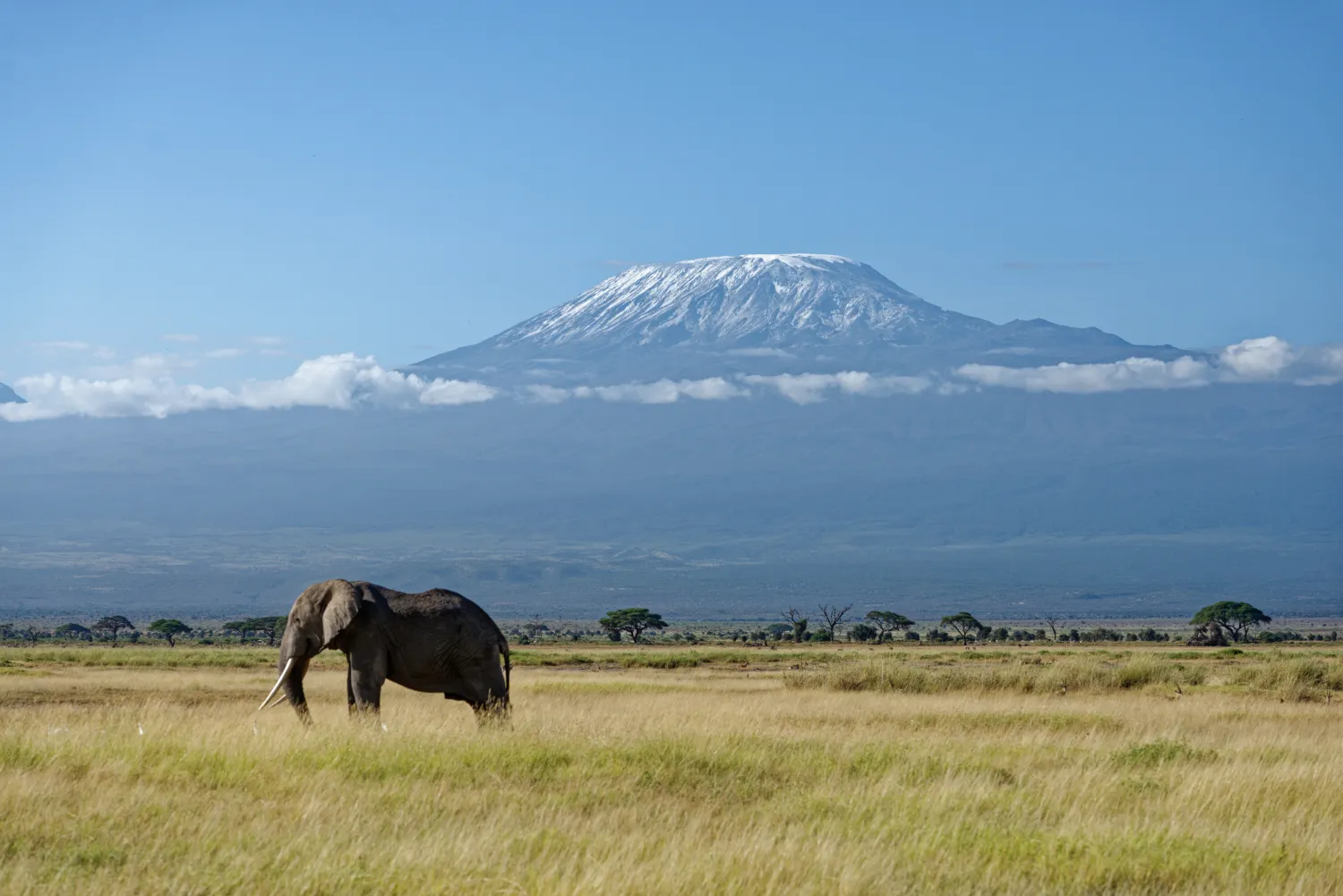
This small hill near the Enkongo Narok swamp gives a panoramic view of the swamps, the plains and the mountain. It is one of the few places where you can get out of the vehicle, and a good place for a picnic.
Big tuskers
Amboseli is famous for elephants with long, heavy tusks. Long protection by researchers, rangers and the Maasai communities around the park has allowed bulls to grow old here.
When to go
Amboseli can be visited year-round. The dry seasons, June to October and January to February, bring elephants to the swamps and good visibility. Kilimanjaro is often hidden by cloud in the middle of the day, so plan game drives for dawn and the late afternoon.
Good to know
- The park fee is US$90 per adult per day.
- Bring a dust cover for your camera in the dry season.
- Lions, cheetahs, hyenas and many birds are also seen.
- Visit a Maasai village nearby; see our Maasai village visit.
Who it suits
Amboseli suits photographers, families and first-time safari-goers. Its flat, open plains make animals easy to see, distances from Nairobi are manageable, and the elephants are calm because they have been protected and studied for decades. It pairs well with the Masai Mara for cats and Lake Nakuru for rhinos, or with a few days on the Kenyan coast at the end.
Where to stay
Lodges and tented camps sit inside the park and on the surrounding conservancies, where Maasai communities lease land for wildlife. Conservancy camps often offer walks and night drives that are not allowed inside the park.
The science behind Amboseli’s elephants
The Amboseli Trust for Elephants has studied the same population since 1972, one of the longest-running studies of any wild mammal. Researchers know every elephant individually by its ears, tusks and family. Their work has shown how elephant families are led by older females, how they remember water sources over decades, and how they mourn their dead. Amboseli’s elephants are also among the most relaxed in Africa, because they have been protected for so long.
A game drive in Amboseli
Morning drives start at sunrise, when Kilimanjaro is most likely to be clear. Elephants walk from the bush to the swamps, often in long lines, and spend the day feeding in the water. Lions, cheetahs and hyenas hunt on the open plains, and the swamps attract buffalo, hippos and hundreds of waterbirds. In the afternoon, return to the swamps as the elephants leave and the mountain reappears.
Where to stay
Lodges and camps sit inside the park, close to the swamps, and in the surrounding conservancies, such as Kimana and Selenkay, where Maasai communities lease land for wildlife. Conservancy camps can offer walks, night drives and quieter game viewing.
Getting there
Amboseli is about four to five hours by road from Nairobi, or a short flight from Wilson Airport. It can be combined with Tsavo by road, or with the Masai Mara and Lake Nakuru on a longer safari.
Photography tips
Shoot early and late, with Kilimanjaro behind the elephants. A medium zoom of about 70–200 mm captures elephants with the mountain, and a longer lens isolates details. Dust adds atmosphere but can get into your camera, so bring a cover.
Conservation challenges
Amboseli’s elephants move outside the park into community land, where they can raid crops and come into conflict with people. Projects compensate farmers, build fences and pay community rangers, so that elephants and people can share the landscape.
When to see Kilimanjaro clearly
The mountain is often hidden by cloud. Clear views are most likely:
- At dawn, before clouds build up around the summit.
- Late afternoon, when clouds sometimes clear again.
- In the dry seasons, June to October and January to February.
Even on cloudy days, patience is often rewarded, as the clouds can part for a few minutes. Many photographers stay two or three nights to improve their chances.
Big tuskers
Amboseli is one of the few places where elephants with very large tusks still survive, thanks to decades of protection.
Who it suits
Amboseli suits photographers, families and first-time visitors, and anyone who dreams of the classic elephant-and-mountain image.
Plan it
Our 3-day Amboseli safari is the simplest option, and 8 days in Amboseli, Lake Nakuru and the Masai Mara combines it with Kenya’s other highlights.
Frequently asked questions
Is Kilimanjaro in Amboseli?
No. The mountain is in Tanzania, but Amboseli has the classic view of it.
When is Kilimanjaro visible?
Usually early morning and late afternoon, when the clouds clear.
How many days do I need?
Two nights give you several game drives and a good chance of clear views.
Can I fly to Amboseli?
Yes. Light aircraft fly from Nairobi’s Wilson Airport.
Is Amboseli good for children?
Yes. Animals are easy to see on the open plains, and drives are not too long.
Can I combine Amboseli with Tanzania?
Yes. The Namanga border is close, and Amboseli can be combined with Arusha and the northern Tanzania parks.

Written by our Kampala-based planners and guides, who arrange these trips every season. Prices and rules are checked before every quote.