Kibale Forest National Park at a glance
| Question | Short answer |
|---|---|
| Best for | The most reliable chimpanzee tracking in East Africa, and 13 primate species |
| Chimp tracking permit | US$250 (US$200 in April, May and November), including park entry |
| Chimp habituation | US$300 for a full day with up to four hours with the chimps |
| Minimum age | 12 years for chimp tracking |
| Ideal stay | 1–2 nights, with the Bigodi wetland walk and the crater lakes |
Fees are set by the Uganda Wildlife Authority and can change; we confirm them when we quote. See how much a Uganda safari costs.
Trips that visit Kibale
- 2-Day Kibale Chimpanzee Safari
- 5-Day Gorillas and Chimpanzees Safari
- 6-Day Gorillas, Chimps and Queen Elizabeth Safari
- 7-Day Uganda Primates and Wildlife Safari
Chimpanzee tracking
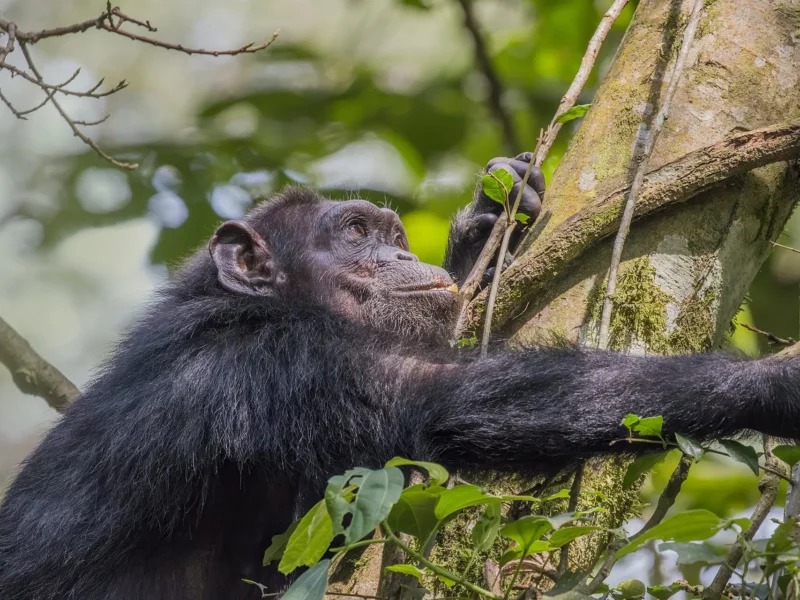
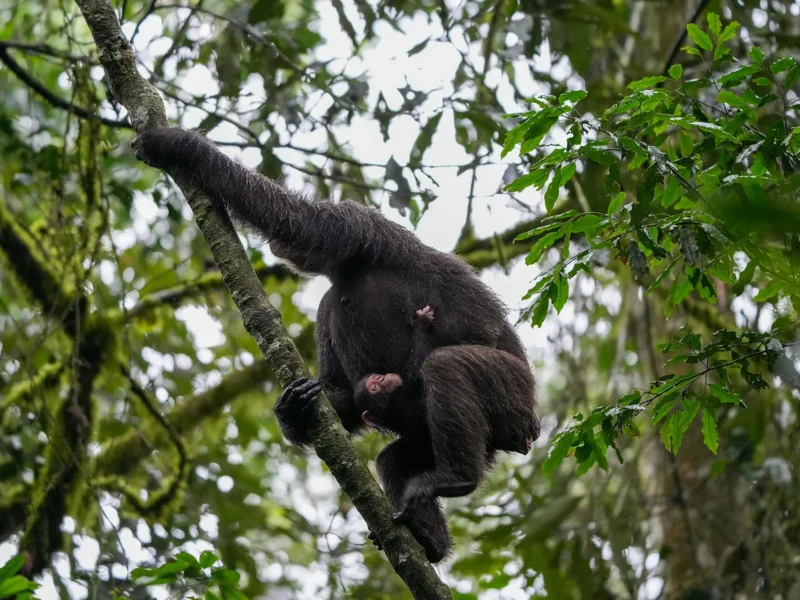
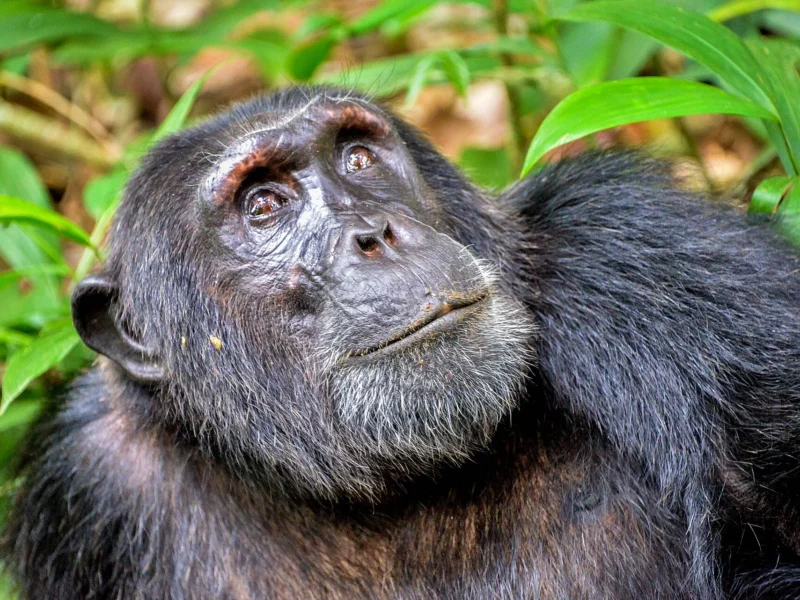
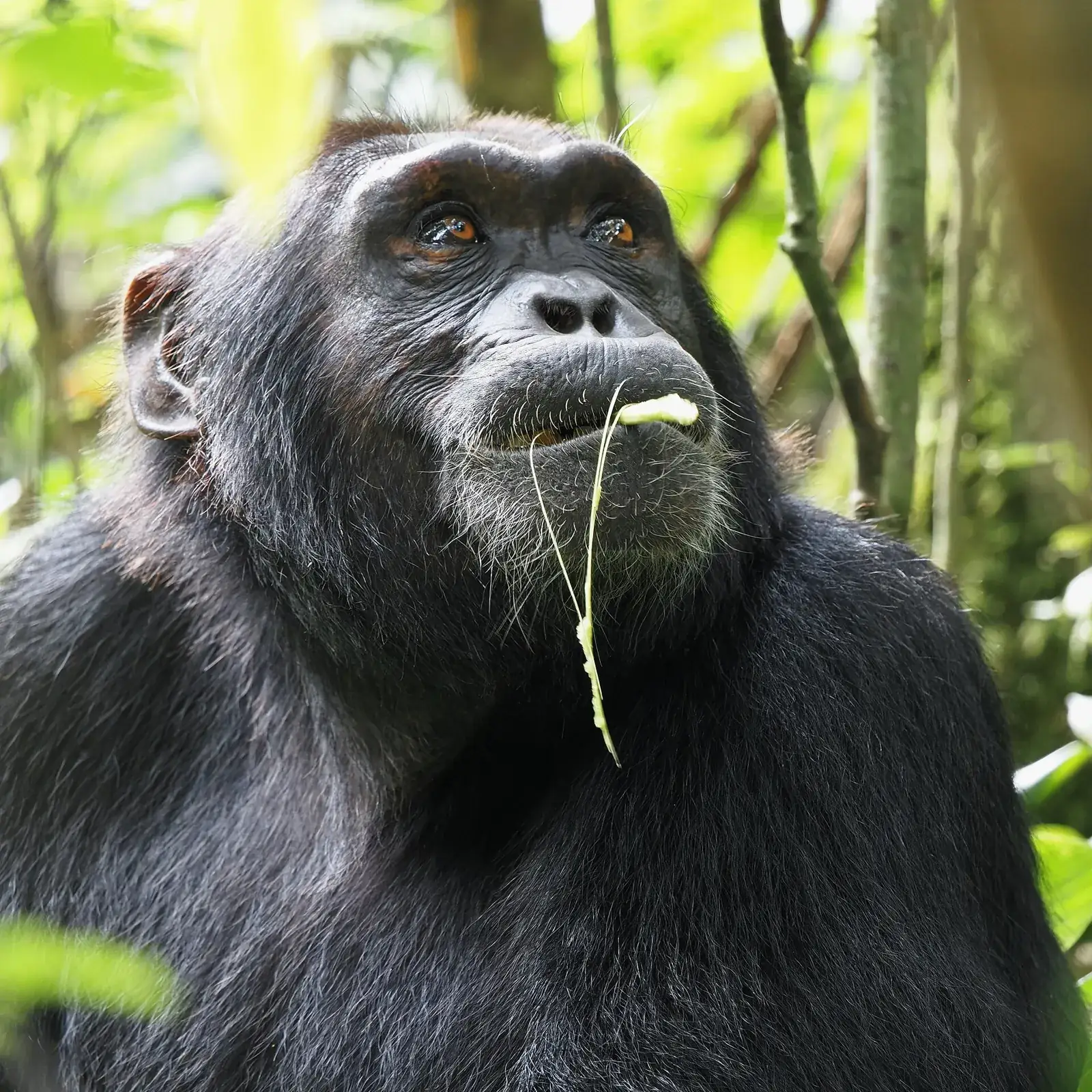
Tracking starts at the Kanyanchu visitor centre with a briefing by Uganda Wildlife Authority rangers. Groups of up to eight follow a ranger along forest trails while trackers report where the community spent the night. When you find them, you have one hour, usually with several individuals feeding on figs, grooming or calling. Chimpanzees move quickly, so be ready to walk off-trail for short stretches.
The permit costs US$250 in 2026, or US$200 in the low-season months of April, May and November, rising to US$300 from 1 January 2027. It includes your park entry for the day. Since March 2026 permits must be paid in full at the time of booking, so we confirm them as soon as you decide. Morning groups are more popular because the chimps are active and vocal after leaving their nests; afternoon groups are smaller and the forest is quieter. Read chimpanzee tracking in Kibale for a full walk-through.
The chimpanzee habituation experience
For travellers who want more than an hour, the chimpanzee habituation experience spends a day in the forest with researchers and rangers who are getting a community used to people, including up to four hours with the chimpanzees. You start early, often in time to see the chimps leave their night nests, and follow them as they feed and travel. It costs US$300 (US$400 from January 2027), includes park entry, and is physically harder and far more immersive than standard tracking. Spaces are very limited.
Bigodi Wetland Sanctuary
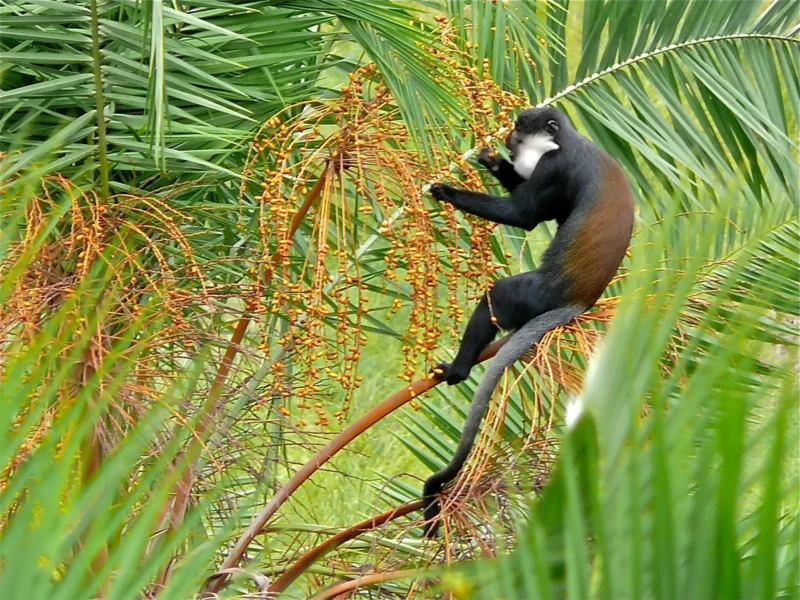
Just outside the park, the community-run Bigodi Wetland primate walk follows a boardwalk through papyrus swamp. It is one of the best places in Uganda to see the great blue turaco, and red colobus and L’Hoest’s monkeys are regular. Fees go to the local community association, which funds schools and a health centre.
The crater lakes
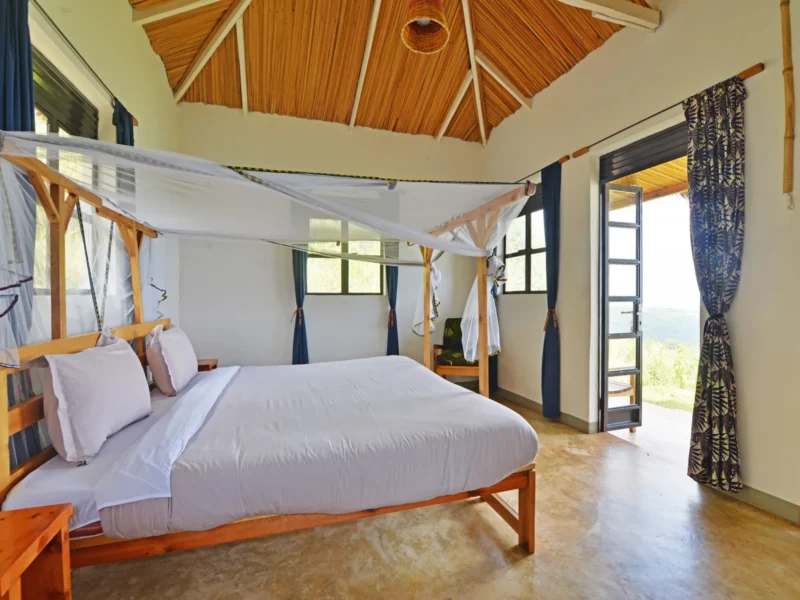
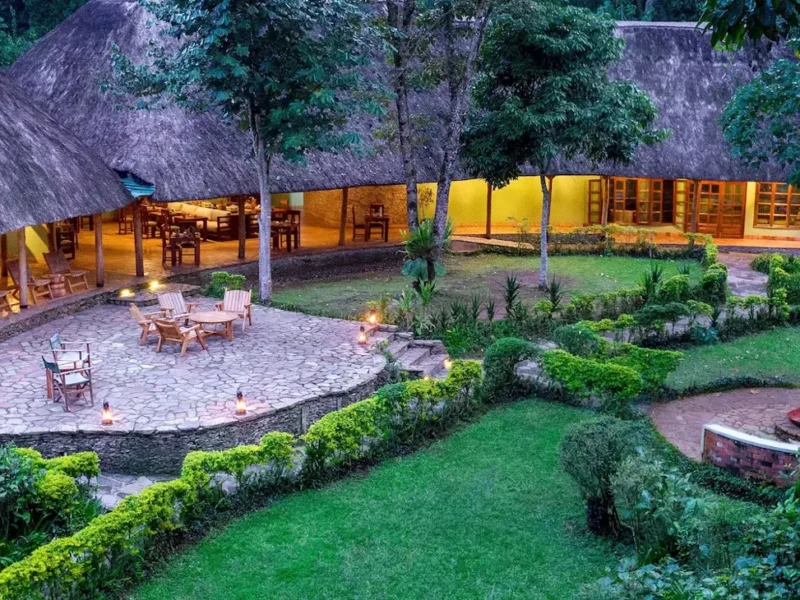
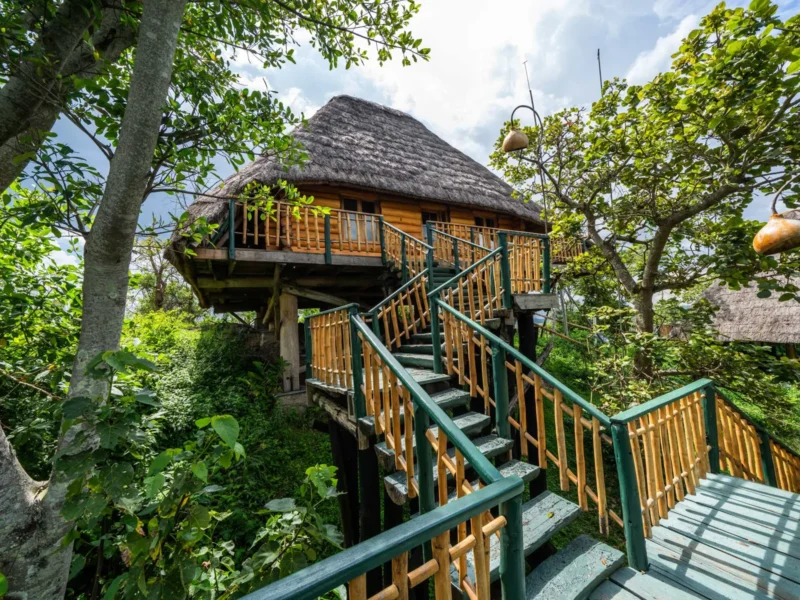
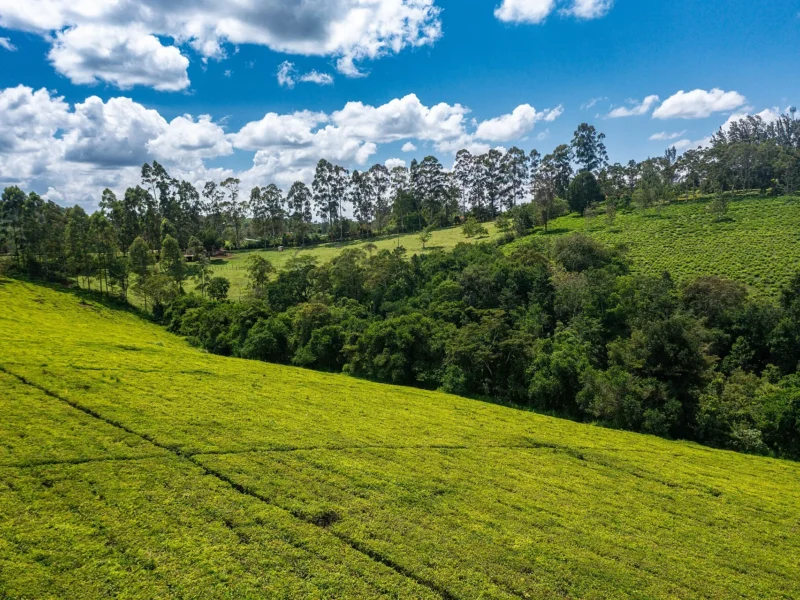
The Ndali-Kasenda crater field west of Kibale holds dozens of volcanic lakes in deep green bowls. A crater lakes walk through villages and tea gardens makes a gentle afternoon after tracking, and several lodges overlook the lakes with views to the Rwenzori Mountains on clear mornings.
Wildlife and birds
Besides chimpanzees, look for:
- Red colobus, one of Africa’s most endangered monkeys, common in Kibale.
- L’Hoest’s monkey, shy and ground-dwelling, often seen on the trails.
- Grey-cheeked mangabey and black-and-white colobus in the canopy.
- Forest elephants, which are rarely seen but leave fresh signs on the paths.
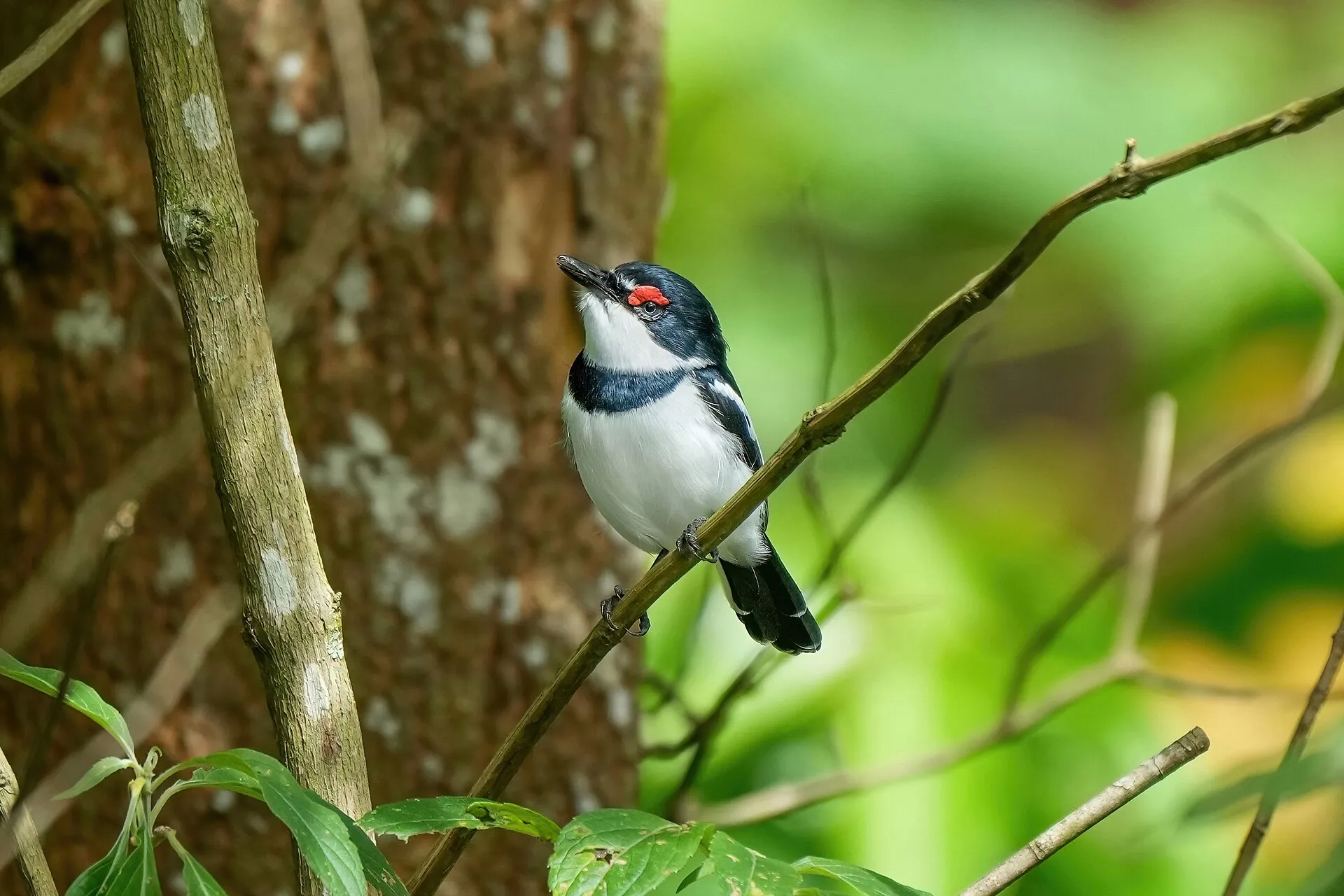
- Birds such as the green-breasted pitta, African grey parrot and great blue turaco.
Combining Kibale with other parks
Kibale is three hours north of Queen Elizabeth National Park and about six hours from Bwindi, so it pairs naturally with both. Our 8-day gorilla, wildlife and primates safari tracks chimpanzees in Kibale after gorillas in Bwindi. For costs and how permits fit into a trip, see our safari cost guide.