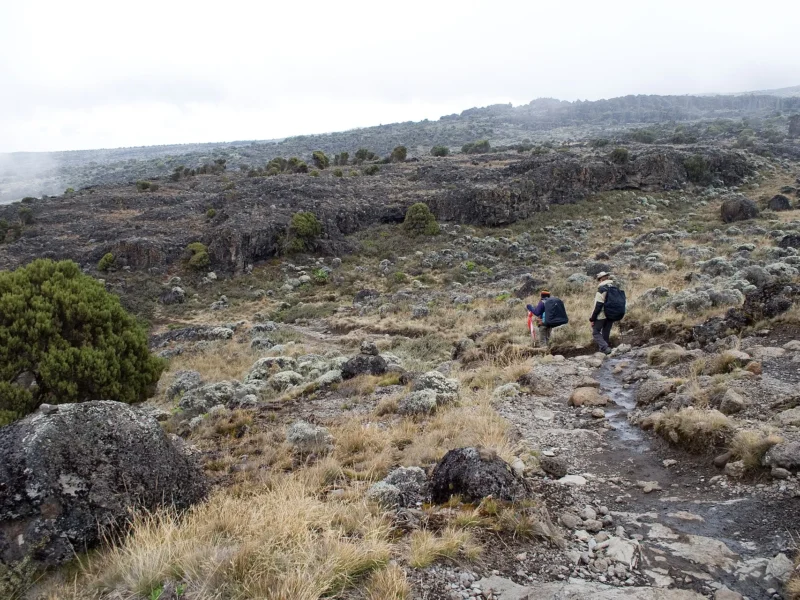
Adventure 7 days7-Day Kilimanjaro Climb: Rongai Route
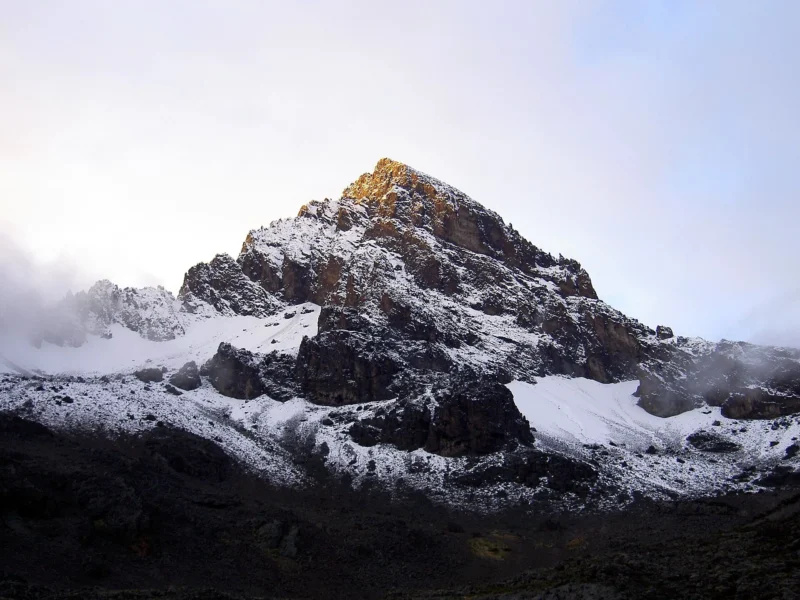
The only route from the north, close to the Kenyan border: quiet, drier trails, wide views over the plains and a night beneath the jagged spires of Mawenzi before the climb to Uhuru Peak.

The Northern Circuit at an unhurried pace: Tarangire, Lake Manyara, three nights in the Serengeti following the herds and a full day in the Ngorongoro Crater.
This seven-day safari covers the full Northern Circuit at a comfortable pace: Tarangire for elephants and baobabs, Lake Manyara for its forest and soda lake, three nights in the Serengeti and a full day in the Ngorongoro Crater. It is our recommended first safari in Tanzania.
With three nights in the Serengeti, your guide has time to follow the herds wherever they are in the season, or to explore quieter areas such as the Moru Kopjes. The other parks each add something different, and the route flows naturally from Arusha and back without backtracking.
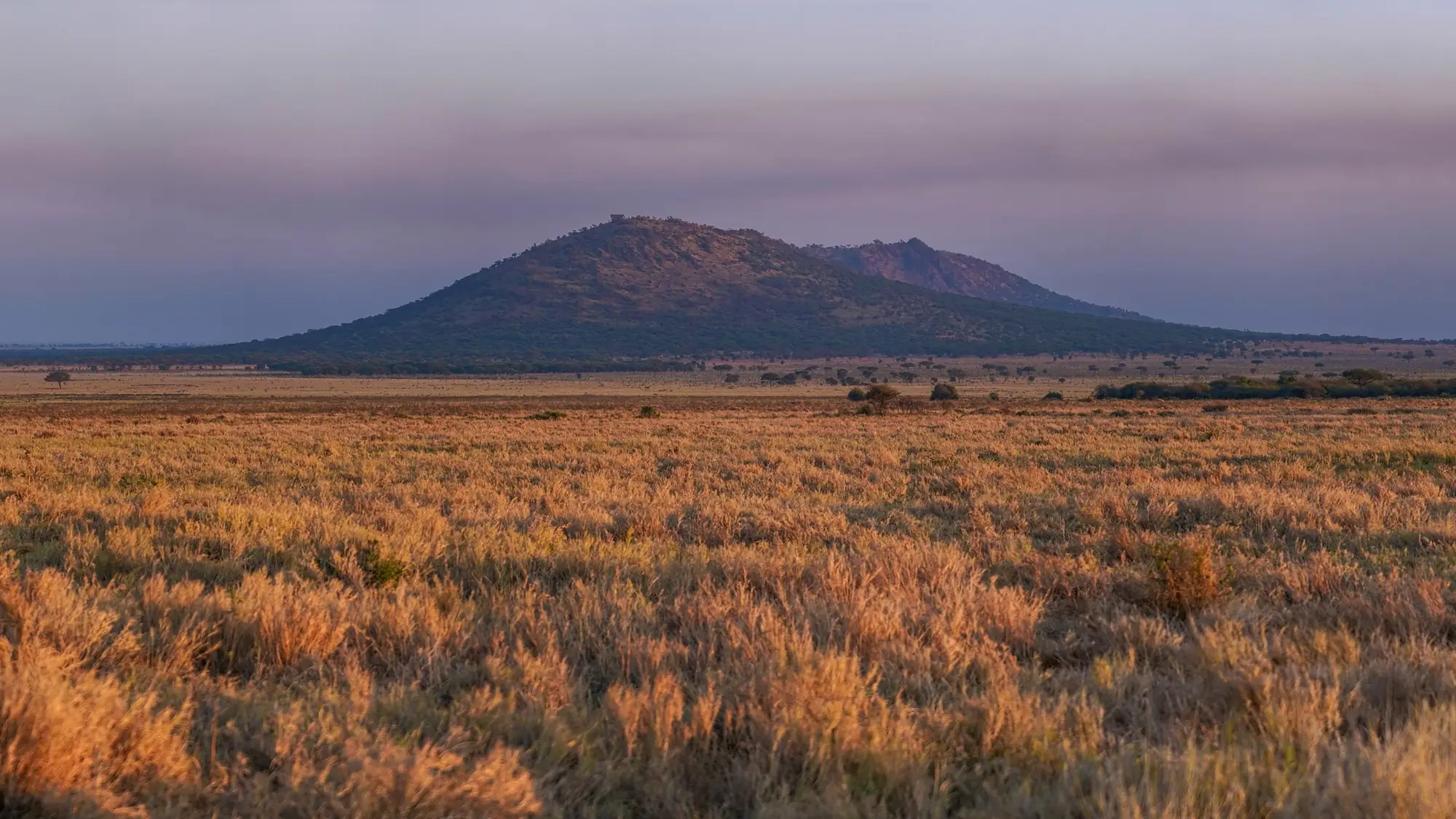
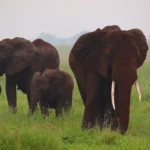
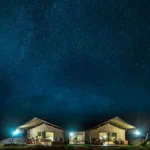
Lodges near Tarangire and Lake Manyara, a tented camp in the Serengeti for three nights, ideally positioned for the season, and a final night on the crater rim or in Karatu.
Your driver-guide collects you from your Arusha hotel or Kilimanjaro International Airport and drives about 2–3 hours south-west on good tarmac to Tarangire National Park. The landscape changes from coffee farms and Maasai villages to dry bush dotted with enormous baobab trees.
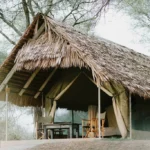
Spend the afternoon on a game drive along the Tarangire River, the park’s lifeline. In the dry season (June to October) herds of elephants, sometimes hundreds strong, gather to drink and dig for water in the sandy riverbed, alongside zebra, wildebeest, buffalo, giraffes and impala. Look for lions resting in the shade, leopards in the sausage trees, and the colourful yellow-collared lovebirds that are found only in northern Tanzania.

Take a morning game drive in Tarangire, exploring the Silale Swamp for buffalo, elephants and predators. After lunch, drive to Lake Manyara National Park at the foot of the Rift Valley escarpment. Its groundwater forest is home to large troops of baboons and blue monkeys, and the soda lake attracts flamingos, pelicans and storks. Lions here occasionally climb trees, and elephants move between the forest and the lake shore.
Drive up the escarpment to Karatu and on into the highlands. Drive up through the cool highland forest of the Ngorongoro Conservation Area, with a stop at the rim viewpoint, then descend past Maasai villages to the plains. Stop at Olduvai Gorge, one of the world’s most important sites for human origins, where a small museum overlooks the gorge. Enter the Serengeti at Naabi Hill gate and game drive across the short-grass plains to the Seronera area in the afternoon, arriving at camp by sunset.
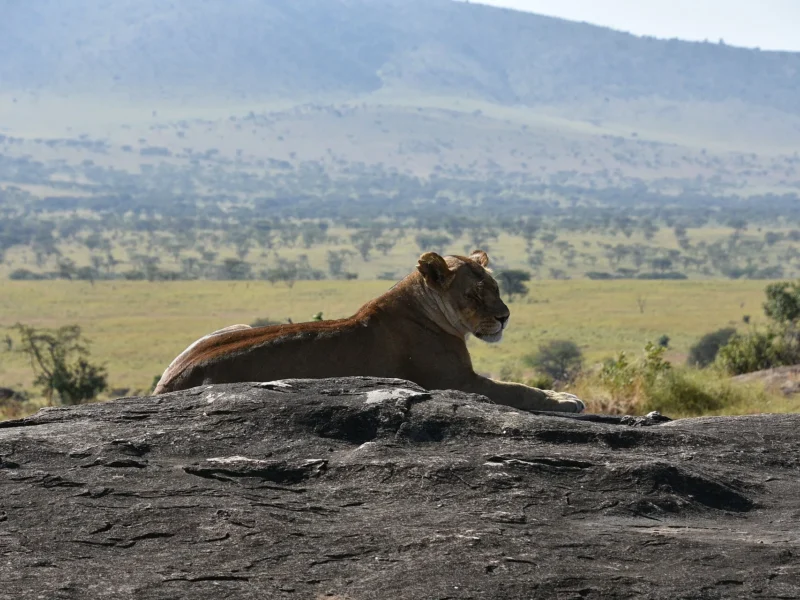
Spend a full day exploring the Serengeti with a picnic lunch. In the central Seronera valley, permanent water supports resident wildlife all year: lions on the kopjes, leopards in the sausage trees along the rivers, cheetahs on the open plains, and herds of giraffe, buffalo, topi, hartebeest and gazelles. Your guide follows the latest sightings and positions the vehicle for the best views and light, returning to camp at sunset.
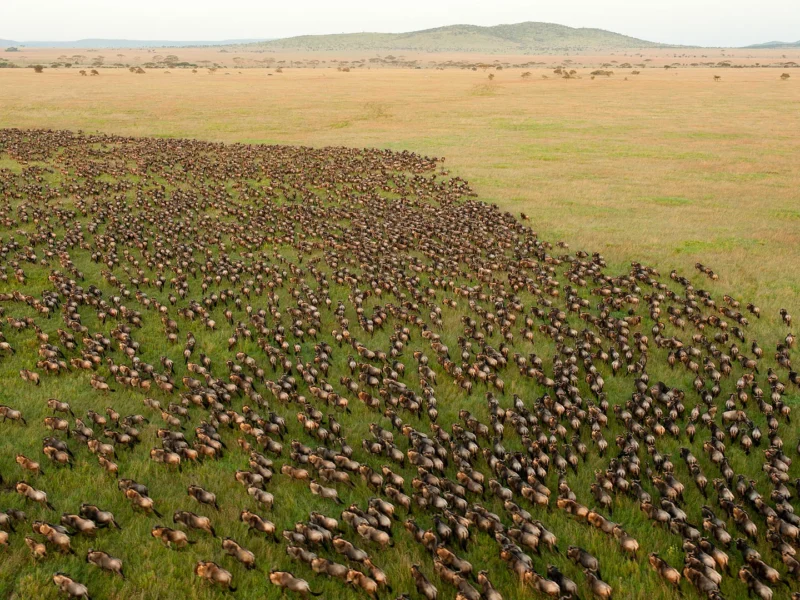
A second full day lets you explore further afield. Depending on the season, your guide heads towards the herds: south to the short-grass plains in calving season, west towards the Grumeti River from May to July, or north towards the Mara River from July to October. Alternatively, explore the Moru Kopjes for lions and the chance of black rhino, or start with a sunrise balloon flight.
After a final morning drive in the Serengeti, cross the plains to Naabi Hill and climb into the Ngorongoro highlands, arriving at your lodge in time for sunset over the crater or the coffee farms of Karatu.
Descend into the Ngorongoro Crater as soon as the gates open, dropping 600 metres down the steep crater wall to the floor of the world’s largest intact volcanic caldera. In about six hours on the crater floor you can see lions and spotted hyenas, herds of zebra, wildebeest and buffalo, old elephant bulls with huge tusks and, with luck, one of the crater’s protected black rhinos. Stop for a picnic lunch by the Ngoitokitok hippo pool, then visit the soda lake, often pink with flamingos, before climbing back up to the rim in the afternoon. Then drive back to Arusha, arriving in the evening.
Lodges shown match the quoted price. Ask us about mid-range and luxury upgrades.


Three nights in the Serengeti let you follow the migration or explore remote areas, and the route adds Lake Manyara without rushing.
Roughly: December–March in the south, April–June in the centre and west, July–October in the north, November moving south again.
Yes, to Arusha or Zanzibar, saving the drive back.
Yes: lodges and tented camps on full board, with upgrades available.
Yes. Distances are reasonable and the variety of parks keeps children engaged; some camps have family tents.
Adventure 7 daysThe only route from the north, close to the Kenyan border: quiet, drier trails, wide views over the plains and a night beneath the jagged spires of Mawenzi before the climb to Uhuru Peak.
Adventure 8 daysThe quiet western approach to Africa’s highest mountain: eight days from remote rainforest across the Shira Plateau and round the southern slopes, with the slow ascent that gives climbers the best chance of reaching Uhuru Peak.
Wildlife 7 daysAfrica’s wild south: boat safaris on the Rufiji River and wild dogs in Nyerere, then the baobab hills, kudu and huge lion prides of Ruaha, linked by light aircraft and shared with very few other travellers.
Change the dates, add a night, upgrade a lodge or combine it with Rwanda or Kenya. Tell us what you have in mind and we’ll send a revised plan and price.