Signature 6 days6-Day Uganda & Rwanda Double Gorilla Safari
Two countries, two gorilla families: trek in Rwanda’s volcanoes and Uganda’s ancient Bwindi forest, then unwind among the islands of Lake Bunyonyi.

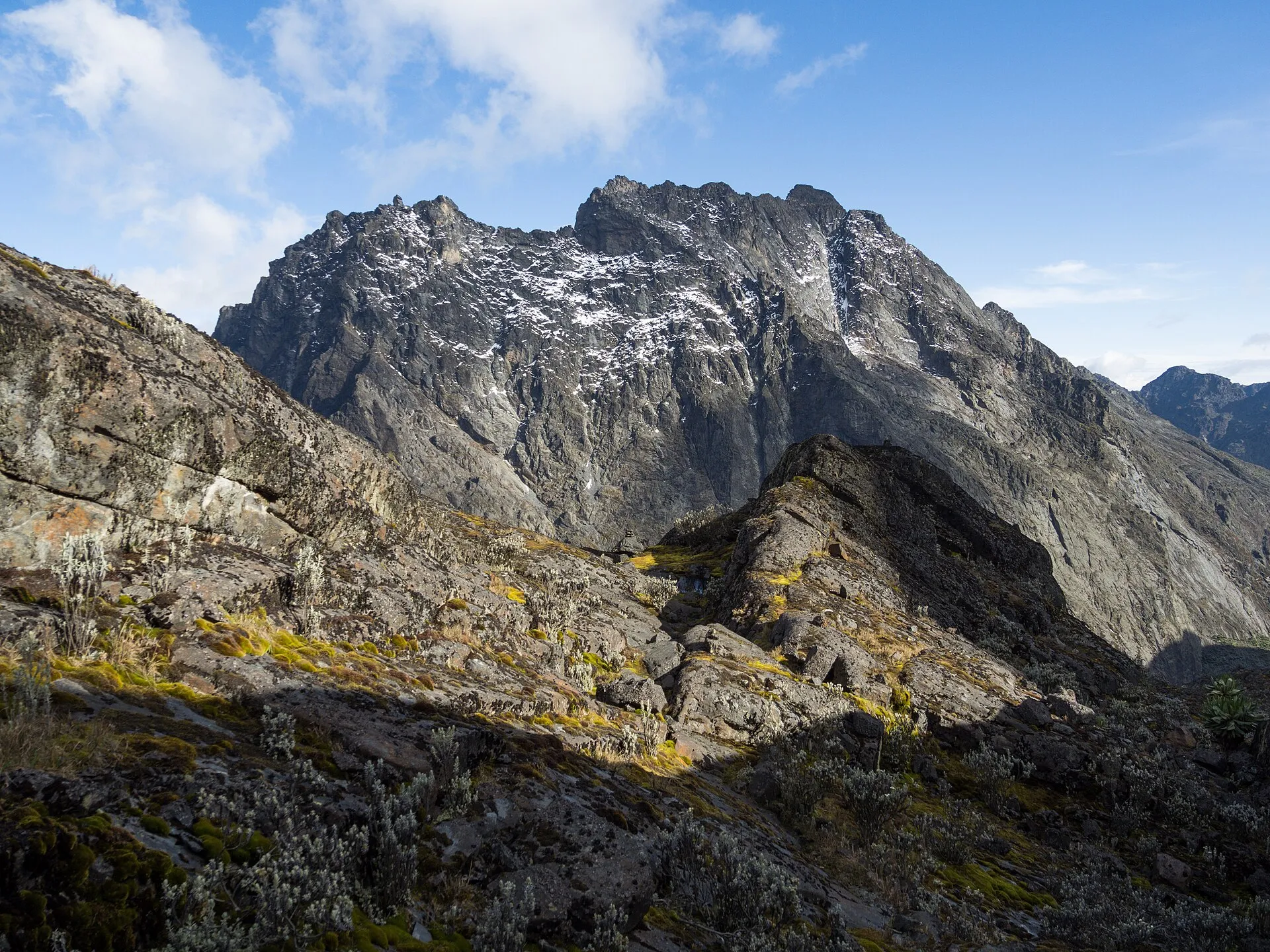
Trek into the Mountains of the Moon: through montane forest, bamboo and moss-draped heather to the giant lobelias and glacier views of the Bujuku Valley, without needing technical climbing skills.
The Rwenzori Mountains are one of Africa’s great trekking ranges, with glaciers on the equator and some of the strangest plant life on earth. This six-day trek follows the Central Circuit from Nyakalengija to Lake Bujuku beneath Mount Stanley, passing through every vegetation zone from montane forest to the alpine Bigo Bogs.
It is designed for fit hikers who want the full Rwenzori experience without a technical summit. Licensed mountain guides, porters and cooks support you throughout, and you sleep in mountain huts.
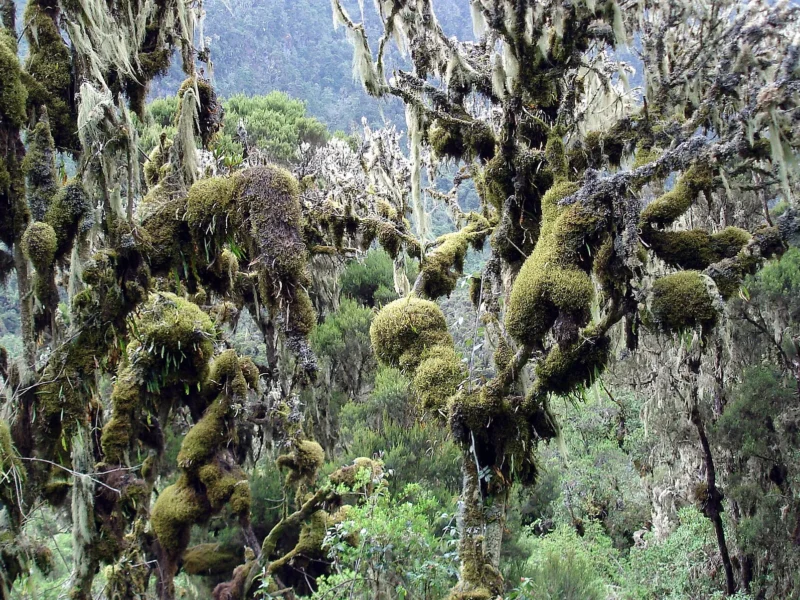
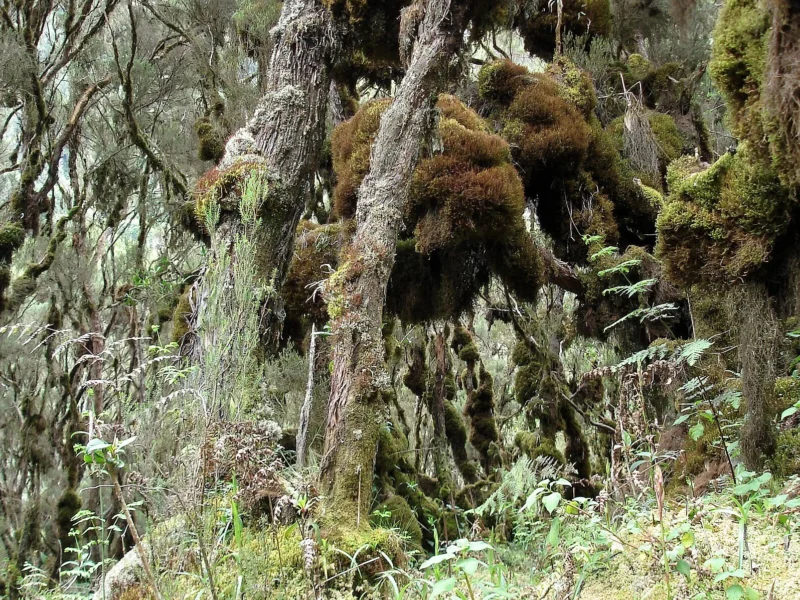
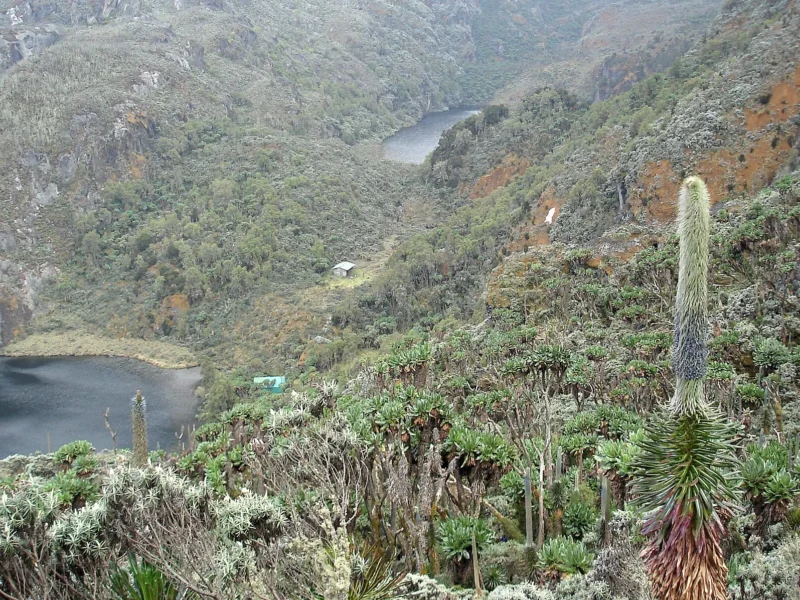
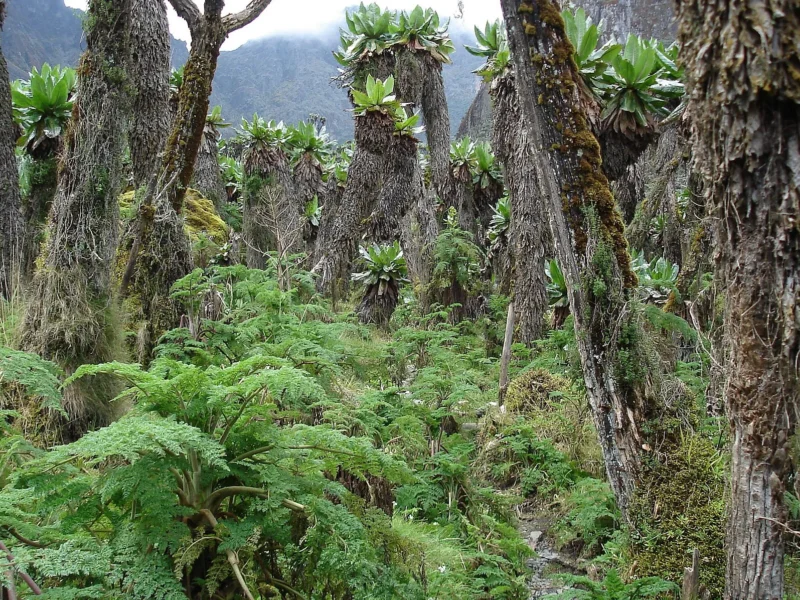
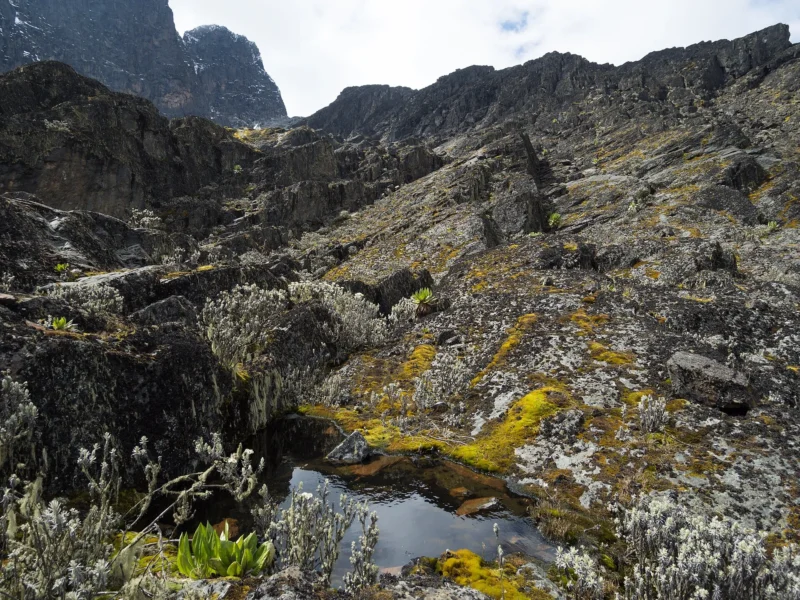
The Rwenzori is wet and wild. Even in the drier months, expect mud, bogs and rain showers, and be prepared to walk in gumboots for much of the high section. In return, you pass through a landscape unlike anywhere else: moss-covered tree heathers, giant lobelias taller than a person, glacial lakes and, on clear mornings, the snow and ice of Mount Stanley.
Days start early and finish at mountain huts with bunks, where the cook prepares hot meals. Porters carry the food and equipment; you carry a day pack with water, snacks, waterproofs and a warm layer. Guides monitor everyone for signs of altitude sickness, and the itinerary climbs gradually.
Regular hiking in the months before your trip is the best preparation, ideally including long days with a loaded day pack. Break in your boots, and practise walking on uneven, muddy ground if you can.
Leave Kampala or Entebbe in the morning and drive west via Mubende and Fort Portal, passing tea estates and crater lakes, then descend to Kasese at the foot of the Rwenzori Mountains. On clear afternoons the peaks are visible above the foothills. In the evening, meet your mountain guide for a briefing on the route, safety and altitude, and check your equipment; any missing items such as gumboots can be hired.
Start at Nyakalengija trailhead and follow the Mubuku River through farmland into montane forest, where you may hear chimpanzees and see black-and-white colobus and the Rwenzori turaco. A steep climb brings you to Nyabitaba hut on a ridge above the river.
Cross the Kurt Schafer bridge and climb through bamboo forest, then into the heather zone, where tree heathers are draped in moss and lichen. The trail is muddy and steep in places. At John Matte hut, clear afternoons reveal the first views of the snow-capped peaks.
Cross the Lower and Upper Bigo Bogs on boardwalks and tussocks, among giant lobelias and groundsels that grow to several metres tall. The trail climbs to Lake Bujuku, a glacial lake beneath Mount Stanley, Mount Speke and Mount Baker. It is the most spectacular day of the trek.
Watch the early light on the peaks before descending through the Bigo Bogs and the heather zone back to Nyabitaba hut. It is a long day, but downhill and full of views you missed on the way up.
After breakfast at Nyabitaba, walk down through the montane forest to Nyakalengija, about three hours, watching for colobus monkeys and forest birds on the way. Say goodbye to your guides and porters, then drive back to Kampala or Entebbe, arriving in the evening. Alternatively, spend a night in Fort Portal and continue to Kibale Forest for chimpanzees or to Queen Elizabeth National Park for a game drive and the Kazinga Channel cruise.
Lodges shown match the quoted price. Ask us about mid-range and luxury upgrades.
Night 1| Permit or fee | 2026 rate (foreign non-resident adult) |
|---|---|
| Rwenzori Mountains National Park: park entry | US$35 per day |
| Porter on trekking day (recommended, paid locally) | about US$20 |
The fees that apply to this trip are included in your quote. Park authorities set them and can change them, so we always confirm the current rates when we quote.
For a full breakdown, see how much a Uganda safari costs.
Every itinerary is private, so you choose the style of each stay. These are lodges we use at each stop, by comfort level:
In Uganda, gorilla and chimp trekking run all year. June to September and December to February are the driest months, with easier forest trails; April, May and November are wetter and quieter, and Uganda's gorilla permit drops to US$600. See the best time to visit Uganda.
For the climb itself, the driest and most popular windows are January to early March and June to October.
Every trip can be adjusted to your dates, budget and pace. Ask for a free quote and a specialist will reply within 24 hours.


No. This trek visits the high valleys and Lake Bujuku without the technical summit. You need good fitness and tolerance for mud, cold and altitude.
Yes, by extending to 8–9 days with glacier crossings using crampons and ropes.
Waterproof boots, gumboots for the bogs, gaiters, warm layers, a down jacket, a good sleeping bag and waterproofs. Some gear can be hired locally.
December to February and June to August are the driest, though rain is possible any day.
At Bujuku (about 3,900 m) mild symptoms are possible. The gradual ascent and guides’ monitoring reduce the risk.
Treks on the Central Circuit are run by licensed mountain operators who provide guides, porters, cooks and hut bookings; we arrange everything and handle your transfers.
Nights at Bujuku hut, at around 3,900 m, can drop below freezing. Days are cool and often wet, so warm, waterproof layers are essential.
Signature 6 daysTwo countries, two gorilla families: trek in Rwanda’s volcanoes and Uganda’s ancient Bwindi forest, then unwind among the islands of Lake Bunyonyi.
Popular 6 daysThe classic Uganda primate and wildlife circuit at an easy pace: chimpanzees in Kibale, two nights in Queen Elizabeth for game drives and a boat cruise, then gorillas in Bwindi.
Wildlife 7 daysTwo of Uganda’s greatest wildernesses in one journey: the thundering Nile at Murchison Falls, then the wide, wild plains of Kidepo Valley in the far north-east.
Change the dates, add a night, upgrade a lodge or combine it with Rwanda or Kenya. Tell us what you have in mind and we’ll send a revised plan and price.