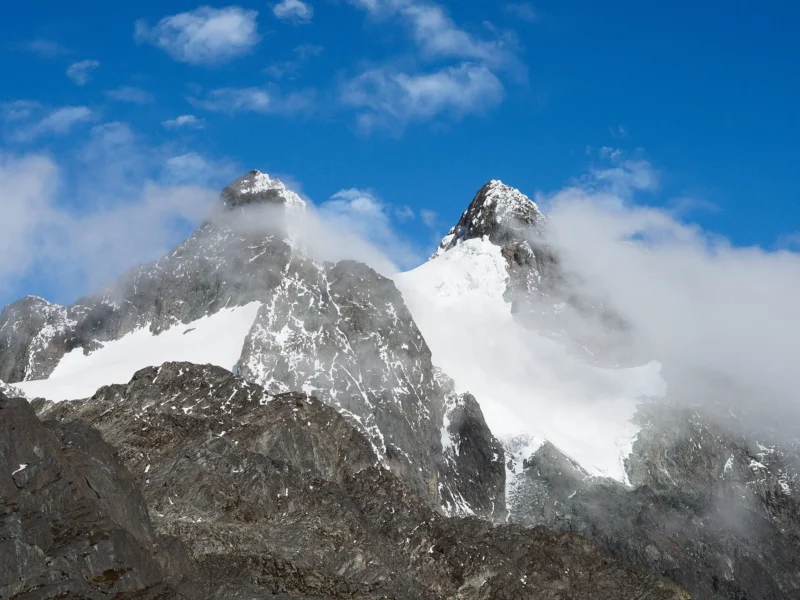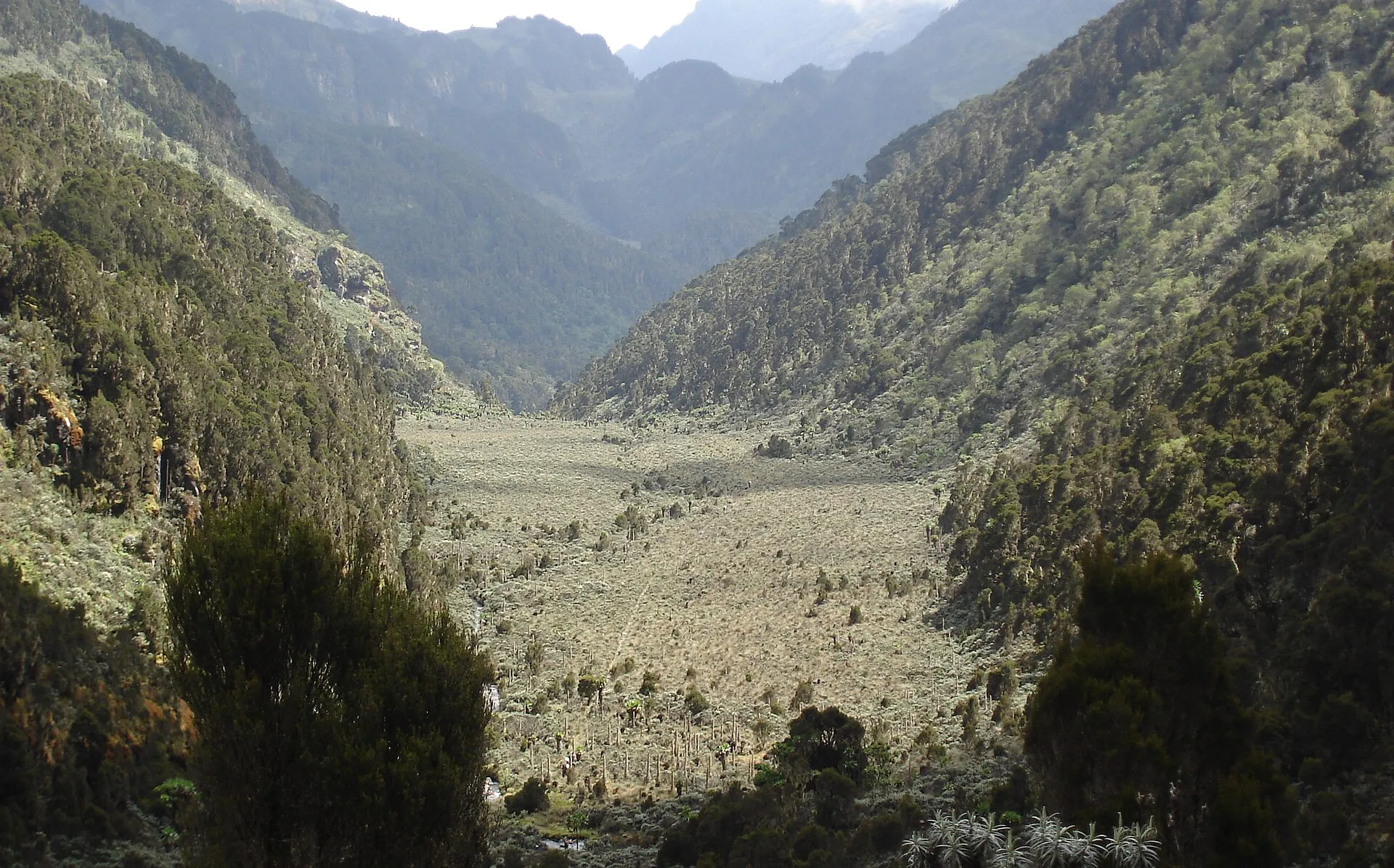
The Rwenzori Mountains lie on Uganda’s border with Congo. Their highest point, Margherita Peak on Mount Stanley, reaches 5,109 metres, the third-highest summit in Africa. Treks range from short day hikes to the Central Circuit, usually seven to eight days, which passes through bamboo, heather forests and bogs filled with giant lobelias and groundsels. Summit climbs need glacier equipment and good fitness.
Key takeaways
- Margherita Peak: 5,109 m, Africa’s third-highest.
- Central Circuit: about 7–8 days.
- Giant lobelias, groundsels and bogs.
- Fees US$50/day hiking + US$35 entry.
The Rwenzori Mountains are a UNESCO World Heritage Site. Unlike Kilimanjaro, they are not volcanic; they are a block of ancient rock pushed up between the arms of the Rift Valley. Their peaks are often hidden by cloud, which gives them their mystery.
The trekking routes
- Central Circuit: a loop from Nyakalengija, about 7–8 days, via Bujuku and Kitandara lakes.
- Kilembe route: from the south, with a more gradual ascent.
- Day and short hikes: in the lower forests for those with less time.
The landscapes
As you climb, you pass through montane forest, bamboo, heather forests draped in moss, and bogs where you walk on duckboards. Above 3,500 metres, giant lobelias and groundsels grow several metres tall. Higher up, glacier-covered peaks rise above lakes.
Summit climbs
Margherita Peak needs ropes, crampons and an ice axe, with experienced guides. Glaciers are retreating, so conditions change from year to year.
When to go
The driest months, December to February and June to August, are best. It can rain at any time; the Rwenzori are among the wettest mountains in Africa.
Good to know
- Fees are US$50 per day for hiking plus US$35 park entry.
- Bring waterproof boots and gaiters for the mud.
- Altitude sickness is possible; acclimatise slowly.
- Porters carry equipment and support local communities.
Who it suits
The Rwenzori suit fit, experienced trekkers looking for a true wilderness adventure, and climbers wanting a less crowded high-altitude challenge.
Wildlife
The forests are home to the Rwenzori turaco, chimpanzees, L’Hoest’s monkeys and the three-horned chameleon. Birders will find several Albertine Rift endemics.
A day on the Central Circuit
Days start early with a hot breakfast prepared by the camp crew. You walk for five to seven hours, crossing streams on rocks and logs, wading through bogs on duckboards, and climbing steep, root-covered paths. Porters carry the main loads and set up huts or camps before you arrive. Evenings are cold, so warm clothing and a good sleeping bag are essential. On clear mornings, the peaks emerge above the clouds, a reward for the hard work.
Fitness and preparation
Train with long hill walks in the months before your trek, ideally carrying a day pack. Good waterproof boots, gaiters, warm layers and a reliable rain jacket make the biggest difference to your comfort.
The Central Circuit, day by day (typical)
- Day 1: Nyakalengija to Nyabitaba camp, through farmland and montane forest.
- Day 2: to John Matte camp, through bamboo and heather, crossing streams.
- Day 3: to Bujuku camp, through the Bigo bog with giant lobelias and groundsels.
- Day 4: over the Scott Elliot Pass to Kitandara lakes.
- Day 5: over the Freshfield Pass to Guy Yeoman camp.
- Day 6–7: descent through forest back to Nyakalengija.
Summit attempts on Margherita Peak add extra days from the high camps.
Why the Rwenzori are special
The Rwenzori Mountains are one of the few places in Africa with glaciers, and among the wettest mountains on the continent. This combination of altitude, rain and isolation has created unique vegetation, such as giant lobelias, groundsels and heathers that grow to tree size. The mountains are also home to the three-horned chameleon and the Rwenzori turaco. Ptolemy called them the “Mountains of the Moon” and believed they were the source of the Nile.
Where to stay before and after
Kasese town and lodges near the park entrance offer accommodation before and after the trek. Fort Portal, about an hour and a half away, has more choice.
Who it suits
The Rwenzori suit fit, experienced trekkers who are comfortable with mud, rain and altitude. Shorter day hikes suit anyone wanting a taste of the mountains.
When to go
The driest months are December to February and June to August.
Plan it
Our 6-day Rwenzori Mountains trek is a great introduction. See also Kilimanjaro for a comparison.
Frequently asked questions
How hard is the Rwenzori trek?
Challenging, because of mud, steep terrain and altitude.
Do I need climbing experience for Margherita Peak?
Some experience helps; guides provide technical support.
When is the best time?
December to February and June to August.
Rwenzori or Kilimanjaro?
Kilimanjaro is higher and drier; the Rwenzori are wilder and wetter.
Do I need to be very fit?
Yes. The trek involves long, muddy days and altitude, so good fitness and preparation are important.
Do I need to hire porters?
Yes. Porters and guides are part of every Rwenzori trek, carrying loads and supporting local communities.

Written by our Kampala-based planners and guides, who arrange these trips every season. Prices and rules are checked before every quote.