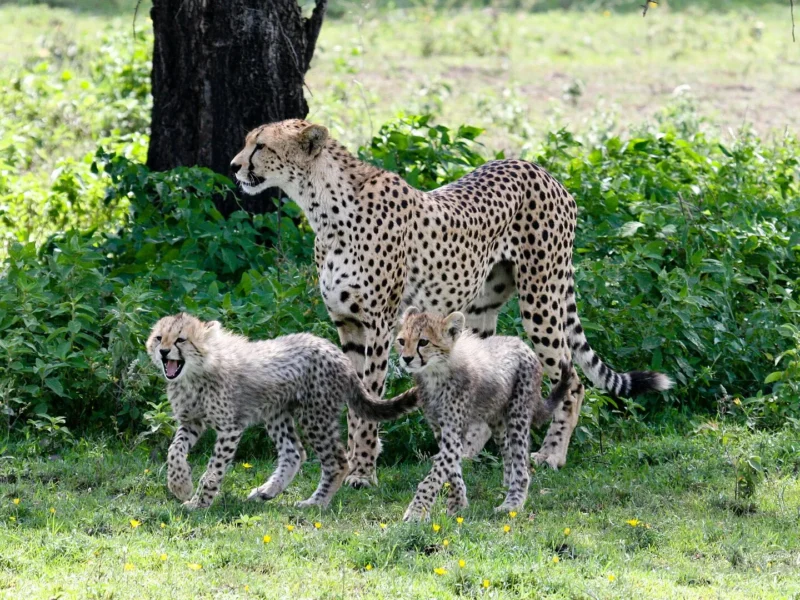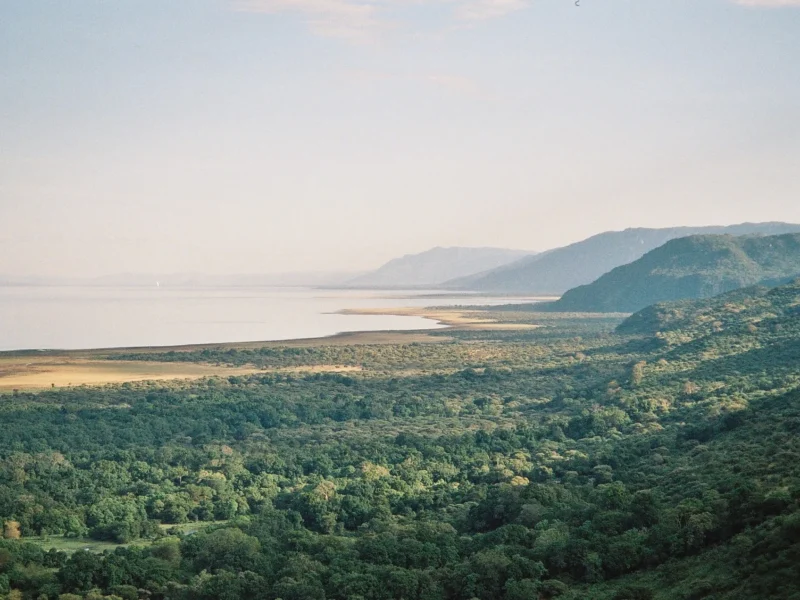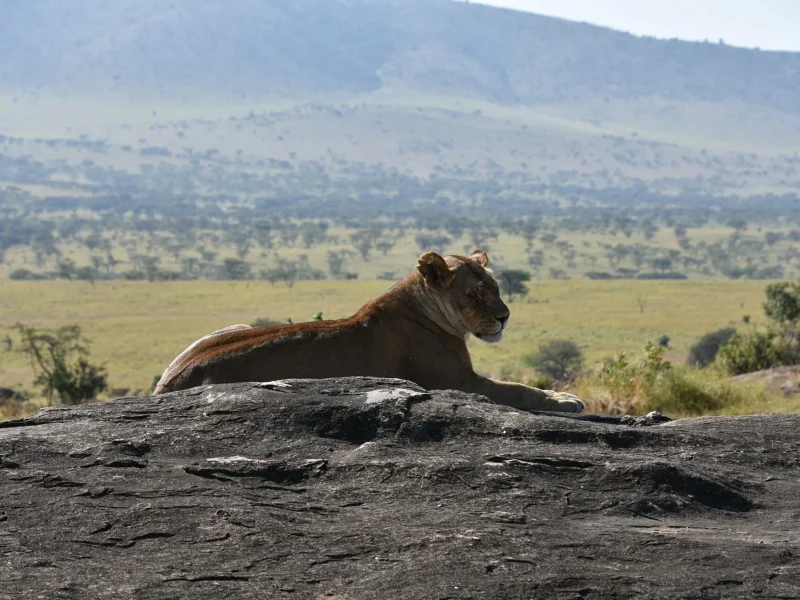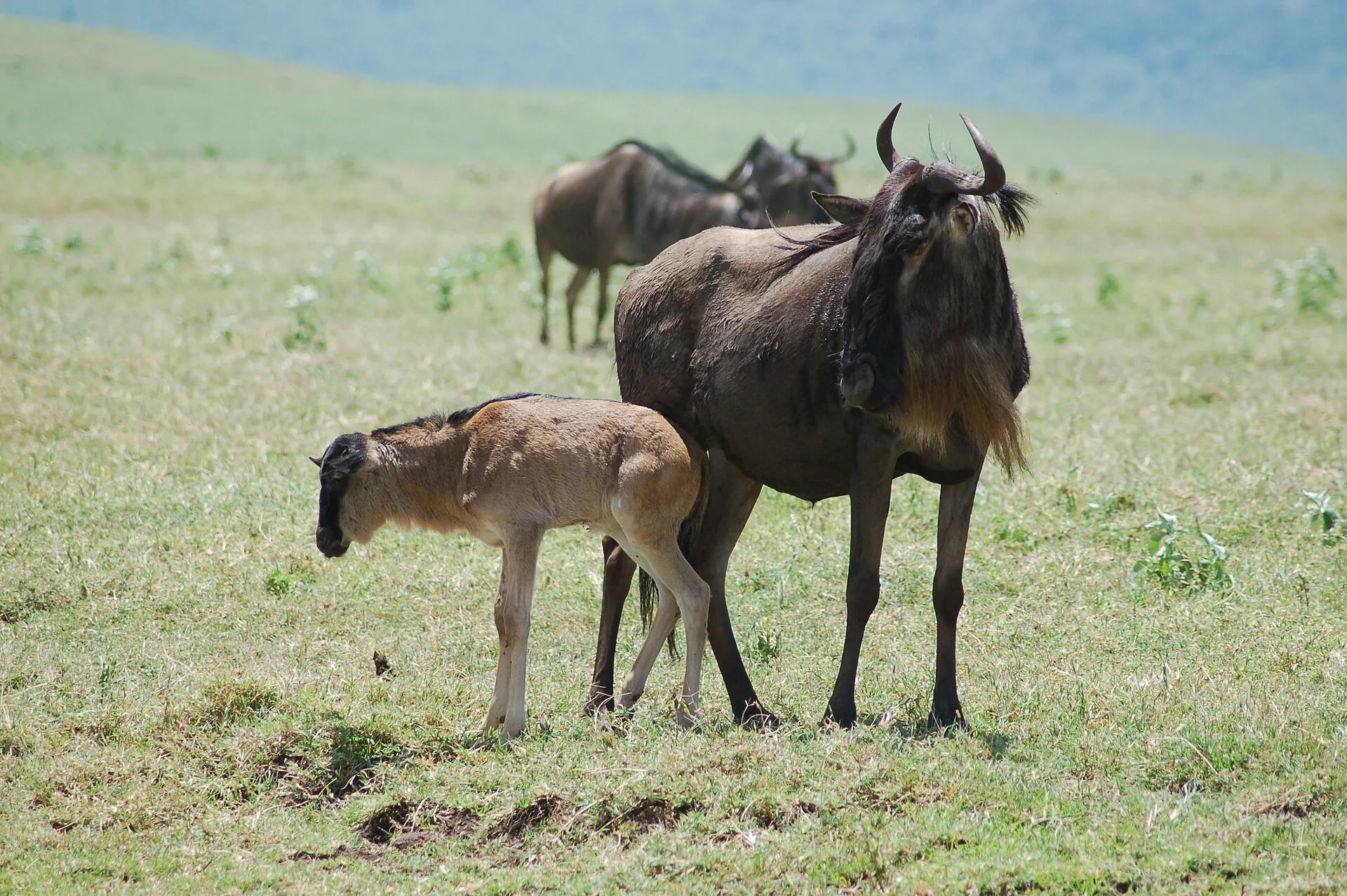
The wildebeest calving season takes place on the short-grass plains of the southern Serengeti and the Ndutu area of the Ngorongoro Conservation Area, mostly between late January and March. Hundreds of thousands of calves are born over a few weeks, with peak days of several thousand births, and lions, cheetahs and hyenas hunt among the herds.
Key takeaways
- Calving peaks around February.
- Calves stand within minutes and run with the herd soon after.
- Lions, cheetahs and hyenas are very active.
- Ndutu lets you drive off-road in parts of the conservation area.
After the short rains, the volcanic soils of the southern Serengeti grow grass rich in minerals, and the herds return to give birth. Almost all calves are born within the same few weeks. This is a survival strategy: predators cannot eat them all, so more calves survive.
What you see
- Births: a calf can stand within minutes of birth and run with its mother soon after.
- Huge herds: wildebeest and zebras spread to the horizon on the open plains.
- Predators: lions, cheetahs, spotted hyenas and jackals hunt among the herds, and vultures follow.
- Cheetahs: the open plains are some of the best cheetah country in Africa.
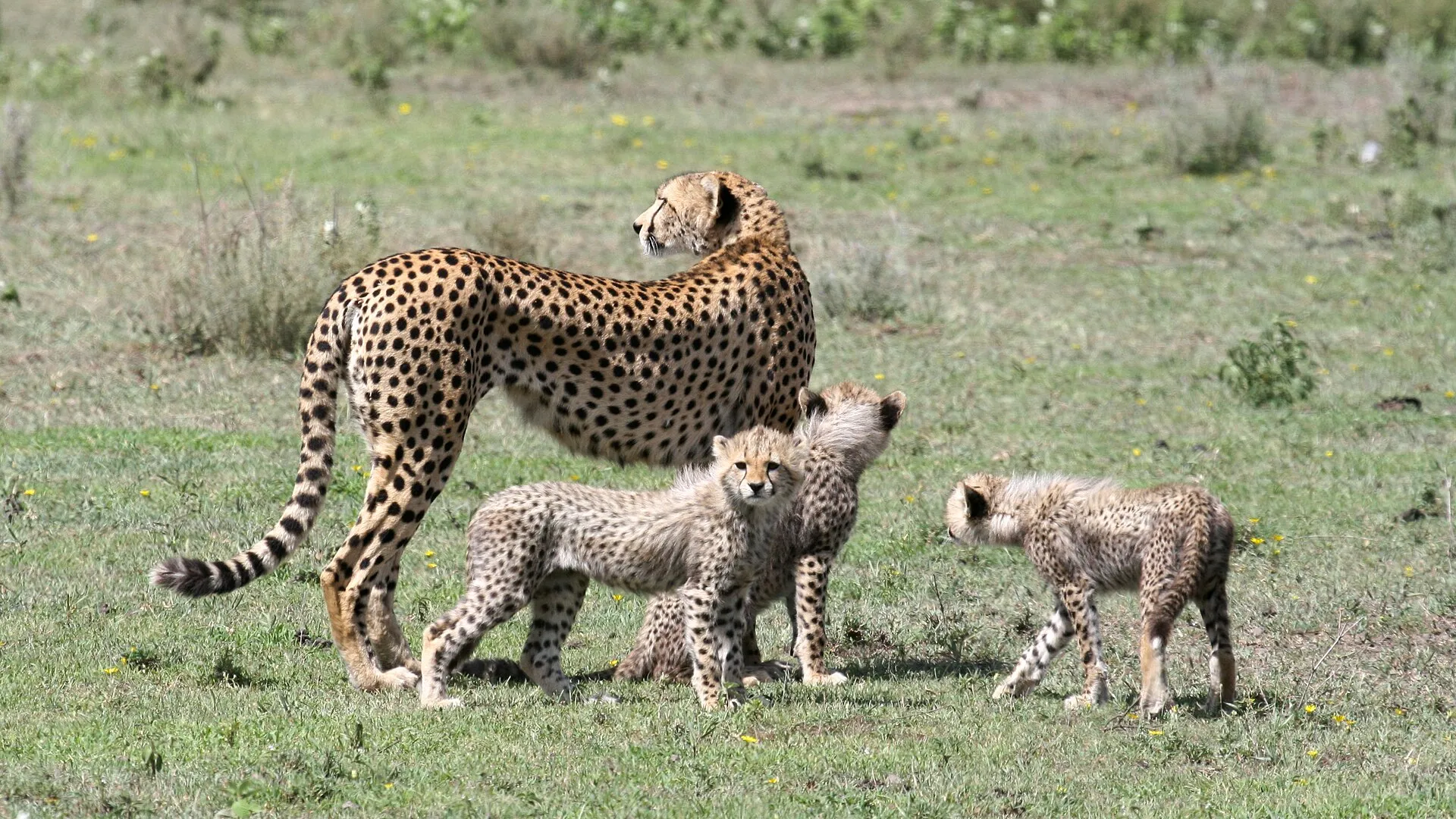
Ndutu and the southern plains
Ndutu lies on the border of the Serengeti and the Ngorongoro Conservation Area, around Lakes Ndutu and Masek. Because part of the area is in the conservation area, guides can follow animals off-road there, which is not permitted in most of the national park. Lodges and seasonal camps are set up near the herds.
When to go
Late January to March is the calving window, with February the usual peak. The short rains end in December and the long rains begin around late March, so expect green plains, afternoon showers and clear skies after the rain. The herds start moving north and west in April.
Good to know
- Combine it with a day on the Ngorongoro Crater floor, which is only a short drive away.
- Calving season is also a great time for photography: the plains are green and the light is soft.
- Births can be hard to watch; predators take many young calves.
- Book early: Ndutu camps are small and popular in February.
Who it suits
Calving season suits photographers, returning safari-goers and anyone who wants to see predators in action. It is also good value: February falls outside the July–October high season in the north, and the green plains feel completely different from the dry-season Serengeti. Families should know that hunts are common and can be upsetting for young children.
Where to stay
Seasonal mobile camps move to the Ndutu area and the southern plains for the calving months, and a few permanent lodges stand near Lake Ndutu. Staying close to the herds means more time watching and less time driving. Booking early is important, as the best camps fill up quickly for February.
A calving-season day
Leave camp at dawn, when births and predator hunts are most likely. Guides scan the herds for cows about to give birth, often recognisable by restless behaviour and lying down. Mid-morning, cheetahs and lions may be resting near the herds. Return for lunch, then head out again in the late afternoon when predators become active.
Photography
Calving season is one of the best photographic periods in Africa. Green grass, dramatic skies and active predators create endless opportunities. A long lens for predators, a wide lens for the herds and plenty of memory cards are essential.
Getting there
Fly from Arusha to the Ndutu or Seronera airstrips, or drive via Ngorongoro, about two to three hours from the crater rim to Ndutu.
What else to see in the south
The southern plains are also home to golden jackals, bat-eared foxes, honey badgers and huge flocks of storks that follow the rains. Lakes Ndutu and Masek attract flamingos in some years, and the woodland around Ndutu shelters giraffes and elephants. Olduvai Gorge and the Ngorongoro Crater are within easy reach.
Is calving season right for you?
Choose calving season if you love predator action, green landscapes and fewer vehicles than the northern crossings. Choose July to October if river crossings are your top priority.
Plan it
Our 6-day Serengeti calving season safari is timed for January to March. Read the Great Migration month by month for the rest of the year.
Frequently asked questions
When is the best time to see calving?
February is usually the peak, but late January and early March are also good.
Will I see a birth?
Often, if you spend time with the herds in the early morning.
Is it busy?
Ndutu is popular in February, but the plains are vast.
Is it rainy?
Short afternoon showers are common, but mornings are often clear.
Can I combine calving season with Zanzibar?
Yes. February is a lovely time for the beach in Zanzibar, so many travellers fly there after the Serengeti.
Is calving season good for photography?
Yes. Green plains, dramatic skies and active predators make it one of the best times of year.
Where should I stay for calving season?
Near Ndutu or in the southern Serengeti, close to the herds.

Written by our Kampala-based planners and guides, who arrange these trips every season. Prices and rules are checked before every quote.