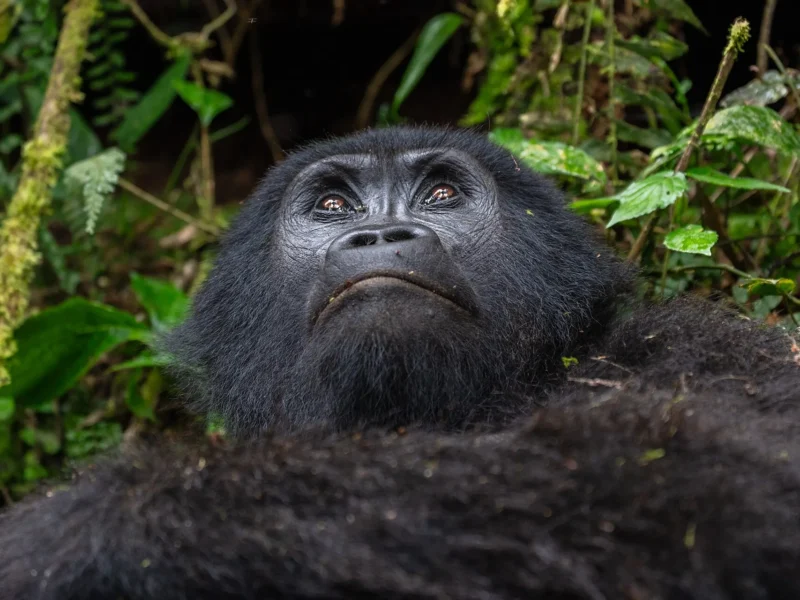
For gorilla trekking, pack waterproof hiking boots with good grip, long trousers and long sleeves in neutral colours, gardening gloves, gaiters or long socks, a rain jacket, a warm layer, a small day pack with water and snacks, and a camera without flash. A walking stick and a porter (about US$20) are provided at the park.
Key takeaways
- Waterproof, broken-in hiking boots are essential.
- Gardening gloves protect against nettles and thorns.
- Long sleeves and trousers tucked into socks keep out ants and nettles.
- A rain jacket is needed in every season.
- Carry 2 litres of water, snacks and a packed lunch.
Gorilla trekking is a walk through steep, wet, dense forest, sometimes for several hours. Wearing the right clothing and carrying the right kit makes it safer and much more enjoyable. This checklist is based on the advice our guides give every trekker.
Footwear
- Waterproof hiking boots with ankle support and deep treads. Break them in before your trip.
- Gaiters or long socks to tuck your trousers into, against mud, ants and nettles.
- Spare socks in your day pack.
Clothing
- Long trousers in a tough, quick-drying fabric (not jeans, which stay wet).
- Long-sleeved shirt to protect against nettles, thorns and insects.
- Waterproof rain jacket, needed in every season.
- Warm layer such as a light fleece for early mornings at altitude.
- Neutral colours: greens, browns, khaki and grey.
- A hat for sun and rain.
Gloves
Gardening gloves are one of the most useful items you can bring. On steep slopes you will grab branches, vines and roots, many covered in stinging nettles or thorns.
Day pack essentials
- A small, comfortable day pack with a rain cover.
- At least 2 litres of water.
- Packed lunch and energy snacks, as treks can last several hours.
- Insect repellent and sunscreen.
- Personal medication, a small first-aid kit and hand sanitiser.
Camera kit
- A camera or phone that works well in low light; flash is not allowed.
- A mid-range zoom lens is ideal; gorillas are often within 10 metres.
- A rain cover or plastic bag for your camera.
- Spare batteries and memory cards.
Read photography tips for gorillas and chimps for settings.
What the park provides
- Walking sticks: usually available at the start of the trek.
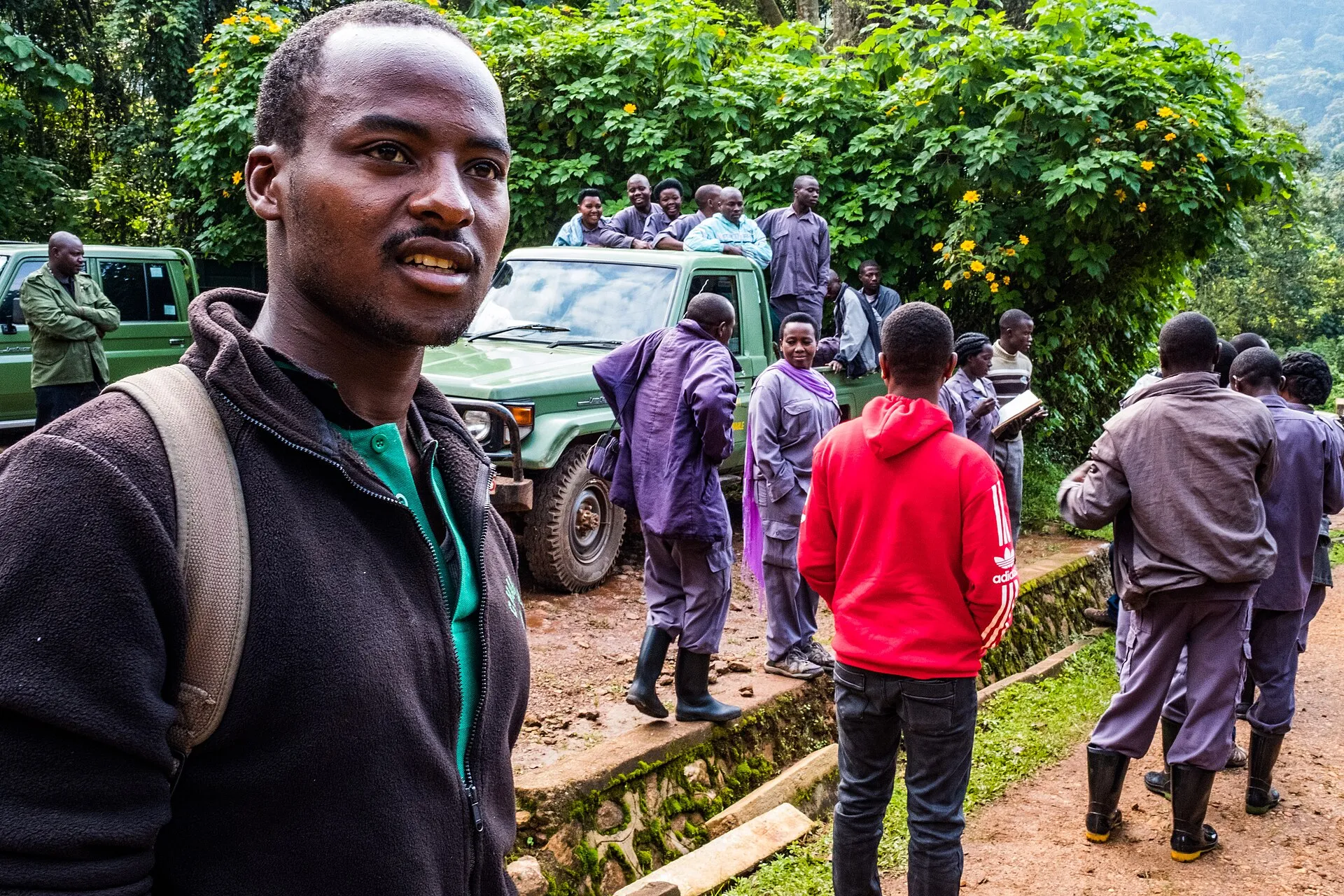
- Porters: local porters carry your bag and help you on steep sections for about US$20. Hiring one supports the community, many of them former poachers or their families.
Wear your gloves and tuck your trousers into your socks before you enter the forest. Safari ants and nettles are much easier to avoid than to remove.
What not to bring
- Bright or white clothing.
- Large bags or heavy equipment.
- Food to eat near the gorillas: eating and drinking are not allowed during the hour with them.
- Drones or flash photography.
Packing for chimps and golden monkeys
The same kit works for chimpanzee tracking in Kibale and golden monkey trekking in Mgahinga or Volcanoes, with small differences. Kibale is lower, warmer and flatter, so a light long-sleeved shirt is enough, but safari ants are common on the trails, which makes tucked-in trousers essential. Golden monkeys live in bamboo at altitude, where mornings are cold and wet, so keep the fleece and rain jacket. Chimps move fast and high in the canopy, so a longer zoom lens helps.
Luggage on domestic flights
If you fly to Kihihi or Kisoro, the small aircraft have strict luggage limits, usually around 15 kg per person including hand luggage, in soft bags rather than hard suitcases. Pack a soft duffel for the safari and, if needed, leave extra luggage at your Entebbe hotel. Ask us for the current limit for your flight.
Packing for gorilla trekking: quick answers
Can I trek in trainers?
You can, but you will slip more and your feet will be wet within minutes. Waterproof hiking boots with deep treads are far safer on Bwindi’s steep, muddy slopes.
Do I really need gloves?
Yes. Nettles, thorns and slippery branches are everywhere, and you will grab vegetation to steady yourself. Cheap gardening gloves are perfect.
What should I wear in the rainy season?
A full waterproof layer, quick-drying trousers, gaiters and boots with good grip, plus a dry bag for your camera and phone. See the low-season guide for what April, May and November are like.
Can I bring a drone?
No. Drones are not allowed on gorilla treks, and flying one in the national parks needs special permission.
Packing for the rest of your safari
For game drives, lodges and the rest of your trip, see our travel essentials and packing list. And for what to expect on the day, read our gorilla trekking guide and how fit do you need to be for gorilla trekking?.
Printable checklist
| Item | Why |
|---|---|
| Waterproof hiking boots | Grip on steep, muddy slopes |
| Gaiters or long socks | Keep out mud, ants and nettles |
| Long trousers, long-sleeved shirt | Protection from nettles and thorns |
| Rain jacket | Rain is possible in every season |
| Light fleece | Cool mornings at altitude |
| Gardening gloves | Grip vegetation safely |
| Day pack with rain cover | Water, lunch, camera |
| 2 litres of water and snacks | Treks can last several hours |
| Camera with spare batteries | No flash allowed |
| Passport and permit | Checked at the briefing |
Packing for the weather
Bwindi and the Virungas are wet in every season, so pack as if rain is certain. In the drier months, mornings are still cool and misty at altitude, while in the rains a full waterproof layer and quick-drying clothes make the day far more comfortable.
Frequently asked questions
Do I need hiking boots?
Yes. Trails are steep, muddy and slippery; waterproof boots with ankle support and a good grip make a big difference.
Why gardening gloves?
To protect your hands from stinging nettles, thorns and rough vegetation when you grab plants for balance.
Can I wear bright colours?
It is better to wear neutral greens, browns and khaki, which are less distracting to the gorillas.
Is it cold?
Mornings at altitude can be cool, around 10–15°C, especially in Rwanda and Ruhija; bring a warm layer.
Can I bring a drone?
No. Drones are not allowed in the parks without special permits.
Can I buy or hire gear locally?
Walking sticks are provided, and some lodges lend gaiters, rain jackets or gloves. Boots are personal, so bring your own broken-in pair.

Written by our Kampala-based planners and guides, who arrange these trips every season. Prices and rules are checked before every quote.