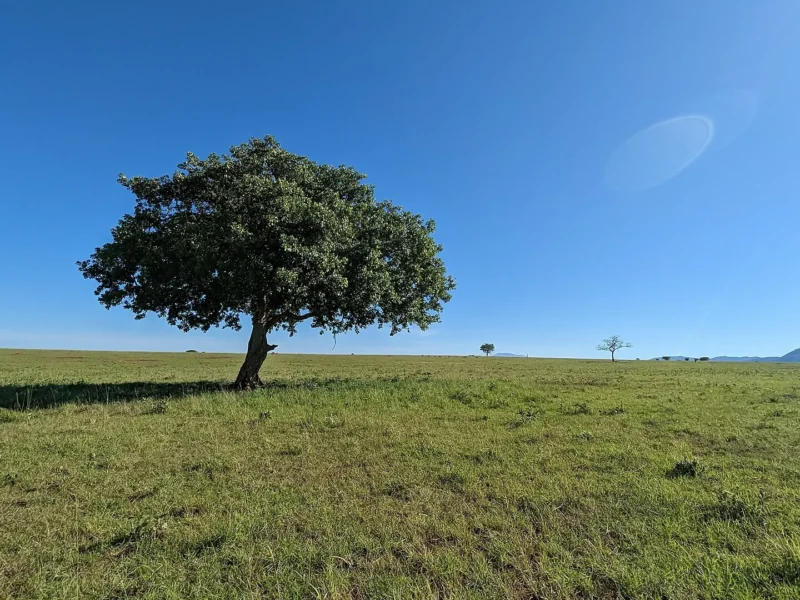
The best places to see cheetahs in East Africa are Tanzania’s Serengeti, especially the southern plains around Ndutu from December to March, and Kenya’s Masai Mara and its conservancies. Samburu in northern Kenya is also good. In Uganda, cheetahs live only in Kidepo Valley National Park, in the far north-east. Rwanda has no cheetahs. Because cheetahs hunt in daylight on open grassland, sightings of a chase are more likely than with lions or leopards.
Key takeaways
- Cheetahs are the fastest land animals, reaching around 100 km/h in short bursts.
- The Serengeti’s southern plains and the Masai Mara are the best places to see them.
- In Uganda, cheetahs are found only in Kidepo Valley.
- Unlike lions and leopards, cheetahs hunt mainly by day.
- Fewer than about 7,000 adult cheetahs remain in the wild.
Watching a cheetah scan the plains from a termite mound, then explode into a sprint, is one of the great sights of an East African safari. Cheetahs are built for speed rather than strength, and their daytime hunting means patient travellers have a real chance of seeing a chase.
Where to see cheetahs
- Serengeti, Tanzania: the short-grass plains of the south and the area around Ndutu are excellent, especially in the calving season, when gazelles and young wildebeest are everywhere. See the calving season in the southern Serengeti.
- Masai Mara, Kenya: the reserve and the private conservancies around it are among the best places in Africa for cheetahs, with famous coalitions of brothers hunting together. See the Masai Mara guide.
- Samburu, Kenya: cheetahs hunt gerenuks and gazelles in the dry country along the Ewaso Ng’iro. See Samburu National Reserve.
- Kidepo Valley, Uganda: Uganda’s only cheetahs, on the wide grasslands of the Narus Valley and towards Kenya. See Kidepo Valley National Park.
- Ruaha and Tarangire, Tanzania: smaller numbers, with quieter sightings.
Built for speed
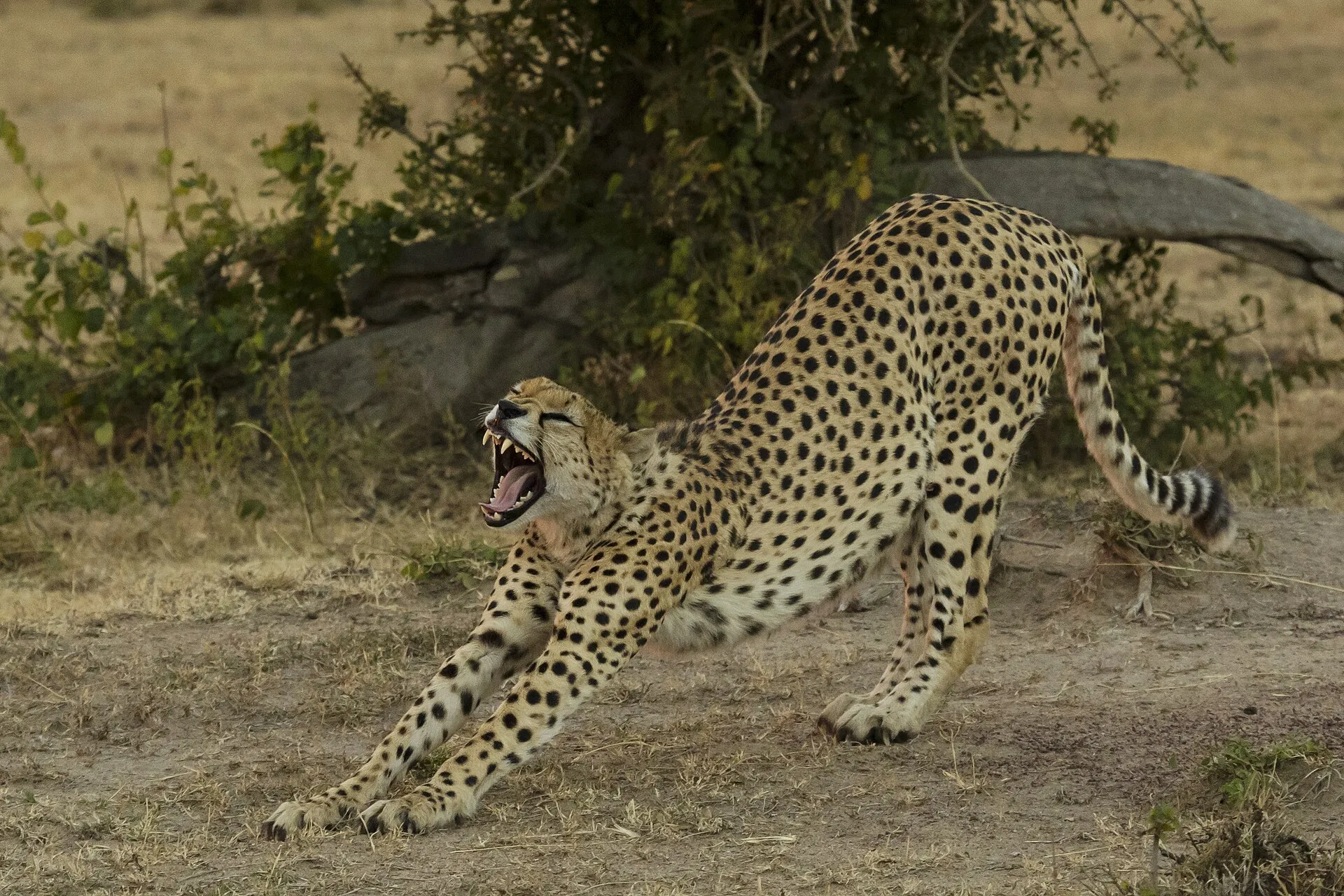
Everything about a cheetah is designed for the sprint: a light, slender body, long legs, a flexible spine that works like a spring, enlarged nostrils and lungs, and semi-retractable claws that grip the ground like running spikes. The long tail acts as a rudder for sharp turns. A cheetah can reach around 100 km/h in a few seconds, but it can keep that speed for only a few hundred metres before it overheats.
After a successful chase, the cheetah needs time to recover its breath, and it often loses its kill to lions or hyenas. That is why cheetahs eat quickly and keep a constant watch while feeding.
Daily life and cubs
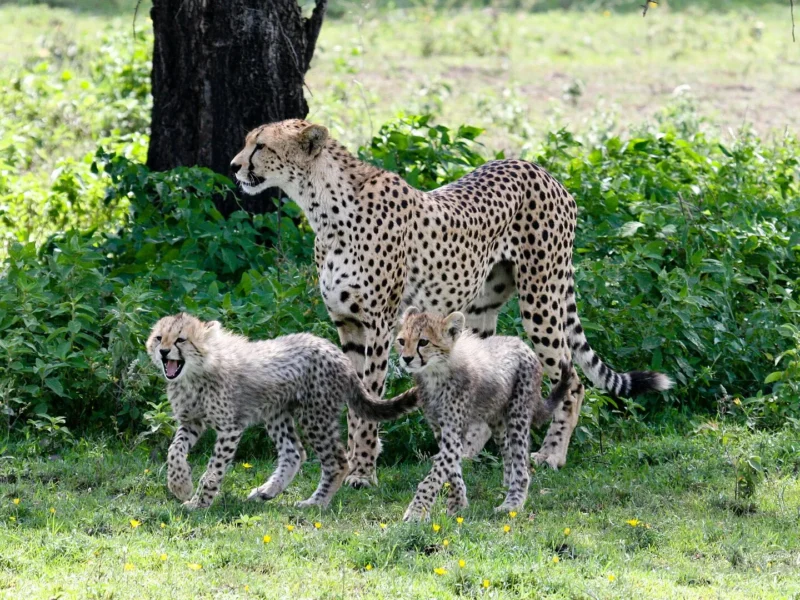
Female cheetahs live alone except when raising cubs. A mother usually has three to five cubs and moves them often to hide them from lions and hyenas, which kill many young cheetahs. The cubs stay with her for about 18 months, learning to hunt by practising on young gazelles she brings back alive. Males often live in small groups called coalitions, usually brothers, which hold territories together and can tackle larger prey such as wildebeest.
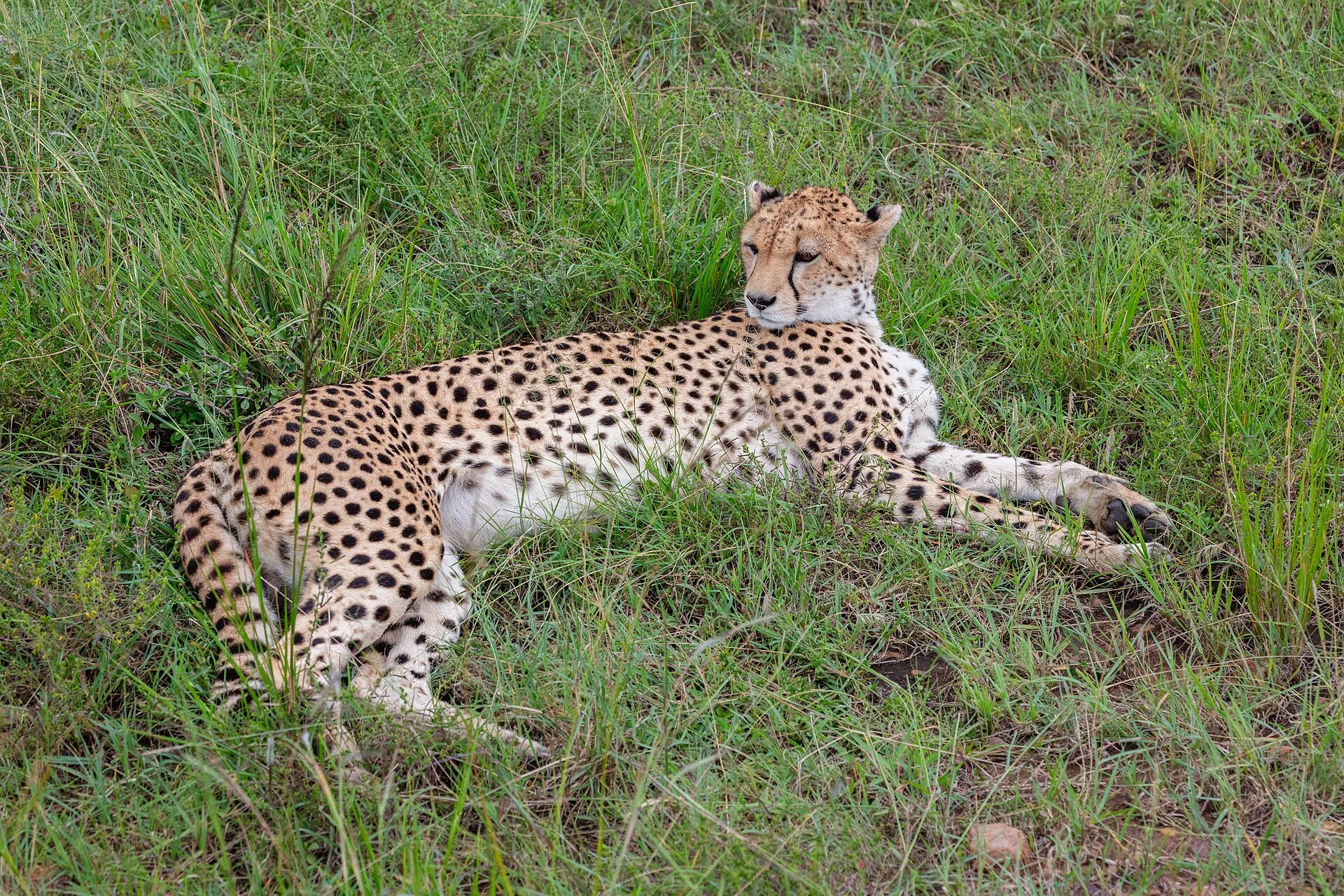
Because they hunt in daylight to avoid competition with lions and hyenas, cheetahs are most active in the morning and late afternoon, often scanning the plains from a mound or a fallen tree.
Cheetahs in danger
Fewer than about 7,000 adult cheetahs remain in the wild, and they have disappeared from most of their former range. They need huge areas with plenty of prey, and they often come into conflict with livestock farmers outside parks. Research projects in the Mara and the Serengeti track individual cheetahs and work with communities to reduce conflict, and responsible tourism helps fund this work.
on the open plains, look for a still, upright shape on a termite mound, and for gazelles all staring in the same direction.
Tips for seeing a cheetah hunt
- Stay with a cheetah that is alert and watching prey; a hunt may take an hour to begin.
- Keep quiet and still, and let your guide position the vehicle well back.
- Visit open short-grass areas, where cheetahs prefer to hunt.
- Choose a camp with experienced guides who know the local cheetahs.
Frequently asked questions
Where is the best place to see cheetahs?
The southern Serengeti and Ndutu during the calving season (December to March), and the Masai Mara year-round. Both have open plains and plenty of prey.
Are there cheetahs in Uganda?
Yes, but only in Kidepo Valley National Park, where they roam the open Narus Valley and the plains towards the Kenyan border.
Can cheetahs roar?
No. Cheetahs cannot roar like lions. They purr, hiss and make a high-pitched chirp, a call mothers use to find their cubs.
Why do cheetahs climb on safari vehicles?
In some parts of the Mara and Serengeti, cheetahs have learned to use vehicles as lookouts. Good guides discourage it and never encourage close contact.
How can I tell a cheetah from a leopard?
Cheetahs are slimmer and longer-legged, with solid round spots and black ‘tear marks’ running from the eyes to the mouth. Leopards are stockier, with rosette-shaped spots.

Written by our Kampala-based planners and guides, who arrange these trips every season. Prices and rules are checked before every quote.