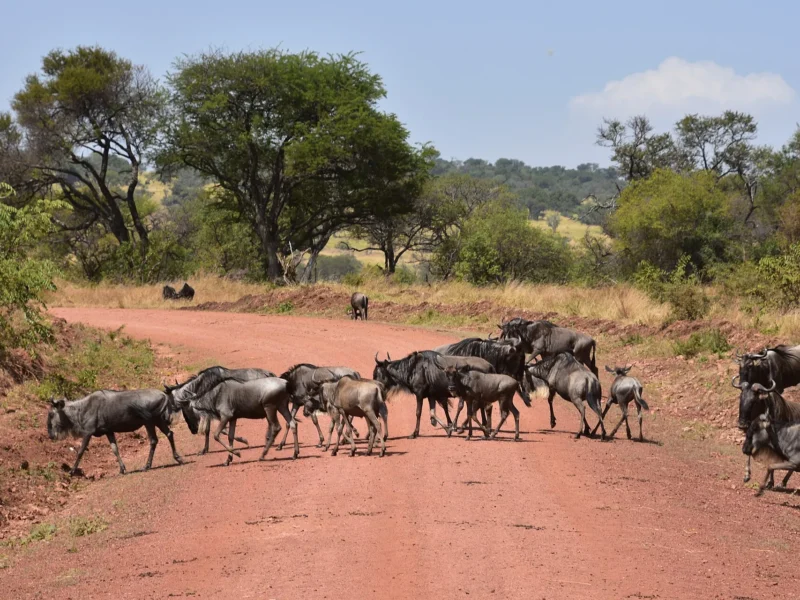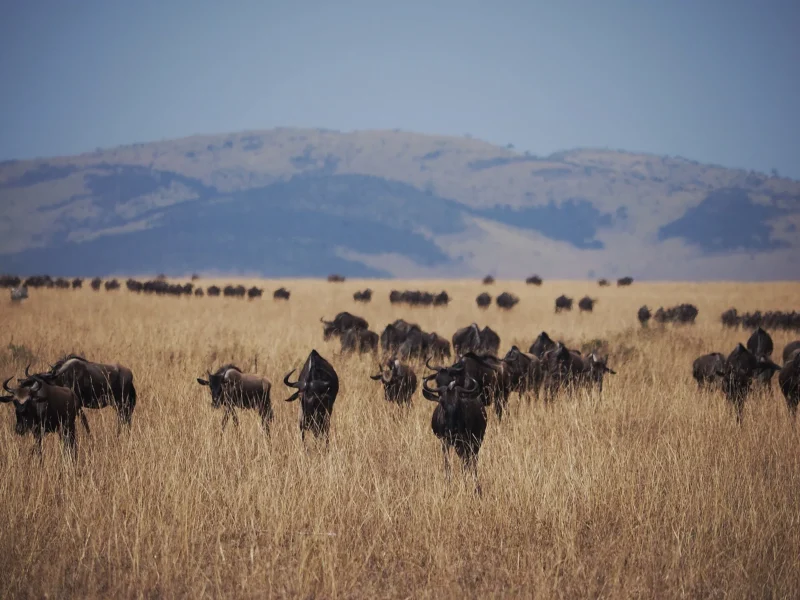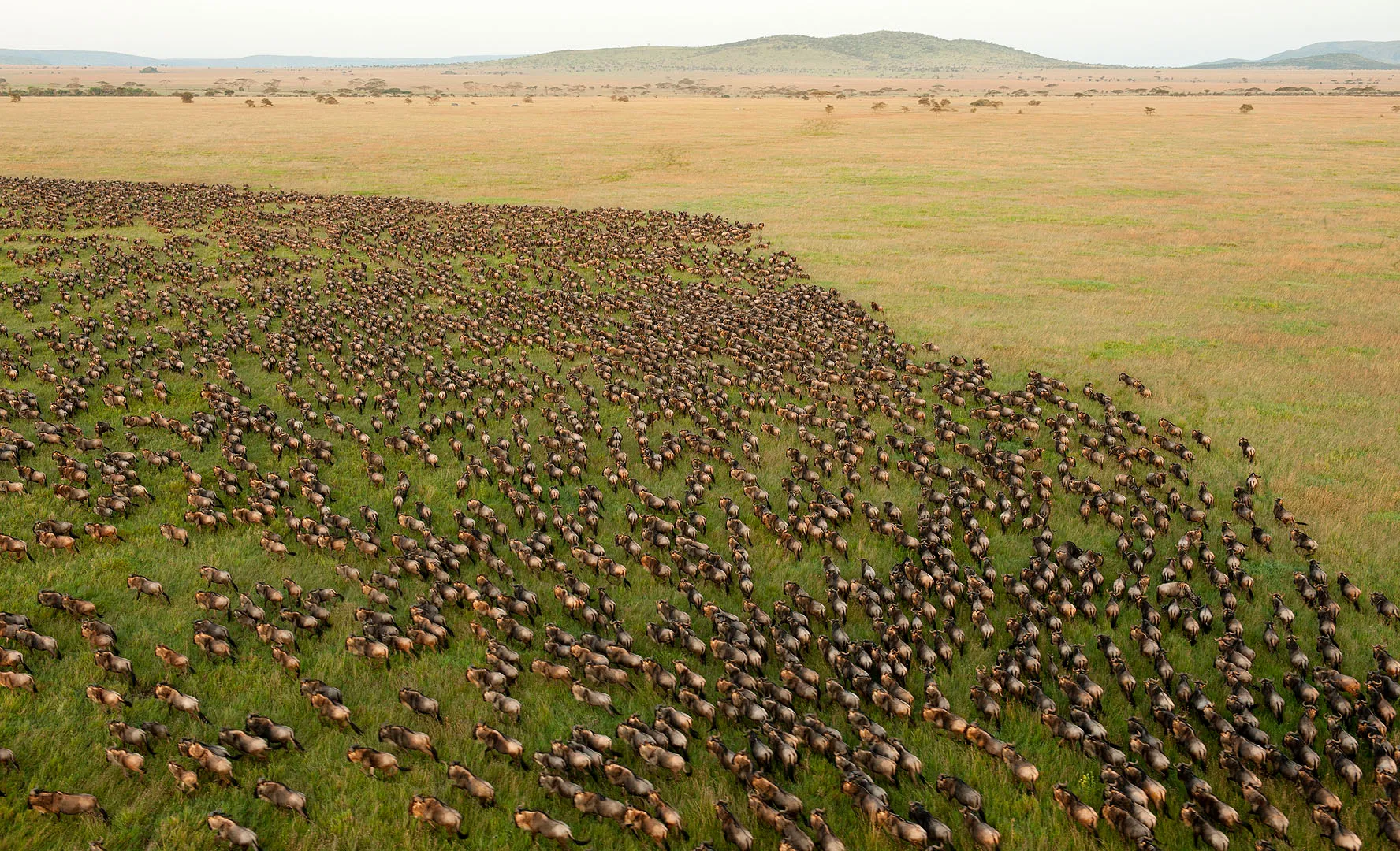
The Great Migration is the year-round circular movement of about 1.3 million white-bearded wildebeest, plus around 200,000 zebra and many gazelles, through Tanzania’s Serengeti and Kenya’s Masai Mara in search of fresh grass. Calving happens in the southern Serengeti from about January to March, and the dramatic Mara River crossings usually take place from July to October.
Key takeaways
- About 1.3 million wildebeest take part, with zebra and gazelles.
- The migration is a continuous loop driven by rain and fresh grass.
- Calving peaks around February in the southern Serengeti.
- Mara River crossings usually happen from July to October.
- Predators follow the herds all year.
Nothing in the natural world quite matches the Great Migration. Long lines of wildebeest stretch to the horizon, zebra mingle with them, and lions, cheetahs, hyenas and crocodiles follow every step. It is not a single event but a continuous, year-round journey through the Serengeti–Mara ecosystem.
The wildebeest
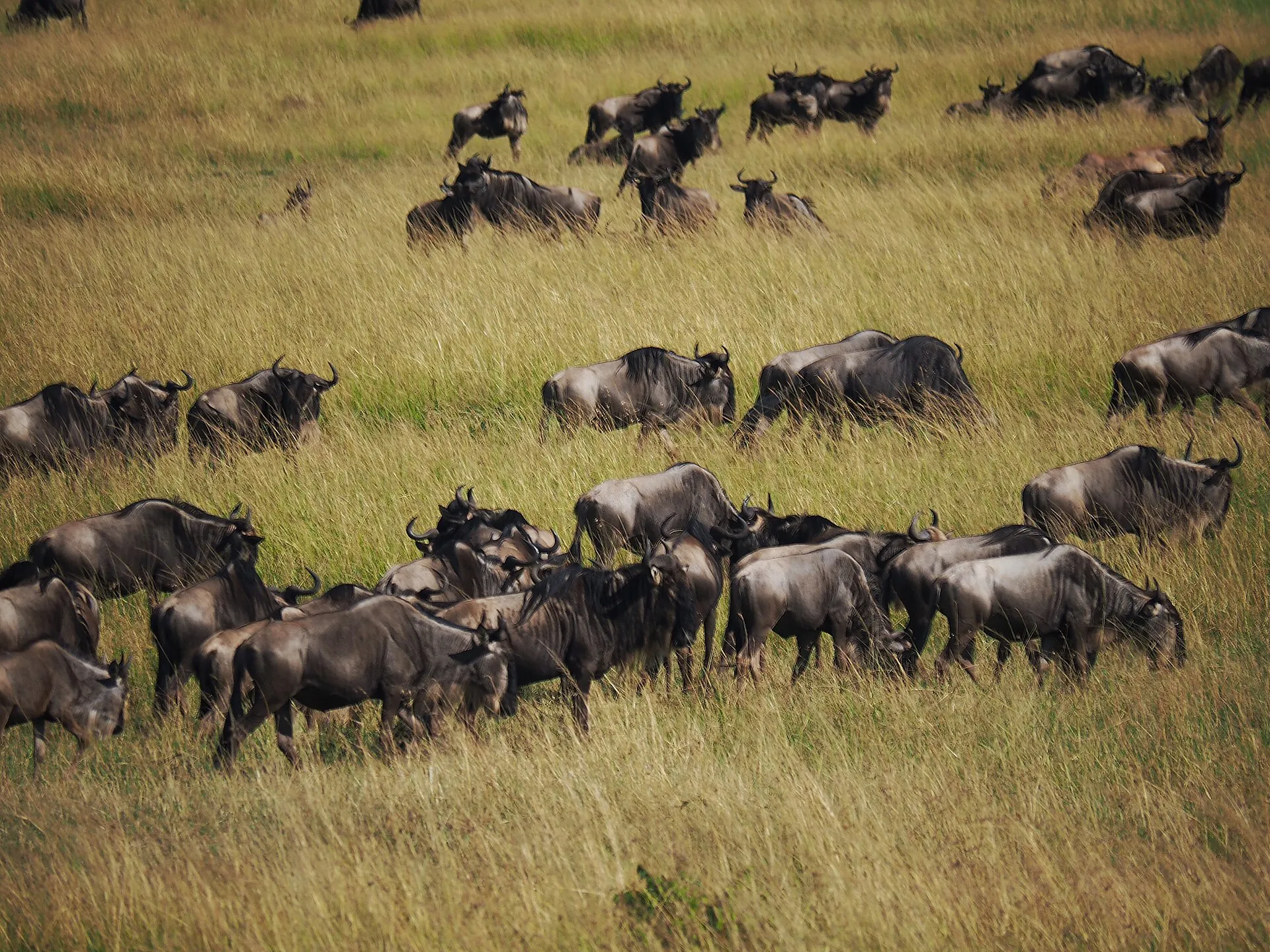
The white-bearded wildebeest, or gnu, is a large antelope with a heavy head, curved horns, a shaggy mane and a pale beard. Wildebeest look ungainly but are tough and well suited to long journeys. They are grazers, and their movements follow the rains and the growth of fresh grass.
The yearly cycle
| Months | Where the herds usually are | What happens |
|---|---|---|
| December–March | Southern Serengeti and Ndutu | Calving: hundreds of thousands of calves born, predators gather |
| April–June | Central and western Serengeti | Herds move north-west; rut and Grumeti River crossings |
| July–October | Northern Serengeti and Masai Mara | Mara River crossings |
| November | Moving south through the east | Herds return as the short rains begin |
The timing changes from year to year with the rains. Read the Great Migration month by month for more detail.
Calving season
Between about January and March, the herds gather on the short-grass plains of the southern Serengeti and Ndutu, rich in minerals. Hundreds of thousands of calves are born within a few weeks, peaking around February. Calves can stand within minutes and run with the herd soon after, but predators take many. Read calving season in the southern Serengeti.
River crossings
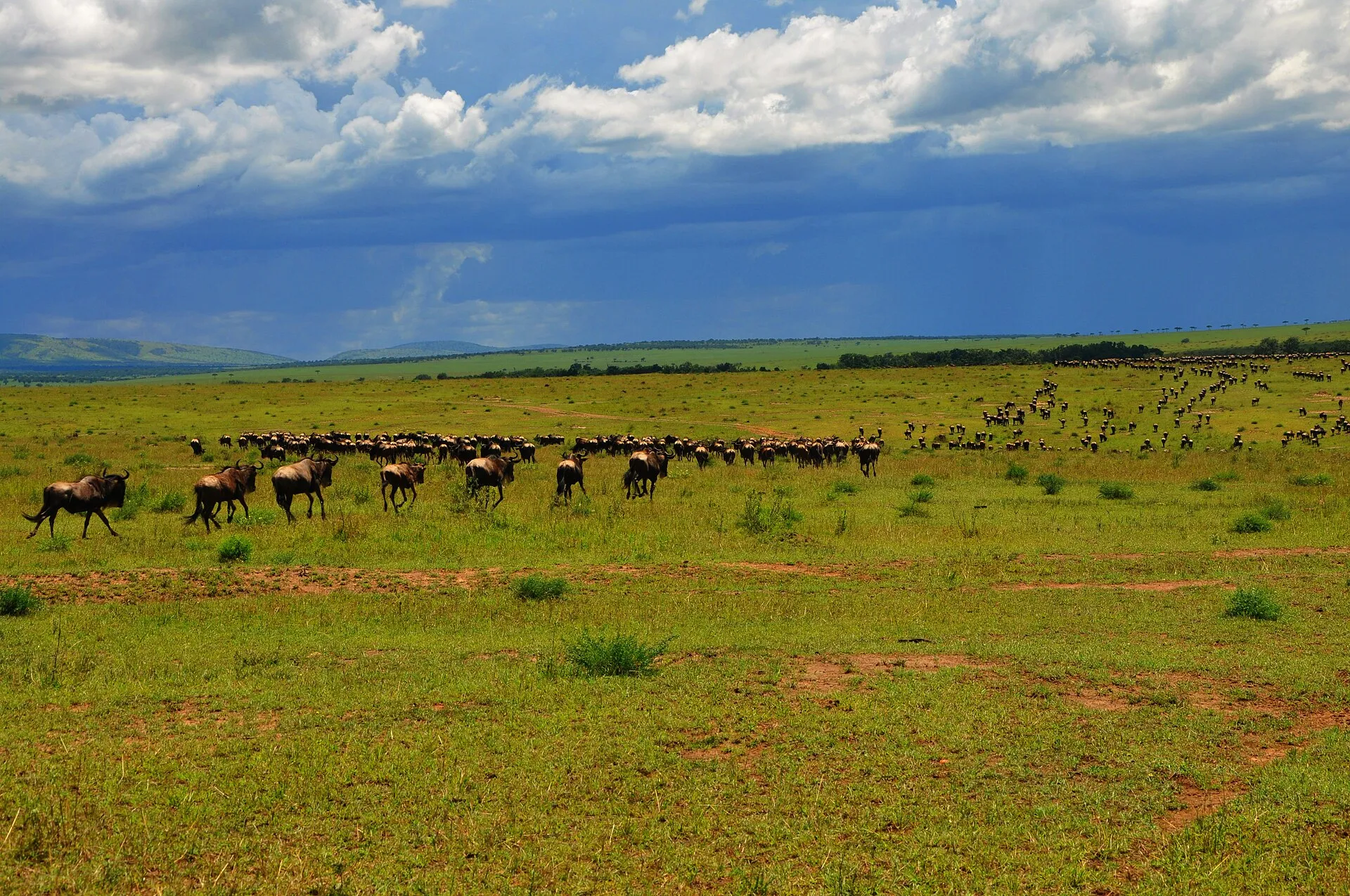
From about July to October, the herds reach the Mara River in the northern Serengeti and Kenya’s Masai Mara. They gather on the banks, sometimes for hours or days, before plunging across, braving strong currents and huge crocodiles. Crossings are chaotic, dramatic and unpredictable. See Great Migration river crossings.
Predators
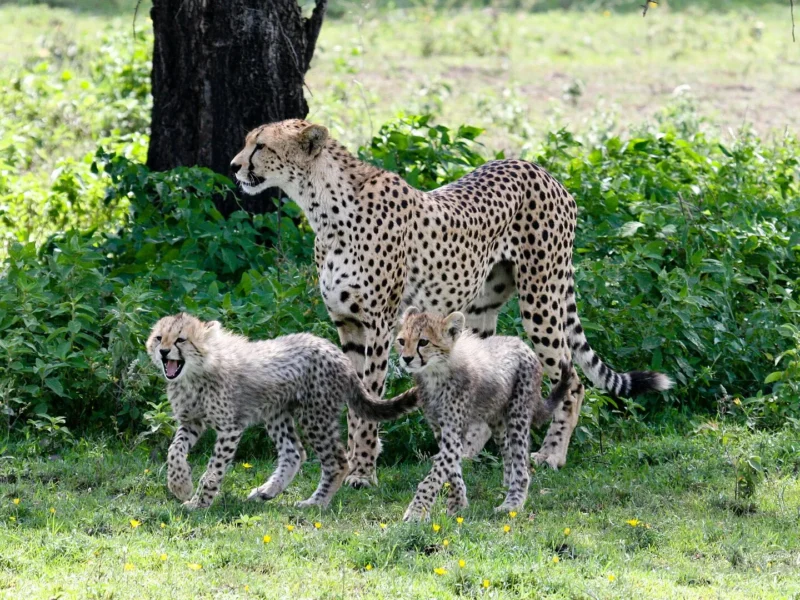
The migration supports some of Africa’s densest predator populations. Lions and spotted hyenas follow the herds, cheetahs hunt calves on the open plains, and crocodiles wait in the rivers. Vultures and jackals clean up.
At river crossings, choose a spot with a clear view, switch off the engine and wait quietly. Crowding the herds can delay or stop a crossing.
Remarkable migration facts
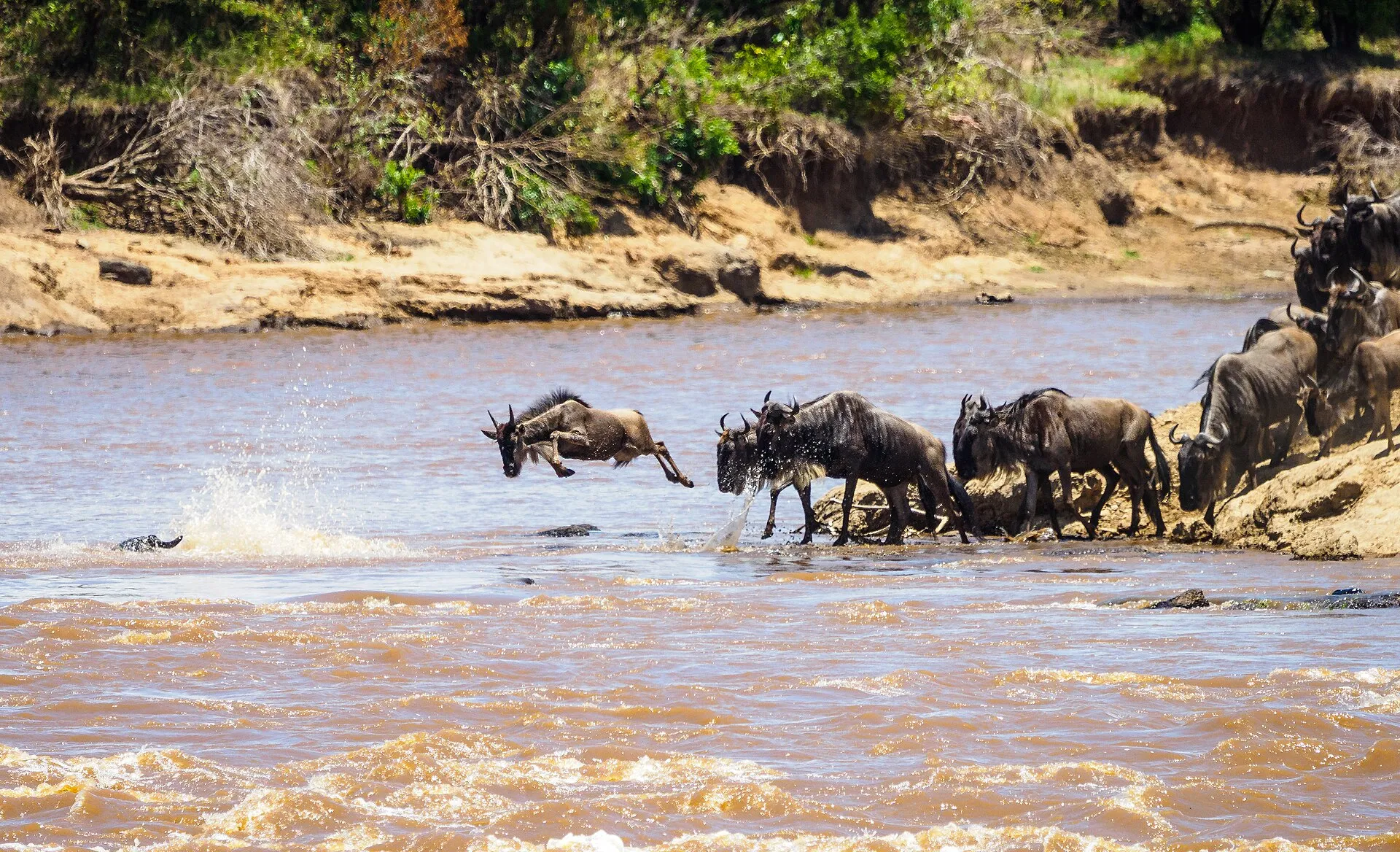
- The circuit covers well over 1,000 km each year.
- Wildebeest can smell rain and sense distant storms, which may guide their movements.
- Zebra often lead, eating the longer grass and leaving the shorter shoots preferred by wildebeest.
- Calving is so synchronised that predators cannot possibly catch more than a small fraction of the young.
Where to see the migration
Choose your destination by month: Ndutu and the southern Serengeti for calving, the Masai Mara or northern Serengeti for crossings, and the central Serengeti for the movements between.
Planning a migration safari
- Decide what you most want to see: calving and predators (January to March) or river crossings (July to October).
- Choose the right area for your month: Ndutu in the south for calving; the northern Serengeti or Masai Mara for crossings.
- Book early: camps close to the herds fill up 9–12 months ahead for February and August.
- Stay at least three nights: the herds move daily and crossings are unpredictable, so time is your friend.
- Consider flying: light aircraft save long drives and get you to the herds faster.
Our 6-day Serengeti calving season safari and 7-day northern Serengeti migration safari are built around these principles.
Frequently asked questions
When is the best time to see the Great Migration?
It depends what you want to see: calving and predators from January to March in the southern Serengeti, or river crossings from July to October in the northern Serengeti and Masai Mara.
Is the migration the same every year?
No. Its timing and route vary with the rains, so guides follow the herds from day to day.
Why do wildebeest migrate?
To follow rainfall and fresh, nutritious grass across the ecosystem, and to reach mineral-rich grasslands in the south for calving.
How many wildebeest die during the migration?
Many thousands die each year from predators, drowning, exhaustion and disease, but the population is broadly stable because so many calves are born.
Can I see the migration in both Kenya and Tanzania?
Yes. The herds spend most of the year in Tanzania and usually reach the Mara in Kenya from about July to October.
Do zebra migrate with the wildebeest?
Yes. Around 200,000 zebra travel with the herds, often moving slightly ahead and grazing the longer grass.

Written by our Kampala-based planners and guides, who arrange these trips every season. Prices and rules are checked before every quote.