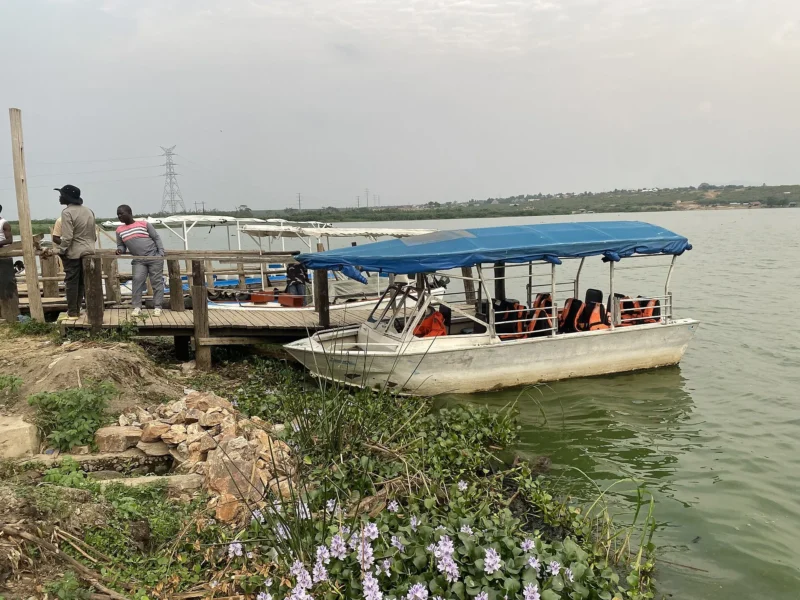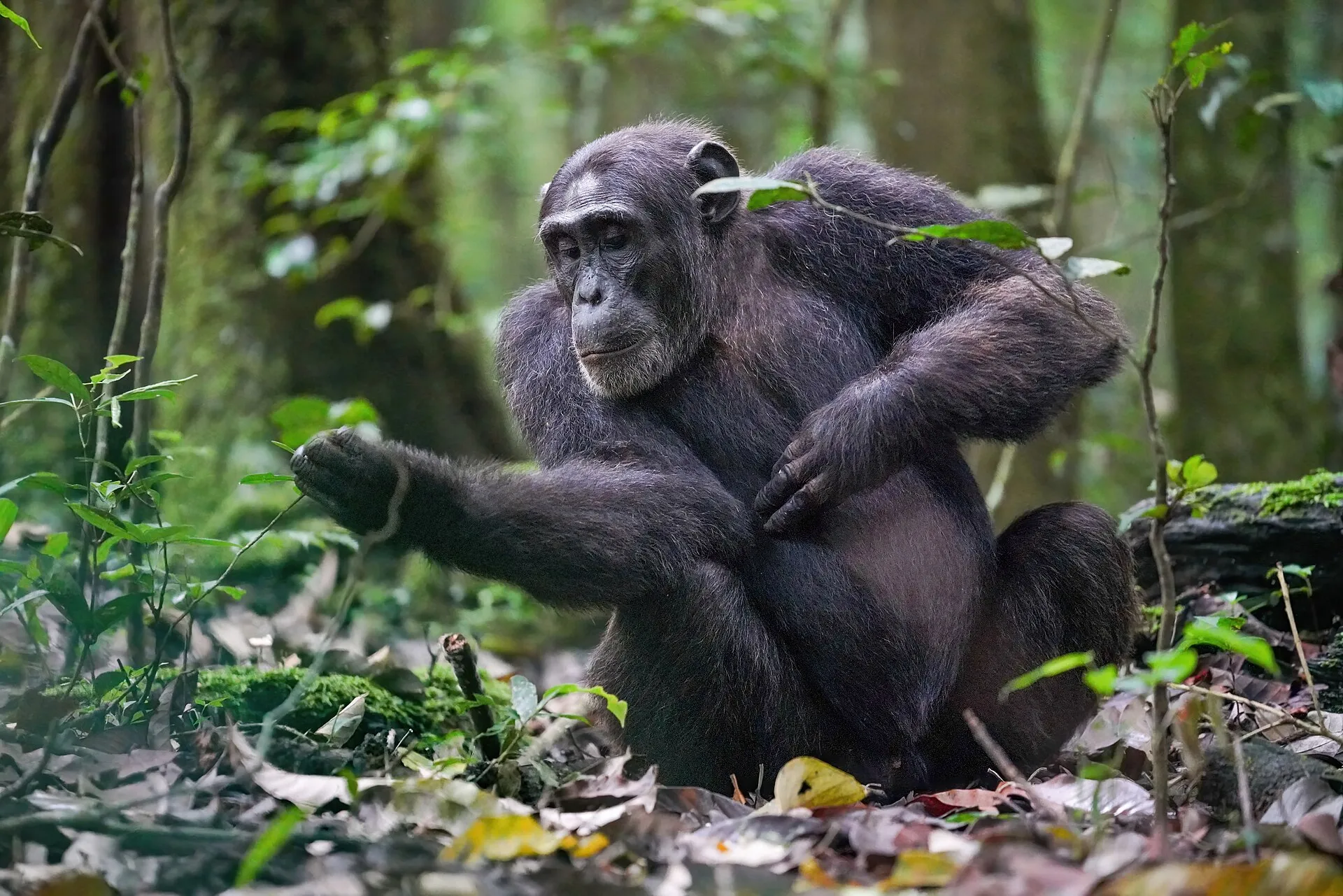
Standard chimp tracking in Kibale gives you one hour with a habituated community in a group of up to eight, costs US$250 (US$200 in April, May and November; US$300 from 2027) and takes 2–5 hours in total. The chimpanzee habituation experience costs US$300 (US$400 from 2027), includes up to four hours with chimps still getting used to people, and is longer, harder and more immersive.
Key takeaways
- Tracking: one hour with the chimps, groups of up to eight.
- Habituation: up to four hours with researchers and chimps.
- Tracking US$250 (US$200 low season); habituation US$300 in 2026.
- Both include Kibale park entry on the day.
- Habituation suits photographers and primate enthusiasts.
Kibale National Park is the best place in East Africa to see chimpanzees, with around 1,500 in the forest and habituated communities followed daily by rangers and researchers. Visitors can choose between two experiences, and the right one depends on your time, budget and interest.
At a glance
| Chimp tracking | Chimp habituation | |
|---|---|---|
| Time with chimps | One hour | Up to four hours |
| Start | 8:00am or 2:00pm | Early morning |
| Group | Up to eight visitors | Small group |
| Difficulty | Moderate | Harder, often off-trail |
| Price 2026 | US$250 (US$200 Apr, May, Nov) | US$300 |
| Price from 2027 | US$300 | US$400 |
| Park entry | Included that day | Included |
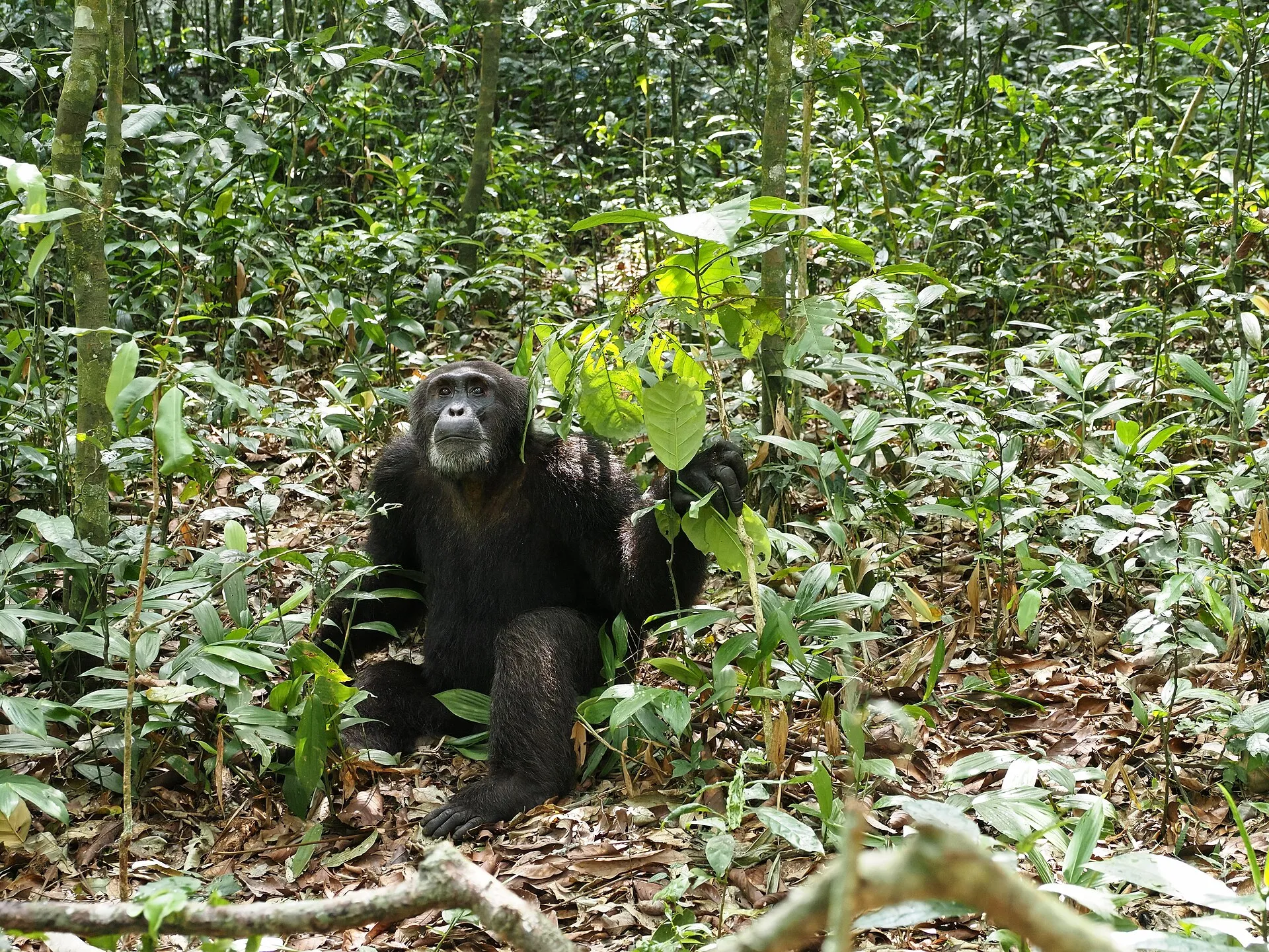
Chimpanzee tracking
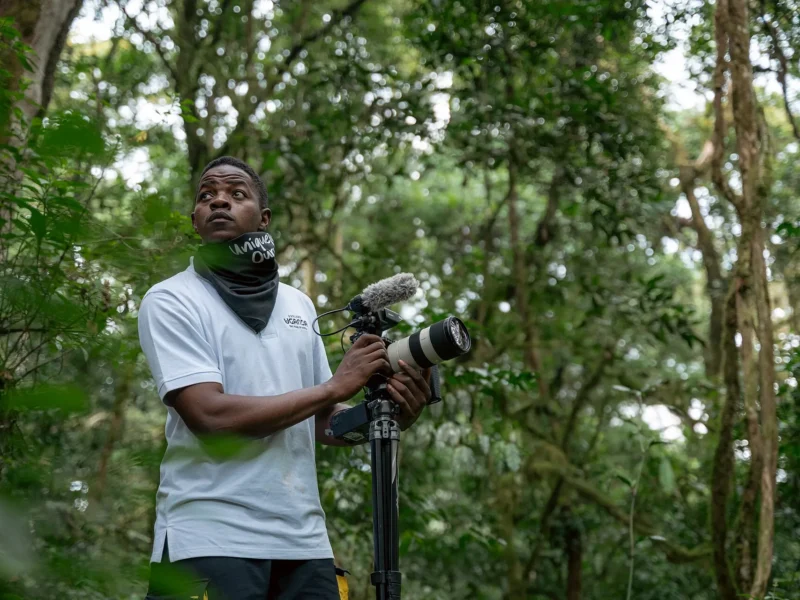
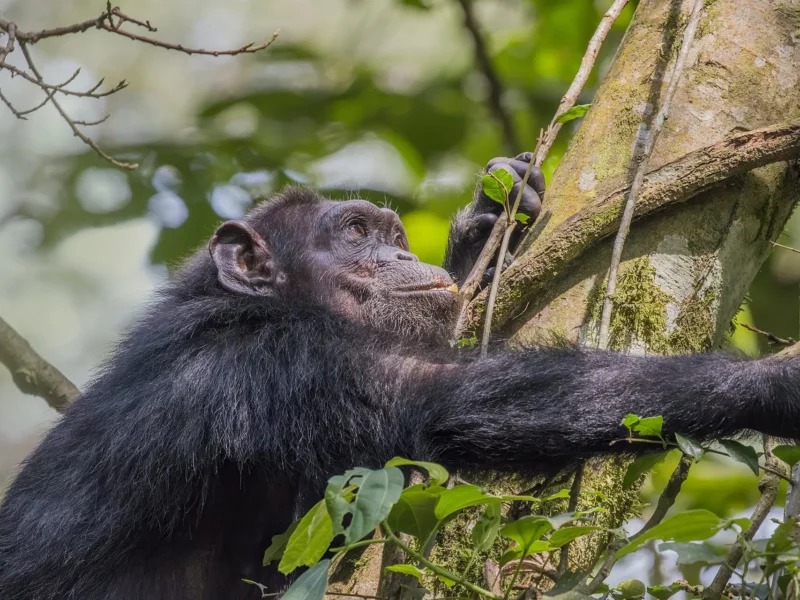
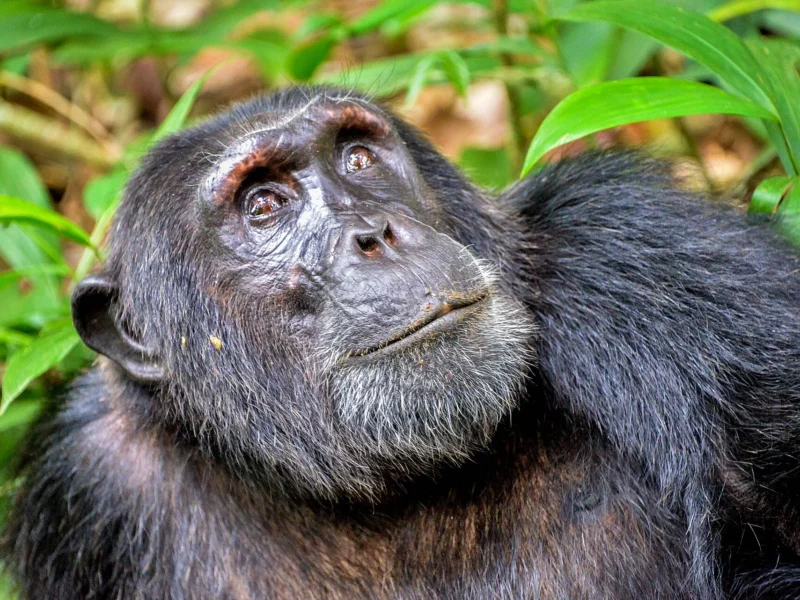
Tracking begins at the Kanyanchu visitor centre with a briefing, then you walk into the forest with a Uganda Wildlife Authority ranger. Trackers locate the community, and once you find them you have one hour, often with chimps calling, grooming and feeding in fig trees, before returning. In total it takes two to five hours, leaving the rest of the day free for the Bigodi Wetland walk or travel. Read chimpanzee tracking in Kibale.
The habituation experience
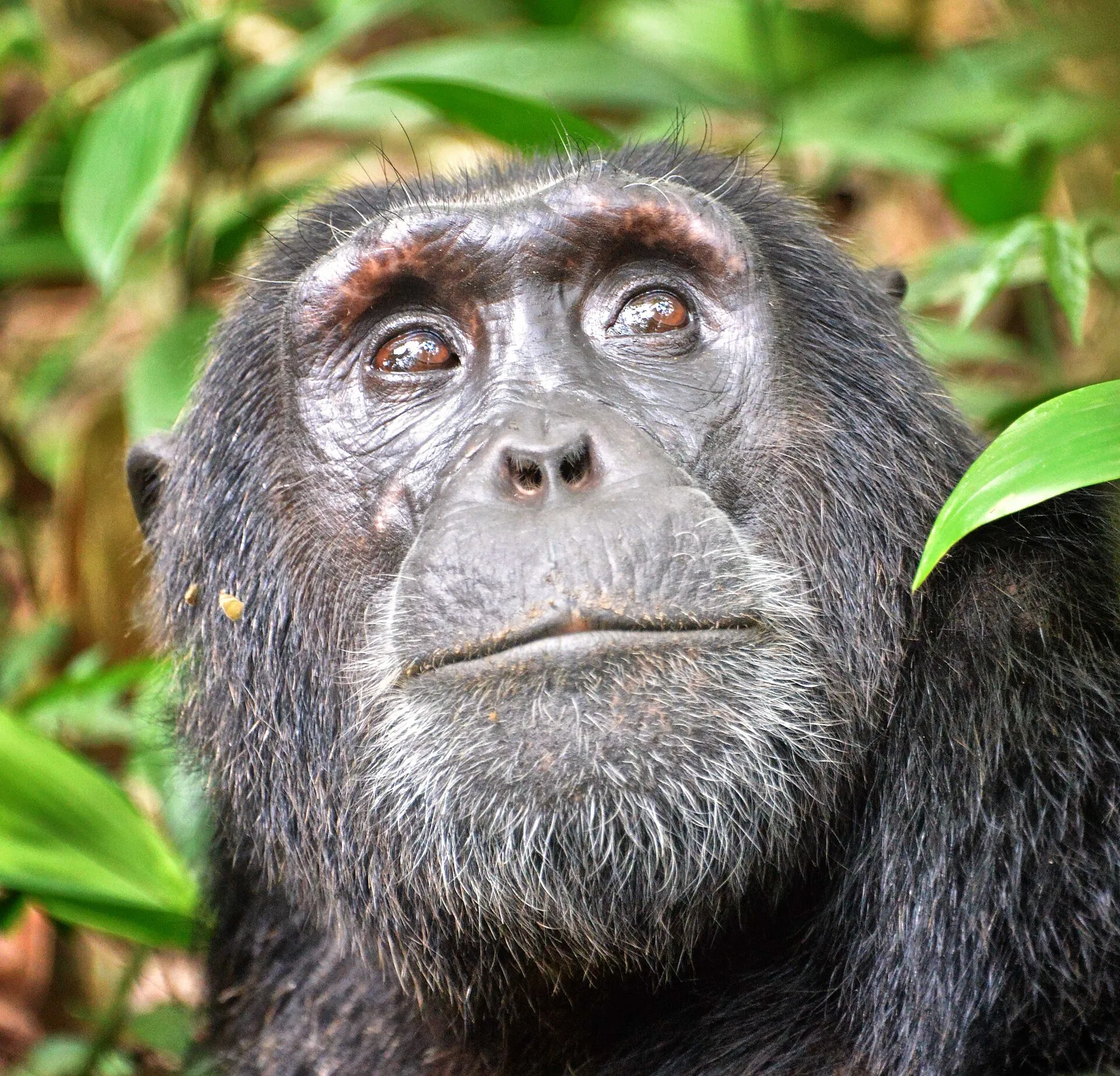
Habituation is the patient process of getting a wild community used to people so that it can be studied and visited without disturbance. On the chimpanzee habituation experience, you join the researchers and rangers doing this work. You start early, often seeing chimps leave their night nests, and stay with them for up to four hours as they feed, rest, travel and socialise. You learn to recognise individuals and behaviours, and the longer time means far more natural moments.
Which should you choose?
Choose tracking if:
- You are on a multi-park safari and want chimps as one highlight.
- You prefer a shorter, more predictable walk.
- You are travelling with children aged 12–15.
Choose habituation if:
- You love primates or photography and want more time.
- You are fit and comfortable with longer, off-trail walking.
- You want to understand chimp behaviour in depth.
Habituation spaces are very limited. If it is important to you, book it first and plan the rest of your trip around it.
Where to stay
Lodges near Kanyanchu, Bigodi and the crater lakes are 10–40 minutes from the starting point. For habituation, staying close to the park makes the early start easier. See our Kibale guide and the chimpanzee guide.
Combining with gorillas
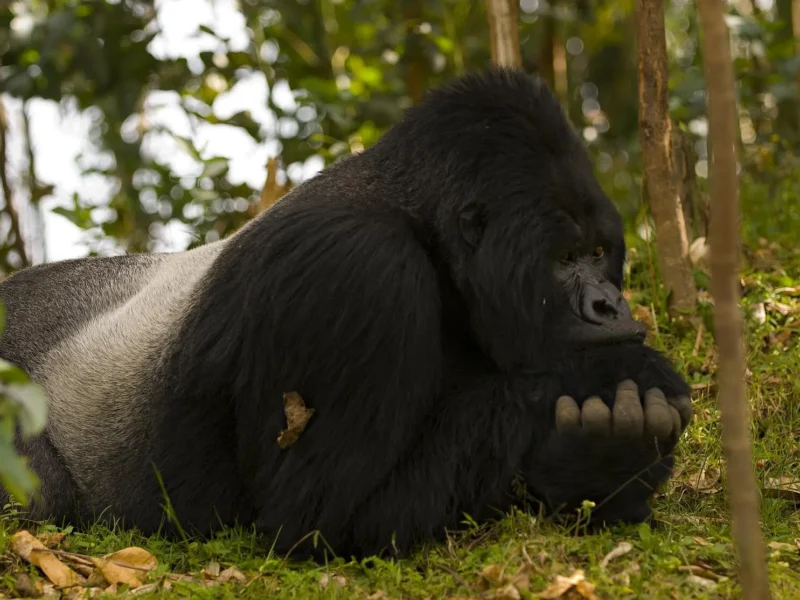
Most visitors track chimpanzees in Kibale and gorillas in Bwindi on the same trip, as on our 5-day gorillas and chimpanzees safari. The two encounters are very different: gorillas are calm and gentle, chimps loud, fast and dramatic.
A typical day
Tracking: arrive at Kanyanchu for the briefing about 30 minutes before your session. Groups set off into the forest with a ranger, following trackers who are already with the chimps. The walk to the community can take from 30 minutes to a couple of hours. After your hour with them, you walk back, usually finishing before lunch on the morning session. In the afternoon you might do the Bigodi Wetland walk or drive on to Queen Elizabeth National Park.
Habituation: start before dawn, when the chimps are still in their night nests, and stay with them for up to four hours as they leave the nests, feed and move. You return in the early afternoon, ready for a slow evening at your lodge.
Other places to see chimpanzees in Uganda
- Kyambura Gorge, in Queen Elizabeth National Park: a small community in a sunken forest. Sightings are less reliable than in Kibale, but the gorge is spectacular. The fee is US$100, plus park entry, rising to US$200 from 2027.
- Budongo Forest, near Murchison Falls: a quieter alternative for travellers heading north. See Budongo Forest Reserve.
For reliability and the number of habituated chimps, Kibale remains the best choice.
Chimp tracking vs habituation: quick answers
How likely am I to see chimpanzees in Kibale?
Very likely. The habituated communities are followed every day, so sightings are the norm, although chimps move fast and sometimes stay high in the canopy.
What is the minimum age for chimp tracking?
12 years in Uganda.
Is chimp tracking hard?
Kibale’s trails are much flatter than Bwindi’s, but you may walk off the path through undergrowth when the chimps move. Most people of reasonable fitness manage tracking easily; habituation is longer and harder.
Should I do chimps before or after gorillas?
It works either way. Many routes visit Kibale first, then Queen Elizabeth, then Bwindi, which spreads the driving evenly.
What to bring for either experience
- Long trousers tucked into socks and long sleeves against safari ants and nettles.
- Waterproof boots with good grip; Kibale’s trails are flatter than Bwindi’s but can be muddy.
- A light rain jacket, water and snacks; for habituation, a packed lunch.
- A camera that handles low light. Flash is not allowed.
Other primates you may see
Kibale has 13 primate species, so both experiences often bring encounters with red colobus, black-and-white colobus, L’Hoest’s monkeys, red-tailed monkeys and grey-cheeked mangabeys. Read our L’Hoest’s monkey guide.
Frequently asked questions
Which is better, tracking or habituation?
Tracking suits most travellers and fits easily into a multi-park safari. Habituation suits photographers, researchers at heart and anyone who wants more time and a deeper understanding.
How many people go on the habituation experience?
Groups are small, and spaces are very limited, so book early.
Is habituation harder?
Yes. You start early, may walk off-trail through thick undergrowth and follow the chimps as they travel.
Do I need two nights in Kibale for habituation?
We recommend it, as the habituation day is long and it is best not to travel straight afterwards.
Will prices change?
Yes. From 1 January 2027 tracking rises to US$300 and habituation to US$400.
Can children do the habituation experience?
It is designed for adults; standard tracking with a minimum age of 12 is better for families.

Written by our Kampala-based planners and guides, who arrange these trips every season. Prices and rules are checked before every quote.