Signature 14 days14-Day Uganda, Rwanda & Tanzania Safari
Three countries, three great experiences: chimps and gorillas in Uganda, golden monkeys and Kigali in Rwanda, then the Serengeti and the Ngorongoro Crater in Tanzania.

Primates and plains: chimpanzees and gorillas in Uganda, then a flight to Tanzania for the Serengeti’s great herds, the Ngorongoro Crater and Tarangire’s elephants.
This twelve-day safari combines Uganda’s forests and primates with Tanzania’s plains. In Uganda you track chimpanzees in Kibale, cruise the Kazinga Channel and trek mountain gorillas in Bwindi. Then you fly to Kilimanjaro for Tarangire, the Serengeti and the Ngorongoro Crater.
Comfortable lodges in Uganda, then lodges and a tented camp on Tanzania’s Northern Circuit.
A domestic flight from Kihihi brings you back to Entebbe after the gorilla trek, and a regional flight, usually via Nairobi, takes you to Kilimanjaro International Airport near Arusha, where your Tanzanian guide meets you.
Travellers who want both great East African experiences, gorillas and the Serengeti, and who prefer two nights in most places.
Your driver-guide collects you from Entebbe or Kampala in the morning and heads west on the Mubende road through farmland, tea estates and small trading towns. Lunch is taken on the way, and by mid-afternoon you reach Fort Portal, set against the foothills of the Rwenzori Mountains. A short drive brings you to your lodge on the edge of Kibale Forest, where black-and-white colobus often feed in the trees around the grounds.
In the afternoon, walk the boardwalk and trails of the community-run Bigodi Wetland Sanctuary with a local guide. It is one of the best places in Uganda to see the great blue turaco, and you may also find red colobus, L’Hoest’s monkeys and a wealth of swamp birds. Fees support the local community’s schools and health projects.

Arrive at the Kanyanchu visitor centre for the 8:00am briefing, then set off into the forest in a group of up to eight with a Uganda Wildlife Authority ranger. Kibale’s habituated chimpanzees are usually found within one to three hours, often calling loudly or feeding in fig trees. You spend one hour with them, watching grooming, squabbles and youngsters at play, while red colobus and grey-cheeked mangabeys move through the canopy around you.
Drive to Queen Elizabeth National Park in the afternoon.
Morning boat cruise on the Kazinga Channel.
Drive south through the Ishasha sector of Queen Elizabeth National Park, where lions often rest in the branches of large fig trees. Your guide checks their favourite trees as you look for topi, buffalo and elephants on the open plains, then you continue through the hills to Bwindi.
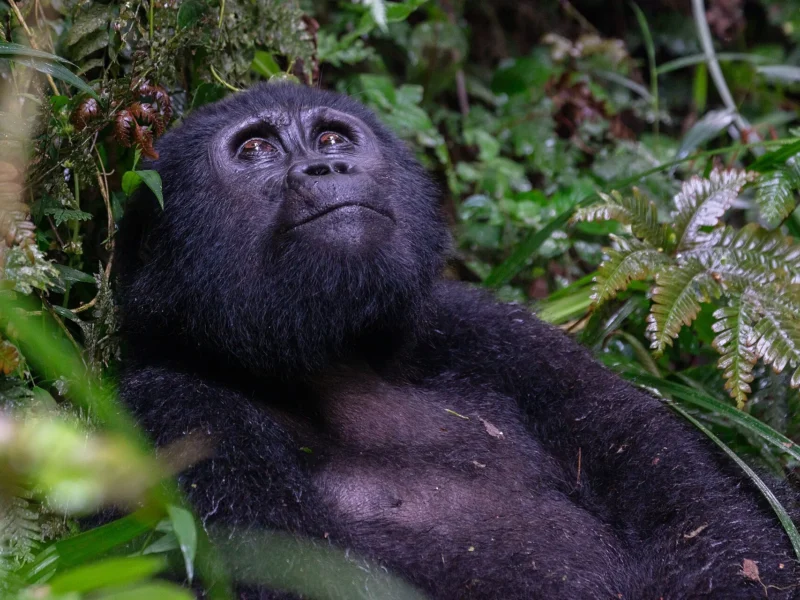
After an early breakfast you report to the park office for the 7:30–8:00am briefing, where Uganda Wildlife Authority rangers explain the rules and assign each visitor to a gorilla family; no more than eight people visit a family each day.
You then follow your ranger guide into the forest while trackers radio the family’s position. Treks take anywhere from one to six hours over steep, muddy ground. When you reach the gorillas you leave bags and sticks with the porters, put on a face mask and spend one hour watching them feed, groom and play from at least 10 metres away, before walking back out and receiving your trekking certificate.
Fly from Kihihi back to Entebbe and spend the afternoon by Lake Victoria, perhaps visiting the Botanical Gardens or the Uganda Wildlife Education Centre.
Fly from Entebbe to Kilimanjaro International Airport, usually connecting via Nairobi, and transfer to your lodge in Arusha among coffee gardens beneath Mount Meru.
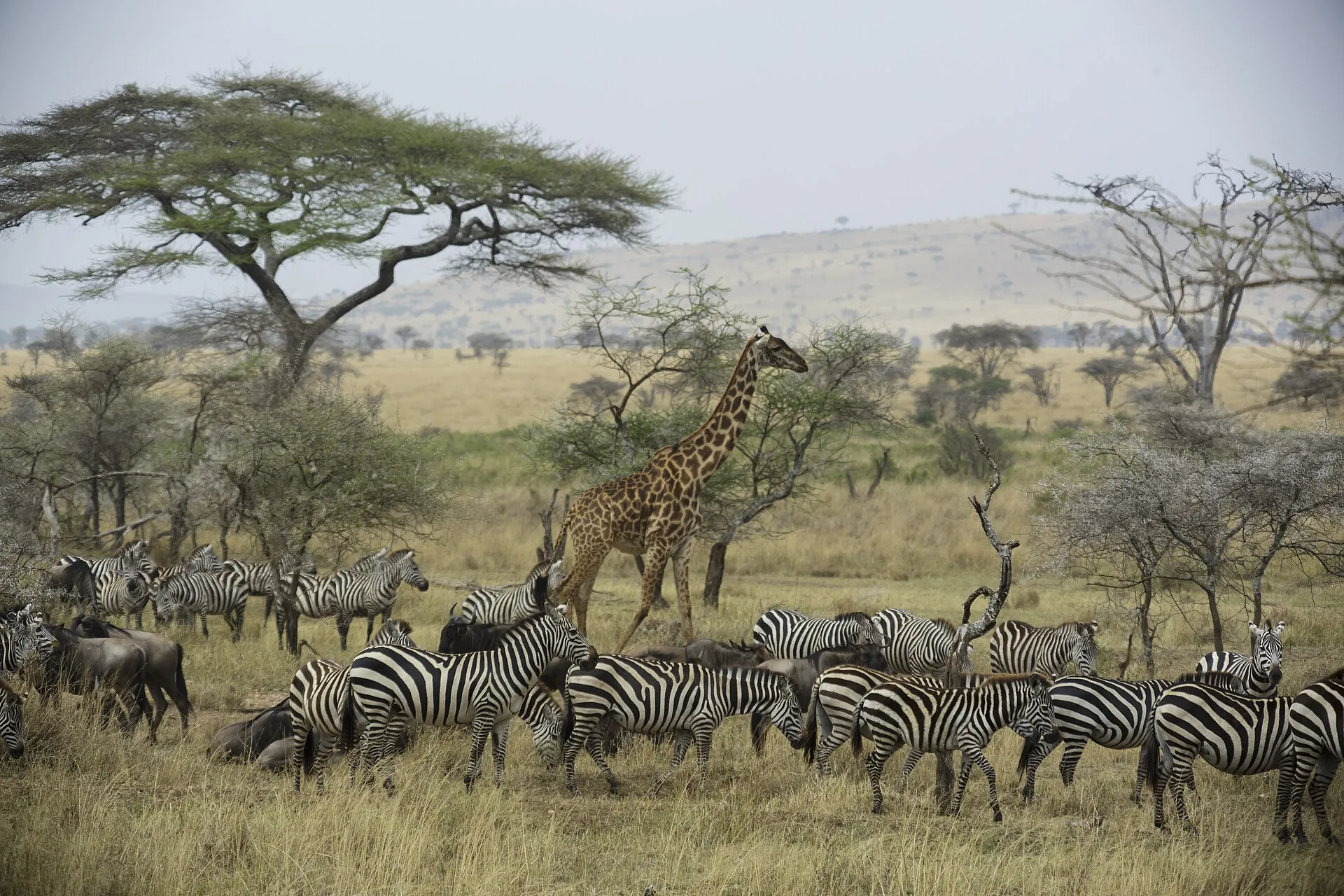
Spend the afternoon on a game drive along the Tarangire River, the park’s lifeline. In the dry season (June to October) herds of elephants, sometimes hundreds strong, gather to drink and dig for water in the sandy riverbed, alongside zebra, wildebeest, buffalo, giraffes and impala. Look for lions resting in the shade, leopards in the sausage trees, and the colourful yellow-collared lovebirds that are found only in northern Tanzania.
Drive up through the cool highland forest of the Ngorongoro Conservation Area, with a stop at the rim viewpoint, then descend past Maasai villages to the plains. Stop at Olduvai Gorge, one of the world’s most important sites for human origins, where a small museum overlooks the gorge. Enter the Serengeti at Naabi Hill gate and game drive across the short-grass plains to the Seronera area in the afternoon, arriving at camp by sunset.
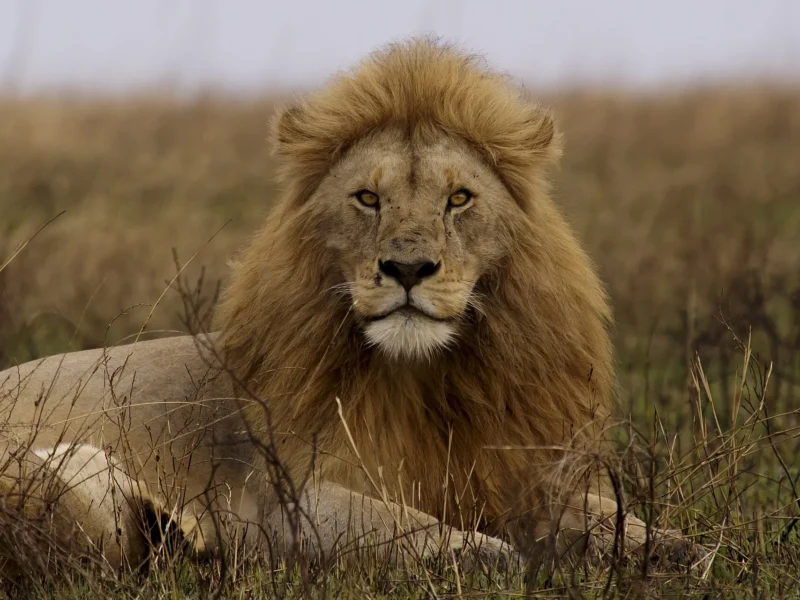
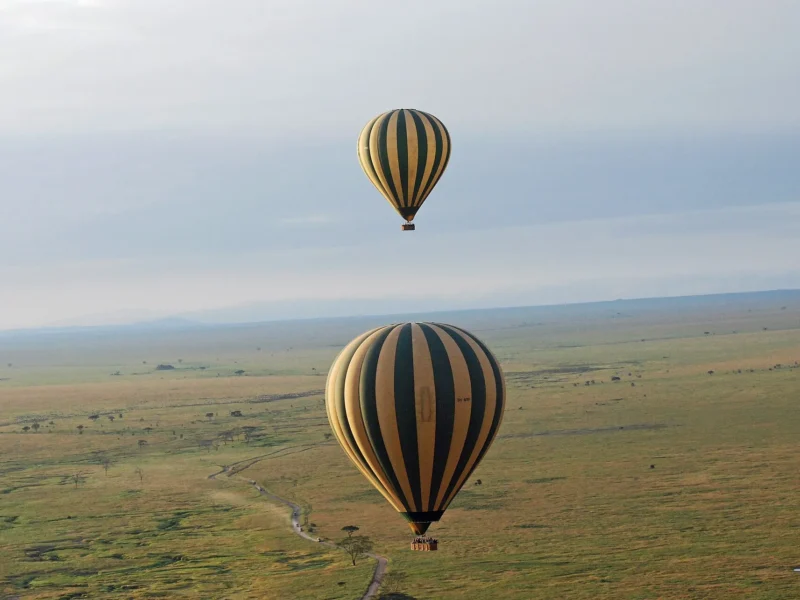
Spend a full day exploring the Serengeti with a picnic lunch. In the central Seronera valley, permanent water supports resident wildlife all year: lions on the kopjes, leopards in the sausage trees along the rivers, cheetahs on the open plains, and herds of giraffe, buffalo, topi, hartebeest and gazelles. Your guide follows the latest sightings and positions the vehicle for the best views and light, returning to camp at sunset.
After a final morning game drive in the Serengeti, cross the plains to Naabi Hill and climb into the Ngorongoro highlands, stopping at the crater viewpoint, to your lodge in Karatu among coffee farms.
Descend into the Ngorongoro Crater as soon as the gates open, dropping 600 metres down the steep crater wall to the floor of the world’s largest intact volcanic caldera. In about six hours on the crater floor you can see lions and spotted hyenas, herds of zebra, wildebeest and buffalo, old elephant bulls with huge tusks and, with luck, one of the crater’s protected black rhinos. Stop for a picnic lunch by the Ngoitokitok hippo pool, then visit the soda lake, often pink with flamingos, before climbing back up to the rim in the afternoon.
After a relaxed breakfast, visit a coffee farm near Karatu to see how Tanzania’s arabica is grown and roasted, then drive back to Arusha, about 2–3 hours, for your flight from Kilimanjaro International Airport.
Lodges shown match the quoted price. Ask us about mid-range and luxury upgrades.


| Permit or fee | 2026 rate (foreign non-resident adult) |
|---|---|
| Uganda gorilla trekking permit | US$800 per person each (US$600 in April, May and November 2026) |
| Chimpanzee tracking permit, Kibale | US$250 per person (US$200 in April, May and November) |
| Kazinga Channel launch, Queen Elizabeth | US$30 per person |
| Kibale Forest National Park: park entry | US$40 per day (included in the chimp permit on tracking day) |
| Queen Elizabeth National Park: park entry | US$40 per day |
| Bwindi Impenetrable National Park: park entry | US$40 per day (included in the gorilla permit on trekking day) |
| Tarangire National Park: park entry | about US$60 per 24 hours |
| Serengeti National Park: park entry | about US$83 per 24 hours |
| Ngorongoro Conservation Area fee | about US$71 per 24 hours, plus US$295 per vehicle for each crater descent |
| Porter on trekking day (recommended, paid locally) | about US$20 |
Permits alone come to about US$1,050 per person on this trip at standard rates. The permits marked as included are part of your quote, and we secure them before anything else because they are limited and must be paid in full when booked.
For a full breakdown, see how much a Uganda safari costs and how much a Tanzania safari costs.
Every itinerary is private, so you choose the style of each stay. These are lodges we use at each stop, by comfort level:
In Uganda, gorilla and chimp trekking run all year. June to September and December to February are the driest months, with easier forest trails; April, May and November are wetter and quieter, and Uganda's gorilla permit drops to US$600. See the best time to visit Uganda.
In Tanzania, June to October is the long dry season, the classic time for the northern circuit and the river crossings in the north of the Serengeti. Calving around Ndutu peaks from roughly January to March, and April and May bring the long rains. See the best time to visit Tanzania.
Every trip can be adjusted to your dates, budget and pace. Ask for a free quote and a specialist will reply within 24 hours.


Usually Entebbe to Kilimanjaro via Nairobi; some days have direct regional flights.
Uganda (e-visa or East Africa Tourist Visa) and Tanzania (e-visa or visa on arrival).
Uganda offers gorillas and chimps; the Serengeti offers the great herds and big cats. Together they cover East Africa’s two great safari experiences.
June to October is dry for both; January to March brings calving in the southern Serengeti.
Yes, with a flight from Arusha at the end.
Depending on the month, yes: the herds are in the southern Serengeti from December to March, the centre and west from April to June, and the north from July to October; your guide heads to wherever they are.
Signature 14 daysThree countries, three great experiences: chimps and gorillas in Uganda, golden monkeys and Kigali in Rwanda, then the Serengeti and the Ngorongoro Crater in Tanzania.
Signature 18 daysThe ultimate East African journey across four countries: chimps and gorillas in Uganda, golden monkeys in Rwanda, the Masai Mara in Kenya and the Serengeti and Ngorongoro Crater in Tanzania.
Signature 12 daysA slow, deep journey through Uganda: two nights in every major park, from the Nile at Murchison Falls to the gorillas of Bwindi, with crater lakes, Lake Bunyonyi and Lake Mburo along the way.
Change the dates, add a night, upgrade a lodge or combine it with Rwanda or Kenya. Tell us what you have in mind and we’ll send a revised plan and price.